

Welcome, photography enthusiasts! We are absolutely thrilled to bring you another insightful feature on capturing the world around us, this time focusing on the incredible power of the device already in your pocket: your smartphone. Today, we’re especially excited to welcome back our talented friend, Tamar, who generously shares her unique perspective and invaluable tips on mastering camera phone photography. Get ready to transform your everyday snapshots into stunning visual stories, whether you’re navigating bustling cityscapes or serene natural retreats.

Unlocking the Potential of Your Camera Phone
Hello everyone! It’s wonderful to be back here at Kleinworth & Co., sharing more of my passion for photography with you. In today’s post, I want to delve deeper into how your iPhone – or any smartphone, for that matter – can become your most versatile tool for documenting the beauty and intrigue that surrounds you every single day. Forget the notion that professional-grade photos require bulky equipment; your phone is a powerhouse of creative potential, always ready in your pocket.
Exploring the Urban Jungle: Discreet Photography in the City
Just last weekend, I had the pleasure of visiting my mom in the vibrant heart of New York City. We spent a delightful day immersed in the city’s energy, catching a captivating show and simply wandering through its iconic streets. What struck me most was the sheer joy of capturing the city’s essence with just my phone. There’s an undeniable advantage to using a smartphone for urban photography: it allows you to blend in seamlessly. Unlike lugging a large DSLR, which can sometimes make you feel overtly touristy or draw unwanted attention, my phone offered the perfect discreet solution. It allowed me to capture candid moments, intricate architectural details, and the dynamic rhythm of city life without disrupting the scene or feeling self-conscious. Afterward, a few quick adjustments with my favorite mobile editing apps were all it took to elevate these spontaneous shots into polished, evocative images.
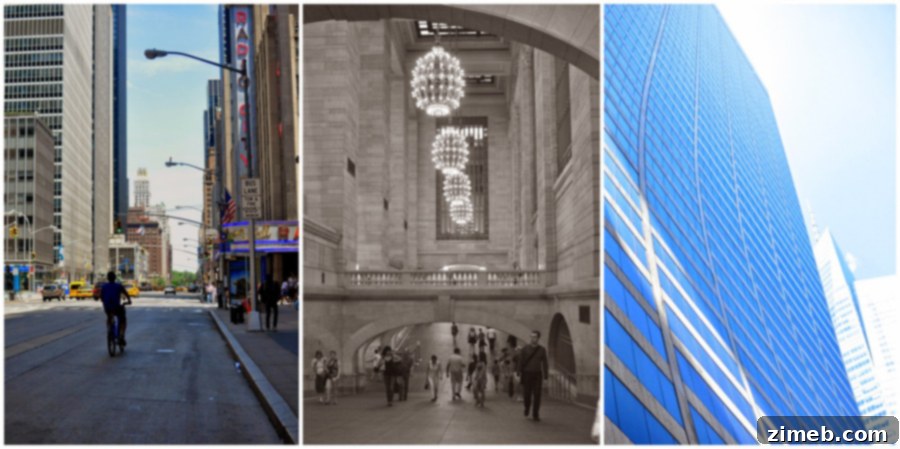
Following my New York adventure and several recent excursions into downtown Boston, my thoughts naturally gravitated towards the unique characteristics of the urban landscape. It’s a fascinating “jungle” in its own right – a symphony of constant hustle and bustle, the pervasive hum of noise, the stark, imposing lines of towering buildings, and endless miles of concrete sidewalks and bustling streets. This environment, while undeniably stimulating, presents distinct photographic opportunities. From capturing the intricate patterns formed by shadows on buildings to the fleeting expressions of passersby, the urban jungle is a canvas for those who observe closely.
While I genuinely adore city living – the culture, the energy, the convenience – I’ve always held the belief that it’s the pockets of nature within and around these metropolitan areas that truly make them livable and breathe life into the concrete expanse. These green sanctuaries offer a crucial balance, softening the hard edges and providing essential respite from the urban intensity. They are vital for well-being and, as I discovered, offer a completely different photographic challenge and reward.
Embracing the Green Jungle: Nature Photography on the Go
After a concentrated dose of the urban jungle, I found myself intensely craving the tranquility and refreshment of a green jungle. So, last weekend, I embarked on a short 15-minute drive outside of town to a beautiful nature reserve, where I happily spent several hours hiking. And once again, my trusty iPhone was my sole companion for capturing the breathtaking landscapes and intricate details of the natural world. It proved to be the quintessential hiking partner: not only did it provide essential GPS navigation, but its high-quality camera allowed me to document every discovery without any fear of damaging or losing a much larger, more expensive DSLR. Its lightweight design and ease of access meant I never missed a moment, whether it was a sweeping vista or a delicate wildflower.

After several glorious hours immersed in the green jungle on a beautiful July day, the stark contrast upon returning home was quite amusing. While I cherished the tranquility of nature, I was equally appreciative of the comforts of my urban apartment – especially the air conditioning and the absence of bugs! This experience solidified a long-held personal truth: “it’s the parks and greenery that make it possible for me to truly thrive in a city.” The ability to escape, even for a few hours, into a lush green space, to clear my head, and to simply explore, is often exactly what I need to recharge and maintain perspective.
Mastering Smartphone Photography: Tips for Every Environment
So, whether your next adventure takes you deep into the captivating concrete canyons of an urban jungle or transports you to the serene, untamed beauty of a natural wilderness, never underestimate the power of your phone. It’s an incredibly capable device, ready to help you capture the myriad forms of beauty – both constructed and natural – that continuously unfold around you. The key is to see the world through a photographer’s eye, even when your most advanced equipment is simply the smartphone in your hand. Here are some expanded tips to elevate your mobile photography game:
General Smartphone Photography Tips:
- Understand Your Camera’s Features: Take time to explore your phone’s camera app. Modern smartphones offer incredible features like Portrait Mode, Night Mode, Panorama, Burst Mode, and even manual controls for ISO and shutter speed. Experiment with these settings to see how they can enhance your shots in different conditions.
- Clean Your Lens: This might sound simple, but it’s probably the most overlooked tip! Your phone is constantly in your pocket or hand, picking up smudges and dust. A quick wipe with a soft cloth before taking a photo can dramatically improve clarity and sharpness.
- Focus and Exposure: Most phone cameras allow you to tap on the screen to set the focus point and adjust exposure. Use this to ensure your subject is sharp and that the lighting is just right. Often, tapping on your subject will automatically adjust the exposure to suit it.
- Embrace Natural Light: Good lighting is paramount in photography. Try to shoot during the “golden hour” (shortly after sunrise or before sunset) for warm, soft light, or on overcast days for diffused, even light. Avoid harsh midday sun which can create strong shadows and blown-out highlights.
- Composition is Key: Even with a phone, the rules of composition apply.
- Rule of Thirds: Imagine your screen divided into a 3×3 grid. Place your subject along these lines or at their intersections for a more balanced and engaging image.
- Leading Lines: Use natural or architectural lines (roads, fences, rivers) to draw the viewer’s eye towards your main subject.
- Symmetry and Patterns: Cities are full of symmetrical buildings and repeating patterns. Nature offers intricate patterns in leaves, flowers, or water. Seek these out for visually striking photos.
- Foreground, Midground, Background: Add depth to your photos by including interesting elements in all three planes.
- Don’t Be Afraid to Get Close: Fill the frame with your subject. Sometimes, getting physically closer reveals details that would be lost otherwise. This is especially true for macro shots in nature.
- Angle and Perspective: Experiment! Shoot from a low angle to make buildings look grander, or from a high angle to capture unique patterns on the ground. Crouch down for eye-level shots of pets or children. A fresh perspective can transform an ordinary scene.
- Utilize Editing Apps: Mobile editing apps like Snapseed, Adobe Lightroom Mobile, or VSCO offer powerful tools to fine-tune your images. Adjust exposure, contrast, saturation, sharpness, and crop. Don’t over-edit, but subtle enhancements can make a huge difference.
- Shoot More, Keep Less: Digital photography costs nothing per shot. Take many photos from different angles and choose the best ones later. Practice makes perfect, and reviewing your shots helps you learn what works and what doesn’t.
Specific Tips for Urban Photography with Your Phone:
- Capture the Vibe: Focus on elements that define the city – iconic landmarks, bustling street markets, public transport, unique architecture, or even graffiti art.
- People in Motion: Use burst mode to capture the dynamic movement of people, or try to frame subjects against a static background for contrast.
- Reflections: Look for reflections in windows, puddles, or shiny surfaces. They add an abstract and artistic element to city photos.
- Details Matter: Zoom in (optically, if your phone has it, or digitally with caution) on interesting textures, signs, street art, or unique architectural features.
Specific Tips for Nature Photography with Your Phone:
- Find the Light: In forests, look for dappled light filtering through trees. Near water, observe how light reflects and shimmers.
- Macro Shots: Get really close to flowers, insects, or dew drops. Many smartphones have surprisingly good macro capabilities.
- Landscapes: Use panorama mode for expansive views. Pay attention to the sky and clouds, as they can add dramatic flair.
- Textures and Patterns: The natural world is rich in textures – tree bark, moss, rock formations, water ripples. Isolate these for abstract beauty.
- Patience is a Virtue: Especially for wildlife (even small birds or squirrels), sometimes waiting for the perfect moment pays off.
What truly matters is embracing the camera you have in your hand at that precise moment. It’s not about the brand or the size of the lens, but about your ability to observe, compose, and capture the world as you see it. So, go out there, explore your surroundings – be it an urban canyon or a tranquil forest – and let your smartphone be your creative companion!
Want more expert photography tips & tutorials? Expand your skills with these resources:
Master Your Smartphone Camera: Rock Your Camera Phone

Street Photography Essentials: Tips for Capturing City Moments
To explore more of our content and discover where we’re linking today, please visit HERE.