
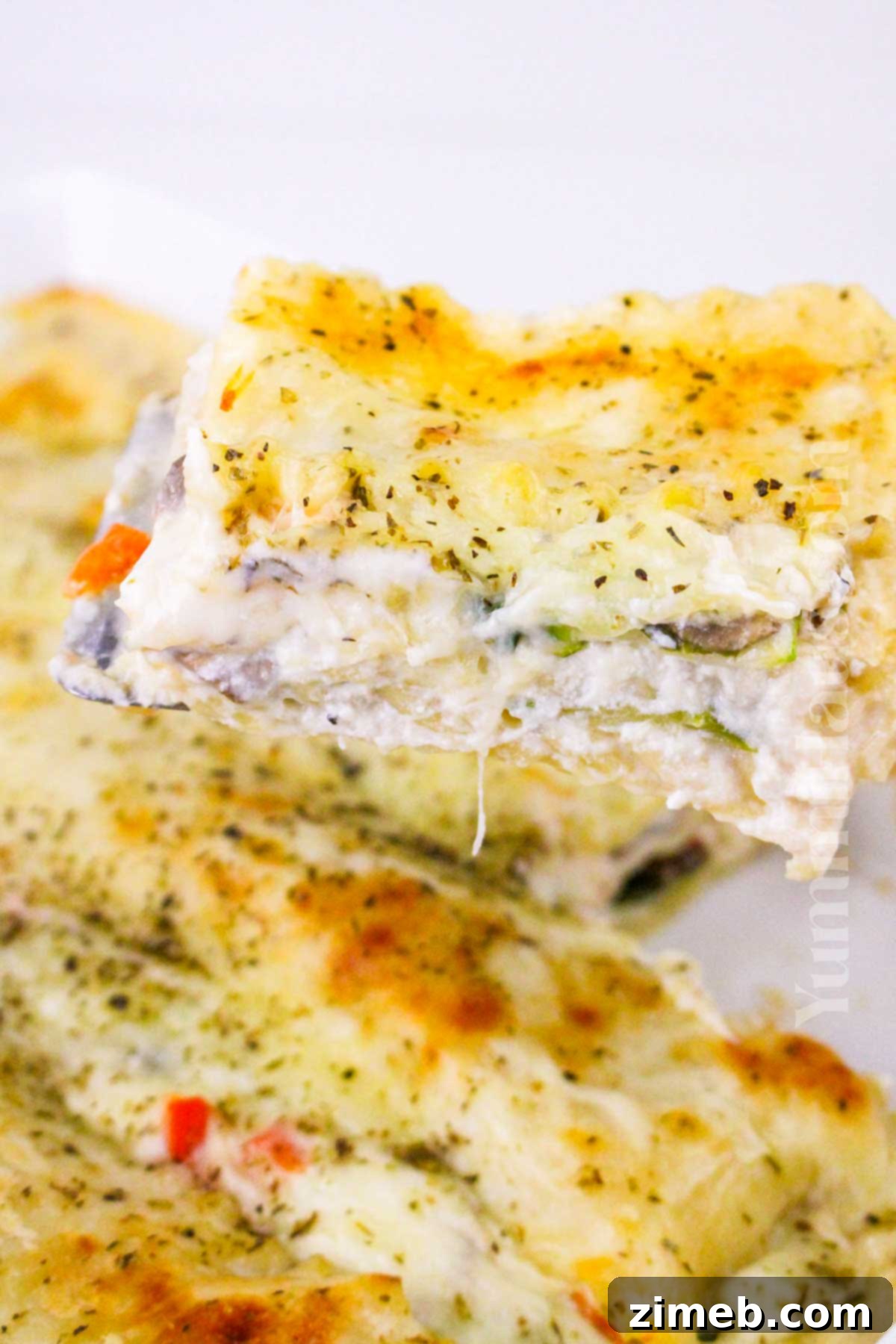
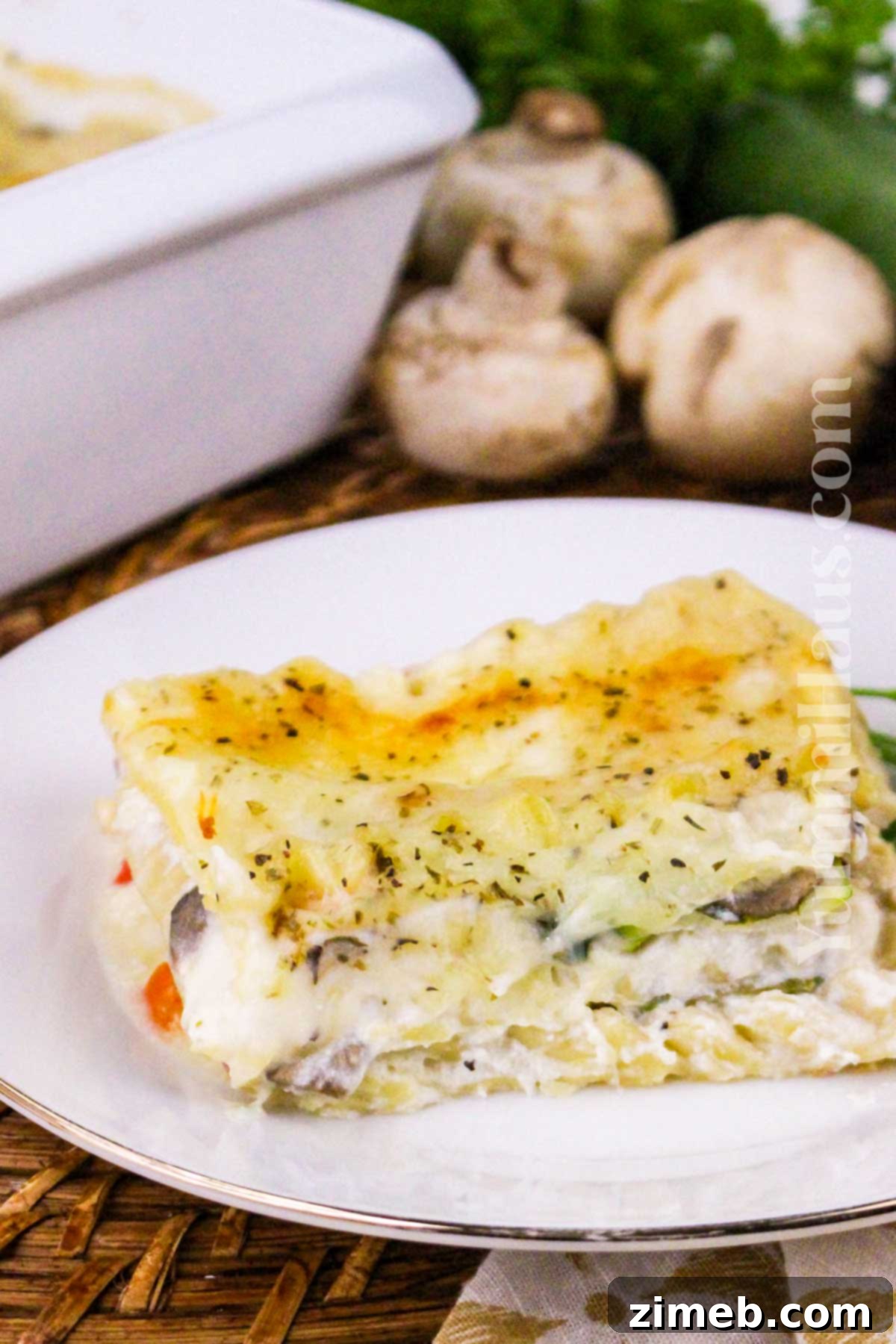
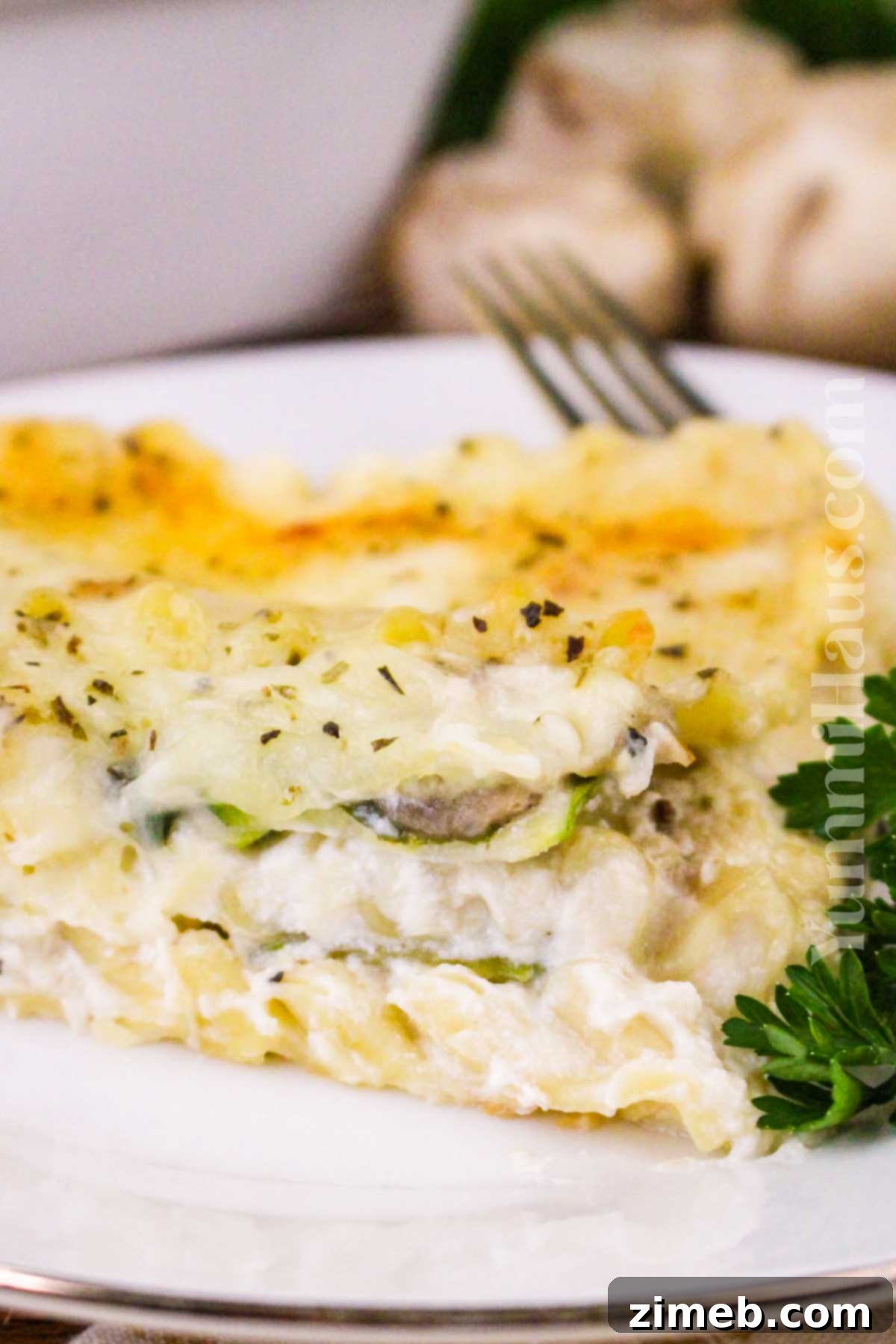
Welcome to a culinary journey where classic Italian comfort food meets a vibrant vegetarian twist! This recipe for **Vegetable Lasagna with Creamy White Sauce** is an absolute delight, featuring tender lasagna noodles layered generously with rich béchamel-style white sauce, gooey mozzarella, and creamy ricotta cheese, all complemented by a colorful array of fresh vegetables. It’s an unforgettable dish that promises to impress and satisfy, whether you’re hosting a gathering or simply craving a hearty, meat-free meal.
While traditional lasagna, with its robust meat sauce, holds a special place in many hearts, there are often occasions when a vegetarian option is desired – for guests with dietary preferences, for a lighter meal, or simply to enjoy the bounty of garden-fresh produce. The beauty of lasagna lies in its adaptability, and transforming it into a vegetarian masterpiece is surprisingly simple and incredibly rewarding. This particular rendition foregoes the heavy tomato base in favor of a luxurious white sauce, elevating the dish to a new level of creamy indulgence.
Gina’s Recipe Rundown: A Delectable Overview
Before diving into the full recipe, let’s take a moment to highlight what makes this Vegetable Lasagna with White Sauce truly exceptional:
Texture: Prepare for a symphony of textures! Each bite offers the satisfying chew of perfectly cooked lasagna noodles, harmoniously balanced with the lush, silky smoothness of the white sauce. The delicate crispness of baked cheese on top adds another layer of sensory pleasure, creating a truly comforting and engaging mouthfeel.
Taste: This dish is a celebration of fresh, clean flavors. The creamy white sauce, a rich béchamel-inspired creation, forms the perfect backdrop for the vibrant, tender vegetables. Melty mozzarella and ricotta cheese infuse every layer with a savory, milky richness, while a hint of garlic and onion powder in the sauce adds depth without overpowering the fresh ingredients. The combination is pure comfort, packed with delicious, well-rounded flavor that will have everyone asking for seconds.
Ease: Don’t let the elegance of this lasagna fool you – it’s remarkably straightforward to prepare. With simple ingredients and clear, step-by-step instructions, even novice cooks can achieve impressive results. The process involves making a smooth white sauce, preparing your chosen vegetables, layering everything thoughtfully, and then letting the oven do its magic. It’s a rewarding culinary experience that feels gourmet without the fuss.
Why I Love It: There’s so much to adore about this vegetarian lasagna. It’s an indulgent yet wholesome meal that brings warmth and satisfaction to any table. I especially cherish its comforting blend of tender vegetables, the creamy richness of the béchamel, and those irresistible layers of perfectly baked, cheesy goodness. It’s a soul-warming dish that feels special enough for holidays, yet simple enough for a delightful weeknight dinner. Plus, the leftovers are absolutely heavenly!
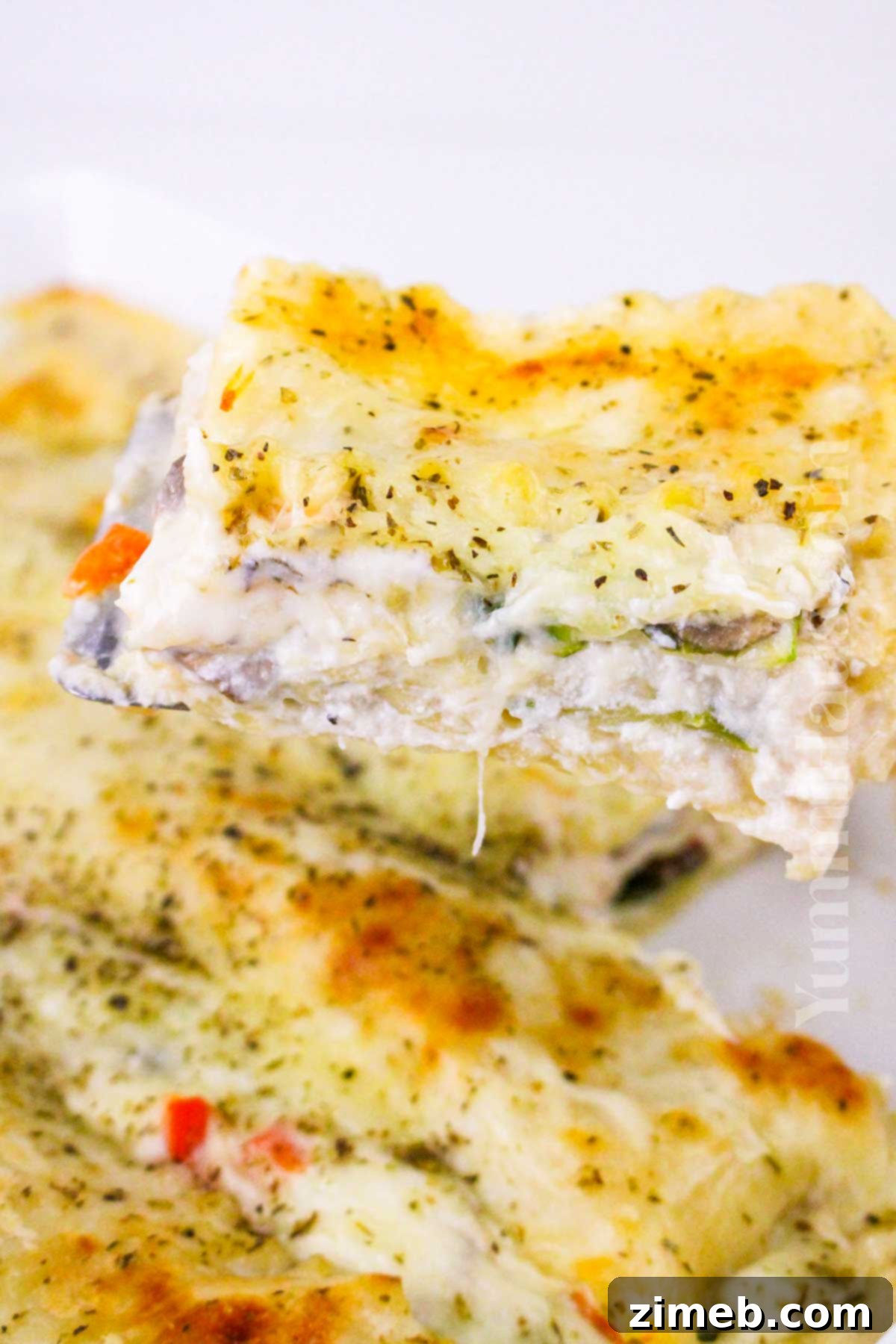
The hallmark of any truly exceptional lasagna, regardless of its fillings, is a rich and flavorful sauce. In this recipe, the creamy white sauce plays a starring role, providing a luxurious counterpoint to the fresh vegetables. This foundational element ensures that every bite is moist, savory, and utterly satisfying.
- Gina’s Recipe Rundown: A Delectable Overview
- Why You’ll Adore This Vegetarian Lasagna Recipe
- Important Ingredient Notes
- Béchamel vs. Our Cheesy White Sauce: Understanding the Difference
- Key Kitchen Equipment for Success
- Step-by-Step: How To Make Irresistible Vegetable Lasagna With White Sauce
- Storage and Make-Ahead Tips
- Substitutions & Creative Variations
- Expert Tips To Make The Best Vegetable Lasagna In White Sauce
- Addressing Your Top Questions
- How Do You Keep Vegetable Lasagna From Being Watery?
- Do You Put White Sauce On Every Layer Of Lasagna?
- What Vegetables Go With Lasagna?
- What Can I Add To My Lasagna To Make It Taste Better?
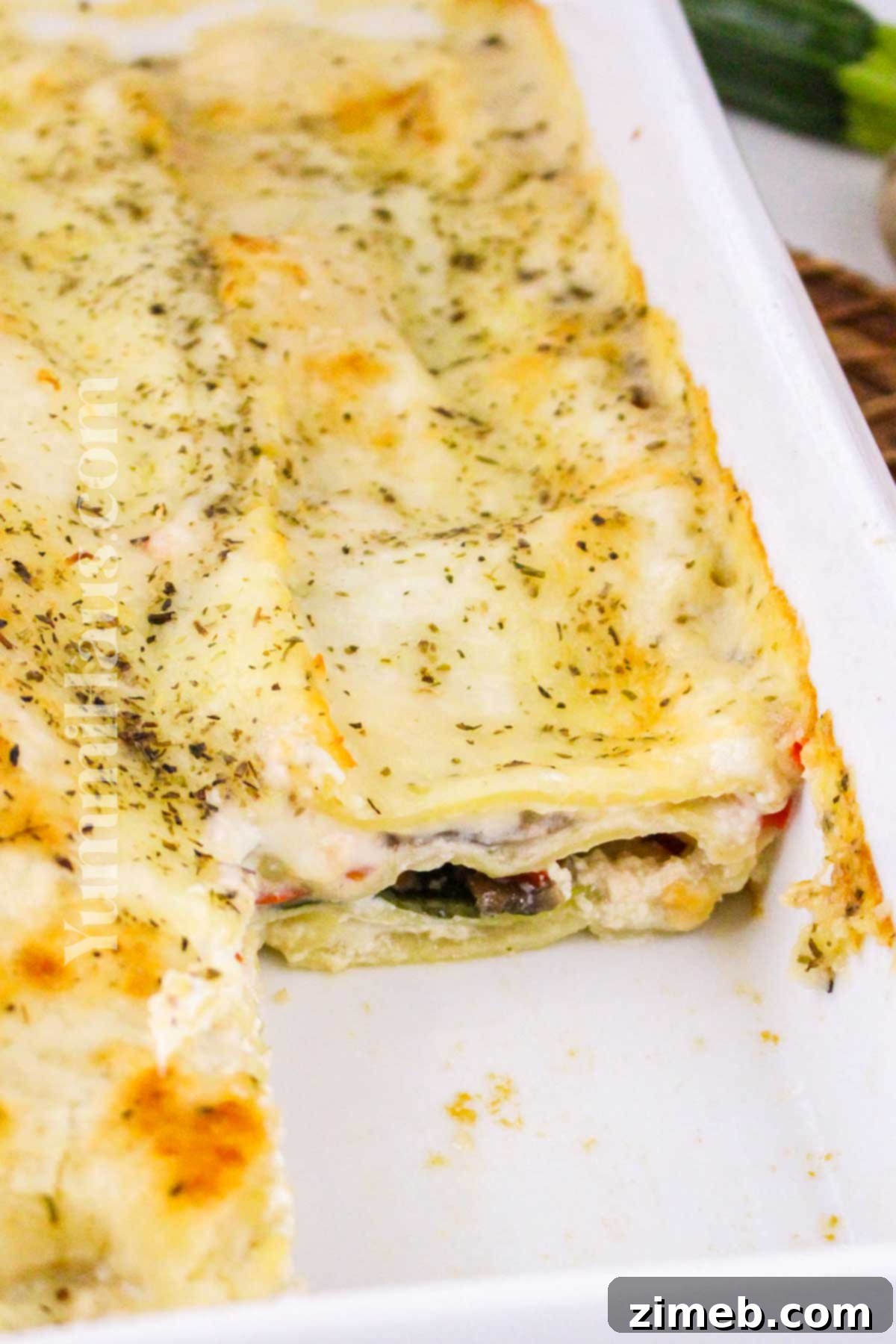
Why You’ll Adore This Vegetarian Lasagna Recipe
This Vegetable Lasagna with White Sauce isn’t just another dish; it’s a culinary experience designed for maximum enjoyment and minimal stress. Here’s why it’s destined to become a staple in your recipe collection:
- Effortlessly Easy & Delicious: This recipe is designed to be a straightforward vegetable lasagna that’s perfect for a quick vegetarian dinner. It’s simple enough for busy weeknights, yet elegant enough to impress guests or even entice picky eaters with its delicious flavors. Imagine perfectly cooked vegetables, tender lasagna noodles, and a rich, creamy white sauce generously seasoned with grated Parmesan cheese – it’s pure culinary bliss.
- Hearty and Satisfying: Despite being entirely vegetarian, this lasagna is incredibly hearty and filling. The combination of dense noodles, substantial vegetables, and three types of cheese ensures that every serving is deeply satisfying and leaves you feeling comfortably full. It’s a complete meal that doesn’t compromise on substance.
- Nutrient-Packed Goodness: Loaded with fresh veggies, this lasagna is a fantastic way to incorporate tons of nutrients and gut-friendly fiber into your diet. Zucchini, bell peppers, spinach, and mushrooms contribute essential vitamins and minerals, making this a healthy and wholesome meal you can feel good about enjoying.
- The Ultimate Holiday Centerpiece: With its beautiful layers and inviting aroma, this creamy vegetable lasagna makes an amazing dish for holiday tables or any special occasion. It offers a sophisticated, meat-free alternative that appeals to a wide range of palates and adds a touch of gourmet flair to your festive spread.
- Delicious Leftovers: If there’s one thing better than freshly baked lasagna, it’s leftover lasagna! The flavors deepen and meld overnight, making it an even more delectable meal the next day. This recipe yields generous portions, guaranteeing delightful lunches or dinners later in the week.
Please note: This recipe is designed to be vegetarian and does not specifically cater to vegan or gluten-free dietary needs.
Important Ingredient Notes
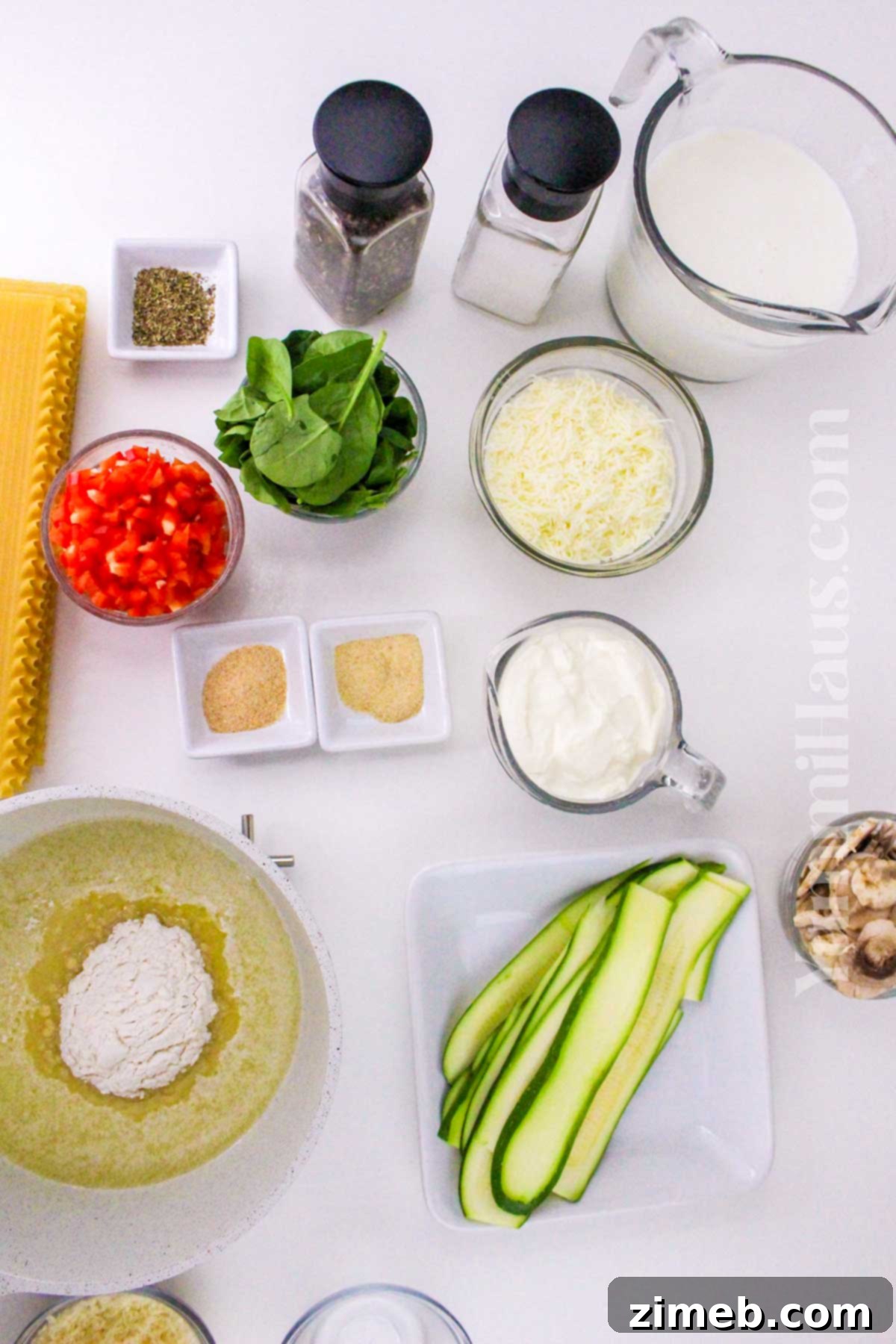
The success of this vegetable lasagna hinges on selecting quality ingredients. Here’s a closer look at what you’ll need and some tips for the best results:
Crafting the Creamy White Sauce
- Roux: Butter + All-Purpose Flour: This classic combination forms the base of your creamy white sauce. Use good quality butter for the best flavor. The roux should be cooked gently for about one minute to ensure the raw flour taste is eliminated, but it should remain light in color to keep the sauce pale and rich.
- Milk: Whole milk is recommended for the richest, creamiest sauce, contributing to a more decadent texture and flavor. However, you can use 2% milk for a slightly lighter option without sacrificing too much creaminess.
- Garlic Powder (or Fresh Garlic): I prefer using garlic powder in the white sauce as it integrates seamlessly, creating a smooth mixture free of any small lumps. If you opt for fresh minced garlic, be sure to cook it gently with the butter before adding the flour to prevent burning and to mellow its flavor.
- Onion Powder: Similar to garlic powder, onion powder provides a consistent, mellow onion flavor without altering the sauce’s texture.
- Salt and Freshly Ground Black Pepper to Taste: These are crucial for seasoning. Always taste your sauce and adjust as needed. Freshly ground black pepper offers a more potent and aromatic punch than pre-ground.
- Parmesan Cheese: For an unparalleled taste and texture, always recommend grating a block of fresh Parmesan cheese at home. Pre-shredded cheese often contains anti-caking agents that can prevent it from melting smoothly, potentially leading to a grainy or clumpy sauce. Freshly grated Parmesan melts beautifully and contributes a superior salty, nutty flavor.
Essential Lasagna Components
- Lasagna Noodles: You have a choice here:
- No-Boil Lasagna Noodles: These are incredibly convenient as they absorb moisture directly from the sauce and vegetables as the lasagna bakes, saving you a step.
- Regular Lasagna Noodles: If using these, follow package instructions to boil them in salted water until al dente. Drain them thoroughly and lay them flat on a baking sheet to prevent sticking before assembling the lasagna.
- Zucchini: A fantastic choice for its mild flavor and tender texture. Thinly slicing it ensures it cooks evenly within the lasagna layers.
- Bell Pepper: Adds a sweet crunch and vibrant color. Diced bell peppers integrate well throughout the dish. Any color works, but red, yellow, or orange will add more sweetness.
- Fresh Spinach Leaves: Spinach cooks down considerably and adds a wonderful earthy note and a boost of nutrients. Make sure to use fresh leaves for the best texture.
- Mushrooms: Sliced mushrooms contribute a savory, umami depth to the vegetable medley. Cremini or white button mushrooms are excellent choices.
- Ricotta Cheese: This provides the classic creamy, slightly tangy layer in lasagna. For the richest flavor and best consistency, whole milk ricotta cheese is highly recommended.
- Mozzarella Cheese: The quintessential melting cheese for lasagna, providing that desirable gooey stretch. Shredded mozzarella is perfect for even distribution and optimal melt.
- Italian Seasoning: A blend of dried herbs like oregano, basil, thyme, and rosemary that instantly infuses the lasagna with authentic Italian flavor.
Béchamel vs. Our Cheesy White Sauce: Understanding the Difference
Many people wonder about the distinction between a generic “white sauce” and the classic French béchamel. While they share a common lineage, there are key differences that make our cheesy white sauce perfect for this vegetable lasagna.
Béchamel sauce is one of the five “mother sauces” of classical French cuisine. Traditionally, it’s a simple, elegant sauce made from a roux (cooked butter and flour) and milk, seasoned with salt, white pepper, and often a pinch of nutmeg. Its purpose is to provide a creamy, unctuous base without overpowering other flavors. It’s known for its silky smooth texture and mild, buttery taste, and it typically does not contain cheese or other strong herbs beyond nutmeg or thyme.
Our cheesy white sauce, while undeniably inspired by the béchamel technique, takes a delightful Italian-American twist. It begins with the same foundational roux and milk, creating that familiar creamy body. However, instead of just nutmeg and thyme, we incorporate garlic powder and onion powder for an aromatic boost, and crucially, we stir in Parmesan cheese directly into the sauce. This addition transforms it from a simple béchamel into a richer, more flavorful, and inherently savory sauce that perfectly complements the vegetables and other cheeses in the lasagna. The Parmesan cheese melts into the sauce, making it even creamier and adding a distinct salty, umami depth that’s ideal for a hearty pasta dish like lasagna.
So, while they both start with a roux and milk, our white sauce is a more robust, cheesy, and herb-forward variation specifically tailored to enhance the overall flavor profile of this comforting vegetable lasagna.
Key Kitchen Equipment for Success
Having the right tools can make your lasagna-making experience even smoother. Here’s what you’ll need:
- Saucepan: Essential for preparing your creamy white sauce. A medium-sized, heavy-bottomed saucepan will ensure even heat distribution and prevent scorching.
- 9×13″ Baking Dish or Foil Lasagna Pan: This standard size is perfect for a family-sized lasagna. Ensure it’s at least 2.5 inches deep to accommodate all the delicious layers without overflowing during baking. A foil pan can be convenient for make-ahead or potluck dishes.
- Rubber Spatula: Indispensable for stirring the roux, whisking the sauce, and gently spreading the cheese and vegetable layers in your baking dish. Its flexibility helps ensure every bit of sauce is incorporated and spread evenly.
- Aluminum Foil: Used to cover the lasagna during the initial baking phase, which helps the noodles cook through and prevents the top from browning too quickly.
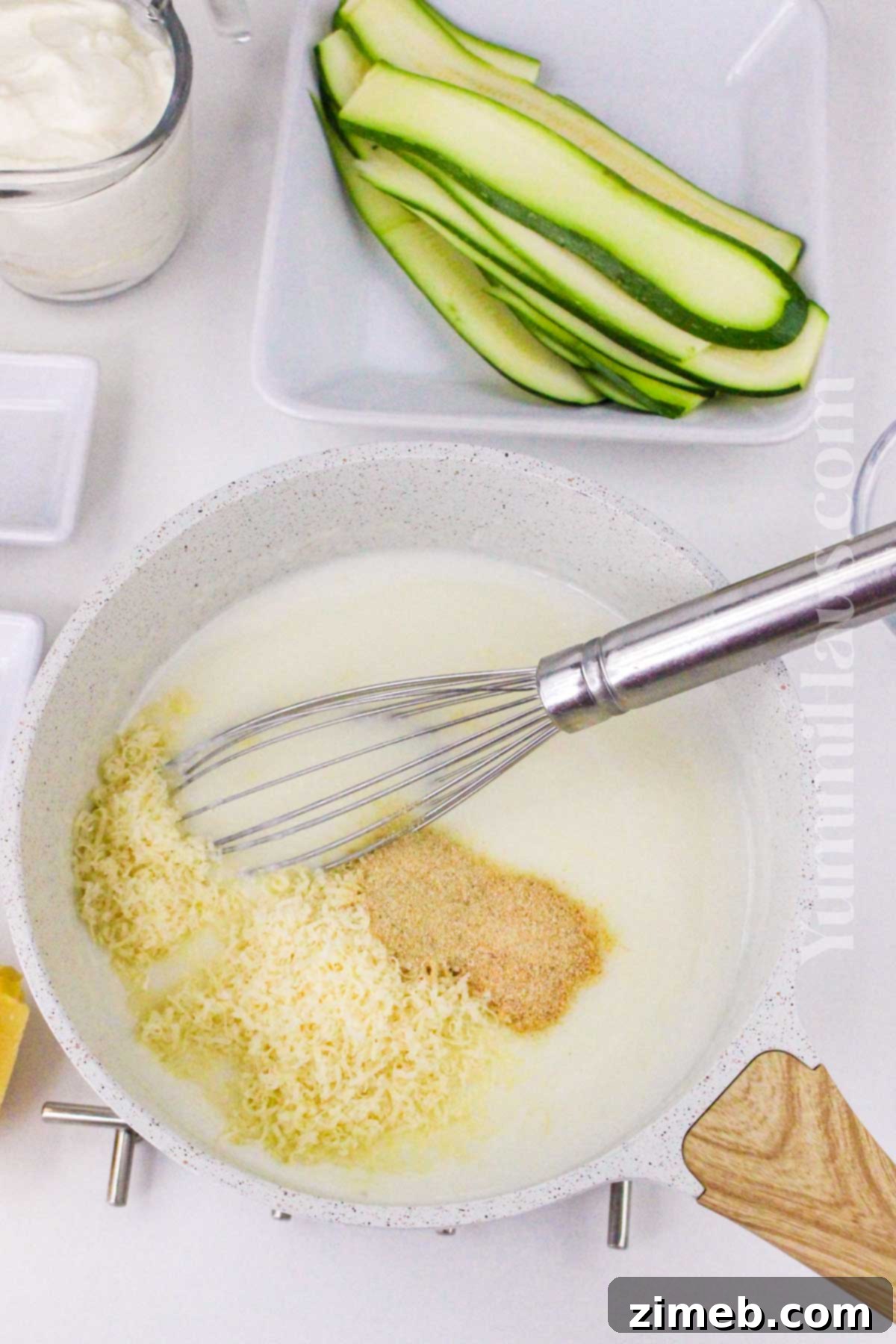
Step-by-Step: How To Make Irresistible Vegetable Lasagna With White Sauce
1: Master the Creamy White Sauce
- Melt Butter: Begin by melting the butter in your saucepan over medium heat. Allow it to fully liquefy and slightly shimmer.
- Create Roux: Stir in the all-purpose flour. Whisk continuously for about 1 minute to cook out the raw flour taste. The mixture, known as a roux, should be a pale, golden-yellow color, not browned. This step is crucial for thickening your sauce.
- Whisk in Milk: Gradually whisk in the milk, a little at a time, ensuring no lumps form. Continue to stir gently as the sauce comes to a simmer and begins to thicken to a luscious, creamy consistency. This usually takes a few minutes.
- Season and Finish: Stir in the garlic powder, onion powder, salt, freshly ground black pepper, and the grated Parmesan cheese. Continue stirring until the cheese is fully melted and incorporated, and the sauce is perfectly smooth. Immediately remove the sauce from the heat to prevent it from becoming too thick.
*Note on Noodles: If you are using regular lasagna noodles (not the no-boil variety), boil them in generously salted water according to package instructions until they are al dente. Drain them well and lay them flat, slightly overlapping, on a baking sheet or clean surface to prevent them from sticking together while you prepare the other components.
2: Layering Your Lasagna to Perfection
- Preheat Oven: Preheat your oven to 375°F (190°C).
- Prepare Baking Dish: Lightly spray a 9×13-inch baking dish with cooking oil or olive oil. This prevents sticking and aids in easy serving.
- First Sauce Layer: Spread a thin, even layer of your prepared white sauce on the bottom of the baking dish. This prevents the first layer of noodles from sticking and provides a moist base.
- Assemble Layers: Begin the layering process:
- Place 3 cooked (or no-boil) lasagna noodles over the sauce.
- Evenly spread half of the ricotta cheese mixture over the noodles. For easier spreading, you can lightly mix the ricotta with some spinach leaves beforehand.
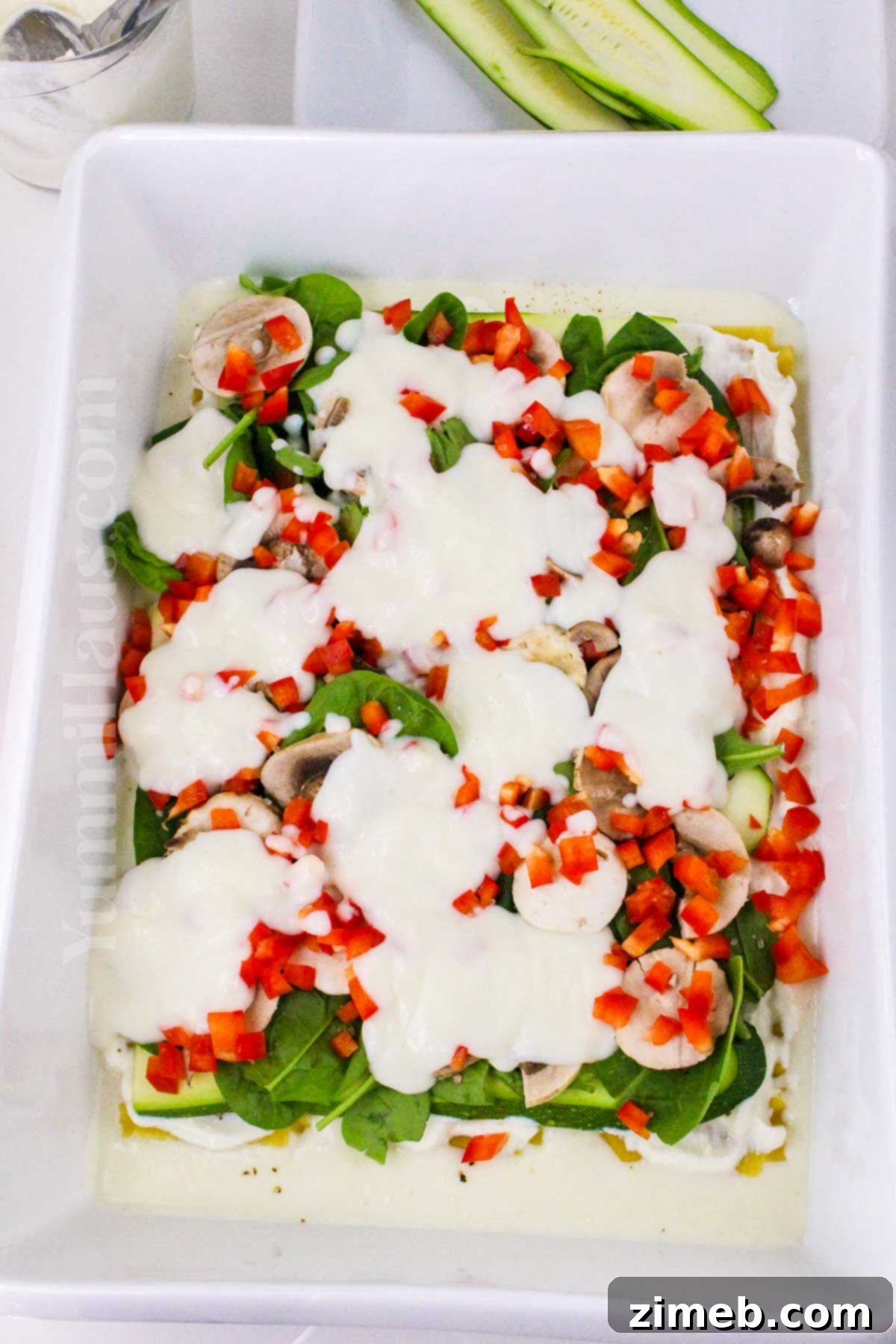
- Distribute half of your prepared vegetables (zucchini, bell pepper, spinach, mushrooms) over the ricotta layer.
- Spoon approximately one-third of the remaining white sauce over the vegetables.
- Repeat these layers once more with the remaining noodles, ricotta, vegetables, and another third of the white sauce. Most lasagnas will have 3 to 4 distinct layers.
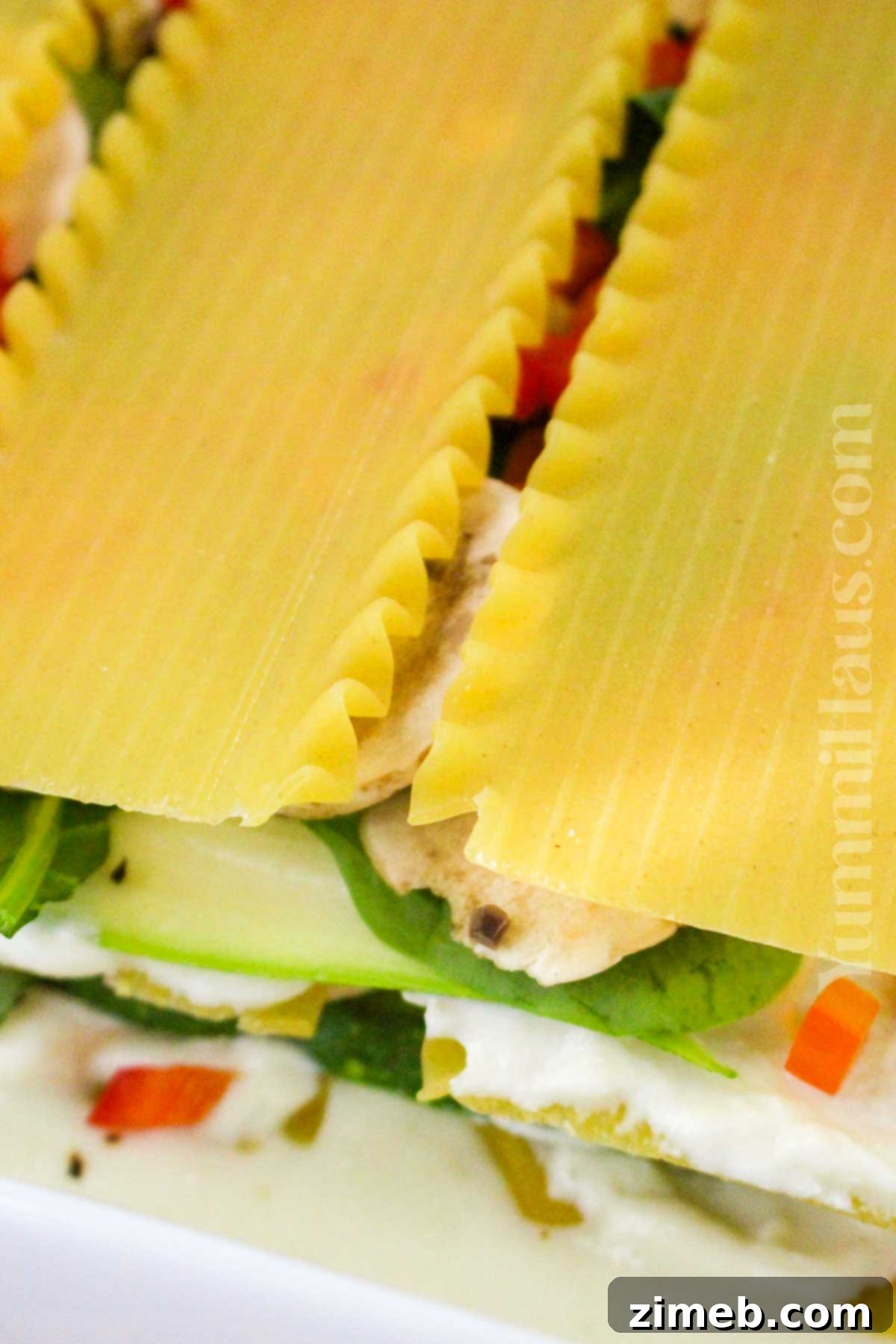
- Final Layer: Finish with a final layer of 3 lasagna noodles. Top this layer generously with the remaining white sauce, ensuring the noodles are well covered.
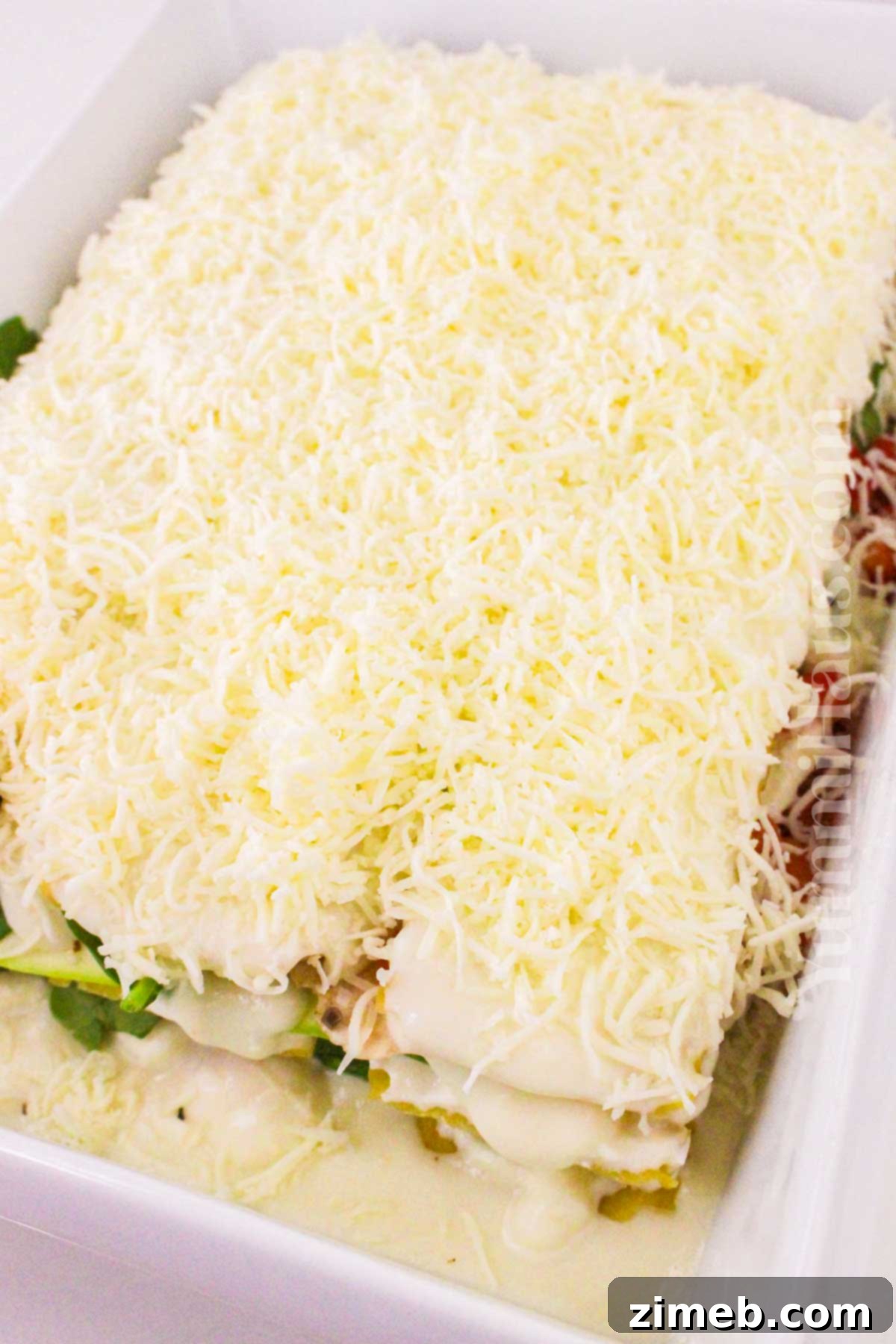
- Add Cheesy Topping: Sprinkle the shredded mozzarella cheese evenly over the top layer. For an extra touch of richness, you can dollop small amounts of any remaining ricotta cheese over the mozzarella. Finish by dusting with Italian seasoning.
- Advance Preparation: For convenience, you can assemble the entire vegetable lasagna up to 24 hours before baking. Simply cover it tightly with plastic wrap or aluminum foil and store it in the refrigerator. Allow it to come closer to room temperature for about 30 minutes before baking for more even cooking.
3: Baking for Golden Perfection
- Initial Bake (Covered): Cover the baking dish tightly with aluminum foil. Bake for 25 minutes. Covering helps steam the noodles and vegetables, ensuring they cook through and remain moist.
- Final Bake (Uncovered): Remove the foil and continue baking for an additional 15-20 minutes. During this stage, the cheese on top will become beautifully bubbly, melted, and develop a golden-brown hue.
- Rest Before Serving: Once baked, remove the lasagna from the oven and let it rest for at least 10 minutes before slicing and serving. This crucial resting period allows the layers to set, the sauces to thicken, and makes for cleaner, more intact slices.
Storage and Make-Ahead Tips
This Vegetable Lasagna with White Sauce is perfect for meal prepping or enjoying as leftovers. Proper storage ensures its deliciousness for days to come:
- Refrigerating Leftovers: Store any leftover veggie lasagna in an airtight container in the fridge for 2-3 days. To reheat, you can place individual portions in the microwave, or for best results, reheat in the oven at 350°F (175°C) in a covered baking dish until warmed through. A skillet can also be used for smaller portions, covered, over medium-low heat.
- Freezing Uncooked Lasagna: If you’re planning ahead, assemble all the layers in a freezer-safe foil pan or baking dish. Wrap it tightly with multiple layers of plastic wrap and then aluminum foil to prevent freezer burn. It can be frozen for 2-3 months.
- To cook from frozen: Bake, covered with foil, for an additional 20-30 minutes beyond the original cook time (so, about 45-55 minutes covered, then uncover and bake for 15-20 minutes).
- Alternatively, thaw overnight in the refrigerator and then bake as usual according to the recipe instructions.
- Freezing Cooked Lasagna: Allow the baked lasagna to cool completely. Wrap it tightly in a few layers of plastic wrap and then aluminum foil. Freezing individual portions is ideal for quick reheating. The sauce might become slightly grainy once thawed and reheated, but the flavor will still be fantastic. Reheat in the oven at 350°F (175°C) for about 15 minutes, or until hot.
- Freezing White Sauce Separately: The white sauce mixture can also be prepared in advance and stored separately. It will last in an airtight container in the fridge for 2-3 days, or in the freezer for 2-3 months. Thaw frozen sauce in the refrigerator overnight and gently reheat on the stovetop, whisking occasionally, adding a splash of milk if needed to regain desired consistency.
Substitutions & Creative Variations
This Vegetable Lasagna with White Sauce is a versatile canvas, open to countless modifications to suit your taste and what you have on hand. Don’t hesitate to get creative!
- Expand Your Veggie Palette: While zucchini, bell pepper, spinach, and mushrooms are fantastic, the possibilities are endless. Consider adding thinly sliced yellow squash, nutrient-dense kale, tender broccoli florets, vibrant carrots, meaty eggplant slices (pre-salt and drain to remove bitterness and excess water), sweet white beans, or even green peas. Roasting or sautéing tougher vegetables like carrots or eggplant beforehand can enhance their flavor and ensure they cook tenderly within the lasagna.
- Explore New Cheese Mixtures: The cheese blend is key to lasagna’s appeal. For the soft cheese layer, besides ricotta, you could use creamy fontina cheese or even small-curd cottage cheese (drained well). For the melting cheese, experiment with sharp cheddar cheese for a tangier note, mild gouda for a smooth, nutty flavor, or Pepperjack cheese if you desire a spicy kick. These can be used alongside or in place of mozzarella and Parmesan or Pecorino Romano.
- Alternative Sauce Bases: While our cheesy white sauce is a star, you can certainly switch it up. Replace it with a rich homemade or store-bought tomato sauce for a more classic lasagna profile. To enhance the existing white sauce, you could incorporate chicken broth or vegetable broth for added savory depth, a splash of dry white wine for complexity, or a touch of heavy cream for extra richness. Store-bought Alfredo sauce can also be used as a convenient shortcut – just elevate it with your favorite seasonings.
- Bring the Heat: If you enjoy a bit of spice, a pinch of red pepper flakes, a dash of cayenne pepper, or a few drops of your favorite hot sauce can add a delightful kick to the white sauce or the vegetable layers.
- Make it Non-Vegetarian: If you’re cooking for mixed preferences, it’s easy to adapt. Simply add some cooked, shredded chicken, browned Italian sausage, or ground beef to the vegetable layers for a heartier, meat-inclusive version. You could even use cheese ravioli instead of traditional lasagna noodles for a fun twist!
- Add More Texture: For a delightful crunch, consider adding a topping of crushed cracked pepper croutons or panko breadcrumbs. Simply mix them with a little melted butter and sprinkle over the top layer of cheese before baking uncovered. They’ll brown beautifully and provide a satisfying textural contrast.
Expert Tips To Make The Best Vegetable Lasagna In White Sauce
Achieving a perfect vegetable lasagna every time is within reach with these expert insights:
Pre-Cook Your Veggies for Best Flavor and Texture: While the recipe can accommodate raw vegetables, for an even deeper flavor and to prevent excess moisture, consider pre-cooking all your veggies. Sautéing them in a pan with a little olive oil, onions, and minced garlic before adding them to the lasagna layers will concentrate their flavors and give them a head start on tenderness. Just be sure to drain any excess liquid if you do this step, especially with watery vegetables like zucchini and mushrooms.
Noodle Hydration is Key for No-Boil Lasagna: The convenience of no-boil noodles is undeniable, but they rely heavily on the moisture from the sauce and vegetables to cook properly in the oven. The primary concern is ensuring they have enough liquid to soften evenly and avoid dry, chewy spots. This is why generous amounts of sauce between layers are crucial. If you’ve pre-cooked and thoroughly drained your vegetable mixture, you might want to add a tiny bit more white sauce to each layer to compensate. However, in my experience with this specific recipe, the combination of our creamy white sauce and fresh, un-drained vegetables (like spinach which releases water) has consistently resulted in perfectly cooked, tender noodles without any dryness.
Don’t Skimp on Sauce Between Layers: To reiterate the point above, ensure you spread a good amount of white sauce over each layer of noodles and vegetables. This not only aids in cooking the noodles but also contributes to the overall creaminess and flavor of the finished lasagna, preventing any dry sections.
Addressing Your Top Questions
How Do You Keep Vegetable Lasagna From Being Watery?
Preventing a watery lasagna is a common concern, especially with moisture-rich vegetables. Here are key strategies:
- Drain Cooked Vegetables Thoroughly: If you choose to pre-cook vegetables like mushrooms, zucchini, bell peppers, or eggplant, it is absolutely essential to drain them well. Many vegetables release a lot of liquid when cooked. Squeeze excess water from spinach after wilting. For eggplant and zucchini, salting them and letting them sit for 30 minutes before patting dry can draw out significant moisture.
- Be Mindful of Frozen Veggies: If using frozen vegetables, thaw them completely and squeeze out as much water as possible before adding them to the lasagna.
- Drain Ricotta Cheese: While less common, some ricotta cheeses can be quite watery. If yours seems particularly loose, you can drain it by placing it in a fine-mesh sieve lined with cheesecloth over a bowl for 30 minutes to an hour.
- Rest the Lasagna: This is arguably the most crucial step. Once baked, always let the lasagna rest for a minimum of 10-15 minutes (or even longer) before slicing. This allows the hot liquids to reabsorb into the noodles and the cheese and sauce to set and thicken, resulting in cleaner slices and a less watery final product.
Do You Put White Sauce On Every Layer Of Lasagna?
Yes, absolutely! For the best, most delicious lasagna experience, you should put white sauce on virtually every layer. Lasagna is at its best when it’s lusciously saucy, moist, and flavorful throughout, not dry. This means you need to divide your white sauce mixture evenly among all the layers. You should typically start by spreading a thin layer of white sauce on the bottom of your baking dish to prevent sticking and ensure a moist base. Then, as you build the layers of noodles, cheese, and vegetables, you’ll add a generous portion of white sauce between each, ensuring the noodles have enough moisture to cook and every bite is infused with creamy goodness. Finish the top layer of noodles with the remaining sauce before adding the final cheese topping.
What Vegetables Go With Lasagna?
When it comes to side dishes, vegetable pairings for lasagna are truly endless, offering a delightful way to complement the richness of the main course. Lasagna pairs beautifully with simple, fresh greens or lightly cooked vegetables. Think of vibrant, crisp options that can balance the creamy, hearty nature of the lasagna.
Excellent veggie side dishes include:
- Sautéed Green Beans: Quick to prepare and offer a crisp texture and fresh flavor.
- Steamed or Roasted Broccoli: A classic, healthy choice. Roasting brings out its natural sweetness.
- Garlic Zucchini: Lightly sautéed zucchini with garlic is a perfect match.
- Grilled or Steamed Asparagus: Elegant and adds a touch of sophistication.
- Sautéed Spinach: A simple, flavorful side that echoes the spinach in the lasagna.
- Cooked Mushrooms: Sautéed in butter and herbs, they add an earthy depth.
- Simple Side Salad: A crisp green salad with a light vinaigrette is always a refreshing counterpoint.
Ultimately, almost any vegetable that is good for sautéing, roasting, or grilling can be an excellent accompaniment to lasagna.
What Can I Add To My Lasagna To Make It Taste Better?
To truly elevate the flavor of your lasagna, beyond the core ingredients, consider these additions:
- Aromatics: Freshly minced garlic and diced onions, sautéed until translucent before adding them to your vegetables or sauce, provide a deeper aromatic foundation.
- Herbs: Beyond Italian seasoning, fresh herbs like finely chopped basil, oregano, or parsley stirred into the ricotta mixture or sprinkled over layers can brighten the flavors significantly.
- Spices: A pinch of nutmeg in the white sauce is a classic béchamel touch that adds a subtle warmth. A tiny bit of fennel seeds (crushed lightly) can bring a sweet, anise-like note.
- Wine: A splash of dry white wine can be deglazed in the pan after sautéing vegetables, adding a complex depth to the overall flavor.
- Lemon Zest: A touch of finely grated lemon zest sprinkled into the ricotta or over the finished lasagna can provide a bright, fresh counterpoint to the richness.
- Quality Cheese: Using freshly grated, high-quality Parmesan or Pecorino Romano makes a noticeable difference in the overall savory profile.
If you loved crafting this comforting Vegetable Lasagna with White Sauce, you’re sure to enjoy these other quick and delightful vegetarian-friendly meals too. Explore each recipe below for more culinary inspiration!
Check out this recipe
Check out this recipe

Check out this recipe
Check out this recipe
More Great Veggie Recipes
Roasted Fall Vegetables
Instant Pot Asparagus
Carrots and Cauliflower Soup
Squash Casserole Recipe
CONNECT WITH YUMMI HAUS!
Be sure to follow me on my social media, so you never miss a post!
Substack, FB, Pinterest, IG, Email Subscription

Rate this Recipe
Vegetable Lasagna in White Sauce
Ingredients
White Sauce
- 4 tablespoons butter
- ¼ cup all-purpose flour
- 3 cups milk
- 1 teaspoon garlic powder
- 1 teaspoon onion powder
- salt and pepper to taste
- ½ cup Parmesan cheese – grated
Lasagna
- 9 lasagna noodles no-boil variety or cooked according to package instructions
- 1 zucchini thinly sliced – medium
- 1 bell pepper diced – medium
- 1 cup spinach leaves
- 1 cup mushrooms sliced
- 1 cup ricotta cheese
- 1 cup mozzarella cheese – shredded
- 1 teaspoon Italian seasoning
Instructions
-
Melt the butter in a saucepan over medium heat.
-
Stir in the flour to create a roux, cooking for about 1 minute.
-
Whisk in the milk, continuing to stir until the sauce thickens.
-
Stir in the garlic powder, onion powder, salt, pepper, and Parmesan cheese, stirring until smooth. Remove from heat.
-
Preheat the oven to 375°F (190°C).
-
Spray a 9×13 baking dish with cooking oil.
-
Spread a thin layer of the white sauce in the bottom of the prepared dish.
-
Place 3 lasagna noodles on top, followed by half of the ricotta cheese, half of the vegetables, and a third of the white sauce. Repeat the layers with the remaining noodles, ricotta, vegetables, and sauce.
-
Finish with the last layer of noodles and top with the remaining white sauce.
-
Add the mozzarella cheese and Italian seasoning on top.
-
Cover with foil and bake for 25 minutes.
-
Remove the foil and bake for an additional 15-20 minutes, or until the cheese is bubbly and golden.
-
Let rest for 10 minutes before serving.
Nutrition
Nutritional information for the recipe is provided as a courtesy and is approximate. Please double-check with your own dietary calculator for the best accuracy. We at Yummi Haus cannot guarantee the accuracy of the nutritional information given for any recipe on this site.