
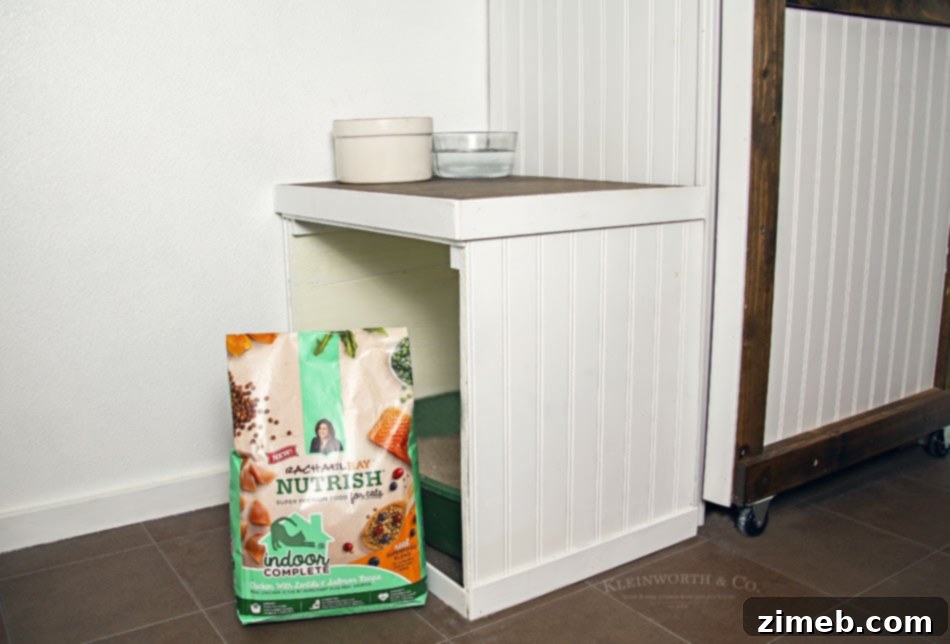
Transform your home and enhance your cat’s comfort with a DIY Litter Box Cabinet. This innovative solution not only discreetly conceals unsightly litter boxes but also provides a dedicated, clean space for your pet’s food and water. If you’re searching for an elegant way to hide your cat’s litter box, this project offers an exceptional and highly functional option.
As pet parents, our furry friends are cherished members of our families. We constantly strive to integrate their needs seamlessly into our home environment and lifestyle. A common challenge for indoor cat owners is the presence of the litter box. While an absolute necessity, it’s rarely a visually appealing addition to any room. We often find ourselves trying to tuck it away in a corner, behind furniture, or in a utility space like the laundry room, hoping it will go unnoticed. However, even in designated “pet zones,” a visible litter box can detract from the overall decor and cleanliness of the space. This was precisely the dilemma we faced. Our cats live strictly indoors, making a litter box indispensable, but I yearned for a more integrated and aesthetically pleasing solution than simply hiding it in the laundry room. During our recent laundry room makeover, we embarked on a project to build a custom DIY Litter Box Cabinet. This endeavor not only maximized space and functionality but also elevated the room’s aesthetic, making the litter box virtually disappear while ensuring our cats’ comfort and privacy.
Creating a Stylish and Functional Hidden Cat Litter Box Cabinet
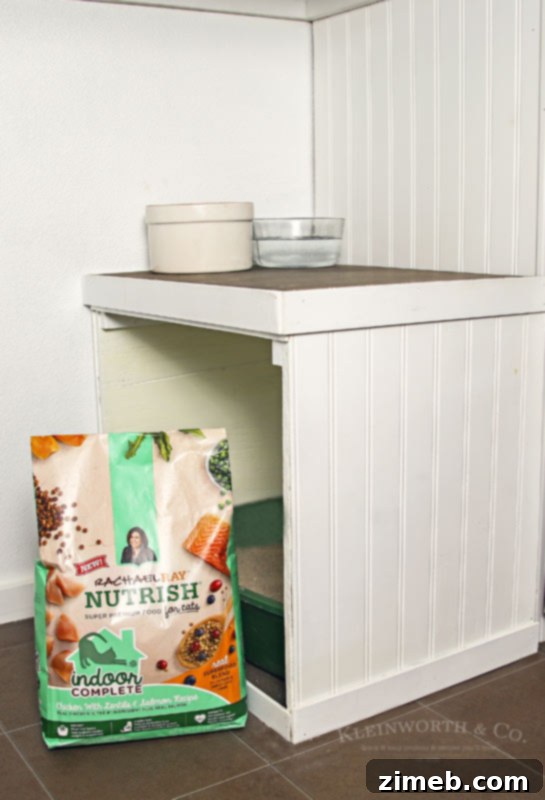
One of the most appealing aspects of this custom cat cabinet is its multi-functional design, ingeniously doubling as a dedicated feeding station. Cats, by nature, are curious and enjoy elevated vantage points, and providing them with a comfortable perch for their meals truly enhances their happiness. This raised feeding area serves a practical purpose too: it keeps their food and water bowls safely away from the litter box, preventing any accidental kicks of litter into their fresh water or kibble. Our cats absolutely adore dining from their elevated spot, and seeing their contentment brings us immense satisfaction. We’ve successfully created a solution that not only meets our practical needs for a concealed litter box but also significantly contributes to the well-being and joy of our beloved feline companions.
The Benefits of a Hidden Litter Box Solution
Beyond simply hiding the litter box, a well-designed DIY litter box cabinet offers a multitude of advantages for both pet owners and their cats. Firstly, it dramatically improves the aesthetics of your home. No longer will you have an unsightly plastic box disrupting your interior design; instead, you’ll have a piece of custom furniture that blends seamlessly with your decor. Secondly, these cabinets are excellent for odor control. While no solution completely eliminates odors without regular cleaning, an enclosed space, especially one with a bit of ventilation, can significantly contain unpleasant smells. Thirdly, a hidden litter box minimizes litter tracking. The entry and exit points, particularly with top-entry designs or baffles, can help knock litter off paws before your cat ventures out into the room, leading to a cleaner floor. Fourthly, it provides cats with a sense of privacy and security, which is essential for their comfort and can encourage consistent litter box use. Lastly, for households with other curious pets or small children, a cabinet keeps the litter box safely out of reach, preventing unwanted investigations or accidental ingestion of litter.
Designing Your Custom Cat Litter Box Cabinet
The key to a successful DIY litter box cabinet lies in careful planning and customization. Since litter boxes vary widely in size, it’s crucial to take precise measurements of your specific litter box. We recommend adding at least two inches to both the width, depth, and height of your litter box to ensure ample space for the box itself, easy removal for cleaning, and proper ventilation. Consider the type of litter box you use: standard, high-sided, or automated. Each might require slight adjustments to your design. For materials, common choices include plywood, MDF (medium-density fiberboard), or even reclaimed wood for a rustic look. Plywood offers durability and strength, while MDF provides a smooth finish ideal for painting. We opted for beadboard panels on the exterior sides of our cabinet. Not only did this choice perfectly complement our laundry room’s aesthetic, but the textured surface also added another layer of visual concealment, helping the cabinet blend in even more effectively.

Step-by-Step Construction Guide for Your DIY Litter Box Cabinet
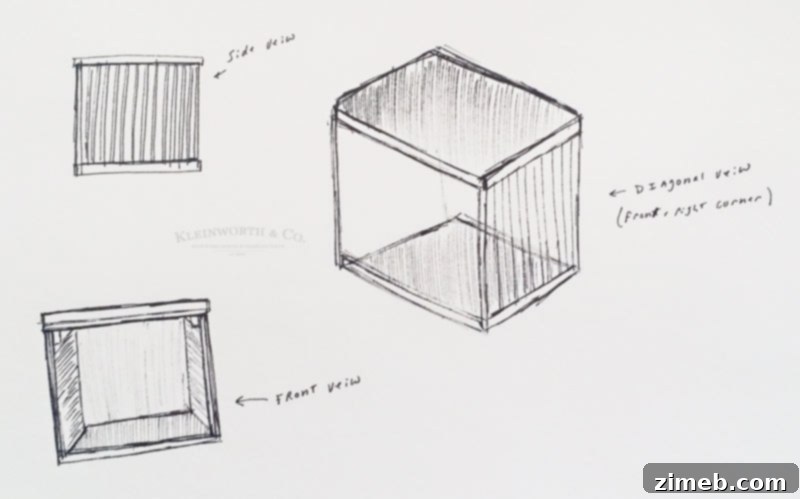
Building your own custom litter box cabinet is a rewarding project that requires basic woodworking skills and tools. The fundamental structure is a three-sided box with an open side for cat access. Here’s a more detailed outline of the process:
- Gather Your Materials and Tools: You’ll need wood panels (plywood, MDF, or beadboard as desired), wood glue, screws, a drill, a saw (circular saw or jigsaw), sandpaper, wood filler, primer, and paint (or stain).
- Measure and Cut Panels: Based on your expanded litter box dimensions, cut the bottom, top, two side panels, and a back panel. If you’re incorporating a front entry, you’ll also need pieces for the front trim or a frame. For side entry, one side panel will have the cutout.
- Create the Cat Entry Point: Decide on the entry location (side, front, or top). For a side or front entry, mark and cut an archway or circular opening large enough for your cat to comfortably enter and exit. Smooth the edges with sandpaper. For a top entry, the top panel would have a cutout, often requiring a different internal structure to prevent the litter box from moving.
- Assemble the Base Structure: Begin by attaching the side panels to the bottom panel using wood glue and screws. Ensure all connections are secure and square.
- Add the Back Panel: Secure the back panel to the assembled sides and bottom.
- Install the Top Panel: The top panel can be permanently affixed or designed to hinge open for easy cleaning access. For a hinged top, attach hinges to the back edge of the top panel and the top edge of the back panel of the cabinet.
- Finishing Touches: Fill any screw holes with wood filler, sand all surfaces smooth, then prime and paint or stain your cabinet to match your home’s decor. This step is crucial for both aesthetics and protecting the wood from moisture.
- Consider Ventilation: If odor is a major concern, you can drill a few small holes in the back or side panels, or even install a small battery-operated fan, though regular cleaning remains paramount.
While I haven’t included exact measurements here, as every litter box size varies, the principle remains consistent: measure your litter box and add a comfortable margin (at least 2 inches on all sides) to ensure a perfect fit and ease of use. Our sketch illustrates the basic concept of a three-sided box with an open access point.
Choosing the Right Fuel: Rachael Ray™ Nutrish® Indoor Complete Chicken with Lentils & Salmon Recipe
As much as we love thoughtful DIY projects for our pets, their health and well-being ultimately come down to what we feed them. That’s why we’re big fans of Rachael Ray™ Nutrish® Indoor Complete Chicken with Lentils & Salmon Recipe. The emphasis on natural ingredients is incredibly important to us. Just as we strive to eliminate processed foods from our own diets, we believe our pets, who are truly part of our family, deserve delicious and healthy food made with wholesome components. This particular recipe features real U.S. farm-raised chicken as its number one ingredient, always, complemented by real salmon. Lentils are included to help support a healthy metabolism and maintain an optimal body weight, a common concern for indoor cats. Additionally, it boasts nutrient and fiber-rich dandelion greens and pumpkin. Dandelion greens naturally contain prebiotics, which are vital for aiding healthy digestion. The formula is further enhanced with cranberries and blueberries, known for their antioxidants that help support a robust immune system. All these ingredients are safely cooked in the USA, ensuring the highest quality standards. Crucially, Nutrish recipes are formulated without ground corn, wheat, soy, or poultry by-product meal, aligning with our commitment to providing our cats with the purest and most beneficial nutrition possible.
Beyond the Bowl: The Philosophy Behind Nutrish®
Our appreciation for Nutrish® extends beyond its quality ingredients to the brand’s commendable philosophy and charitable efforts. In 2014, with the expert assistance of cat nutrition specialists at Ainsworth Pet Nutrition, Rachael Ray launched Nutrish super-premium food for cats. The brand’s dry and wet cat food recipes are crafted using simple, wholesome ingredients, consistently featuring real meat or fish, and are deliberately free from poultry by-product meal or artificial fillers. What truly sets Nutrish apart, however, is its commitment to giving back. A significant portion of the proceeds from every Nutrish sale is generously donated to The Rachael Ray Foundation, which operates through Rachael’s Rescue. This incredible initiative provides crucial support to animals in need. By December 2016, Rachael’s Rescue had already contributed over $17.5 million dollars to various pet charities and other organizations dedicated to animal welfare. These funds provide essential resources such as food, medical supplies, vital treatments, and more for countless animals awaiting their forever homes or requiring urgent care. Choosing Nutrish not only provides superior nutrition for our own pets but also contributes directly to improving the lives of other animals, making it a choice we feel good about on multiple levels.
Embracing Your Next DIY Pet Project
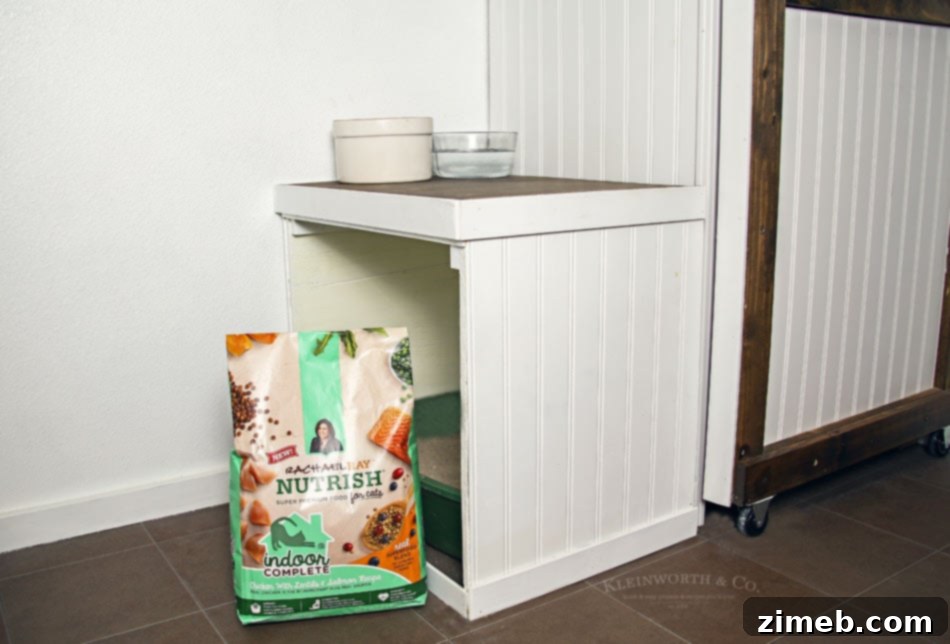
We hope this detailed guide inspires you to take on your own DIY Litter Box Cabinet project. This custom cat cabinet is more than just a place to hide a litter box; it’s a thoughtful piece of pet furniture that enhances your home’s aesthetic, improves hygiene, and provides a comfortable, private space for your beloved feline. It’s an investment in both your home’s appeal and your cat’s well-being. So, what are your thoughts? Are you ready to build your very own stylish and functional concealed litter box solution for your cherished cats?
This is a sponsored conversation written by me on behalf of Rachael Ray Nutrish. The opinions and text are all mine.