
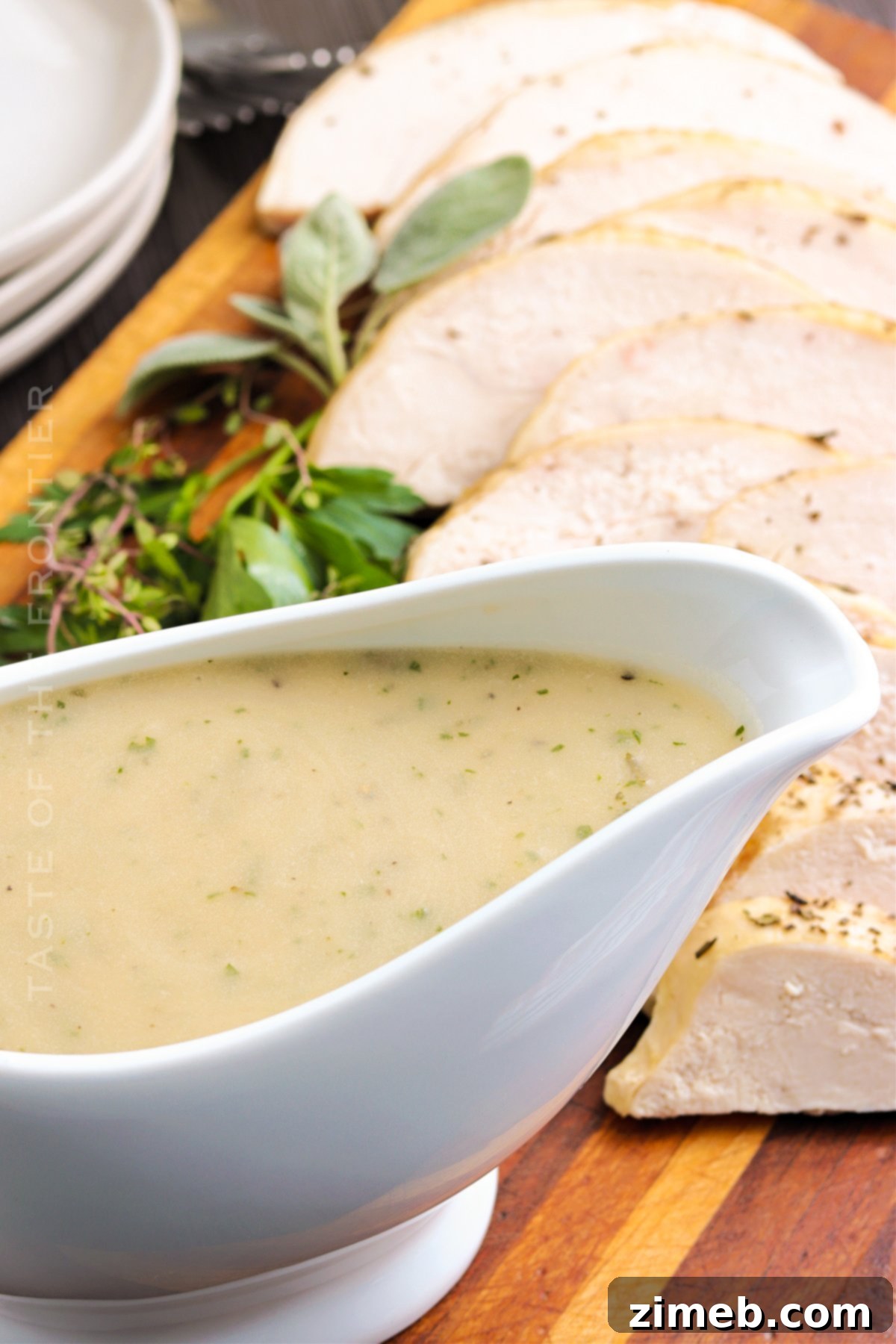
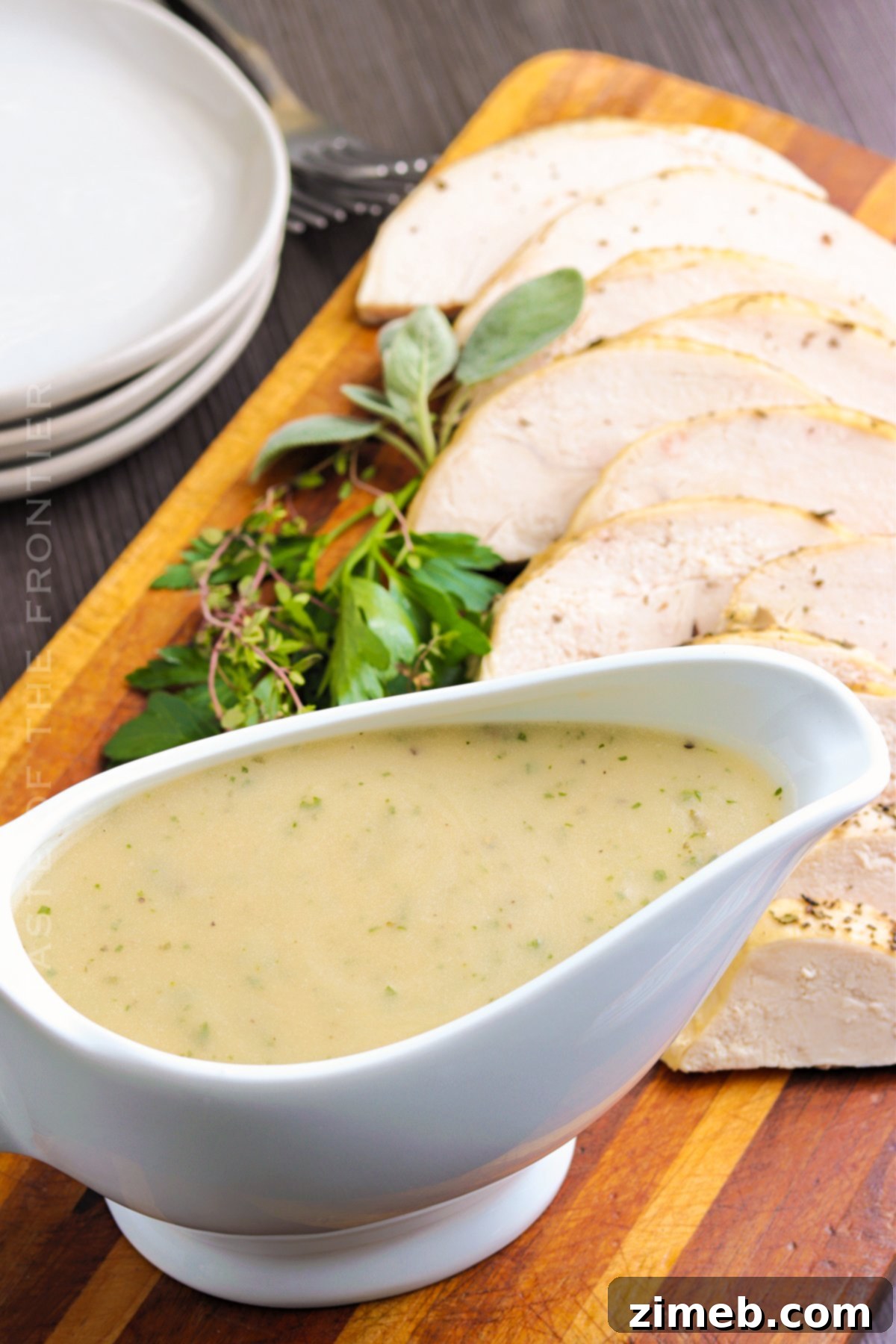
This comprehensive guide will show you the ultimate, easiest way to make delicious homemade Turkey Gravy. It’s the perfect, essential side dish for your Thanksgiving, Christmas, or any festive holiday meal, truly elevating your turkey dinner.
Turkey gravy is a timeless holiday staple, renowned for its rich flavor and ability to bring together all the components of a festive feast. While often associated with the grandeur of Thanksgiving, this versatile sauce is surprisingly simple to prepare from scratch and can be customized to suit any palate. Our recipe focuses on using savory pan drippings, combined with a classic roux, to create a velvety, full-bodied gravy that will impress your guests.
Beyond the basic drippings and flour, you have endless opportunities to infuse your gravy with personal flair. Consider adding fresh herbs like sage or rosemary, finely diced sautéed onions, or earthy mushrooms to deepen its complexity. This recipe is designed to be straightforward and accessible, making it ideal for both seasoned home cooks and those new to the art of gravy making. So, roll up your sleeves, and let’s embark on the journey to crafting the perfect turkey gravy!
PIN THIS RECIPE TO SAVE FOR LATER
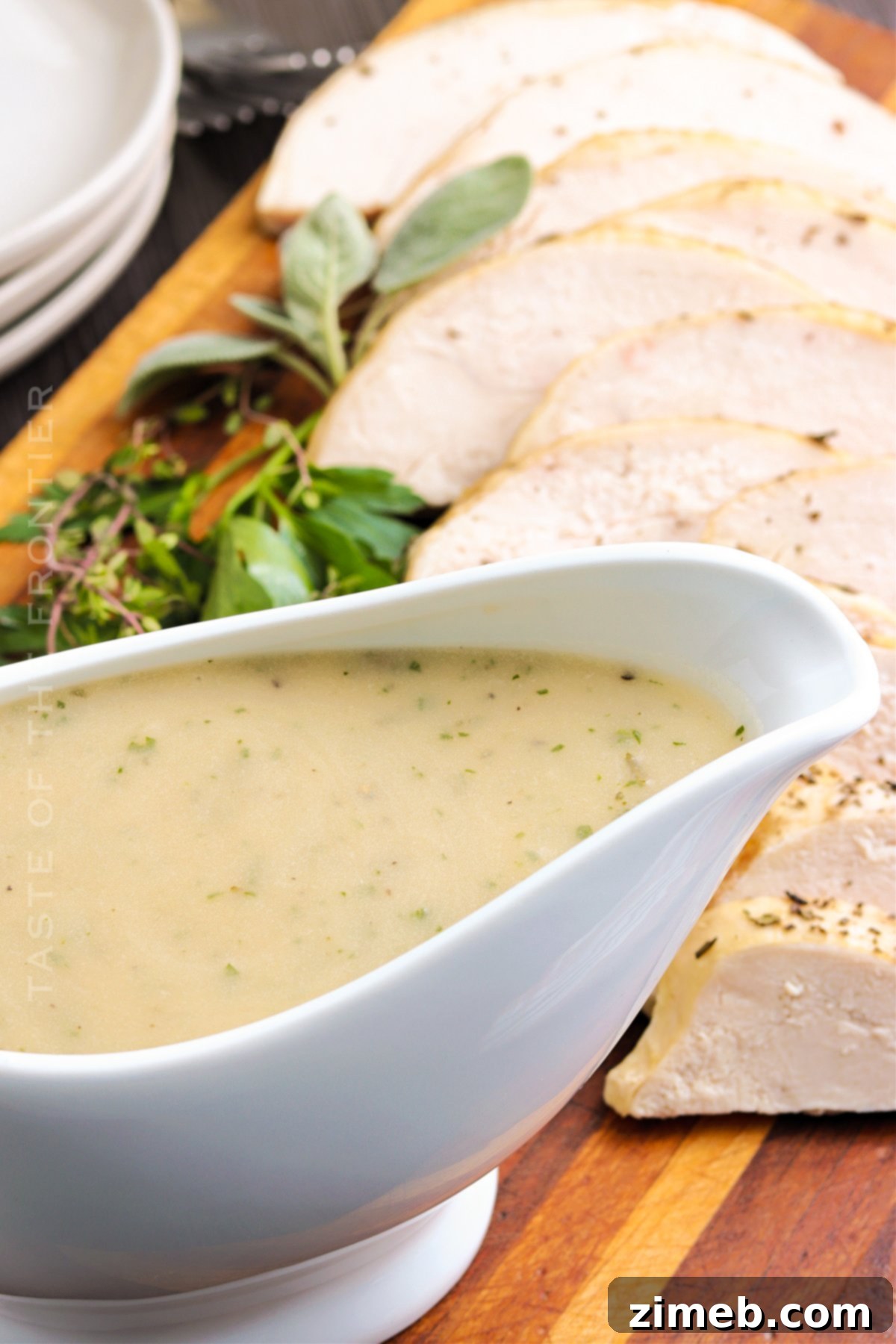
If there’s one element that can transform a holiday dinner from memorable to absolutely unforgettable, it’s a perfectly crafted gravy. This incredibly easy turkey gravy recipe is not only delicious but also remarkably convenient, as it can be prepared ahead of time. This allows you to alleviate some of the pressure on busy Thanksgiving or Christmas Day, letting you focus on other aspects of your grand meal.
However, don’t feel limited to the holiday season for enjoying this incredible gravy. Its rich, savory notes make it a fantastic accompaniment to a multitude of dishes throughout the year. We often find ourselves making this recipe for weeknight meals, elevating everything from roasted chicken to mashed potatoes and even humble meatloaf. Once you discover how effortlessly simple it is to create from scratch, you’ll never reach for those pre-packaged gravy mixes filled with additives and preservatives again. This homemade version is genuinely superior in flavor and freshness!
Homemade Turkey Gravy: Your Go-To Recipe
Frequently Asked Questions About Turkey Gravy
What exactly is turkey gravy?
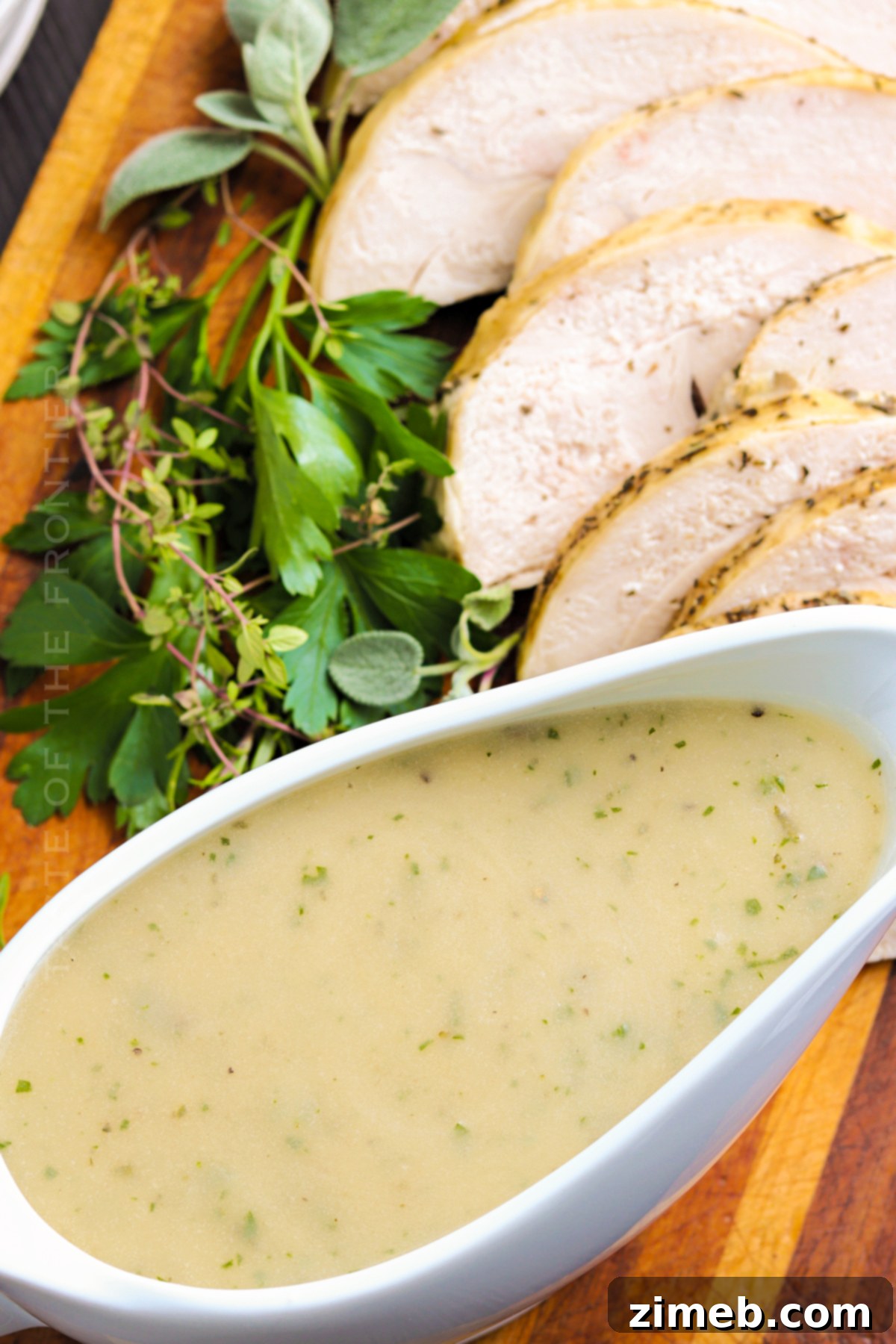
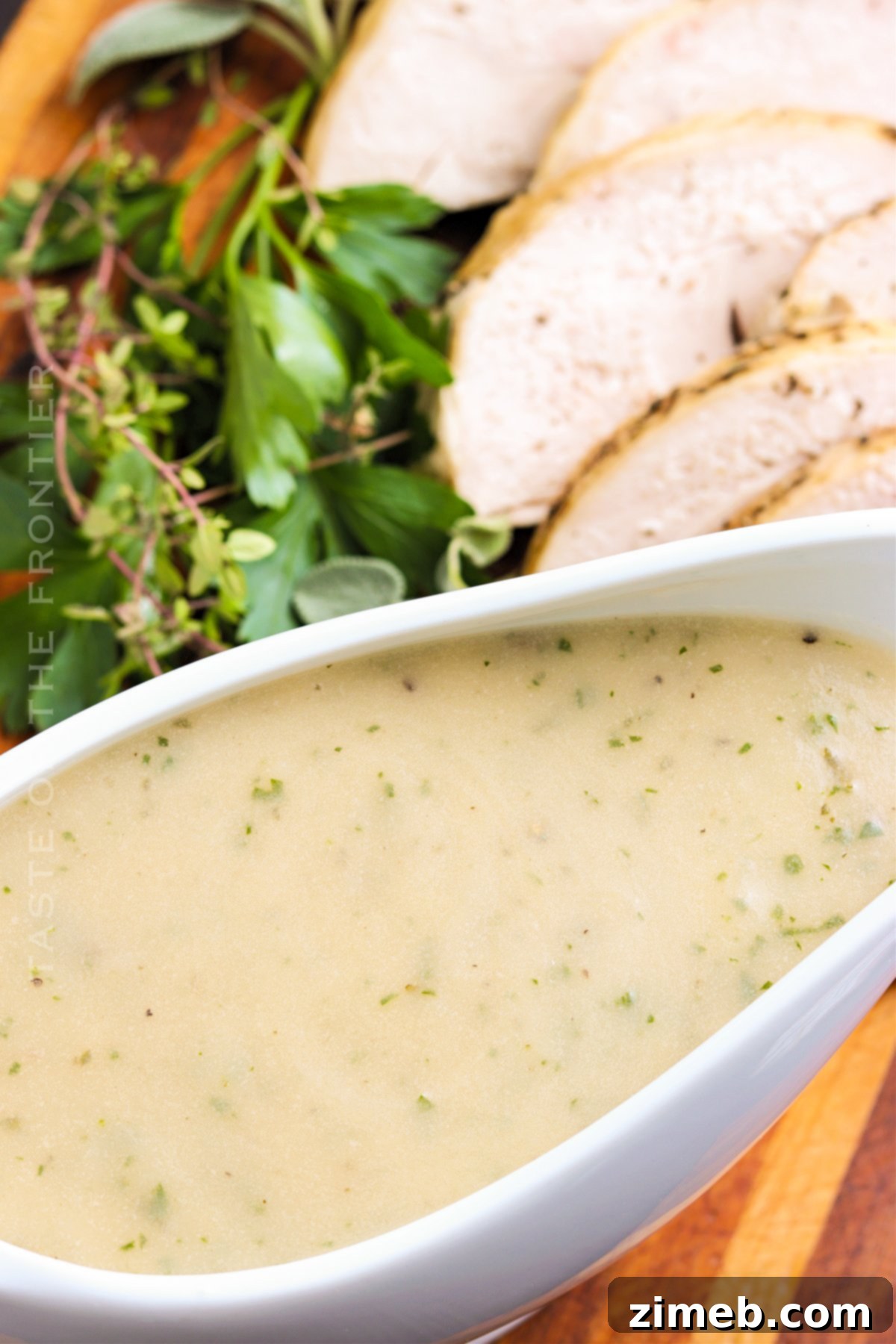
Turkey gravy is a flavorful sauce typically made from the drippings collected from a roasted turkey, often thickened with a roux (a mixture of fat and flour) and sometimes enhanced with turkey or chicken stock. It’s designed to complement the turkey, adding moisture, richness, and depth of flavor to every bite. The beauty of homemade gravy lies in its ability to capture the unique essence of your holiday bird, making it an irreplaceable component of the meal.
Why should I make my gravy in advance?
Preparing your gravy ahead of Thanksgiving or Christmas Day is a brilliant strategy to streamline your cooking process and minimize last-minute stress. Not only does it save crucial time when your kitchen is bustling with activity, but it also ensures your gravy is perfectly seasoned and attains its ideal consistency without rush. While the freshest drippings are ideal for flavor, making a base ahead of time allows you to perfect the roux and foundational liquid. You can then simply whisk in fresh drippings from your roasted turkey on the day of, enriching the pre-made gravy with unparalleled fresh flavor. This hybrid approach offers both convenience and peak deliciousness.
When considering making gravy in advance, a few key points ensure success. Firstly, prioritize fresh ingredients for the base. High-quality stock, fresh herbs, and good butter will lay a strong foundation for a flavorful gravy. Secondly, cook your gravy completely before storing it. This not only ensures optimal taste but also inhibits bacterial growth, making it safe for storage. Lastly, proper storage is paramount. Transfer the cooled gravy to an airtight container and refrigerate for up to three days, or freeze for up to three months. When you’re ready to serve, gently reheat it in a small saucepan over low heat or in the microwave, stirring frequently until it’s hot and bubbly. If it’s too thick, a splash of warm broth or water will bring it back to perfection.
What is a Roux and why is it important for gravy?
A roux (pronounced “roo”) is a fundamental thickening agent in classical French cooking, essential for creating silky smooth sauces, stews, and gravies like our turkey gravy. It’s a simple yet powerful combination of fat and flour, cooked together over heat. The traditional roux recipe calls for equal parts by weight (or often by volume for simplicity in home cooking) of fat and flour – for example, 1/4 cup butter to 1/4 cup all-purpose flour. The fat coats the starch molecules in the flour, preventing them from clumping and allowing them to disperse evenly when liquid is added.
There are different types of roux, distinguished by how long they are cooked: a white roux, cooked only for a minute or two until bubbly, provides minimal flavor but maximum thickening power; a blond roux, cooked a few minutes longer until light golden, adds a subtle nutty flavor; and a brown roux, cooked until deeply brown, imparts a rich, intense flavor but has less thickening ability. For turkey gravy, a white or blond roux is typically preferred as it thickens effectively while preserving the delicate flavor of the turkey drippings.
Since our turkey gravy uses a roux, it’s important to remember that it will naturally continue to thicken as it cools. If your gravy becomes too thick after resting, don’t fret! Simply whisk in a little more warm turkey or chicken stock, or even some hot water, a tablespoon at a time, until you achieve your desired pouring consistency just before serving.
Gravy made with pan drippings often requires minimal additional seasoning. The concentrated pan juices from a roasted turkey are typically packed with natural salt, pepper, and complex flavors. It’s always best to taste-test your gravy once it’s fully cooked and thickened before adding any extra salt or pepper. This ensures you don’t over-season and allows the natural flavors to shine.
Crafting Turkey Gravy From Scratch
Simple Turkey Gravy Ingredients
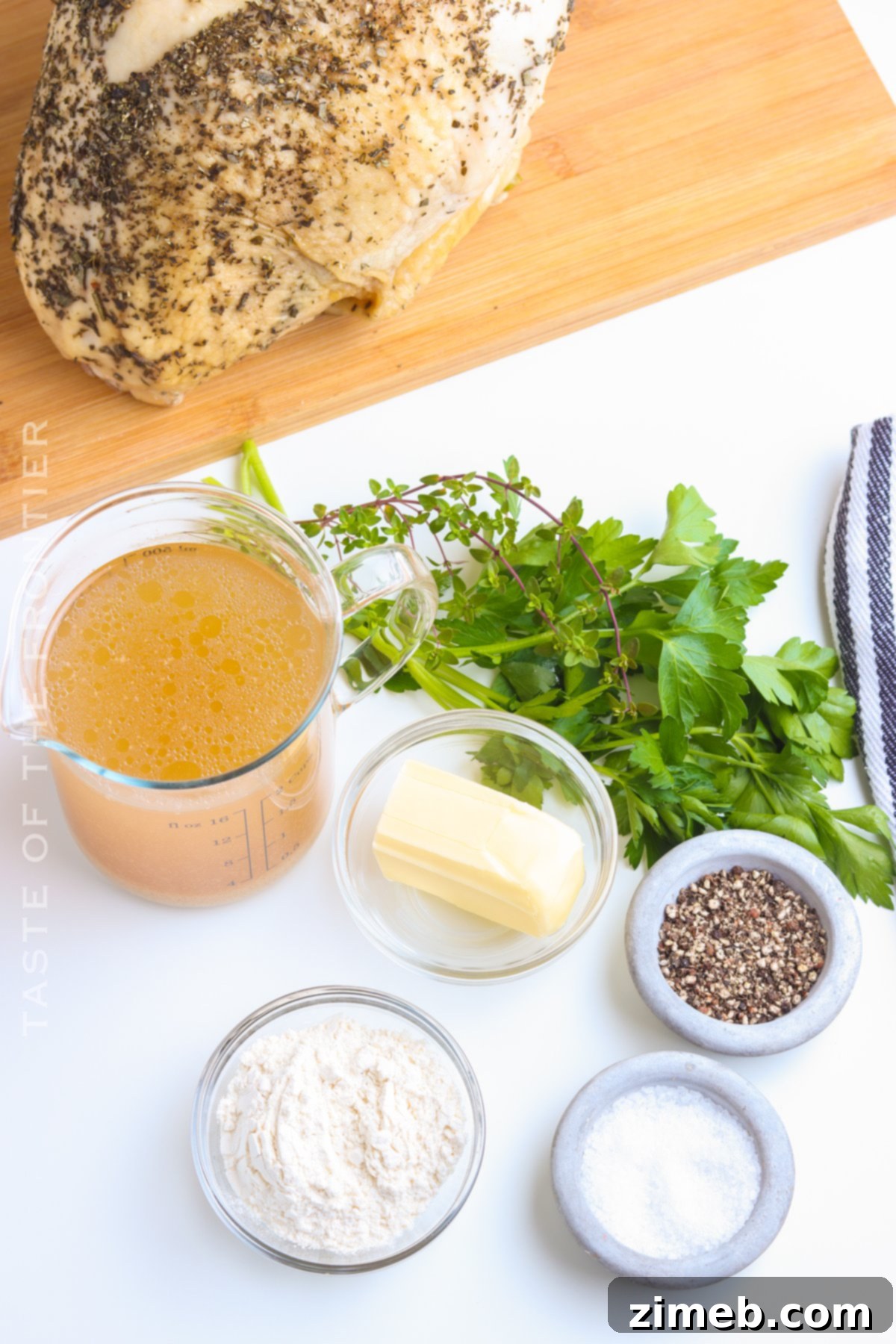
- Turkey Drippings from the Pan or Stock: This forms the flavor backbone of your gravy. Drippings provide rich, savory notes, while stock (chicken or turkey) adds necessary liquid and can be used as a substitute if drippings are scarce.
- Unsalted Butter: Essential for creating the roux, providing the fat component. Using unsalted butter allows you to control the overall saltiness of your gravy.
- All-Purpose Flour: The thickening agent in our roux, giving the gravy its smooth, luscious consistency.
- Thyme (fresh or dried): A classic herb pairing for turkey, adding an aromatic, slightly earthy flavor. Fresh thyme, finely chopped, offers a brighter taste, while dried thyme is a convenient alternative.
- Parsley (fresh or dried flakes): Provides a fresh, slightly peppery note and a hint of green color. Fresh parsley, finely chopped, is vibrant, and dried flakes work well too.
- Salt and Pepper to Taste: Crucial for balancing and enhancing all the flavors. Always taste and adjust at the end, as drippings can vary in salinity.
Making Turkey Gravy Without Drippings
Don’t despair if you don’t have enough (or any!) turkey drippings on hand. You can still craft a wonderfully flavorful gravy. Simply replace the drippings called for in the recipe with an equal amount of high-quality chicken or turkey stock. Look for low-sodium options to better control the seasoning. While stock provides a good base, it typically lacks the concentrated richness and depth that pan drippings offer. Therefore, you may find yourself needing to add more seasonings at the end. Consider augmenting with a pinch of poultry seasoning, a dash of onion powder, or a secret ingredient like a spoonful of umami-rich mushroom paste or a touch of Worcestershire sauce to mimic the complexity drippings provide. Always taste and adjust to your preference!
Delicious Substitutions and Flavor Variations for Your Gravy
One of the joys of cooking is the freedom to customize, and turkey gravy is no exception! You can easily adapt this recipe to dietary needs or explore new flavor profiles:
- Gluten-Free Gravy: For those avoiding gluten, substitute the all-purpose flour with a gluten-free all-purpose flour blend (ensure it contains xanthan gum for best results) or cornstarch. If using cornstarch, create a slurry by whisking 1 tablespoon of cornstarch with 2 tablespoons of cold water for every cup of liquid you want to thicken. Add this slurry gradually to simmering liquid, whisking constantly, until desired thickness is reached. Note that gluten-free flour or cornstarch may result in a slightly different texture than traditional flour, often a bit glossier.
- Dairy-Free Gravy: To make this gravy dairy-free, simply replace the unsalted butter with an equal amount of lard, bacon grease, or a high-quality dairy-free butter substitute. Each option will impart a unique flavor profile – lard and bacon grease will add a savory, smoky depth, while dairy-free butter will offer a more neutral taste.
- Vegetarian/Vegan Gravy: To create a delicious plant-based gravy, swap the turkey drippings/stock for a robust vegetable broth. For the fat, use olive oil, vegan butter, or a flavorful mushroom broth reduction. You can also add finely diced sautéed mushrooms (cremini work well) and a touch of soy sauce or tamari for umami.
- Herb Enhancements: Beyond thyme and parsley, consider other herbs that complement turkey. Fresh sage, rosemary, or a touch of marjoram can add wonderful layers of flavor. Add them finely chopped with the initial herbs.
- Wine or Brandy Infusion: For a sophisticated touch, deglaze your roasting pan with a splash of dry white wine or brandy before adding the drippings and stock. Allow it to simmer and reduce slightly to concentrate the flavors. This adds a subtle acidity and complexity.
- Onion or Shallot Gravy: Sauté finely minced onions or shallots in the butter before adding the flour for the roux. This creates a sweet, aromatic base for your gravy.
- Mushroom Gravy: Sauté a handful of finely chopped mushrooms (like cremini or shiitake) until golden brown before making the roux. This adds a rich, earthy flavor and texture.
Easy Turkey Gravy: Step-by-Step Guide
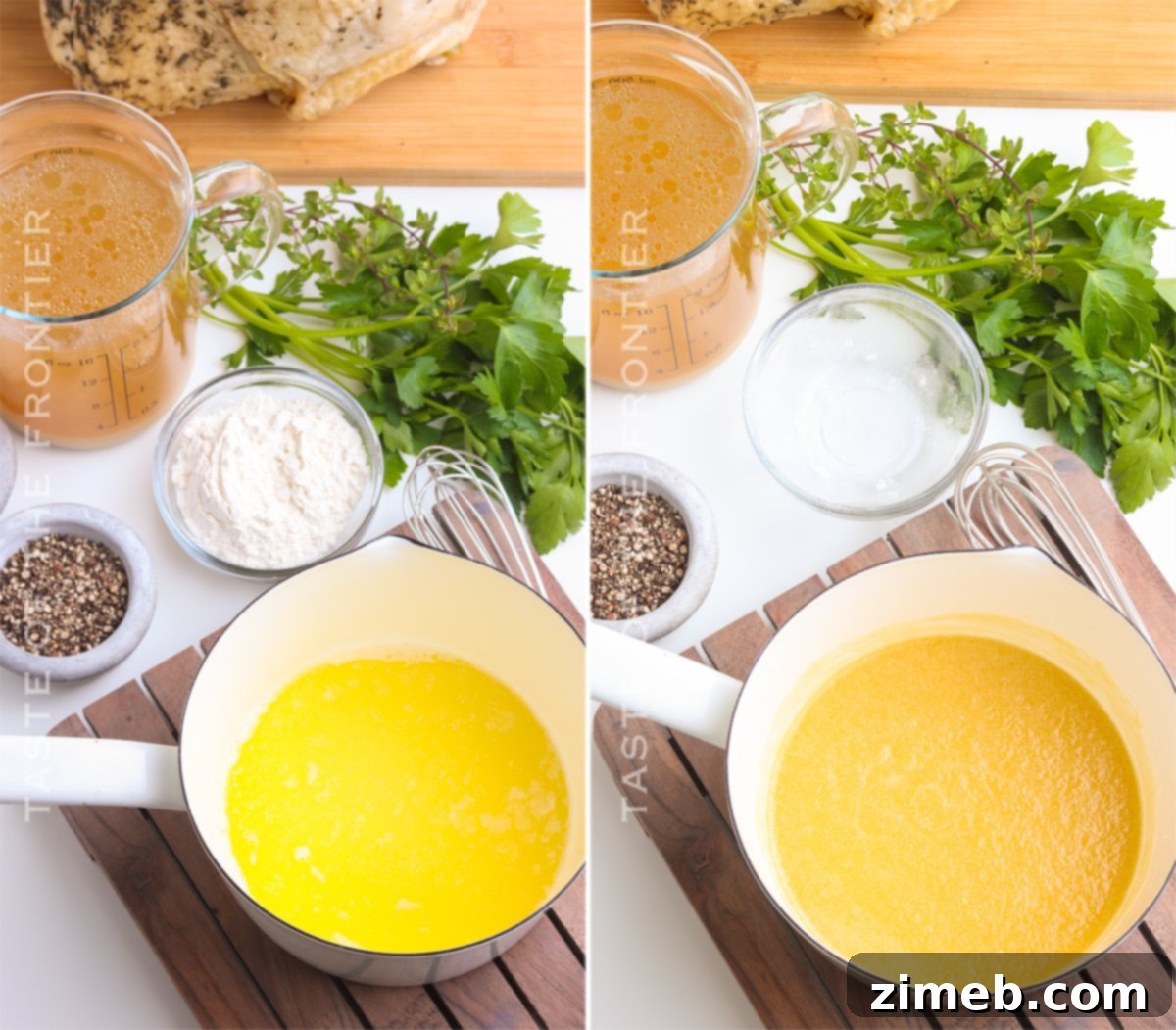
How to Make Perfect Turkey Gravy
- Prepare Drippings: Carefully strain the turkey drippings from your roasting pan or slow cooker. This step removes any solids, creating a smooth gravy. If you have a lot of fat, you can skim some off, but a little fat is good for flavor and helps with the roux.
- Measure Liquid: Measure the strained drippings. Add enough additional chicken or turkey stock (preferably warm) to make a total of 2 ¼ cups of combined liquid. This ensures the right liquid-to-thickener ratio for a balanced gravy.
- Melt Butter: In a medium-sized saucepan, melt the unsalted butter over medium heat. Ensure the butter is fully melted and shimmering but not browned.
- Add Flour for Roux: Sprinkle in the all-purpose flour. Whisk continuously for 1-2 minutes, forming a smooth paste (the roux). Cook until the roux is light golden and smells slightly nutty, ensuring the raw flour taste is cooked out.
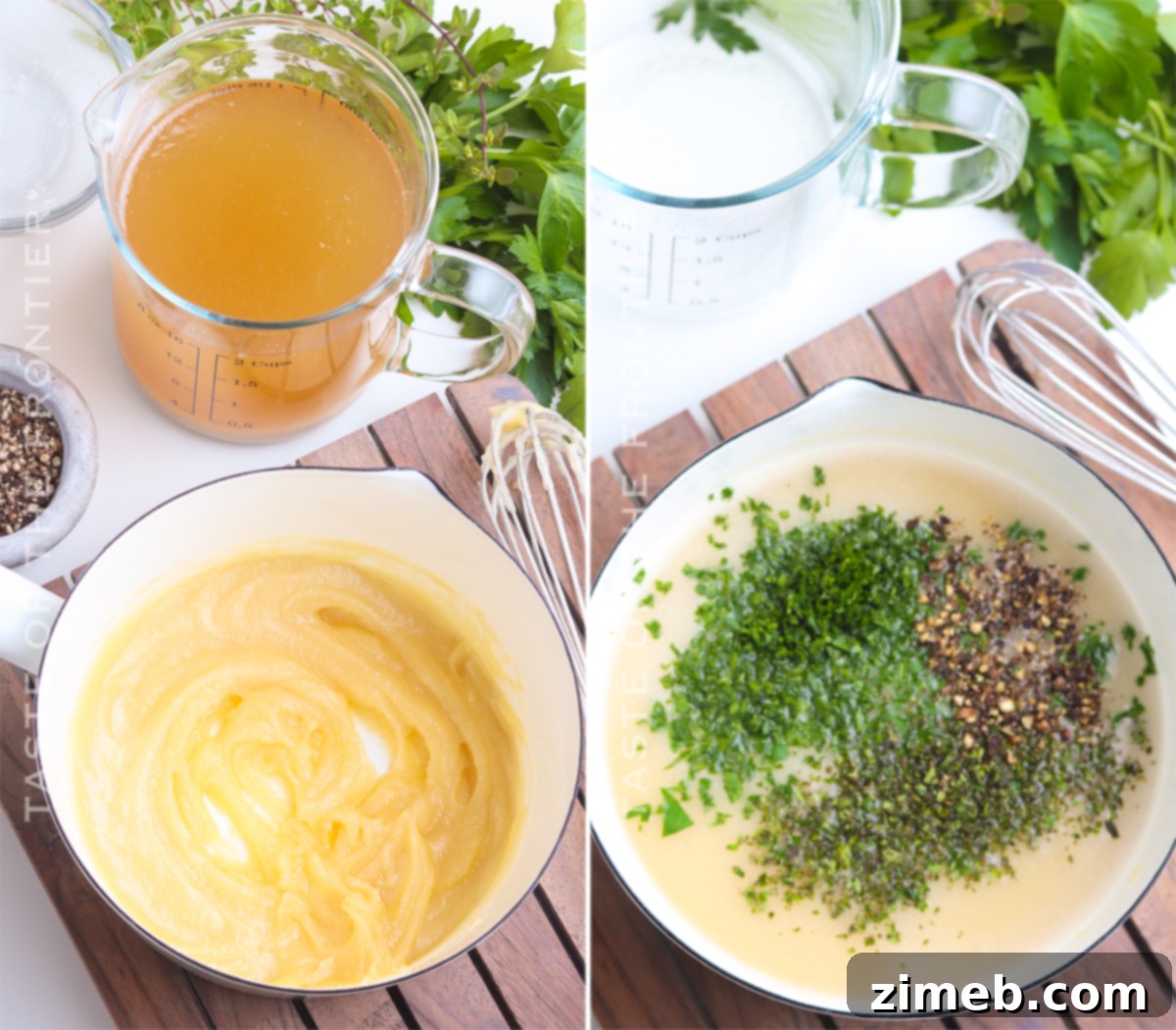
- Start Thickening: Slowly pour approximately ½ cup of your prepared drippings/stock mixture into the saucepan. Whisk briskly and constantly to combine it with the roux, forming a thick, smooth paste. This prevents lumps.
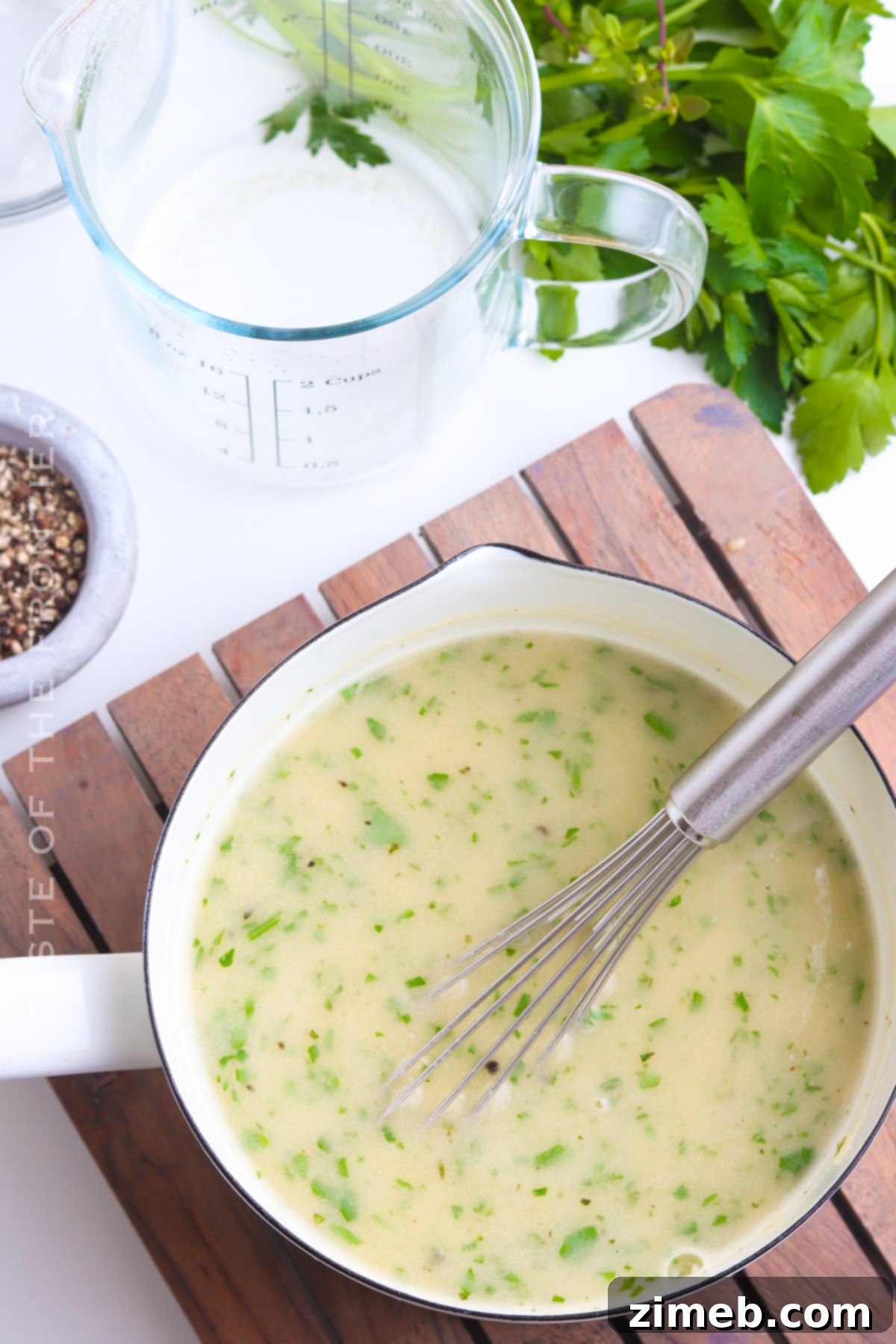
- Incorporate Remaining Liquid: Gradually pour in the remaining liquid mixture into the saucepan, continuing to whisk constantly. This slow addition and continuous whisking are key to achieving a silky-smooth gravy.
- Simmer to Thicken: Bring the gravy to a gentle simmer over medium heat, whisking occasionally. Allow it to simmer for 5-7 minutes, or until it has thickened to your desired consistency. Remember, the gravy will continue to thicken slightly as it cools.
- Season and Stir: Remove from heat. Add the fresh or dried thyme and parsley, along with salt and freshly ground black pepper to taste. Stir well to fully incorporate the seasonings. Taste and adjust as needed.
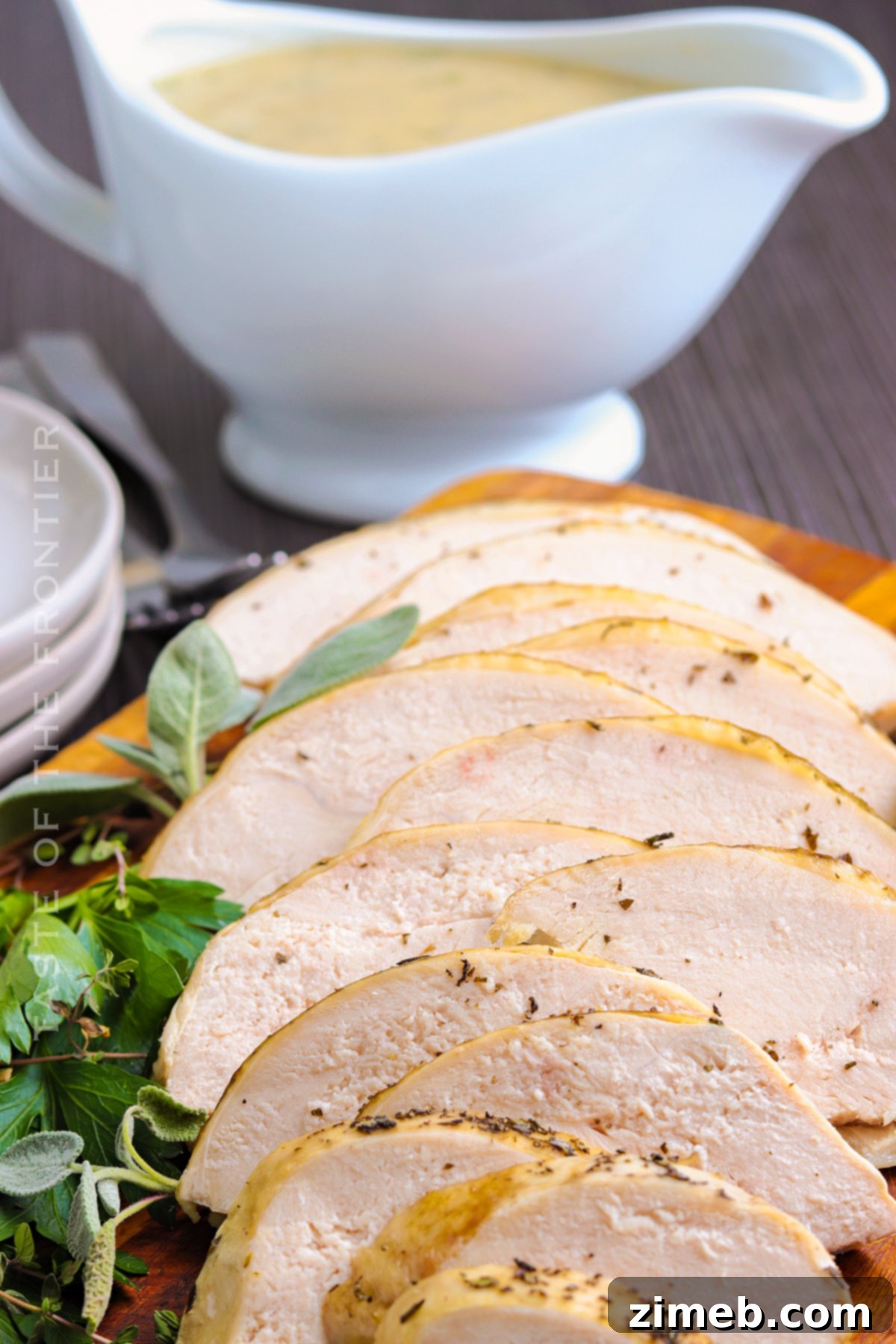
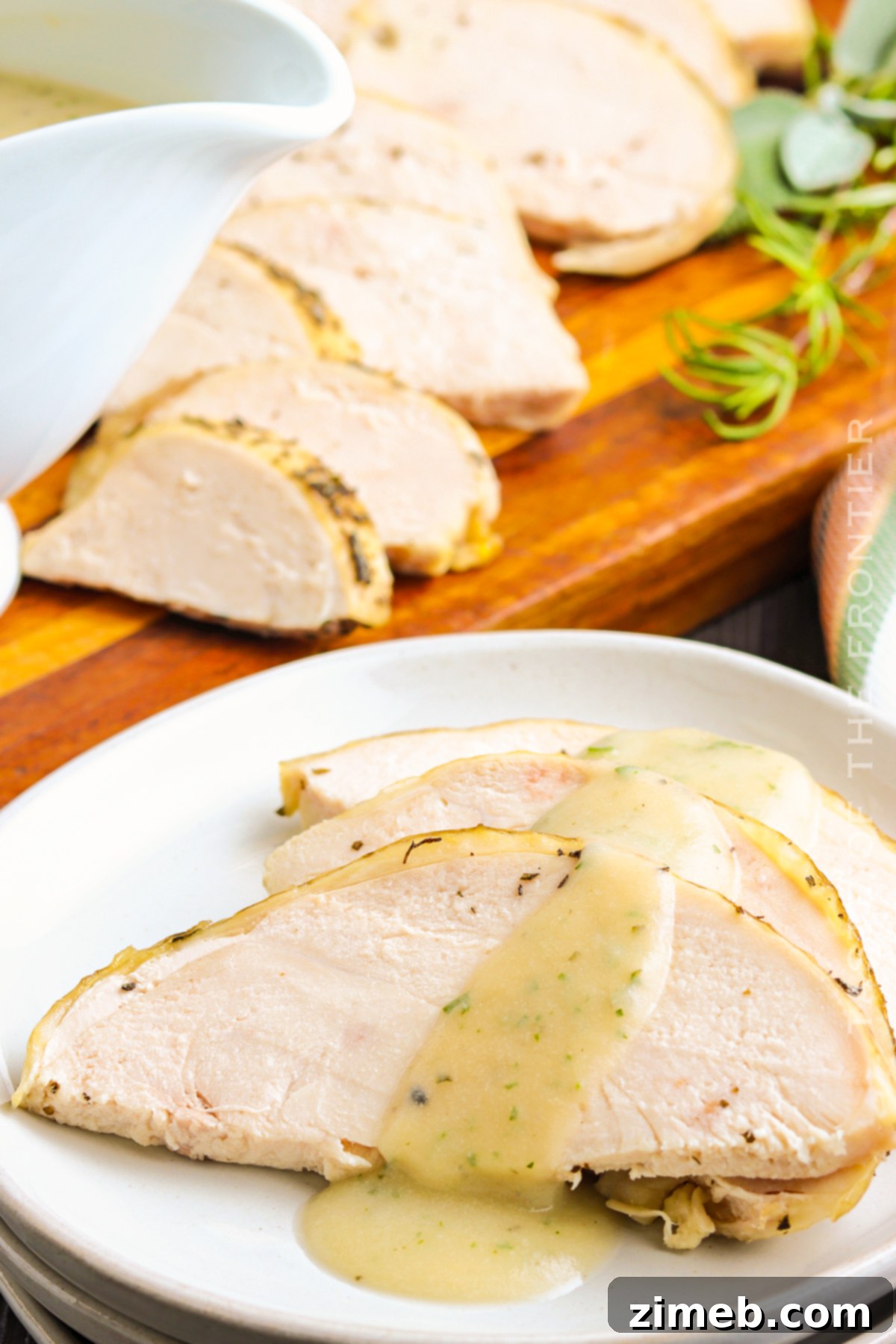
- Serve Immediately: Ladle your rich, homemade gravy generously over slices of roasted turkey, fluffy mashed potatoes, or stuffing.
- Store Leftovers: Any leftover gravy should be stored in an airtight container in the refrigerator for up to 3 days.
Expert Tips to Thicken Your Gravy the Right Way
Achieving the perfect gravy consistency is a common kitchen concern, but it’s easily remedied with a few tricks. If your gravy turns out too thick, the simplest solution is to gradually whisk in a tablespoon or two of warm turkey or chicken broth, or even hot water, until it reaches your preferred pourable consistency. Conversely, if your gravy is too thin, you can create a quick slurry: mix one tablespoon of all-purpose flour or cornstarch with one tablespoon of cold water or melted butter until smooth, then slowly whisk this into your simmering gravy. Allow it to simmer for a few more minutes until it thickens. For a lump-free gravy, especially if you accidentally added liquid too fast, simply pass it through a fine-mesh strainer before serving. This will remove any undesirable lumps, leaving you with a perfectly smooth and luxurious sauce.
What To Serve With This Irresistible Turkey Gravy Recipe
In my opinion, a well-made gravy is a universal enhancer, capable of complementing almost any savory dish. However, when it comes to holiday meals, certain pairings are simply iconic and not to be missed. While you’ll find links to other fantastic holiday side dishes further down this post, if you’re looking for the VERY BEST turkey and main dish holiday recipes to serve with this exquisite gravy, be sure to explore these stellar options:
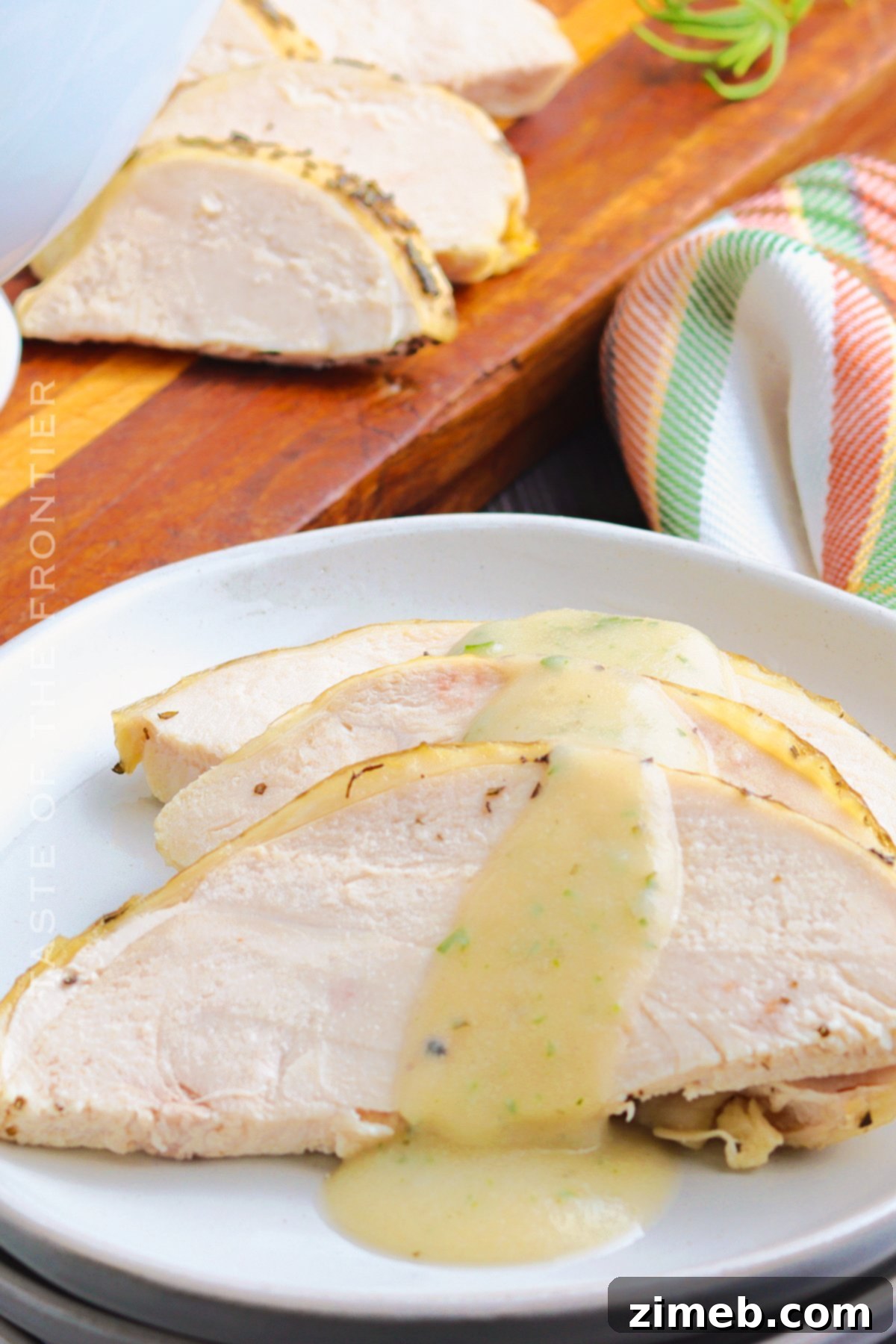
- Slow Cooker Turkey Breast: Perfect for juicy, tender turkey with minimal effort, leaving your oven free for other dishes.
- Instant Pot Turkey Breast: Achieve perfectly cooked turkey breast in a fraction of the time, ideal for smaller gatherings or adding extra meat.
- Smoked Spatchcock Turkey: For an incredibly flavorful and evenly cooked turkey with a beautiful smoky aroma.
- Cajun Turkey Breast: A delicious twist with bold, spicy flavors that pairs wonderfully with a rich, cooling gravy.
- Applewood Smoked Ham: Gravy isn’t just for turkey! This ham offers a sweet and smoky counterpart that works surprisingly well.
- Air Fryer Turkey Breast: For crispy skin and moist meat, a fantastic quick option for smaller portions.
- Classic Roasted Turkey: The traditional centerpiece, for which this gravy was truly destined.
- Smoked Boneless Leg of Lamb: A sophisticated alternative to turkey, equally complemented by a savory gravy.
- Applewood Smoked Turkey: Another smoked option that adds a layer of complex flavor to your holiday table.
Storage Information: Keeping Your Gravy Fresh
Proper storage is essential to extend the life of your delicious homemade turkey gravy. If you find yourself with leftovers after your festive meal, rest assured they can be enjoyed again. Simply transfer the cooled gravy to a clean, airtight container or jar. It will keep beautifully in the refrigerator for up to a week. When you’re ready to indulge again, gently reheat it over low heat on the stovetop, whisking occasionally to prevent the sauce from sticking or separating. If it appears too thick, a splash of warm broth or water will restore its perfect consistency.
For longer storage, turkey gravy freezes exceptionally well. Pour the cooled gravy into freezer-safe containers or heavy-duty freezer bags, leaving a little headspace for expansion. It can be frozen for up to three months. To use, thaw the frozen gravy overnight in the refrigerator, then reheat gently as described above. This makes it a fantastic make-ahead option, allowing you to have homemade gravy readily available for future meals or unexpected cravings.
Why We Absolutely Adore This Turkey Gravy Recipe
- Elevates Any Meal: This gravy is not just an accompaniment; it’s a key ingredient that truly makes your turkey, mashed potatoes, or even simpler dishes extraordinarily special, adding a layer of luxurious richness and deep flavor.
- Effortless and Rewarding: The recipe is incredibly easy to follow, making it accessible for cooks of all skill levels. Despite its simplicity, it consistently yields a delicious, hearty, and satisfying sauce that tastes like you spent hours in the kitchen.
- Flavor Enhancement: It’s a wonderful way to infuse your meal with an extra burst of savory goodness. The fresh herbs and rich drippings combine to create a complex flavor profile that perfectly complements roasted meats and vegetables.
- Perfect for Holidays: This recipe is perfectly suited for Thanksgiving, Christmas, or any holiday dinner. It’s a crowd-pleaser that adds that essential homemade touch, turning a good meal into a truly exceptional feast.
Can I use cornstarch instead of flour to thicken gravy?
Yes, you absolutely can use cornstarch as an alternative to flour for thickening your turkey gravy, and it’s a common practice for gluten-free versions. However, there are a few differences to keep in mind. Cornstarch typically creates a gravy with a slightly glossier, more translucent finish compared to the opaque, velvety texture achieved with flour. To use cornstarch, you must first create a “slurry” by whisking it with an equal amount of cold liquid (water or broth) until completely smooth. Never add cornstarch directly to hot liquid, as it will clump immediately. For every cup of liquid you want to thicken, start with about one tablespoon of cornstarch slurry. Whisk the slurry gradually into your simmering gravy until it reaches your desired consistency. Be careful not to over-thicken, as cornstarch’s thickening power can be quite potent. You may need to adjust the amount of liquid or cornstarch to achieve the perfect balance.
DON’T MISS THESE HOLIDAY E-BOOKS!


Recommended Products for Crafting Homemade Turkey Gravy…
Making this homemade gravy recipe is incredibly easy and yields outstanding results. If you’re anything like me, you probably already have most of these kitchen essentials on hand. However, if you’re new to making gravy from scratch and feeling a little nervous, let me assure you, you’re going to love the process and the delicious outcome! To help you along, I’ve compiled a list of my absolute must-have items that make preparing this holiday side dish an absolute breeze. These tools ensure your gravy turns out perfectly smooth and flavorful every time. (You can also SHOP MY FAVORITES directly in my online store for more kitchen inspiration!)
- High-Quality Saucepan: A good saucepan with a heavy bottom ensures even heat distribution, preventing your roux from burning and your gravy from sticking.
- Accurate Measuring Cups: Precision is key in baking and cooking, especially for the roux ratio. Reliable measuring cups guarantee consistent results.
- Measuring Spoons Set: Essential for accurately measuring herbs and other seasonings, ensuring your gravy is perfectly balanced.
- Sturdy Whisk: An indispensable tool for creating a smooth, lump-free roux and vigorously whisking in liquids. A good whisk makes all the difference in achieving that silky texture.
If you adore this easy turkey gravy recipe, you’ll undoubtedly love these other exceptional holiday side dishes too. Each one is designed to complement your festive meal beautifully. Please click each link below to discover the simple, printable recipe!
Check out this recipe

Check out this recipe
Check out this recipe
Check out this recipe

Check out this recipe

Check out this recipe
Check out this recipe

Check out this recipe

Check out this recipe

Check out this recipe

If you genuinely love this recipe for Homemade Turkey Gravy as much as I do, please take a moment to write a five-star review. Your feedback means the world! And don’t forget to help me spread the deliciousness by sharing it on Facebook and Pinterest with your friends and family!
CONNECT WITH YUMMI HAUS!
Be sure to follow me on my social media channels, so you never miss a post or a delicious new recipe!
Substack, Facebook, Pinterest, Instagram, Email Subscription
Rate this Recipe
Classic Homemade Turkey Gravy
Ingredients
- 2¼ cups turkey drippings (from pan or stock – see instructions above for alternatives)
- ¼ cup unsalted butter (½ of a stick)
- ¼ cup all-purpose flour
- 2 teaspoons fresh thyme (chopped finely, or 1 teaspoon dried thyme)
- 3 teaspoons fresh parsley (chopped finely, or 1 teaspoon dried parsley flakes)
- salt and pepper to taste
Instructions
-
Strain the turkey drippings from the roasting pan or slow cooker into a heat-proof measuring cup.
-
Measure the drippings. If you have less than 2 ¼ cups, add enough chicken or turkey stock to reach a total of 2 ¼ cups combined liquid.
-
In a medium saucepan, melt the unsalted butter over medium heat.
-
Add the all-purpose flour to the melted butter and whisk vigorously for 1-2 minutes to create a smooth roux. Cook until lightly golden.
-
Slowly pour about ½ cup of the prepared drippings/stock mixture into the saucepan, whisking briskly to form a thick, smooth paste.
-
Gradually pour the remaining liquid into the saucepan, whisking constantly until fully incorporated and smooth.
-
Bring the gravy to a gentle simmer and cook, whisking occasionally, for 5-7 minutes, or until it has thickened to your desired consistency. Remove from heat.
-
Stir in the fresh or dried thyme and parsley. Season with salt and pepper to taste.
-
Serve your delicious homemade turkey gravy immediately with your roasted turkey and other holiday favorites.
-
Store any leftovers in an airtight container in the refrigerator for up to 3 days, or freeze for longer storage.
Nutrition
Nutritional information for the recipe is provided as a courtesy and is approximate. Please double-check with your own dietary calculator for the best accuracy. We at Yummi Haus cannot guarantee the accuracy of the nutritional information given for any recipe on this site.
Love this recipe?
Follow @KleinworthCo for even more tasty recipes!