
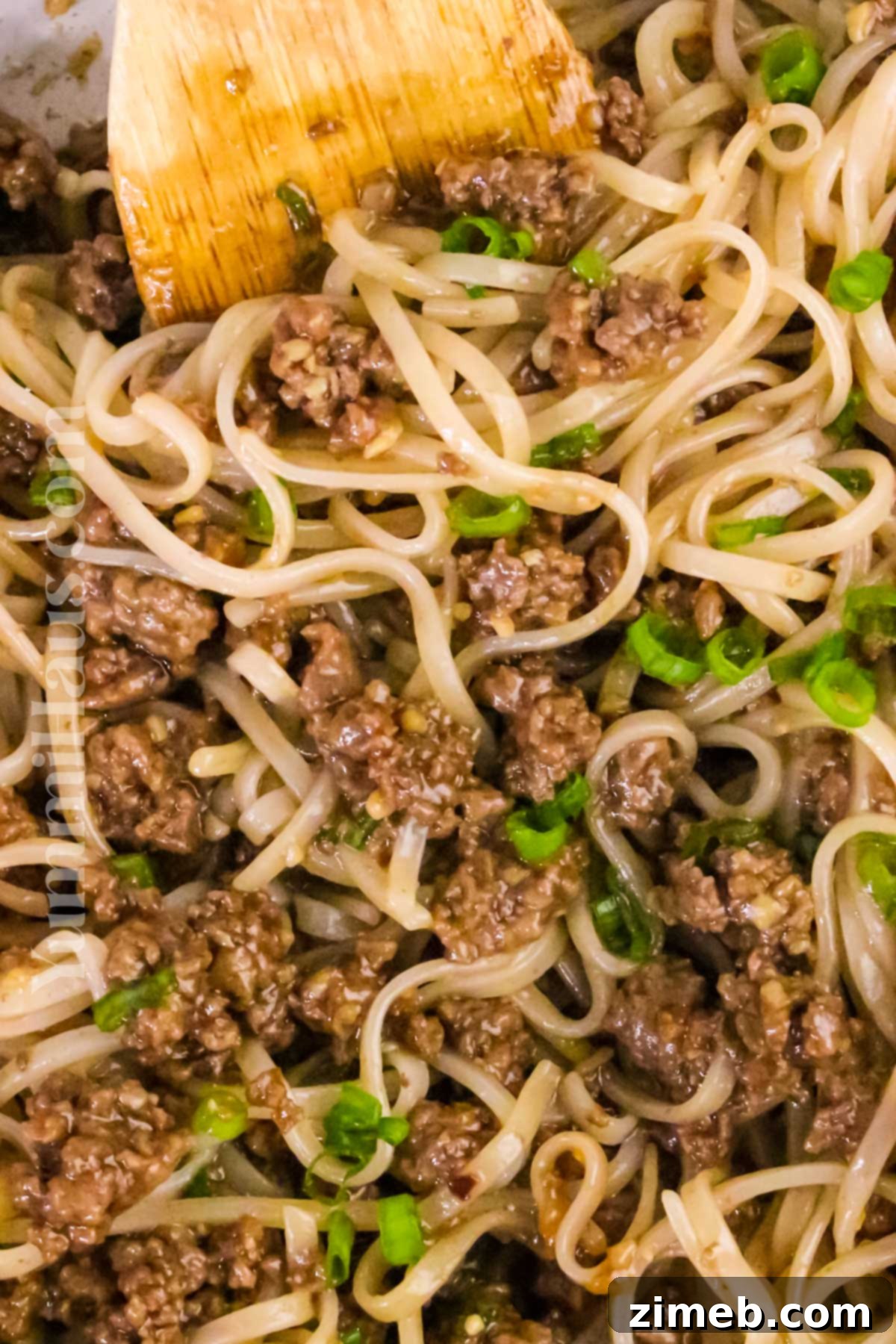
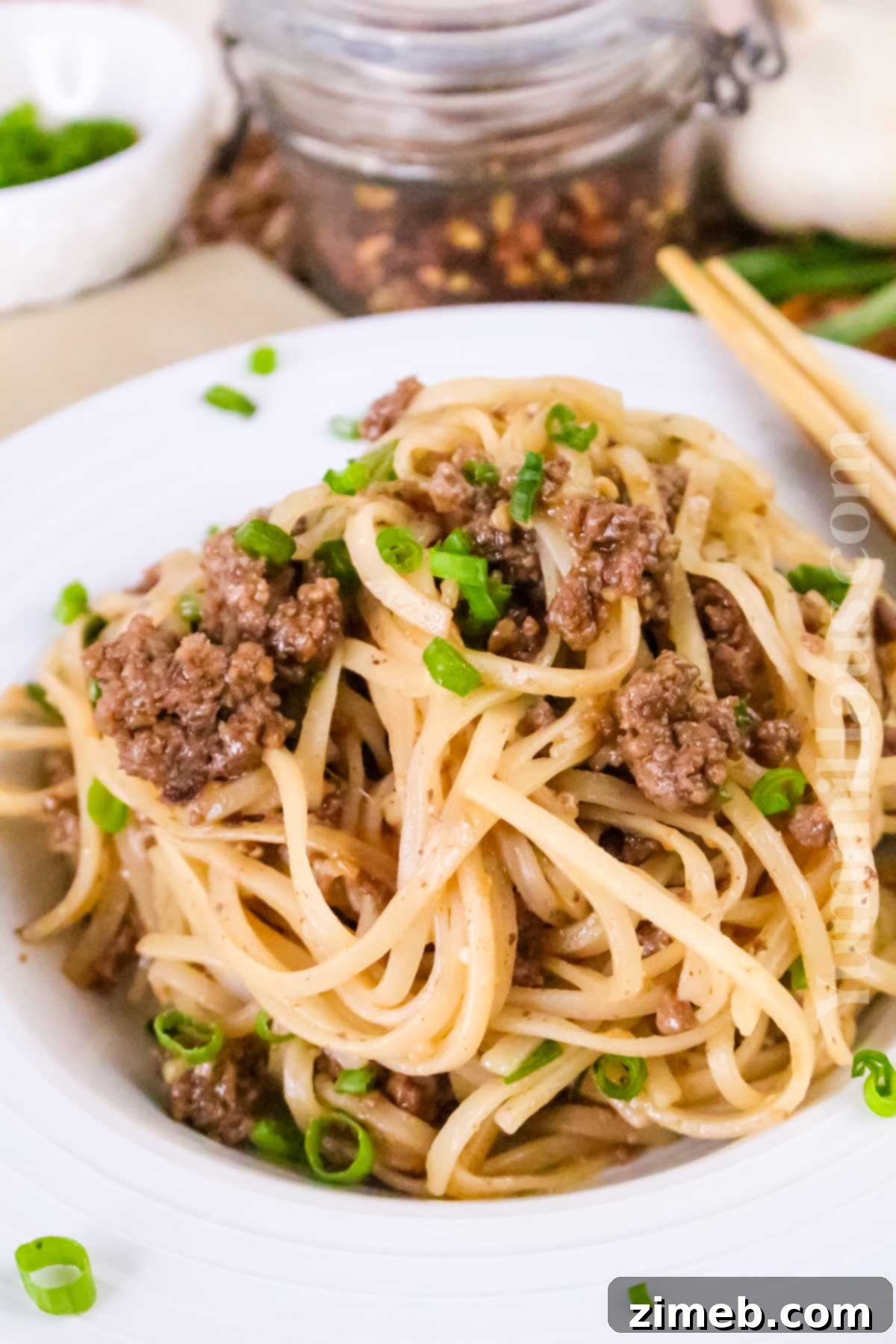
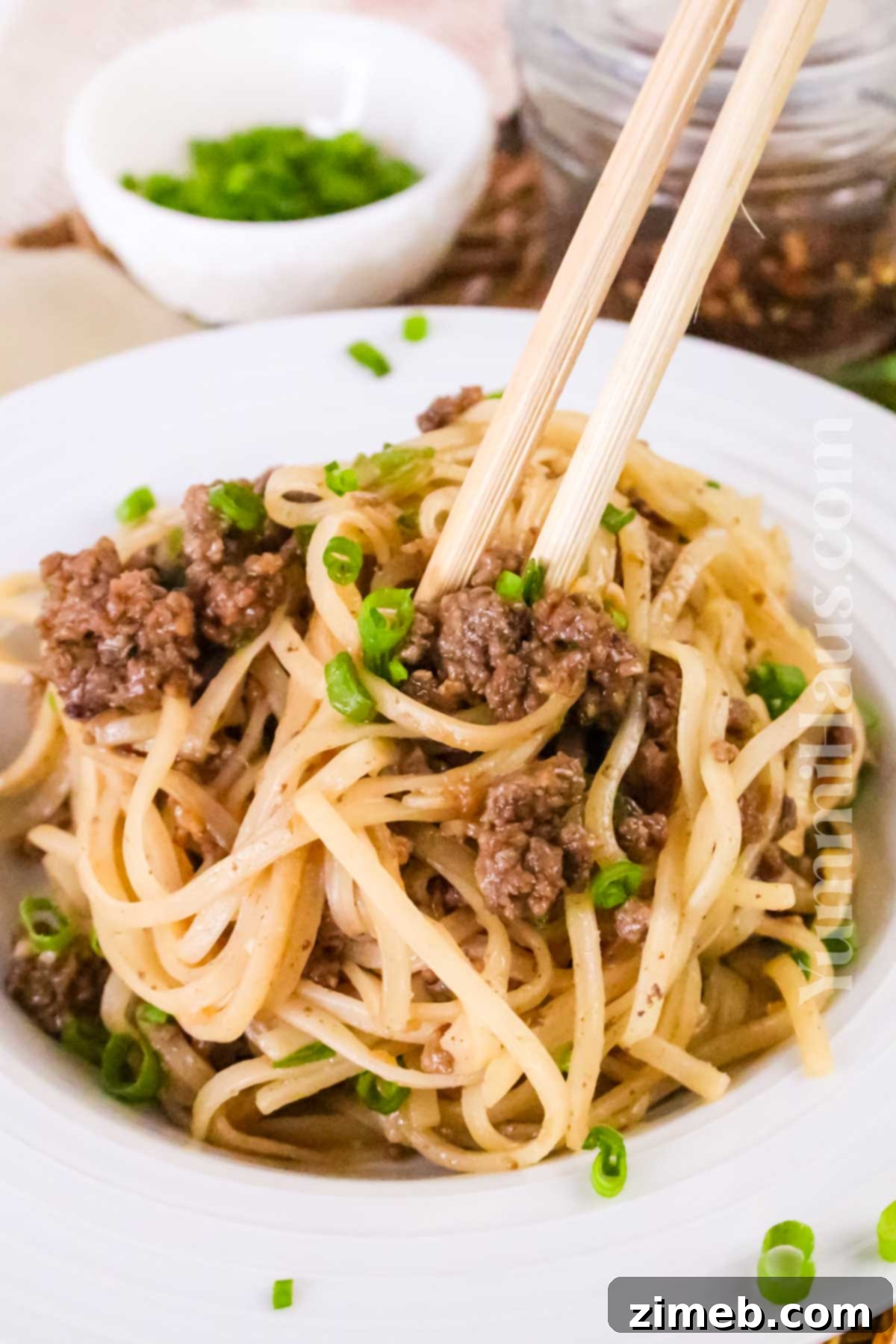
If you’re searching for a dinner that offers an explosion of savory-sweet flavors without demanding hours in the kitchen, then look no further than this incredible **Mongolian Ground Beef Noodles** recipe. This dish is destined to become your go-to solution for busy weeknights, effortlessly delivering a taste experience that rivals your favorite takeout but is made right at home. Imagine tender, seasoned ground beef mingling with a rich, glossy soy-based sauce, all tossed with perfectly cooked noodles. It’s a harmonious blend of textures and tastes, creating a deeply satisfying meal that feels both comforting and wonderfully exotic.
This recipe is more than just a quick meal; it’s a culinary journey that transforms simple ingredients into something truly special. The magic lies in the balance of umami, sweetness, and a hint of spice, creating a complex flavor profile that’s incredibly addictive. Whether you’re cooking for a single serving, a hungry family, or entertaining friends, Mongolian Ground Beef Noodles offers a robust and flavorful solution that’s easy to scale. Plus, the enticing aromas that will fill your kitchen as this dish cooks are just a prelude to the deliciousness that awaits. Get ready to impress yourself and your loved ones with a dish that’s quick to prepare, budget-friendly, and consistently delivers on flavor.
Gina’s Recipe Rundown: A Deeper Dive
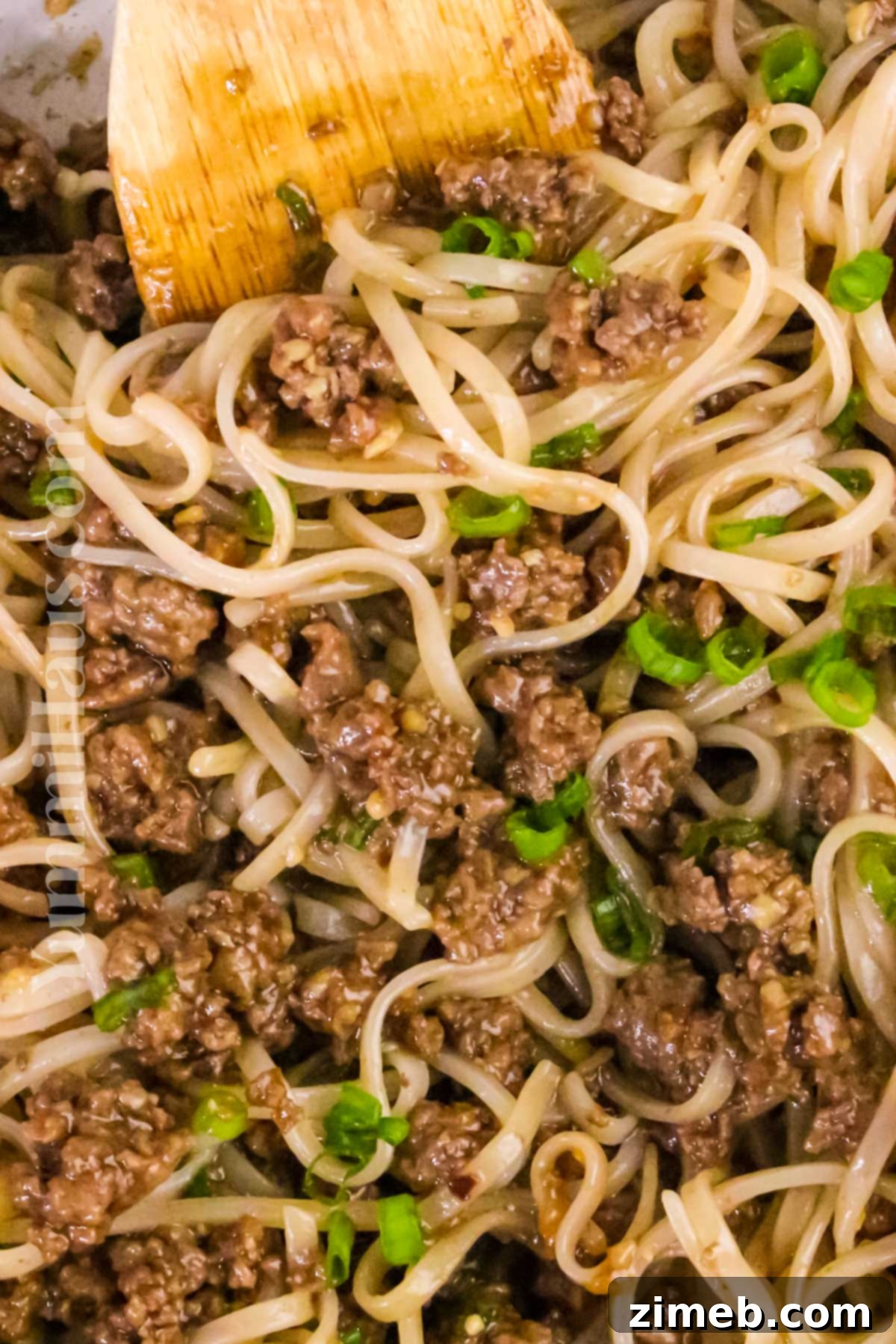
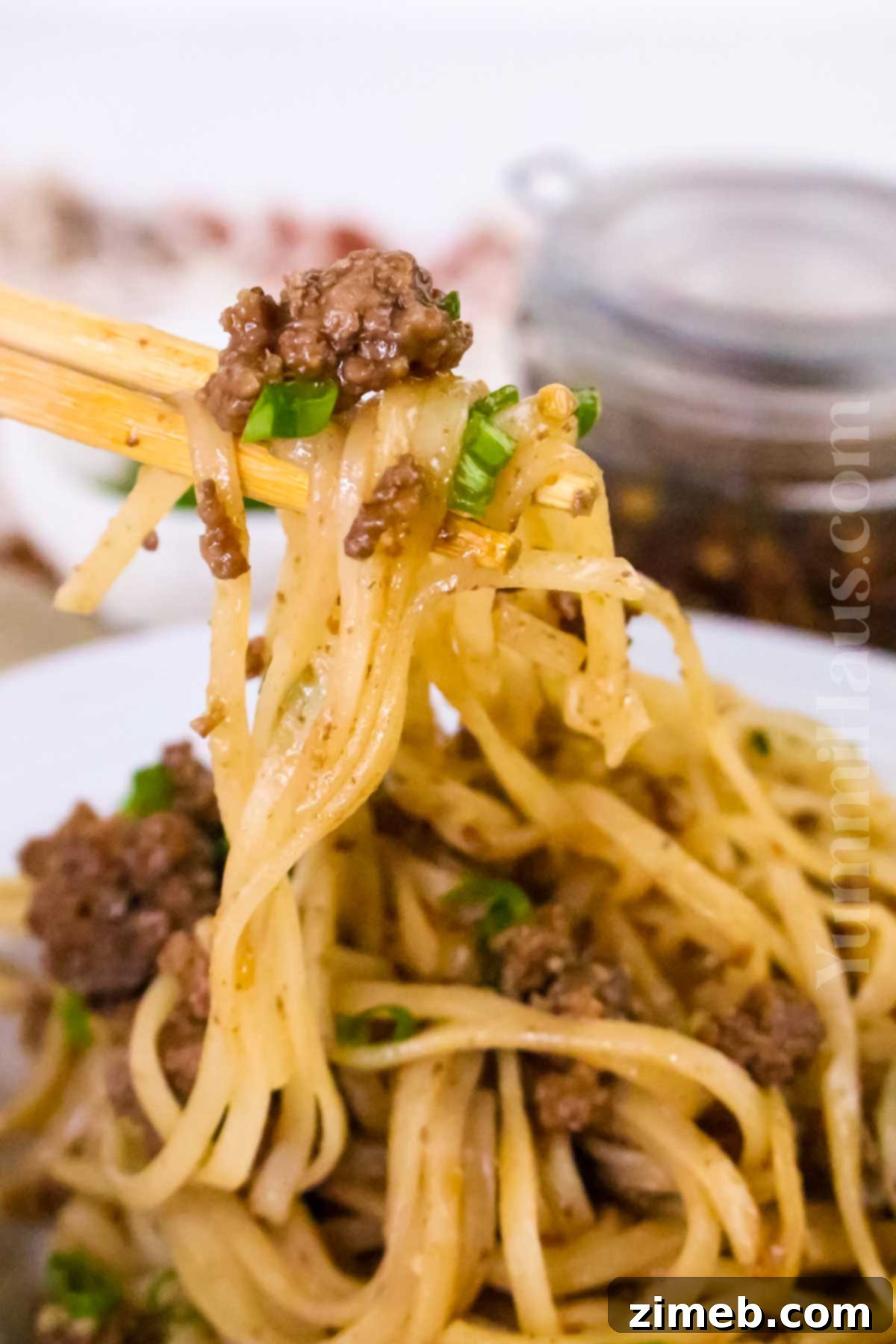
Texture: This Mongolian Ground Beef Noodle dish offers an incredibly comforting and satisfying mouthfeel. You’ll experience the soft, yielding chew of perfectly cooked noodles, beautifully complemented by the juicy, flavorful ground beef. The entire creation is enveloped in a glossy, rich sauce that coats every strand and morsel, ensuring a consistently delightful bite. For those who appreciate a textural contrast, adding crisp-tender vegetables can introduce a refreshing crunch, elevating the overall experience.
Taste: Prepare your taste buds for an extraordinary symphony of flavors. This recipe masterfully balances savory notes from the soy sauce, a subtle sweetness often derived from brown sugar, and a profound umami richness that makes each bite irresistible. What’s truly remarkable is how these complex flavors come together so seamlessly, without requiring an extensive list of exotic ingredients or complicated culinary techniques. It’s the quintessential comfort food, with an exciting Asian-inspired twist that keeps things fresh and exciting.
Ease: The simplicity of this recipe is one of its greatest assets. It’s designed to be highly adaptable, allowing you to effortlessly customize it to suit your preferences or what you have on hand. Feel free to swap noodles for steamed rice for a different base, incorporate a bounty of your favorite vegetables for added nutrition and crunch, or adjust the spice level to your liking. This versatility makes it ideal for a wide range of dietary preferences and cooking moods, offering a delicious meal without any culinary stress or headache.
Why I love it: The use of ground beef is a game-changer in this recipe. It significantly slashes cooking time while still providing a hearty, protein-packed foundation for the dish. This makes it an absolute lifesaver on those hectic evenings when you crave something substantial and flavorful but are short on time. It’s a genuine win-win situation, combining exceptional flavor with unparalleled convenience, making it a staple in my weeknight rotation.
Discover the Irresistible Charm of This Recipe
There are countless reasons why this **Mongolian Ground Beef Noodles** recipe is quickly gaining popularity among home cooks. It truly checks all the boxes for a perfect weeknight meal, offering a fantastic blend of convenience, flavor, and versatility. Here’s why you’ll fall in love with it:
- Lightning Fast & Effortless: In today’s fast-paced world, time is precious. This recipe is designed to be on your table in approximately 30 minutes, making it an ideal choice for even the busiest weeknights. No more stressing over dinner plans!
- Pantry Staple Friendly: Forget about making a special trip to a gourmet grocery store. This dish relies on commonly found ingredients that you likely already have in your pantry and fridge, simplifying your shopping list and reducing meal prep time.
- Unforgettable Sweet & Savory Sauce: The heart of this dish is its rich, Mongolian-inspired sauce. It boasts a beautiful balance of sweet, savory, and umami notes, clinging perfectly to every noodle and piece of beef. Each bite is an irresistible burst of flavor.
- Budget-Conscious Comfort: Enjoy restaurant-quality Asian flavors without the high price tag. This recipe uses affordable ingredients, especially ground beef, making it a wonderfully economical meal that still feels like a special treat or a satisfying takeout alternative.
- Infinitely Adaptable: Culinary creativity is encouraged! This recipe is incredibly forgiving and easy to customize. Feel free to experiment with different types of noodles, toss in your favorite vegetables for added nutrition and texture, or adjust the spice level to match your family’s preferences. It’s truly a recipe that can evolve with your cravings.
Essential Ingredients and Clever Substitutions for Your Mongolian Ground Beef Noodles
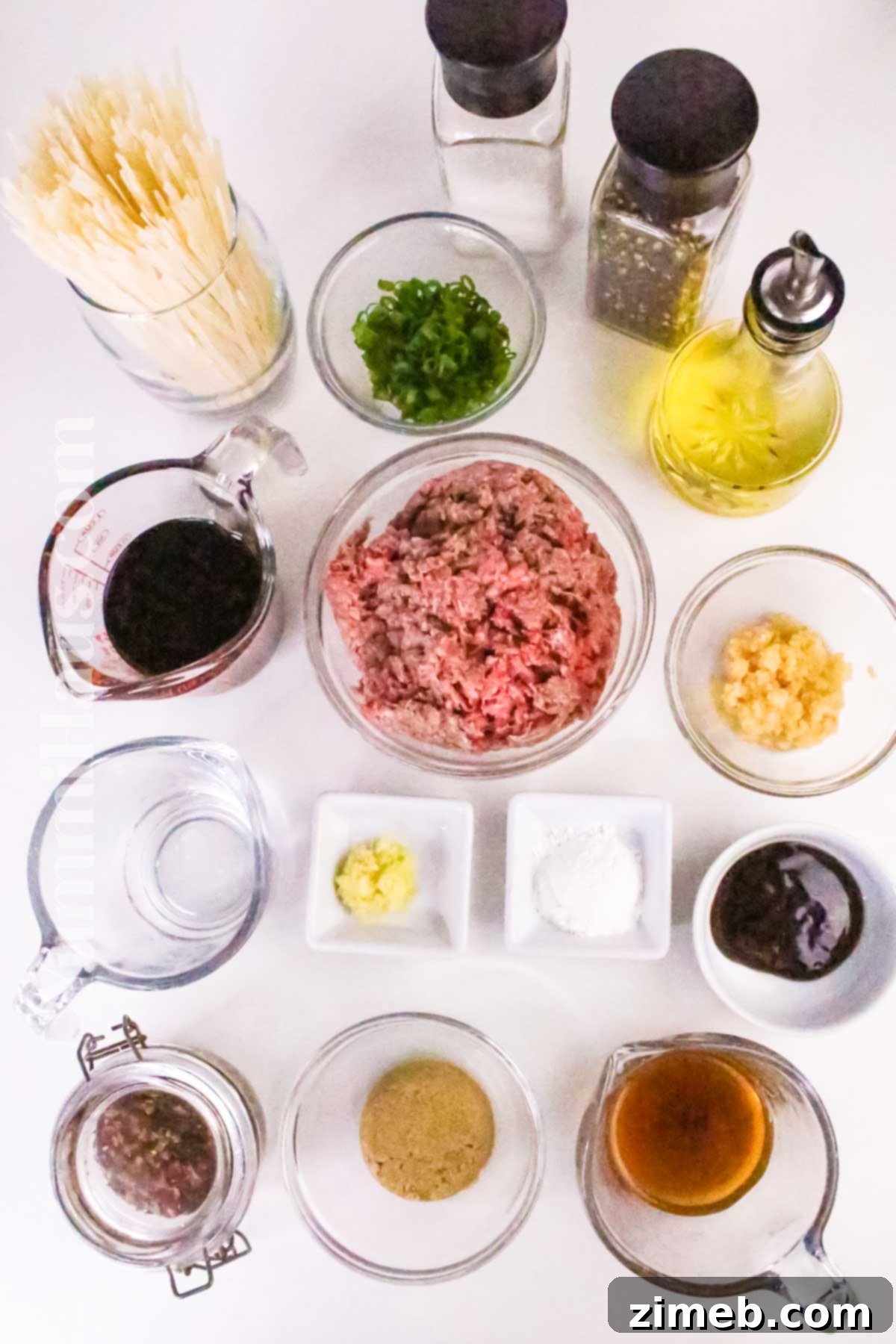
Crafting these delicious Mongolian Ground Beef Noodles begins with a selection of readily available ingredients. Each component plays a crucial role in building the dish’s signature flavor profile and satisfying texture. Here’s a detailed look at what you’ll need and how you can adapt the recipe to your pantry or dietary needs:
- Ground Beef: This forms the robust and savory foundation of our dish, absorbing all the wonderful seasonings and sauce. For the best flavor and texture, aim for ground beef with an 80/20 lean-to-fat ratio, as the fat renders down, contributing to the richness of the sauce. If you’re looking for a lighter alternative, ground turkey or chicken can be excellent substitutes, though they will yield a slightly different flavor depth. You might need a bit more oil when browning leaner meats.
- Noodles: The choice of noodles can significantly impact the dish’s overall experience. Traditional Chinese egg noodles or hearty lo mein noodles are ideal due to their satisfying chewiness and excellent ability to cling to the luscious sauce. If these aren’t available, common pantry staples like spaghetti, linguine, or even rice noodles (for a gluten-free option) can work beautifully. Just ensure you cook them until they are tender yet still have a slight bite (al dente) to prevent them from becoming mushy when tossed with the sauce.
- Soy Sauce: As the cornerstone of the Mongolian sauce, soy sauce delivers that essential savory, salty, and umami punch. We recommend using low-sodium soy sauce to give you more control over the dish’s saltiness. For those with gluten sensitivities, tamari is an excellent gluten-free alternative, and coconut aminos can be used for a soy-free and slightly sweeter option.
- Garlic and Ginger: Freshly minced garlic and grated ginger are non-negotiable for their vibrant, aromatic warmth and bright, pungent zing. These two ingredients are crucial for authentic Asian-inspired flavors, providing a fragrant depth that powdered versions simply can’t replicate. While garlic powder and ground ginger can be used in a pinch (about 1/4 teaspoon powder for every clove of garlic, and 1/2 teaspoon ground for every 1 teaspoon fresh ginger), the fresh ingredients truly elevate the dish to another level.
- Brown Sugar: This ingredient is key to achieving the signature sweet-savory balance of Mongolian-style dishes. It mellows the saltiness of the soy sauce and harmonizes with any added heat from chili flakes. Dark brown sugar will impart a deeper molasses flavor, while light brown sugar offers a milder sweetness. Natural sweeteners like honey or maple syrup are fantastic substitutes, bringing their own unique nuances to the sauce.
- Green Onions: Used primarily as a fresh garnish, green onions (also known as scallions) provide a vibrant splash of color, a crisp textural contrast, and a mild, peppery onion flavor. They add a fresh lift to the rich dish right before serving. Both green onions and scallions are essentially interchangeable, offering the same delightful finish.
- Hoisin Sauce: This thick, fragrant, and slightly sweet Asian barbecue sauce adds depth and a beautiful mahogany color to the Mongolian sauce. It’s made from soybeans, garlic, chili, and various spices, contributing a savory and slightly tangy complexity.
- Beef Broth: A splash of beef broth helps to thin the sauce to the perfect consistency while amplifying the beefy flavor profile of the dish. Low-sodium varieties are recommended for better control of seasoning. Vegetable broth or even water can be used as alternatives, but beef broth offers the most cohesive flavor.
- Cornstarch: This acts as a thickening agent for our sauce, creating that desirable glossy, clingy consistency that perfectly coats the noodles and beef. When mixed with water to form a “slurry” before being added to the hot sauce, it prevents lumps and ensures a smooth finish.
- Crushed Red Pepper Flakes (Optional): For those who appreciate a touch of heat, a dash of crushed red pepper flakes introduces a subtle warmth that enhances the overall flavor without overpowering it. Adjust the quantity to your personal spice preference, or omit entirely for a milder dish.
Exciting Recipe Variations to Explore
One of the joys of this Mongolian Ground Beef Noodles recipe is its inherent flexibility. Don’t hesitate to get creative and tailor it to your dietary needs or flavor preferences. Here are some fantastic ways to switch things up:
Add Veggies for Extra Goodness: Boost the nutritional content, color, and crunch by incorporating your favorite vegetables. Sliced bell peppers (any color), crisp snap peas, thinly shredded carrots, broccoli florets, or even mushrooms are excellent additions. Stir-fry them with the beef after it’s browned, or add them with the sauce to ensure they cook to a crisp-tender perfection.
Crank Up the Spicy Kick: If you’re a fan of heat, it’s incredibly easy to add a fiery dimension to this dish. Increase the amount of chili flakes in the sauce, or introduce a splash of sriracha or a dollop of chili garlic sauce for a bolder, spicier flavor. You could even garnish with finely sliced fresh red chilies for an extra punch.
Delicious Vegetarian Version: This recipe adapts beautifully to a plant-based diet. Simply swap the ground beef for crumbled extra-firm tofu or tempeh. Press the tofu thoroughly to remove excess water, then crumble and brown it in the skillet until it develops a nice texture before proceeding with the sauce. You’ll still achieve a rich, savory meal.
Swapping Noodles for Rice: If noodles aren’t your preference, or you’re simply in the mood for something different, serve the flavorful ground beef and sauce mixture over a bed of fluffy steamed jasmine rice, brown rice, or even quinoa. The rice will absorb the delicious sauce, providing a comforting and satisfying alternative.
Extra Saucy for Maximum Flavor: For those who believe more sauce is always better, feel free to double the quantities of the sauce ingredients. This will create a more generous coating for your noodles and beef, ensuring every bite is drenched in that irresistible sweet and savory glaze. Just remember to adjust the cornstarch slurry slightly if needed to maintain desired thickness.
Essential Kitchen Equipment for Success
Having the right tools can make all the difference in the kitchen, streamlining your cooking process and ensuring the best results. For this Mongolian Ground Beef Noodles recipe, you won’t need anything overly specialized, but these items will certainly help:
- Large Skillet or Wok: A spacious pan is crucial for browning the ground beef evenly and later for tossing all the ingredients together with the sauce. A wok is ideal for stir-fries as its sloped sides allow for quick and efficient cooking, but a large, deep skillet works just as well.
- Pot for Boiling Noodles: A standard large pot with a lid is necessary for cooking your chosen noodles to perfection.
- Grater or Zester (for ginger): To extract the maximum flavor from fresh ginger, a fine grater or zester is invaluable. This ensures you get finely grated ginger that disperses evenly throughout the sauce.
- Tongs or Wood Spoon: Essential for breaking apart the ground beef as it cooks, stirring the sauce, and tossing the noodles to ensure they are thoroughly coated. Tongs are particularly useful for easily mixing everything.
- Measuring Spoons and Cups: Accuracy in measuring ingredients, especially for the sauce, is key to achieving the perfect flavor balance.
- Small Bowls: You’ll need a couple of small bowls for whisking together the sauce ingredients and preparing the cornstarch slurry. This helps to keep your cooking organized and efficient.
Step-by-Step Guide: How to Make Mongolian Ground Beef Noodles
Get ready to create a truly delicious and satisfying meal with these simple, clear steps. Following these instructions will lead you to perfectly cooked Mongolian Ground Beef Noodles every time:
- Prepare the Noodles: Begin by cooking your chosen noodles according to the package directions. It’s crucial not to overcook them; aim for al dente, where they are tender but still have a slight chew. Once cooked, drain them thoroughly and set them aside. You can rinse them lightly with cold water if you want to prevent sticking, then toss with a tiny bit of oil.
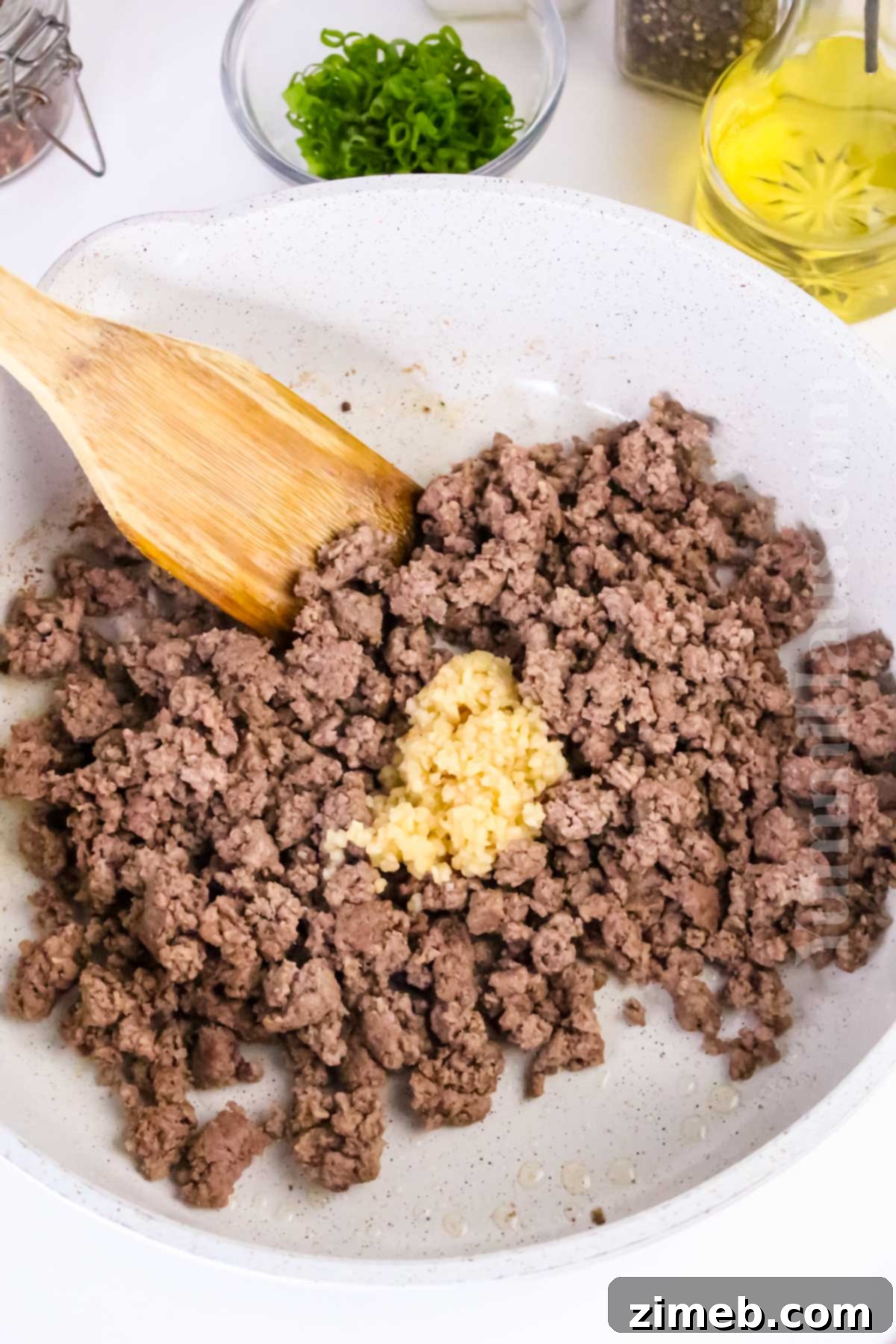
- Brown the Ground Beef: In a large skillet or wok, heat one tablespoon of vegetable oil over medium-high heat. Add the pound of ground beef to the hot pan. Use a wooden spoon or spatula to break the beef apart into small, even pieces as it cooks. Continue to cook, stirring occasionally, until the beef is fully browned and no pink remains. This typically takes about 5-7 minutes.
- Drain Excess Fat: Once the ground beef is thoroughly browned, carefully drain any excess fat from the skillet. This step is important to prevent the final dish from being overly greasy and allows the sauce to properly coat the beef.
- Infuse with Aromatics: Reduce the heat slightly to medium. Add the minced garlic and grated fresh ginger to the browned beef in the skillet. Cook for about 1 minute, stirring continuously, until the aromatics become fragrant and their irresistible scent fills your kitchen. Be careful not to burn the garlic.
- Whisk the Sauce Ingredients: In a separate small bowl, combine the low-sodium soy sauce, brown sugar, beef broth, hoisin sauce, and crushed red pepper flakes (if using). Whisk these ingredients together until the brown sugar is fully dissolved and the sauce is well combined.
- Add Sauce to Skillet: Pour the prepared sauce mixture directly into the skillet with the beef and aromatics. Stir everything together well, ensuring the beef is coated. Bring the sauce to a gentle simmer, allowing the flavors to meld.
- Prepare Cornstarch Slurry: In another small bowl, whisk together the cornstarch with two tablespoons of cold water until a smooth slurry forms. This mixture is crucial for thickening the sauce.
- Thicken the Sauce: While the sauce in the skillet is gently simmering, gradually stir in the cornstarch slurry. Continue to cook for 1-2 minutes, stirring constantly, until the sauce visibly thickens and achieves a glossy, luscious consistency that will beautifully coat the noodles.
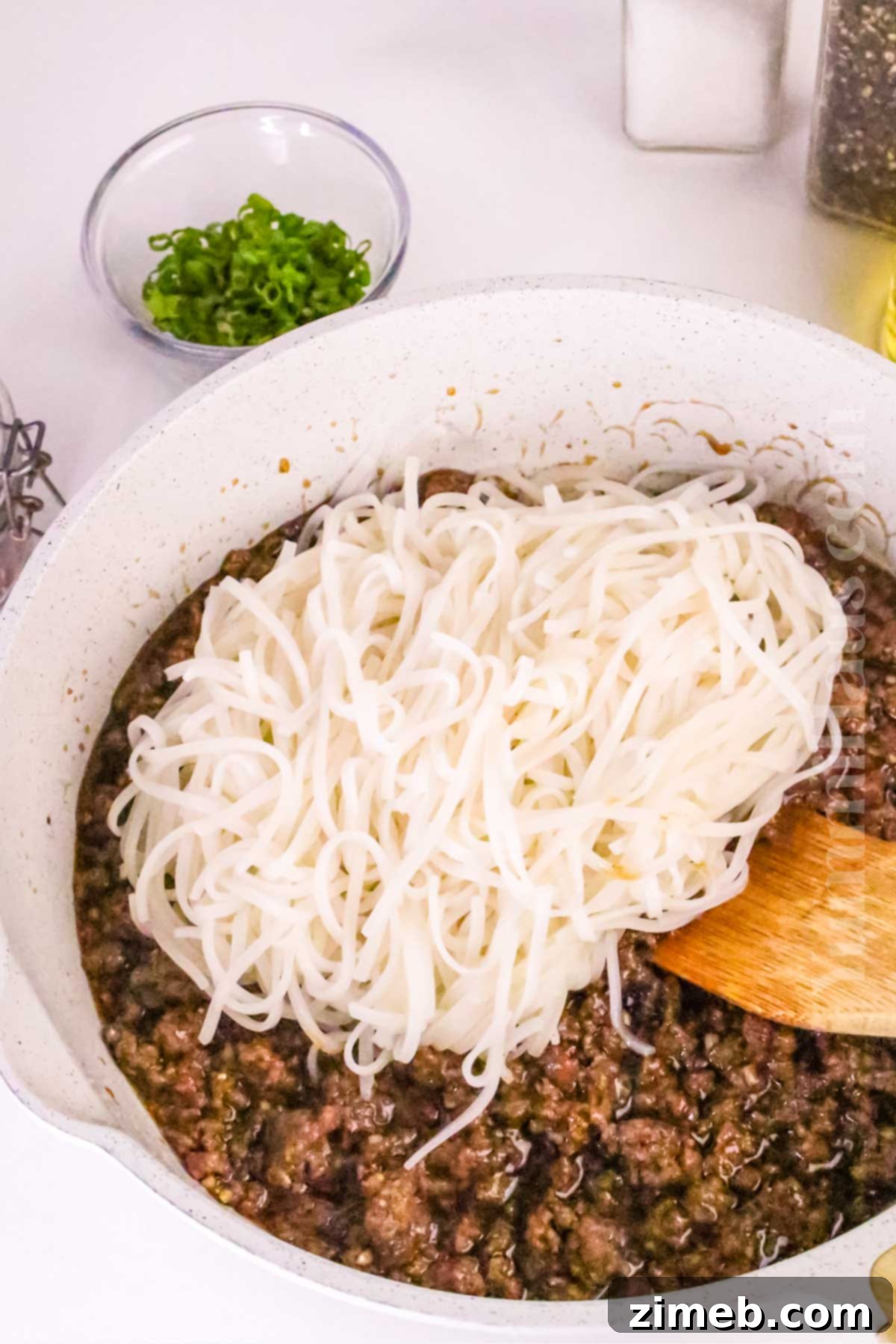
- Combine with Noodles: Add the pre-cooked and drained noodles directly into the skillet with the thickened sauce and beef. Use tongs to toss everything together vigorously, ensuring that every strand of noodle and every piece of ground beef is evenly coated with the rich, flavorful Mongolian sauce.
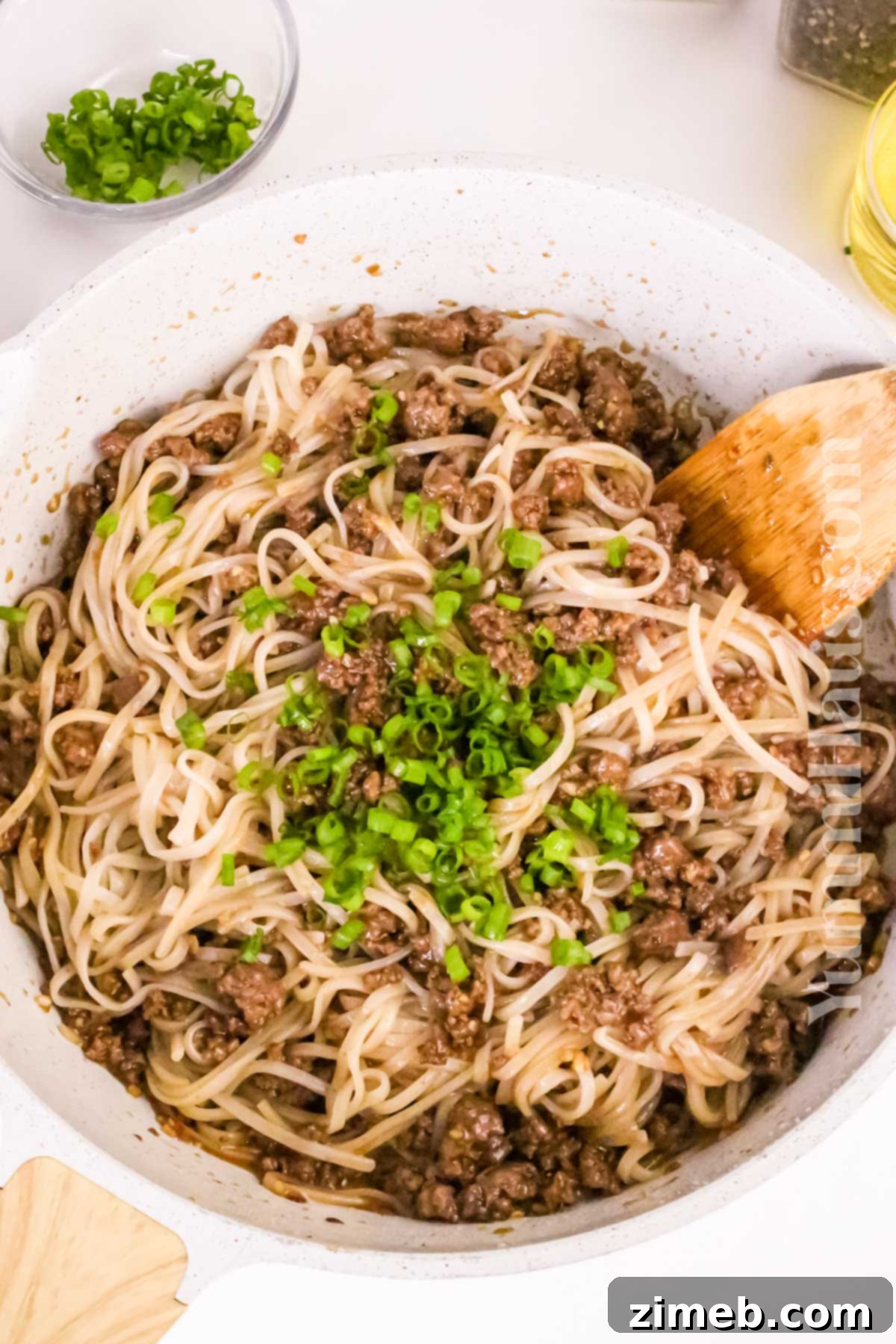
- Finish with Green Onions: Stir in a generous amount of chopped green onions. The fresh, mild onion flavor and vibrant color provide a perfect finish.
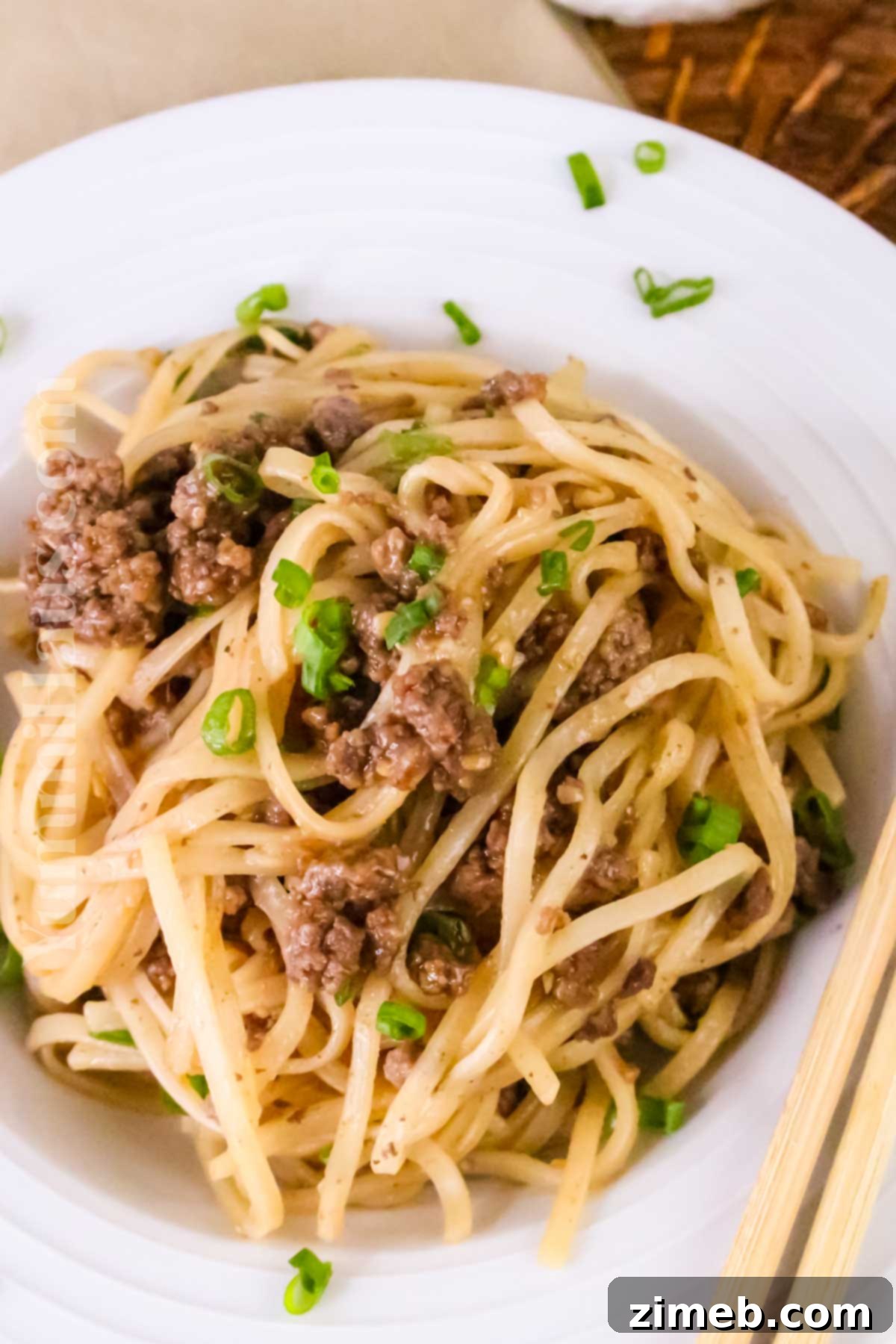
- Serve Immediately: Transfer the Mongolian Ground Beef Noodles to serving bowls. Garnish with additional fresh green onions, toasted sesame seeds, or a drizzle of sesame oil if desired. Serve hot and enjoy your homemade, restaurant-quality meal!
Elevate Your Dish: Expert Pro Tips for Mongolian Ground Beef Noodles
Transform a good meal into a truly exceptional one with these professional tips and tricks. These small adjustments can make a significant difference in the flavor, texture, and overall appeal of your Mongolian Ground Beef Noodles:
- Utilize Medium-High Heat for Superior Caramelization: When browning your ground beef, resist the urge to use low heat. Cooking it on medium-high heat allows the beef to develop a beautiful caramelized crust. This process, known as the Maillard reaction, creates deep, savory flavors and a more interesting texture that adds significant depth to the entire dish. To achieve this, avoid stirring the beef too frequently at the beginning, allowing it to sear properly on one side before breaking it up.
- Toast Your Noodles for a Subtle Nutty Note: This is a lesser-known but highly effective trick. Before boiling your noodles, briefly toss them in a dry, hot pan for just a minute or two until they release a subtle, toasted aroma. This gentle toasting process imparts a delicate nuttiness to the noodles that complements the rich, savory sauce wonderfully. It’s an extra step that yields a surprisingly noticeable boost in flavor.
- Allow the Sauce to Thicken Before Combining with Noodles: Patience is key here. Let the Mongolian sauce simmer and reduce slightly on its own for a few minutes before you introduce the cooked noodles. This crucial step ensures that the sauce achieves its ideal consistency—thick, glossy, and capable of clinging beautifully to every single noodle strand and piece of beef. A perfectly thickened sauce truly ties the entire dish together, creating a cohesive and flavorful experience.
- Fresh Ginger Makes an Unmistakable Difference: While powdered ginger can be a convenient substitute, grating fresh ginger releases an abundance of aromatic oils and potent juices that simply cannot be replicated by its dried counterpart. The warm, spicy, and slightly pungent kick of fresh ginger is absolutely essential for the authentic taste of Mongolian dishes. It’s a small effort that yields a massive return in flavor complexity.
- Garnish Generously for Visual Appeal and Enhanced Flavor: Don’t underestimate the power of a good garnish! A generous sprinkling of freshly chopped green onions not only adds a vibrant pop of color but also provides a fresh, mild oniony bite that cuts through the richness of the dish. For an extra layer of texture and a nutty aroma, consider adding a sprinkle of toasted sesame seeds. These garnishes significantly brighten the presentation and enhance the overall eating experience.
Unlock More Flavor: Delicious Add-Ins and Finishing Touches
While the base recipe for Mongolian Ground Beef Noodles is fantastic on its own, a few simple additions can take the flavor profile to even greater heights. These “flavor boosters” are easy to incorporate and can significantly enhance the depth and complexity of your dish:
- Add Toasted Sesame Oil: A small drizzle of high-quality toasted sesame oil stirred in right at the very end (after the heat is off) adds a profound nutty, aromatic finish. It rounds out all the flavors beautifully, bringing an authentic Asian restaurant-quality depth to your homemade meal.
- Garnish with Fresh Cilantro: For a bright, fresh herbal note, consider sprinkling chopped fresh cilantro leaves over the finished dish. The vibrant, slightly citrusy flavor of cilantro offers a wonderful contrast to the rich, savory noodles and beef, lifting the entire dish.
- Sprinkle Crushed Peanuts: If you enjoy a textural element, a handful of crushed roasted peanuts sprinkled over the top just before serving adds an unexpected but very welcome crunch and a lovely nutty flavor. It introduces a delightful layer of complexity to each bite.
- Squeeze Fresh Lime: A final squeeze of fresh lime juice right before serving can work wonders. The bright, tangy citrus zing cuts through the richness of the sauce, invigorating the flavors and leaving a refreshing impression on the palate.
Perfect Pairings: What to Serve With Mongolian Ground Beef Noodles
While Mongolian Ground Beef Noodles is a satisfying meal all on its own, pairing it with complementary side dishes can elevate your dining experience and create a well-rounded feast. Here are some fantastic suggestions that beautifully complement the rich flavors of the noodles:
- Steamed Broccoli: Lightly steamed broccoli florets offer a clean, crisp, and slightly bitter element that perfectly cuts through the richness of the savory noodles. Its vibrant green color also adds visual appeal and a healthy boost of vitamins.
- Cucumber Salad: A cool, refreshing, and tangy cucumber salad provides a delightful contrast to the warm, savory noodles. The crispness of the cucumber and a light, acidic dressing can cleanse the palate and add a bright, fresh balance to your meal.
- Spring Rolls: Whether you prefer fresh, uncooked spring rolls or crispy, fried versions, they make an excellent and fun side dish. They add a different texture and often come with their own dipping sauces, enhancing the overall Asian-inspired theme of your meal.
- Quick Pickled Vegetables: Quick pickled carrots, daikon radish, or even red onions offer a wonderful crisp texture and a zesty, acidic tang. This sharp contrast balances the sweet and savory notes of the main dish beautifully, adding a refreshing crunch.
- Hot Tea: Serving your meal with a warm cup of green tea or fragrant jasmine tea not only provides a comforting and authentic touch but can also aid in digestion and complement the flavors of the food.
- Asian Slaw: A crunchy slaw made with shredded cabbage, carrots, and a light sesame-ginger dressing would provide a refreshing, tangy, and crunchy counterpoint to the rich noodle dish.
Troubleshooting Common Issues with Mongolian Ground Beef Noodles
Even the most straightforward recipes can sometimes present small challenges. Don’t worry, here are solutions to common issues you might encounter while making your Mongolian Ground Beef Noodles, ensuring a perfect dish every time:
Noodles Clumping Together: This is a common problem, but easily remedied. After boiling your noodles, give them a quick rinse with cold water; this stops the cooking process and washes away excess starch that causes sticking. Then, toss them lightly with a small amount of neutral oil (like vegetable or sesame oil) before setting aside. Right before serving, if they’ve still clumped slightly, give them a good stir with tongs to loosen them up in the skillet.
Sauce Too Watery or Thin: If your sauce isn’t reaching that desired glossy, clingy consistency, don’t panic. Allow it to simmer a bit longer over medium heat; this helps to reduce the liquid and naturally thicken the sauce. If you’re short on time or it’s still too thin, prepare a small cornstarch slurry (1 teaspoon cornstarch mixed with 1 tablespoon cold water) and gradually whisk it into the simmering sauce. Cook for another minute or two, and it should thicken up beautifully.
Beef Too Dry or Overcooked: The key to juicy ground beef is to avoid overcooking it. Cook the beef just until it’s browned through and no pink remains, then drain the fat promptly. If you find your beef tends to dry out, try adding a splash of water or beef broth to the pan while it’s cooking with the sauce; this can help keep it moist and tender.
Flavor Too Bland: If your dish isn’t bursting with flavor, revisit your seasoning. Double-check the amounts of soy sauce and brown sugar, as these are critical for the sweet and savory balance. Most importantly, ensure you’re using fresh garlic and ginger, as their pungent and aromatic qualities are essential for a robust flavor punch. A final dash of salt, a tiny splash of fish sauce for extra umami, or a squeeze of fresh lime juice can also remarkably brighten and deepen the overall taste.
Noodles Too Mushy: Mushy noodles are often a result of overcooking. Always follow the package instructions closely, but err on the side of caution by testing your noodles a minute or two before the recommended cooking time. As soon as they are al dente, drain them immediately and rinse if necessary to halt the cooking process.
Freezing & Storing Leftovers: Maximizing Freshness and Convenience
One of the many advantages of this Mongolian Ground Beef Noodles recipe is how well it holds up as leftovers, making it perfect for meal prepping or enjoying throughout the week. Proper storage ensures both safety and deliciousness:
Freezing for Future Meals:
To freeze, first allow the cooked dish to cool down completely to room temperature. This is crucial to prevent condensation and ice crystals from forming, which can degrade texture. Transfer the noodles and beef into an airtight, freezer-safe container or heavy-duty freezer bags, removing as much air as possible. It can be frozen for up to 2 months. When you’re ready to enjoy, thaw the dish overnight in the refrigerator. Reheat gently on the stovetop or in the microwave, adding a splash of broth or water to rehydrate the noodles and sauce.
Storing in the Refrigerator:
Store any leftover Mongolian Ground Beef Noodles in an airtight container in the refrigerator. It will remain fresh and delicious for up to 3-4 days. When reheating, the noodles might absorb some of the sauce and seem a bit dry. To restore its original texture and moisture, reheat in a skillet over low heat, adding a splash of water or beef broth and stirring occasionally until warmed through.
Reheating Your Mongolian Ground Beef Noodles: Best Methods
Reheating leftovers correctly can make all the difference in maintaining their deliciousness. Here are three effective methods to bring your Mongolian Ground Beef Noodles back to life:
Oven Method (Best for large batches):
Preheat your oven to 350°F (175°C). Transfer the noodles and beef into an oven-safe dish. To prevent drying out and ensure even heating, cover the dish tightly with aluminum foil. Heat for approximately 15-20 minutes, stirring halfway through, until the dish is thoroughly warmed and steaming. The foil helps trap moisture, keeping everything tender.
Microwave Method (Quickest option):
For a fast reheat, place your desired portion of leftovers in a microwave-safe bowl. Cover loosely with a microwave-safe lid or a damp paper towel. This helps to create steam and prevent the noodles from drying out. Heat in 1-minute intervals on high power, stirring well between each interval, until the noodles and beef are hot throughout. Be mindful not to overheat, as this can make the beef tough.
Stovetop Method (Ideal for refreshing the sauce):
This method is excellent for restoring the dish’s original texture and moisture. Heat a large skillet or wok over medium-low heat. Add the leftover noodles and beef, along with a splash of water or beef broth. This liquid will help to rehydrate the noodles and loosen up the sauce. Stir occasionally, allowing the mixture to warm evenly and gently, until it’s heated through and the sauce is glossy again.
Creative Ways to Reinvent Your Mongolian Ground Beef Noodles Leftovers
Don’t let any of those delicious leftovers go to waste! Mongolian Ground Beef Noodles are incredibly versatile and can be transformed into exciting new meals. Here are some creative ideas to give your leftovers a fresh spin:
Mongolian Beef Lettuce Wraps: For a lighter, refreshing meal, spoon the leftover beef and noodles into crisp lettuce leaves (such as butter lettuce or iceberg). Add some shredded carrots, cucumbers, or a sprinkle of fresh cilantro for extra crunch and freshness. It’s a fantastic handheld meal that’s both light and incredibly satisfying.
Stir-Fry with Additional Veggies: Give your leftovers a complete makeover by turning them into a brand new stir-fry. Heat a wok or large skillet with a little oil, then add any fresh vegetables you have on hand – bell peppers, snap peas, broccoli, mushrooms, or bok choy. Stir-fry until crisp-tender, then toss in your leftover Mongolian beef and noodles and heat through. You might want to add another splash of soy sauce or hoisin for extra flavor.
Mongolian Beef Tacos: Embrace a fun fusion twist by using the beef mixture as a flavorful filling for soft tortillas. Top with shredded cabbage or a quick slaw, a drizzle of spicy mayo, and a sprinkle of chopped green onions for an unexpected and delicious taco night.
Egg Fried Rice Upgrade: Elevate your next batch of egg fried rice by incorporating the leftover Mongolian beef. Prepare your fried rice as usual, then stir in the beef mixture during the final stages of cooking. The rich flavors of the beef will infuse into the rice, creating a fast, flavorful, and hearty meal.
Stuffed Bell Peppers: For a comforting baked dish, halve some bell peppers (any color works) and remove the seeds. Scoop the leftover beef and noodles into each pepper half, top with a sprinkle of your favorite cheese (like mozzarella or cheddar), and bake until the peppers are tender and the cheese is melted and bubbly. It’s a fantastic way to enjoy your leftovers in a completely new format.
Frequently Asked Questions About Mongolian Ground Beef Noodles
Here are answers to some common questions you might have about making this delicious and easy Mongolian Ground Beef Noodles recipe:
Can I use ground pork instead of beef?
Absolutely! Ground pork is an excellent alternative to beef in this recipe. It tends to be slightly sweeter and fattier than ground beef, which will add a wonderful richness and unique flavor to the sauce. Just ensure you cook it thoroughly until it’s completely browned, breaking it apart as it cooks, similar to how you would prepare ground beef. You might find its texture slightly different but equally delicious.
Is this recipe spicy?
The base recipe, as written, is designed to be mildly flavored with just a hint of warmth from the crushed red pepper flakes (which are optional). Therefore, it’s generally not considered spicy. However, you have complete control over the spice level! To add more heat, simply increase the amount of red pepper flakes, or incorporate a dash of sriracha, a dollop of chili garlic sauce, or even some finely chopped fresh chilies to the sauce according to your preference.
Can I prep the sauce ahead of time?
Yes, absolutely! Preparing the sauce in advance is a fantastic time-saving tip, making this recipe even quicker on a busy weeknight. Simply whisk together all the sauce ingredients (soy sauce, brown sugar, beef broth, hoisin sauce, red pepper flakes) in a bowl, cover it, and refrigerate for up to 2-3 days. When you’re ready to cook, just warm it up slightly before adding it to the browned beef, and then proceed with thickening it with the cornstarch slurry.
What’s the best noodle to use if I don’t have Chinese egg noodles?
If you don’t have access to traditional Chinese egg noodles or lo mein noodles, common pantry staples like spaghetti or linguine make excellent stand-ins. Their texture and shape are quite similar. The most important tip when using pasta like spaghetti is to cook it truly al dente. This ensures the noodles retain a firm bite and don’t become overly soft or mushy when tossed with the hot sauce, maintaining a pleasant texture in the final dish.
Can I make this recipe gluten-free?
Yes, it’s very easy to adapt this recipe to be gluten-free. The main ingredients to watch are soy sauce and noodles. Simply substitute regular soy sauce with a gluten-free alternative like tamari or coconut aminos. For the noodles, opt for gluten-free noodles, rice noodles (vermicelli or broader rice noodles work well), or even zucchini noodles for a low-carb option. Always check the labels of all your ingredients to ensure they are certified gluten-free.
If you’ve fallen in love with this easy and flavorful Mongolian Ground Beef Noodles recipe, you’re in for a treat! We have a collection of other quick dinner favorites that are just as simple to make and packed with incredible taste. Whether you’re craving pasta, chicken, seafood, or more beef, these recipes are perfect for busy weeknights and guaranteed to become new family favorites. Please click each link below to find the easy, printable recipe and expand your weeknight dinner repertoire!
Check out this recipe
Check out this recipe
Check out this recipe
Check out this recipe

Check out this recipe
Discover More Incredible Ground Beef and Other Beef Dishes
If you’re a fan of the rich, savory flavors of beef, we’ve got you covered! Ground beef is incredibly versatile, and these recipes showcase just how many delicious possibilities it offers for quick, satisfying meals. Expand your culinary horizons with these other fantastic beef-centered dishes:
- Oven Beef Tenderloin: A truly elegant dish that’s surprisingly simple to prepare, perfect for special occasions or when you want to treat yourself to something extraordinary.
- Slow Cooker Beef Stroganoff: Enjoy a classic, creamy beef stroganoff with minimal effort. Your slow cooker does all the work, leaving you with tender beef and a rich sauce.
- Mexican Beef and Rice Skillet: A vibrant and flavorful one-pan meal, perfect for a quick dinner with a Tex-Mex twist. It’s hearty, satisfying, and packed with zesty flavors.
- Korean Beef Bowl: Sweet, savory, and with a delightful kick, this Korean beef bowl is a quick and healthy meal that brings authentic Asian flavors right to your table.
CONNECT WITH YUMMI HAUS!
Be sure to follow me on my social media, so you never miss a post!
Substack, FB, Pinterest, IG, Email Subscription
Rate this Recipe
Mongolian Ground Beef Noodles
Ingredients
- 8 ounces lo mein noodles or spaghetti noodles
- 1 tablespoon vegetable oil
- 1 pound ground beef
- 4 garlic cloves minced
- 1 teaspoon ginger fresh, grated
- ½ cup low-sodium soy sauce
- ¼ cup brown sugar
- ¼ cup beef broth
- 1 tablespoon hoisin sauce
- ½ teaspoon crushed red pepper flakes optional
- 1 tablespoon cornstarch
- 2 tablespoons water
Instructions
-
Cook the noodles according to the package instructions. Drain and set aside.
-
Heat the oil over medium-high heat in a large skillet or wok.
-
Brown the ground beef with the oil, breaking it apart as it cooks. Drain excess fat if needed.
-
Add the garlic and ginger, cooking for about 1 minute until fragrant.
-
Whisk together the soy sauce, brown sugar, beef broth, hoisin sauce, and red pepper flakes in a small bowl. Add the sauce to the skillet and bring to a simmer.
-
Whisk the cornstarch and water in a small bowl.
-
Stir in the cornstarch slurry and cook for 1–2 minutes, until the sauce thickens.
-
Toss in the cooked noodles until fully coated in the sauce.
-
Stir in the green onions.
-
Serve warm, garnished with additional green onions if desired.
Nutrition
Nutritional information for the recipe is provided as a courtesy and is approximate. Please double-check with your own dietary calculator for the best accuracy. We at Yummi Haus cannot guarantee the accuracy of the nutritional information given for any recipe on this site.