

Imagine a velvety, rich, and intensely cheesy sauce that comes together in mere minutes. This isn’t a dream – it’s our incredible homemade cheddar cheese sauce recipe! Crafted with just a few simple ingredients like sharp cheddar cheese, butter, and whole milk, this perfect sauce can be ready in under 10 minutes from start to finish. Its versatility knows no bounds, making it the ideal accompaniment for crispy homemade French fries, a decadent foundation for classic mac n cheese, or a luxurious topping for your favorite pasta dishes. Once you try this Easy Homemade Cheddar Cheese Sauce Recipe, you’ll understand why it’s an absolute game-changer in your kitchen.
While store-bought cheese sauces offer convenience, they often fall short in authentic flavor, creamy texture, and frequently contain artificial ingredients and stabilizers. There’s truly nothing that compares to the homemade goodness, the smooth consistency, and the deeply satisfying taste of a freshly made cheddar cheese sauce. Our recipe distinguishes itself by beginning with a classic roux – a fundamental technique in professional and home kitchens alike – which provides the perfect, lump-free thick base. From there, it’s a straightforward process of whisking in milk and your chosen freshly shredded cheddar cheese to achieve an unparalleled depth of flavor and luscious consistency. Say goodbye to bland, gritty sauces and hello to the ultimate homemade indulgence.
Recipe Highlights: Why This Cheddar Cheese Sauce Will Win You Over
- Irresistible Texture: This recipe guarantees a satisfyingly creamy texture, allowing you to easily adjust it to be a pourable, silky sauce or a luxuriously thick dip.
- Bold, Authentic Flavor: Prepare for a truly cheesy experience that genuinely elevates any dish it accompanies. It’s packed with natural cheddar goodness!
- Effortless Preparation: This super easy cheese sauce requires just a handful of simple ingredients (most of which are pantry staples) and comes together in mere minutes, making it perfect for busy weeknights.
- Unmatched Versatility: This isn’t just a sauce; it’s a culinary superpower! Perfect for movie nights with chips and fries, a delightful addition to steamed broccoli, or a comforting pasta sauce. Its adaptability makes it an instant kitchen staple.

My best tip for making this simple cheddar cheese sauce is to use medium cheddar cheese. Its balanced flavor profile helps to complement the cooked flour taste of the roux and ensures the sauce remains incredibly versatile, pairing beautifully with a wide array of snacks, dips, and main courses. The key is always to grate your own cheese for the best melt and texture!
Understanding the Classic: What Exactly Is Cheddar Cheese Sauce?
Cheddar cheese sauce holds a revered place in cuisine, particularly in British cooking, where it’s considered a fundamental staple much like Mornay sauce is to French gastronomy or chili con queso to Mexican recipes. At its core, it’s an incredibly versatile and comforting sauce crafted from a blend of cheese, milk, butter, and flour.
Traditionally, you’ll encounter this golden, creamy concoction as the star in beloved dishes like macaroni and cheese, or as a rich, warm dipping sauce for a variety of snacks. While commercially prepared cheese sauces are widely available in grocery stores across the US and beyond, the superior quality, taste, and texture of a homemade version are simply undeniable. Making it from scratch allows you to control the ingredients, avoid artificial additives, and achieve a depth of flavor that packaged alternatives can’t replicate. It’s not just a sauce; it’s a testament to simple ingredients coming together to create something extraordinary.
The beauty of cheddar cheese sauce lies in its simplicity and the balance of its components. The butter and flour form a roux, which acts as the thickening agent, providing a smooth base. The milk adds creaminess and helps distribute the cheese evenly, preventing it from becoming oily or clumpy. And, of course, the cheddar cheese itself infuses the sauce with its signature sharp, tangy, and deeply savory notes, creating a flavor profile that is both familiar and incredibly satisfying. This foundational sauce is a culinary canvas, ready to be adapted and enjoyed in countless ways, making it a truly indispensable recipe for any home cook.
Beyond Delicious: Why This Homemade Cheese Sauce Will Become Your Go-To
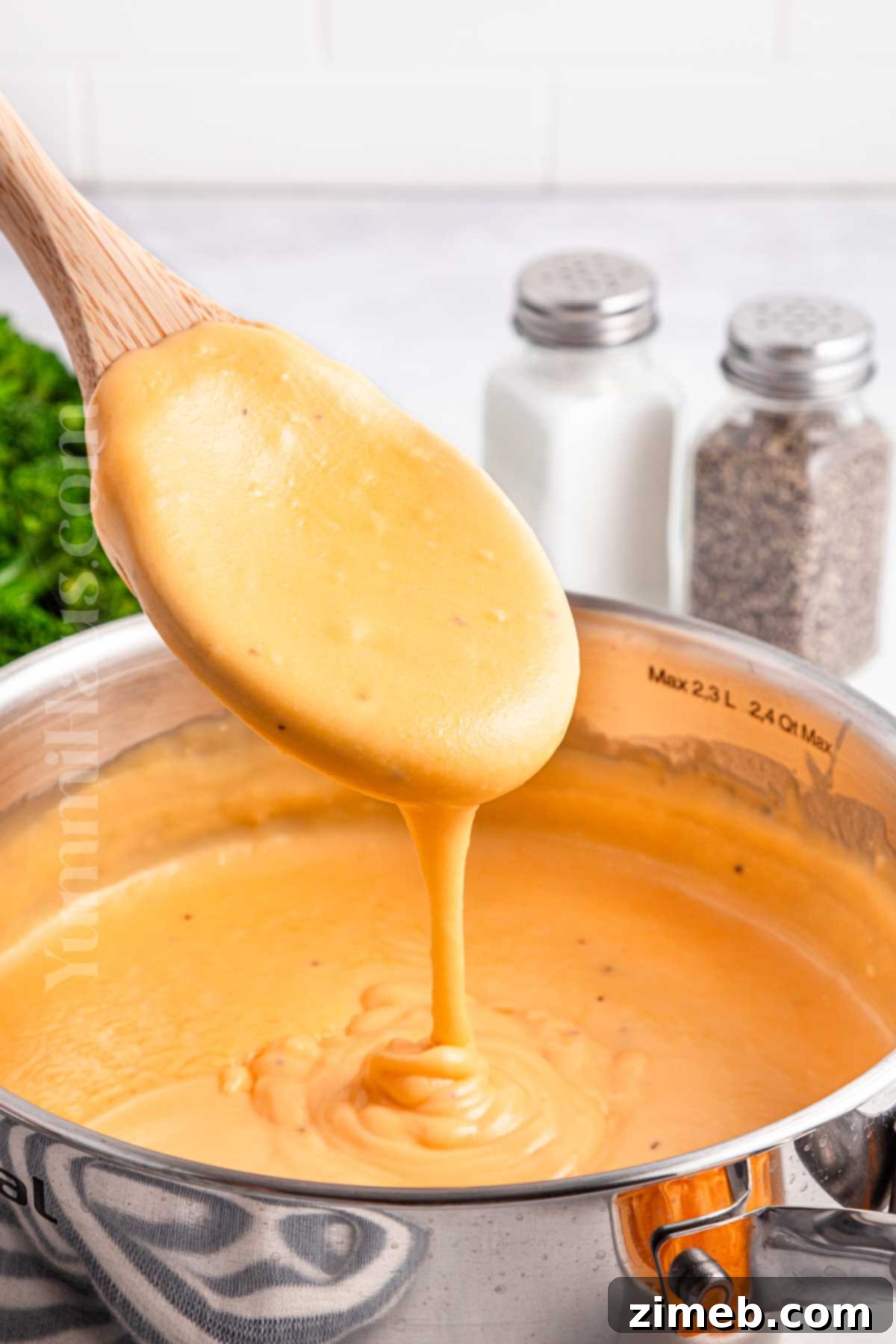
- Unbelievably Creamy: Forget grainy or thin sauces. This recipe, with its carefully balanced ingredients and simple technique, guarantees the silkiest, most luscious cheese sauce you’ve ever tasted. It melts perfectly into a velvety smooth consistency every time.
- Effortlessly Versatile: This isn’t just a single-use sauce. Its applications are boundless! Use it as a decadent dipping sauce for everything from crispy fries to soft pretzels, a luxurious pasta sauce for weeknight dinners, a key ingredient in cooking homemade macaroni and cheese, or even as a rich topping for savory pies and casseroles. The possibilities are truly delicious and inspire endless culinary creativity.
- Infinitely Customizable: This recipe provides a fantastic base, but don’t hesitate to make it your own. Want a kick? Add a pinch of cayenne pepper or a dash of hot sauce. Prefer a different cheese? Experiment with various blends to find your perfect flavor. You can easily adjust the flavor profile to suit any craving, dish, or dietary preference.
- Kid-Approved Goodness: Struggling to get your little ones to eat their vegetables? A generous dollop of this warm, cheesy sauce makes steamed broccoli, cauliflower florets, or carrot sticks instantly appealing and delicious. It’s a secret weapon for encouraging healthy eating without a fuss!
- Quick & Convenient: In a world of busy schedules, a recipe that delivers incredible flavor in just 5-10 minutes is a true gem. This means less time cooking and more time enjoying your delicious creations with family and friends.
- Budget-Friendly: Made with common, affordable pantry staples, this homemade sauce is far more economical than buying specialty cheese sauces from the store. You get gourmet taste and superior quality without the gourmet price tag.
Essential Ingredients for the Perfect Cheddar Cheese Sauce
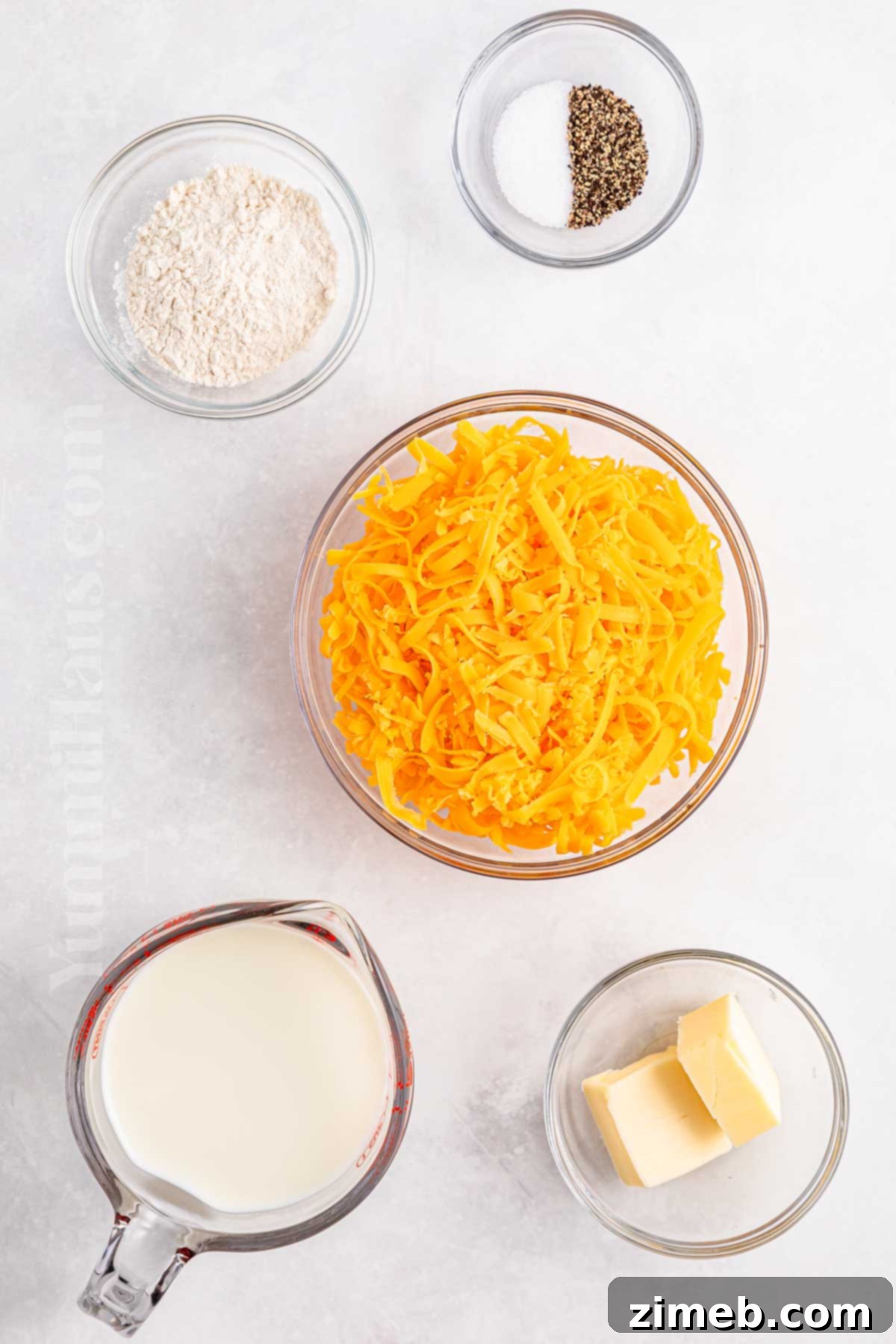
Creating an exceptional cheese sauce starts with selecting the right ingredients. Each component plays a crucial role in achieving that perfect creamy texture and rich, cheesy flavor. Here’s a closer look at what you’ll need and why:
- Unsalted Butter: We opt for unsalted butter to give you complete control over the final sodium content of your sauce. Butter is essential for creating the roux, lending a rich, savory base and contributing significantly to the sauce’s smooth mouthfeel and luscious texture.
- All-Purpose Flour: This is the classic thickening agent that, when combined with butter, forms our foundational roux. You can certainly use a gluten-free all-purpose flour blend or even plain flour as an alternative. The key is to measure it precisely and, if possible, sift it. This prevents lumps and ensures a smooth, consistent sauce. Too much flour can make the sauce pasty or give it an unpleasant raw flour taste, while too little won’t thicken it sufficiently.
- Whole Milk: For the richest, creamiest cheese sauce, whole milk is highly recommended. Its higher fat content contributes significantly to the luxurious texture and full-bodied flavor. If you prefer a slightly thicker sauce, evaporated milk or half-and-half are excellent substitutes. You might also want to keep a little extra milk on hand to thin the sauce if it becomes too thick upon standing or reheating.
- Freshly Grated Medium Cheddar Cheese: This is arguably the most critical ingredient. Freshly grating your cheese from a block is non-negotiable for the best results. Pre-shredded cheeses often contain anti-caking agents like cellulose or potato starch, which can make your sauce gritty, oily, and prevent it from melting smoothly. Medium cheddar offers a balanced, crowd-pleasing cheesy flavor that is robust without being overpowering, making it incredibly versatile for various applications.
- Salt and Pepper: These humble seasonings are vital for enhancing and balancing the complex flavors of your cheese sauce. Always add them to taste at the very end of the cooking process, as the inherent saltiness of your chosen cheddar can vary. Freshly ground black pepper adds a subtle warmth and aromatic depth that complements the cheese beautifully.
- Optional Flavor Boosters: While not strictly necessary for a classic sauce, consider a small pinch of dry mustard powder or a dash of Worcestershire sauce. These additions can subtly deepen the savory notes of the cheese without making the sauce taste overtly of mustard or Worcestershire, adding an extra layer of complexity.
Essential Kitchen Tools for Sauce Success
You won’t need an array of fancy gadgets to create this incredible cheese sauce. A few basic kitchen essentials are all it takes to achieve perfectly smooth and delicious results:
- Medium Saucepan: A non-stick or heavy-bottomed saucepan is ideal for preventing sticking and ensuring even heat distribution. This is crucial for cooking the roux thoroughly without burning and for gently melting the cheese.
- Whisk: An indispensable tool for vigorously stirring the butter and flour for the roux, and then continuously whisking the milk into the roux to prevent lumps. It also helps achieve that desirable silky consistency when melting the cheese.
- Box Grater or Food Processor: If you’re opting for block cheese (which we highly recommend for superior results!), a sturdy box grater or a food processor fitted with a grating attachment will be necessary to prepare your cheese.
- Rubber Spatula: Useful for scraping down the sides of the saucepan and ensuring all ingredients are fully incorporated.
Step-by-Step Guide: Crafting Your Creamy Cheddar Cheese Sauce
Making homemade cheddar cheese sauce is a simple process, but paying attention to a few details ensures a perfectly smooth and rich result every time. Follow these easy steps for culinary success:
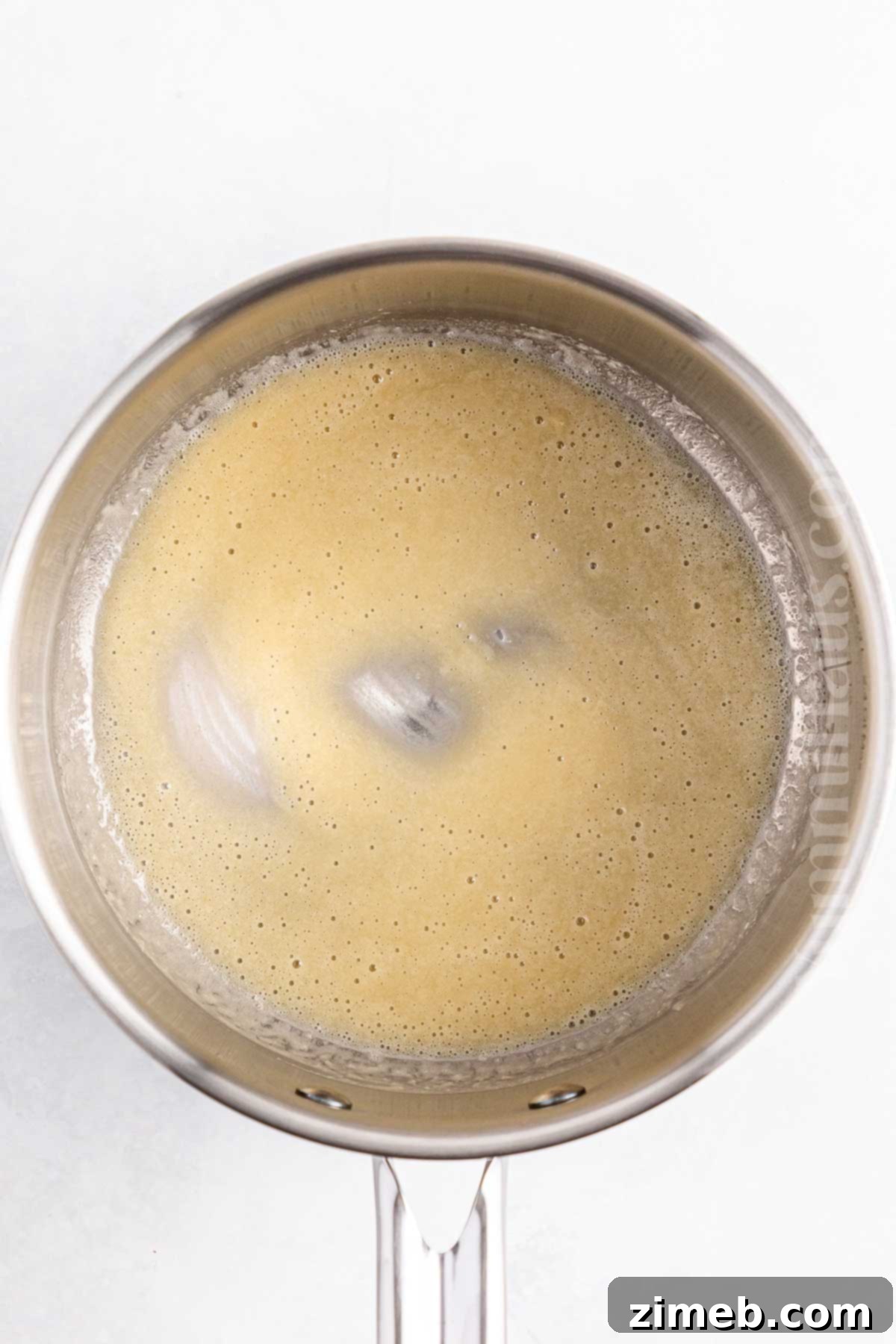
- Prepare the Roux: Begin by melting the unsalted butter in a medium saucepan over medium heat. Keep a close eye on it to prevent burning. Once the butter is fully melted and slightly shimmering, signifying it’s hot, it’s time for the next step.
- Incorporate the Flour: Stir in the all-purpose flour immediately after the butter has melted. Whisk constantly for about 1 minute. This cooking process is crucial; it cooks out the raw flour taste and creates the roux, the foundational thickening agent of your sauce. The mixture should form a thick paste, bubbling gently and smelling slightly nutty. Ensure it doesn’t brown, as we want a pale, classic white sauce base for our cheddar.
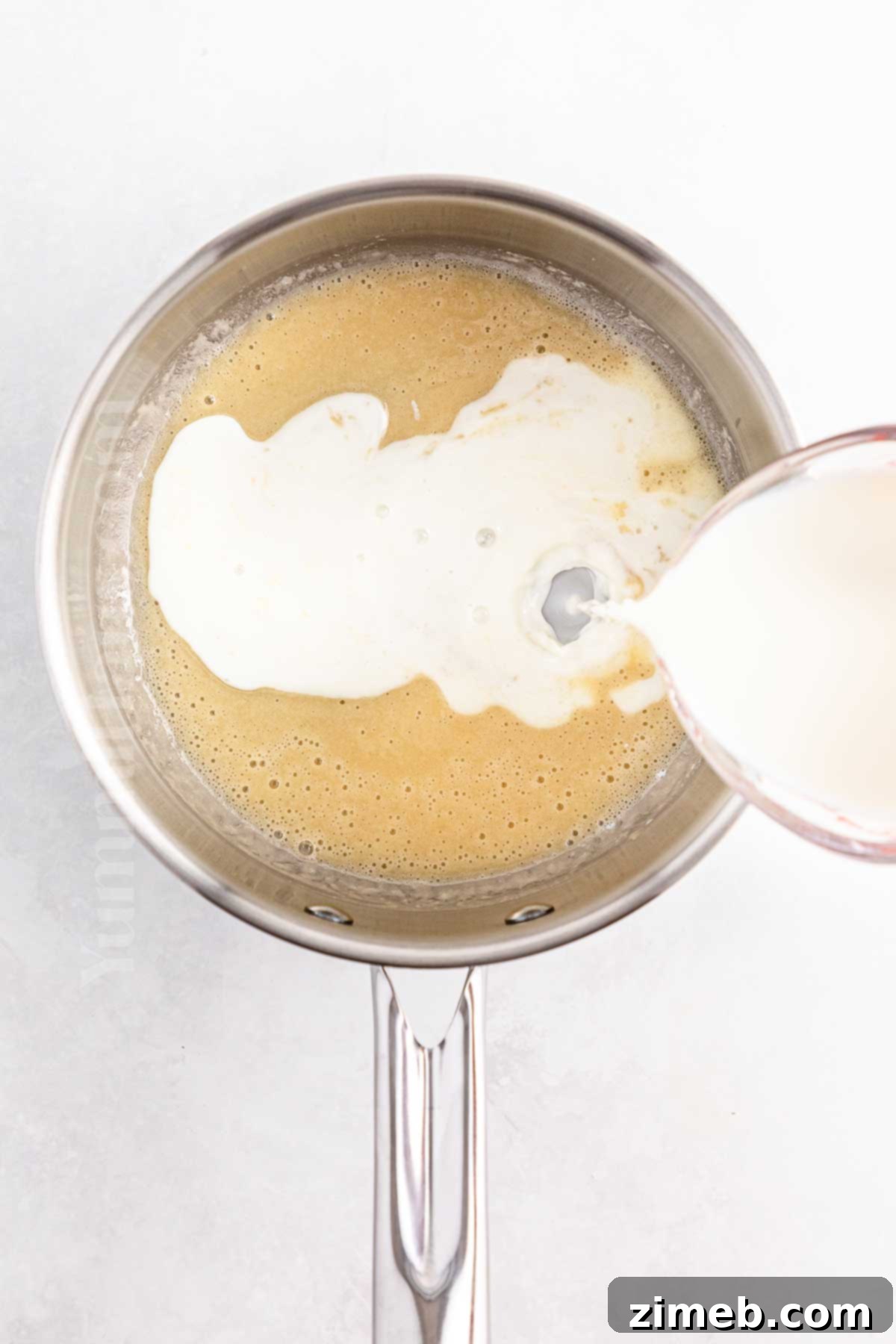
- Gradually Add Milk: This is where patience is key for a lump-free sauce. Slowly pour in the whole milk, a little at a time, while continuously whisking. Initially, the mixture will be very thick, almost clumpy, but as you add more milk and whisk, it will become smoother and more fluid. Continue whisking constantly until all the milk is fully incorporated and the sauce begins to thicken and bubble gently, a process that usually takes 3-5 minutes. The consistent whisking ensures a velvety texture and prevents any lumps from forming.
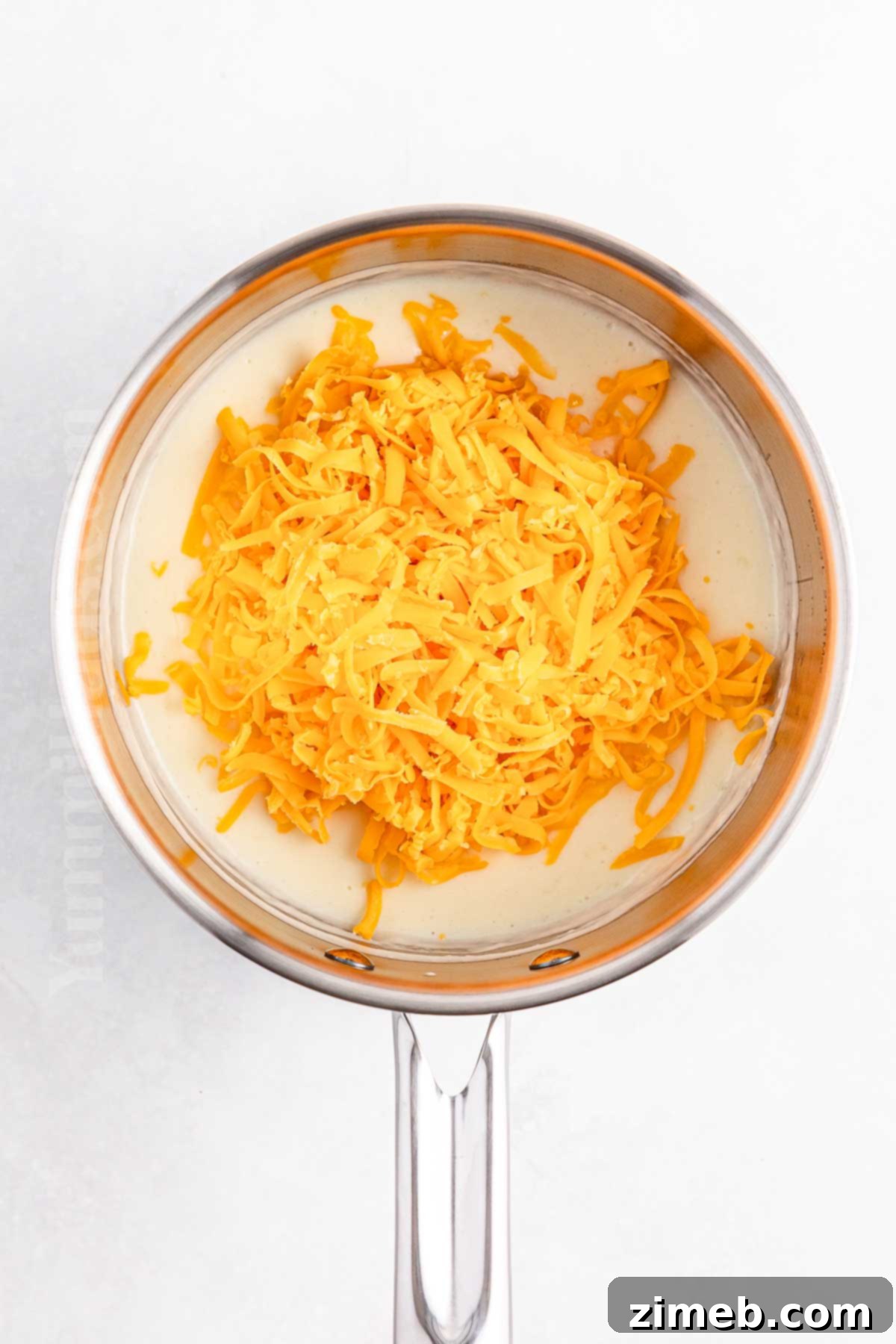
- Melt in the Cheese: Reduce the heat to low. Gently fold in the freshly grated cheddar cheese. It’s important to add the cheese gradually and stir continuously until it’s fully melted and smoothly incorporated into the sauce. Avoid high heat during this stage, as excessive heat can cause the cheese to separate, become oily, or turn grainy. The goal is a smooth, homogenous mixture that flows beautifully.
- Season to Perfection: Once the cheese is completely melted and the sauce is smooth, remove it from the heat. Taste the sauce and season with salt and freshly ground black pepper as desired. Remember that cheddar cheese has its own inherent salt content, so adjust your seasoning carefully to avoid over-salting.
- Serve Immediately: For the best experience, serve your warm, creamy cheddar cheese sauce right away to enjoy its optimal texture and flavor.
Chef’s Tip: If your sauce appears too thick after cooking or after sitting, whisk in a splash more warm milk, one tablespoon at a time, until it reaches your desired pourable consistency. If, conversely, your sauce is too thin, you can try simmering it gently for another minute or two while continuously stirring, or, for a quick fix, mix a tiny bit of cornstarch (1 tsp) with cold water (1 tbsp) to form a slurry, and whisk it into the bubbling sauce, cooking until thickened.
Endless Pairings: How to Enjoy Your Versatile Cheese Sauce
The beauty of this homemade cheddar cheese sauce lies in its incredible versatility. Once you’ve mastered the basic recipe, a world of delicious possibilities opens up! Here are some of our favorite ways to enjoy this golden goodness, making it a star at any meal or gathering:
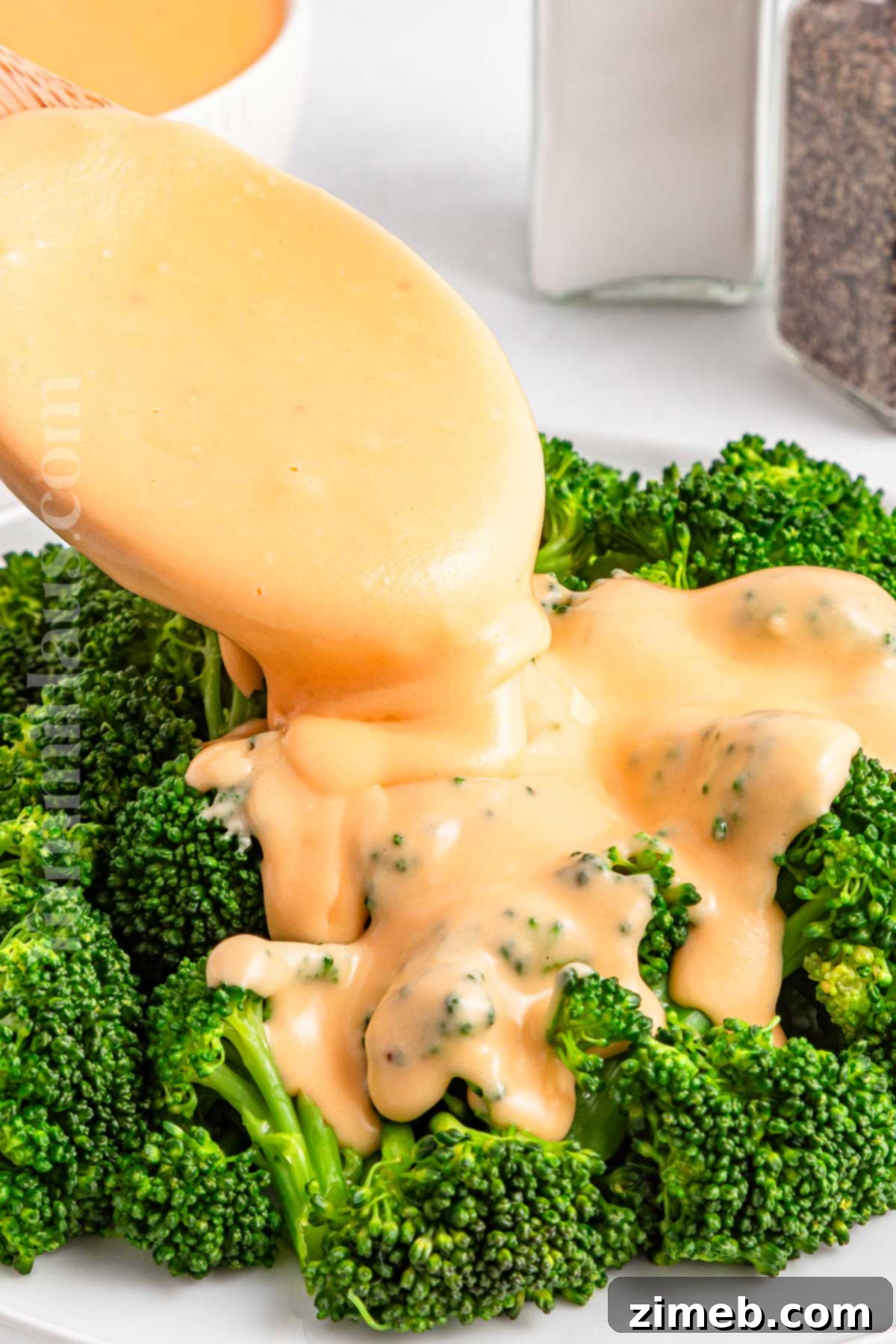
- Classic Dipping Extravaganza: Ladle this warm sauce generously over a platter of freshly cooked vegetables like steamed broccoli, vibrant cauliflower florets, or tender asparagus for a healthy yet incredibly indulgent side dish. It’s also an absolutely irresistible dip for soft pretzels, crispy tortilla chips, or crunchy Parmesan tortilla chips. Elevate your movie night, game day snacks, or appetizer spread instantly!
- Pasta Perfection: Transform simple pasta into a gourmet meal with minimal effort. Use it as a rich, creamy sauce for any pasta shape – from elbow macaroni to rotini or penne. It’s also the essential, star ingredient in a comforting homemade macaroni and cheese. For a complete meal, add some cooked chicken, ham, or sautéed vegetables.
- Potato Paradise: Whether it’s crispy tater tots, golden homemade French fries, rustic potato wedges, or fluffy baked potatoes, a generous pour of this cheese sauce makes any potato dish extraordinary. Try it on loaded mashed potatoes for an ultimate comfort food experience.
- Burger Bliss: Take your burgers to the next level! Serve it hot with juicy beef, turkey, or veggie burgers for an epic cheesy experience that is always a hit at barbecues and casual gatherings.
- Elevated Breakfasts: Who says cheese sauce is only for dinner? Drizzle it over scrambled eggs, savory breakfast burritos, or even a hearty breakfast casserole for a delightful morning treat. It adds a wonderful richness to your first meal of the day.
- Savory Bowls & Sandwiches: Add a dollop to grain bowls, rice bowls, or even chili for an added layer of rich, creamy flavor. It also makes an incredible spread or topping for hot open-faced sandwiches or grilled cheese.
Storing Your Homemade Cheese Sauce
Proper storage is key to enjoying your delicious cheddar cheese sauce for days to come. Here’s how to handle leftovers to maintain its quality and freshness:
First, allow the sauce to cool completely to room temperature before covering it. This crucial step prevents condensation from forming inside the container, which can lead to a watery sauce. Once cooled, transfer any leftover cheese sauce to an airtight container. It will keep beautifully in the refrigerator for 3-4 days, ready for your next cheesy craving.
Reheating Instructions: When you’re ready to enjoy it again, reheating the sauce gently is key to maintaining its smooth texture. Transfer the refrigerated sauce to a small saucepan and reheat over medium-low heat. Cheese sauces tend to thicken significantly in the fridge due to the fats and starches solidifying. To restore its original creamy consistency, add a splash of milk (or even a tiny bit of water or chicken broth) while reheating. Whisk constantly until the sauce is fully heated through and smooth again. Avoid boiling, as high heat can cause the cheese proteins to separate, become oily, or the milk to curdle, leading to a grainy or broken texture.
Freezing: Unfortunately, this simple cheddar cheese sauce is generally not suitable for freezing. The dairy and cheese components tend to separate and become grainy or watery upon thawing and reheating, significantly compromising its smooth, creamy texture. For best results and optimal quality, always enjoy it fresh or within a few days from the refrigerator.
Unleash Your Creativity: Substitutions & Flavor Variations
While classic cheddar cheese sauce is a delight on its own, this recipe offers a fantastic foundation for culinary experimentation. Don’t be afraid to customize it to your taste or the dish you’re pairing it with. Here are some inspiring ideas:
- Explore Different Cheeses: While cheddar is king, many other cheeses melt wonderfully into this sauce, allowing you to create diverse flavor profiles. Experiment with sharp or extra-sharp cheddar for a more intense, piquant flavor, or try white cheddar for a milder, sophisticated profile. Other excellent choices include creamy Gouda, nutty Gruyere, mild Colby Jack, smooth Monterey Jack, delicate Swiss cheese, or even fiery Pepper Jack cheese for a subtle kick. A blend of two or more cheeses can also create a more complex and nuanced flavor experience.
- Spicy Nacho Cheese Sauce: Transform your basic sauce into a fiery, zesty nacho topping. Stir in a teaspoon of chili powder, a pinch of cayenne pepper, a dash of your favorite taco seasoning, or a few drops of your preferred hot sauce. For an extra layer of freshness, vibrancy, and a pop of color, top with finely chopped fresh cilantro or diced jalapeños.
- “Fancy” Sauce Enhancements: Elevate the sauce for more sophisticated dishes. Add a small amount of pungent blue cheese crumbles as a topping for an intense, distinctive flavor, or swirl in a dash of luxurious truffle oil for an earthy, aromatic note. A splash of dry white wine, reduced slightly before adding the milk, can also add a gourmet touch and subtle acidity.
- Garlic & Herb Infusion: If you’re using this sauce as a dip for soft pretzels, crusty bread, or garlic bread, consider adding a little garlic powder (or freshly minced garlic, cooked briefly with the butter before the flour) for deep, aromatic flavors. Fresh or dried herbs like chives, finely chopped parsley, or thyme can also be stirred in at the end to add a layer of fresh, herbaceous taste.
- More Seasoning and Flavor Boosters: The possibilities are truly endless for enhancing the flavor profile. A tiny pinch of freshly grated nutmeg adds warmth and depth (a classic addition to béchamel-based sauces). Smoked paprika can contribute a lovely smoky note, perfect for a BBQ-inspired dish, while dry mustard powder subtly boosts the cheese flavor without making the sauce taste overtly of mustard. Cumin adds an earthy, savory dimension, ideal for Tex-Mex applications. For a vibrant touch and a bit of a bite, consider stirring in finely diced green onions or even mild canned diced green chiles.
- Vegetable Puree Integration: For a slightly healthier twist or to discreetly incorporate extra vegetables, you could blend in a small amount of roasted butternut squash puree or carrot puree. This adds a subtle sweetness, extra creaminess, boosts nutritional value, and provides a beautiful natural color.
Achieving Perfection: Expert Tips for Your Homemade Cheese Sauce
- Always Grate Your Own Cheese: This is perhaps the most crucial tip for a truly smooth and creamy sauce. Pre-shredded cheeses found in grocery stores often contain anti-caking agents like cellulose or potato starch. While these prevent clumping in the bag, they can make your cheese sauce gritty, prevent it from melting properly, and even cause it to become oily. For the best results and a flawlessly smooth sauce, always use real cheese blocks and hand-grate them right before cooking. The difference in melt quality and texture is significant and worth the extra minute of effort.
- Mastering Consistency:
- To thin your sauce: If your sauce becomes too thick for your preference, simply whisk in a tablespoon or two of warm milk until it reaches your desired pourable consistency. Add gradually until perfect.
- To thicken your sauce: If, conversely, your sauce is too thin, you have a couple of options. You can continue to simmer it gently over low heat, stirring constantly, to allow some of the excess liquid to evaporate and thicken naturally. Alternatively, for a quicker fix, you can create a cornstarch slurry (mix 1 teaspoon cornstarch with 1 tablespoon cold water) and slowly whisk it into the simmering sauce, cooking for another minute until thickened.
- Avoid Overheating the Cheese: Once the cheese is added, keep the heat on low and stir constantly until just melted and smoothly incorporated. Heating cheddar sauce too aggressively or for too long can cause the cheese proteins to seize up, resulting in a grainy or stringy texture. It can also cause the milk to curdle, separating into an unappetizing oily mess. Gentle heat and continuous stirring are key for a beautifully smooth, emulsified sauce.
- Whisk, Whisk, Whisk: Consistent and vigorous whisking, particularly when adding the milk to the roux and melting the cheese, is paramount for preventing lumps and achieving that desirable velvety smoothness that sets homemade cheese sauce apart. Don’t be shy with your whisk!
Frequently Asked Questions About Homemade Cheddar Cheese Sauce
Can I Just Melt Cheddar Cheese On Its Own? Will It Make a Sauce?
While you can certainly melt cheddar cheese, it typically won’t yield a smooth, pourable sauce by itself. When heated without additional ingredients like a roux and milk, cheddar cheese tends to get oily, separate, and become clumpy rather than forming a silky, cohesive sauce. This is especially true for pre-shredded varieties, which contain anti-caking agents that further inhibit smooth melting. The purpose of building a cheese sauce with a roux (butter and flour) and milk is to create an emulsified base that helps the cheese melt beautifully and evenly, resulting in that desirable creamy, luscious texture we all love.
What Makes Cheddar Cheese Sauce Thick and Creamy?
The primary thickening agent in this cheddar cheese sauce is the roux. A roux is a classic culinary technique created by cooking equal parts butter and all-purpose flour together. When you slowly incorporate milk into this hot roux and continue to heat it, the starch molecules in the flour absorb the liquid and swell, causing the sauce to thicken beautifully. The melted cheddar cheese itself also contributes to the sauce’s overall body, richness, and mouthfeel, but the roux provides the foundational structure for its smooth, creamy consistency.
What If My Cheese Sauce Turns Out Gritty? How Can I Fix It?
A gritty cheese sauce is a common issue, often caused by one of two main factors: using pre-shredded cheese or overheating the sauce. Pre-shredded cheeses, as mentioned, contain anti-caking agents that don’t melt well, leading to a grainy texture. Overheating can cause the cheese proteins to tighten and separate from the fat, resulting in a similar gritty or oily outcome.
To prevent this, always use freshly grated block cheese and add it slowly over very low heat, stirring constantly until just melted. If your sauce does turn out gritty, you can often save it! Remove the sauce from the heat immediately. Try adding a splash of warm milk or even a tablespoon of cream cheese and whisking vigorously until the sauce becomes smooth again. For more stubborn cases, you can try blending it with an immersion blender for a few seconds. This can help re-emulsify any separated fats and smooth out the texture, salvaging your delicious creation.
Can I Make This Cheese Sauce Gluten-Free?
Absolutely! To make this cheddar cheese sauce gluten-free, simply substitute the all-purpose flour with an equal amount of a gluten-free all-purpose flour blend. Ensure your chosen blend is suitable for thickening sauces and follow the same cooking method. The rest of the ingredients and steps remain the same, allowing you to enjoy a delicious, gluten-free cheese sauce that everyone can enjoy.
How Can I Make My Cheese Sauce Extra Smooth?
For an exceptionally smooth cheese sauce, follow these key tips: always start with freshly grated block cheese, ensure your roux is cooked for at least one minute to eliminate any raw flour taste and fully hydrate the flour, add milk gradually while whisking continuously to prevent lumps, and finally, melt the cheese over very low heat, stirring constantly, without letting it come to a boil. These steps combine to create a beautifully emulsified and silky-smooth sauce. If you find any persistent tiny lumps, a quick pass with an immersion blender can work wonders, but proper technique should prevent most issues.
If you love this cheese sauce recipe, you’re going to love these other homemade sauces, too. Please click each link below to find the easy, printable recipe!
Béchamel Sauce for Lasagna
This creamy, classic Béchamel sauce is the perfect white sauce for lasagna—rich, smooth, and made with butter, flour, and milk for a silky layer that elevates every bite.
Check out this recipe
Buffalo Sauce
This Buffalo sauce is a buttery hot sauce that is absolutely perfect for Buffalo chicken wings — and so much more.
Check out this recipe
Carolina BBQ Sauce
Carolina BBQ sauce is a delicious, flavorful, and tangy sauce for every occasion. Less sweet than Texas sauce but with a little heat. It goes great on everything from chicken to pork to vegetables.
Check out this recipe
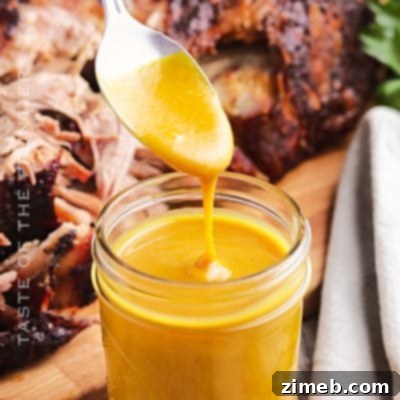
Rum Sauce for Bread Pudding
Rum Sauce for Bread Pudding is rich, creamy, and full of warm rum flavors. This easy recipe elevates any dessert to a new level.
Check out this recipe
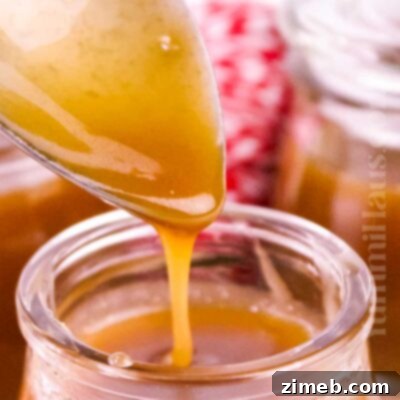
Easy Salted Caramel Sauce
Salty sweet goodness comes together in this amazing salted caramel sauce.
Check out this recipe
More Delicious Recipes to Pair This With
Elevate your mealtime with these fantastic dishes that perfectly complement our homemade cheddar cheese sauce:
- Loaded French Fries: A mountain of crispy fries smothered in this glorious cheese sauce is pure comfort food, perfect for sharing.
- Crab Rangoon Nachos: Add a cheesy kick to this creative and incredibly addictive appetizer, taking it to a whole new level.
- Auntie Anne’s Pretzel Bites – Copycat Recipe: The ultimate dipper for warm, soft pretzel bites. It’s a match made in heaven for snack enthusiasts.
- Cheddar Bay Sausage Balls: A cheesy sauce adds another layer of rich, savory flavor to these delightful and easy-to-make savory bites.
- Steamed Broccoli and Cauliflower Florets: Simple steamed or roasted vegetables become an indulgent and appealing treat with a generous drizzle of this warm, creamy sauce, encouraging even picky eaters.
- Fluffy Baked Potatoes: Transform a plain baked potato into a hearty, satisfying meal with butter, fresh chives, and plenty of warm, luscious cheese sauce.

CONNECT WITH YUMMI HAUS!
Be sure to follow me on my social media, so you never miss a post!
Substack, FB, Pinterest, IG, Email Subscription


Cheddar Cheese Sauce Recipe
Servings: 8 servings
Creamy, rich, and full of flavor, this Cheddar Cheese Sauce recipe is perfect for pouring over vegetables, pasta, baked potatoes, and more. Quick and easy to make in just minutes!
Pin Recipe
Save Recipe
Cook Time: 5 mins
Total Time: 10 mins
Ingredients
- 2 tablespoons unsalted butter
- 2 tablespoons all-purpose flour
- 1 cup whole milk (plus more to thin the sauce if needed)
- 1 ½ cups medium cheddar cheese (freshly grated)
- Salt and freshly ground black pepper (to taste)
Serving Suggestions:
- Over vegetables
- As a dip for soft pretzels
- Serve with crispy nachos or fries
Instructions
- Melt the butter in a medium saucepan over medium heat.
- Stir in the flour and cook for 1 minute, whisking constantly, ensuring it does not burn and the raw flour taste is cooked out.
- Slowly add the milk, continuing to whisk constantly, until fully incorporated. Cook for 3-5 minutes until the sauce thickens and begins to bubble gently.
- Reduce heat to low. Gently fold in the freshly grated cheese. Continue to cook and stir until the cheese is fully melted and the sauce is smooth. Avoid high heat to prevent a grainy texture.
- Taste the sauce and season with salt and pepper before serving, if desired, adjusting to your preference.
- Serve immediately over vegetables, with chips, or pretzels for the best experience.
Notes
- This recipe is highly adaptable. It can be made with different cheeses like sharp cheddar, white cheddar, Colby Jack, Gouda, or even spicy Pepper Jack cheese if desired.
- For the smoothest sauce, always use fresh blocks of cheese and hand-grate them right before cooking. Prepackaged cheeses often contain anti-caking agents that can lead to a gritty sauce.
- To thin the sauce, add a splash of warm milk, one tablespoon at a time, until it reaches your desired consistency.
- If the sauce is too thick, simply whisk in a tablespoon or two of warm milk to loosen it up. If it’s too thin, you can simmer it gently for a minute or two while stirring, or add a cornstarch slurry.
- For a spicy kick, especially for nachos, stir in chili powder, cayenne pepper, or a dash of your favorite hot sauce.
- If serving as a dip for pretzels or bread, adding a little garlic powder during the cooking process can enhance the savory flavors.
- STORING: Allow the sauce to cool completely before covering. Store leftovers in an airtight container in the refrigerator for 3-4 days.
- REHEATING: Reheat gently over the stovetop on medium-low heat. Add a splash of milk and stir constantly until fully heated through and smooth again. Avoid boiling.
- This cheese sauce is not recommended for freezing, as dairy products tend to separate and become grainy upon thawing.
Equipment
- Medium saucepan
- Whisk
- Box grater (for fresh cheese)
Nutrition Information
Serving: 1 serving | Calories: 137kcal | Carbohydrates: 3g | Protein: 6g | Fat: 11g | Saturated Fat: 5g | Cholesterol: 32mg | Sodium: 173mg | Potassium: 65mg | Fiber: 0.1g | Sugar: 2g | Calcium: 188mg | Iron: 0.1mg | Net Carbohydrates: 3g
Nutritional information for the recipe is provided as a courtesy and is approximate. Please double-check with your own dietary calculator for the best accuracy. We at Yummi Haus cannot guarantee the accuracy of the nutritional information given for any recipe on this site. Please consult a qualified nutritionist for personalized advice.
Follow @KleinworthCo for even more tasty recipes and culinary inspiration!