
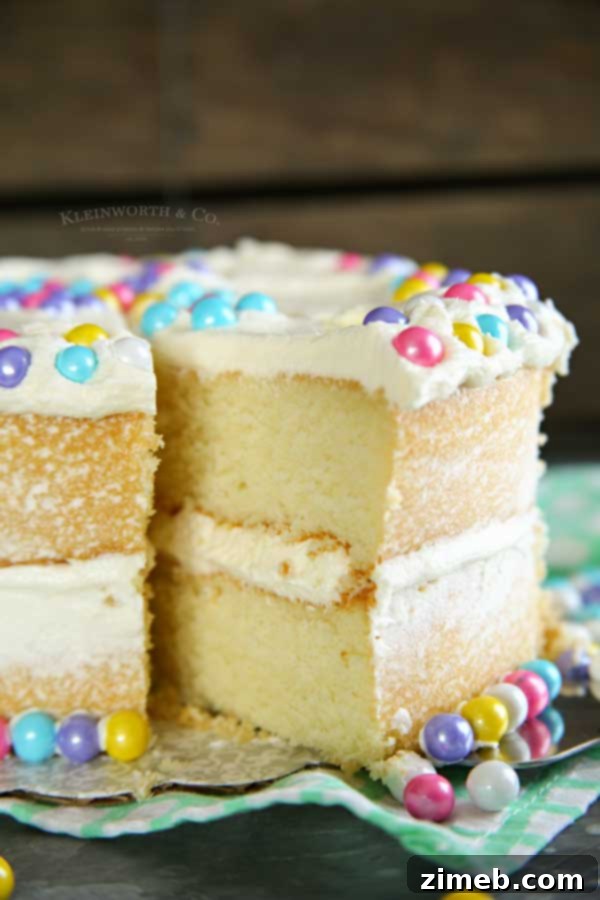
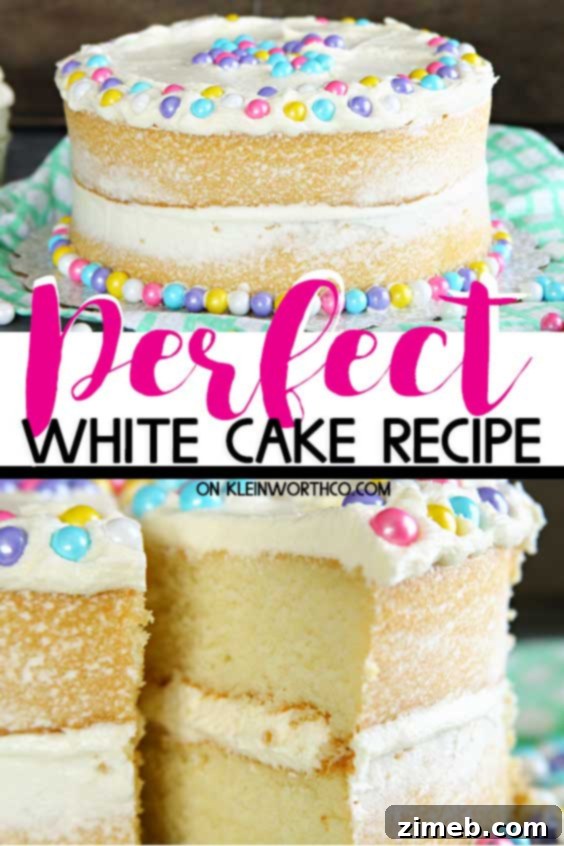
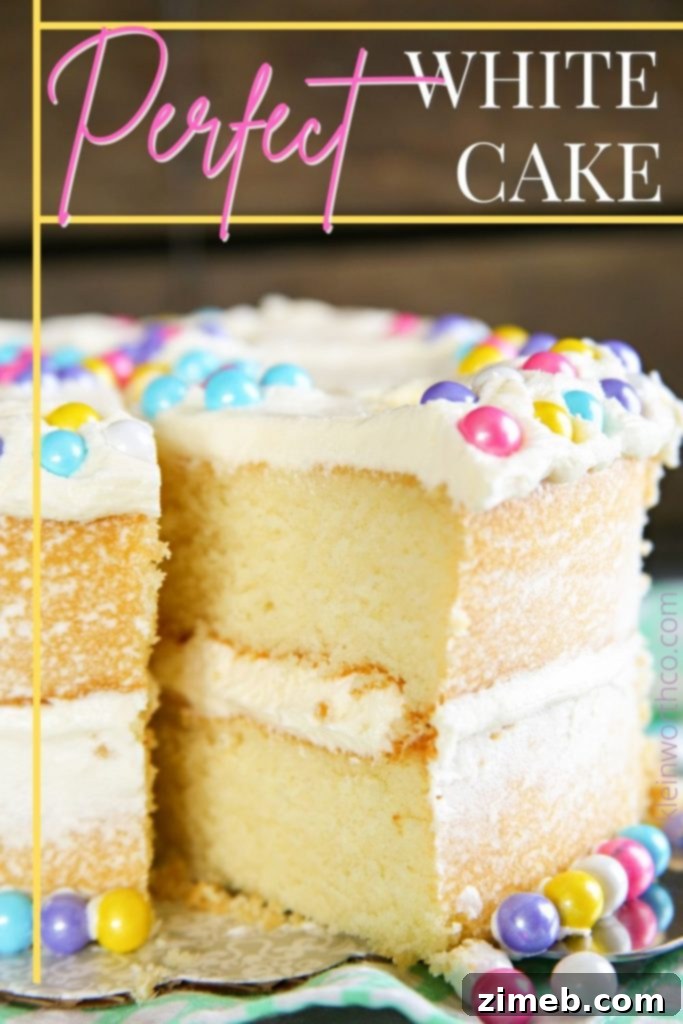
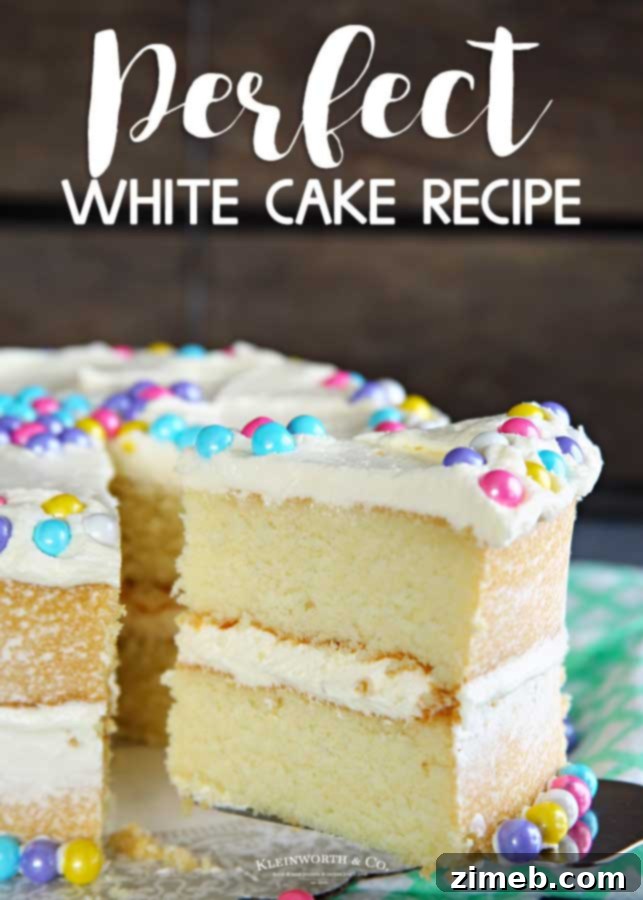
Welcome to the ultimate guide for creating the Best White Cake Recipe you’ll ever taste! This is more than just a dessert; it’s a culinary masterpiece, perfectly suited for grand occasions like weddings, joyful birthday celebrations, or any special moment demanding a touch of elegance. Our easy, classic, two-layer cake isn’t just homemade; it’s a labor of love designed to be the quintessential white cake experience.
There’s an undeniable magic to a truly great white cake. Its light, airy crumb, subtle buttery notes, and delicate vanilla-almond essence create a symphony of flavors that evoke pure delight. Imagine a slice, generously filled with a vibrant raspberry or rich Bavarian cream, then enveloped in a silky, sugary buttercream frosting. For many, including myself, this iconic dessert stirs fond memories and an immediate craving for that perfect, pristine slice. It’s the kind of cake that makes your heart skip a beat and truly elevates any gathering.
This post contains some affiliate links. Click here to read my full disclosure policy.
My deep affection for white cake isn’t just about its exquisite taste; it’s steeped in nostalgia. Growing up, my mom was an incredible cake decorator, transforming simple ingredients into edible works of art for most of my life. During my formative years, she even honed her craft working in a bustling bakery, where she mastered the nuances of baking perfection. Those early experiences undoubtedly shaped her incredible talent and passion for cakes.
However, her true artistry shone brightest when she crafted elaborate, custom cakes for our cherished friends and family. These weren’t just desserts; they were expressions of love and creativity. And as her little helper (or rather, eager spectator), I was perpetually in a state of pure bliss, always fortunate enough to be on standby for the “scraps.” Those leftover pieces of cake and frosting weren’t mere remnants; they were golden opportunities to savor the delicious results of her hard work, often still warm from the oven, offering an unadulterated taste of pure homemade goodness. It was during these moments that my enduring love affair with white cake truly blossomed.
Discover the Perfect White Cake Recipe: A Culinary Legacy
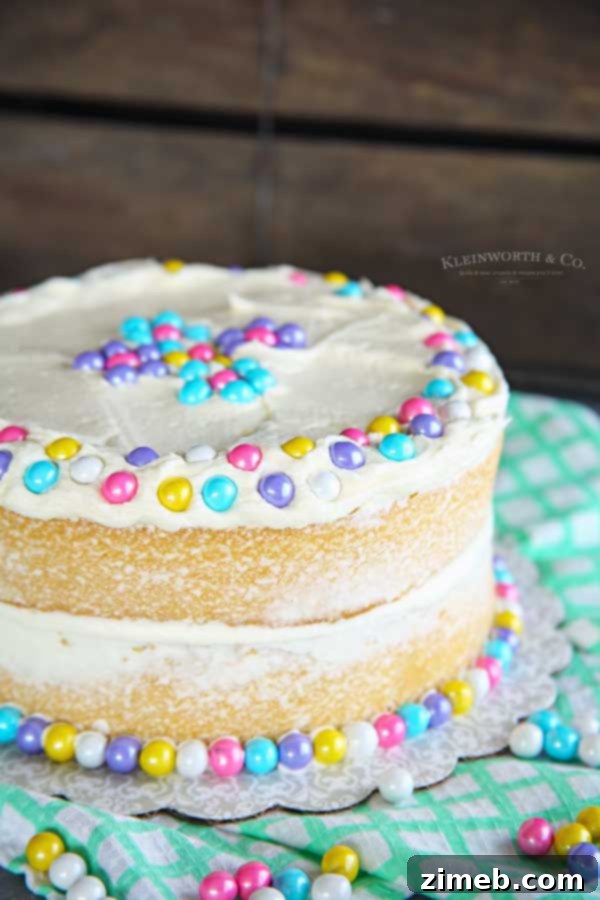
Among all the incredible flavors my mom meticulously perfected, her white cake held a special place. It wasn’t just a recipe; it was the recipe, an absolute staple for the breathtaking wedding cakes she created. There was an unparalleled quality about this particular homemade white cake that, to this day, surpasses anything I’ve ever encountered in any professional bakery. And trust me when I say, my pursuit of the perfect cake has led me to sample countless confections from bakeries far and wide.
Yet, none have ever come close to the sublime taste and texture of THIS classic white cake. This isn’t merely a claim; it’s a testament to decades of baking excellence passed down through generations. This recipe delivers a moist, tender crumb and an exquisite flavor profile that consistently outperforms even the most highly acclaimed commercial offerings. If you’re searching for a truly exceptional 2-layer white cake, your search ends here. Prepare to be amazed by its homemade perfection.
Baking the Best White Cake
Frequently Asked Questions for Your Perfect White Cake
Unlocking the Superiority of Homemade White Cake: Beyond the Box Mix
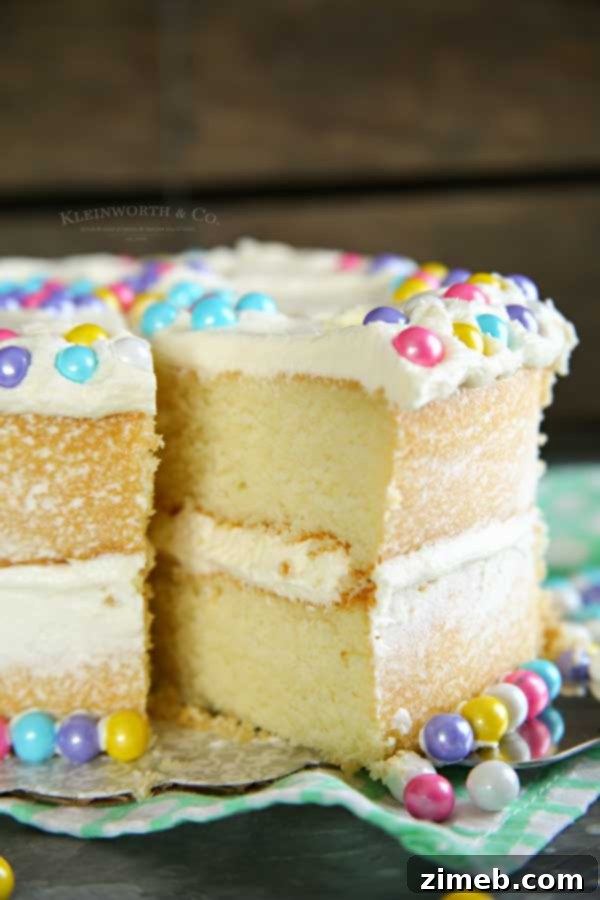
Many aspiring bakers wonder what truly sets a homemade white cake apart from its box mix counterpart. While convenience has its place, our classic white cake recipe offers a multitude of advantages that elevate it to a league of its own. First and foremost is the transparency of ingredients – knowing exactly what goes into your dessert is incredibly reassuring. But beyond that, the texture and structural integrity are game-changers.
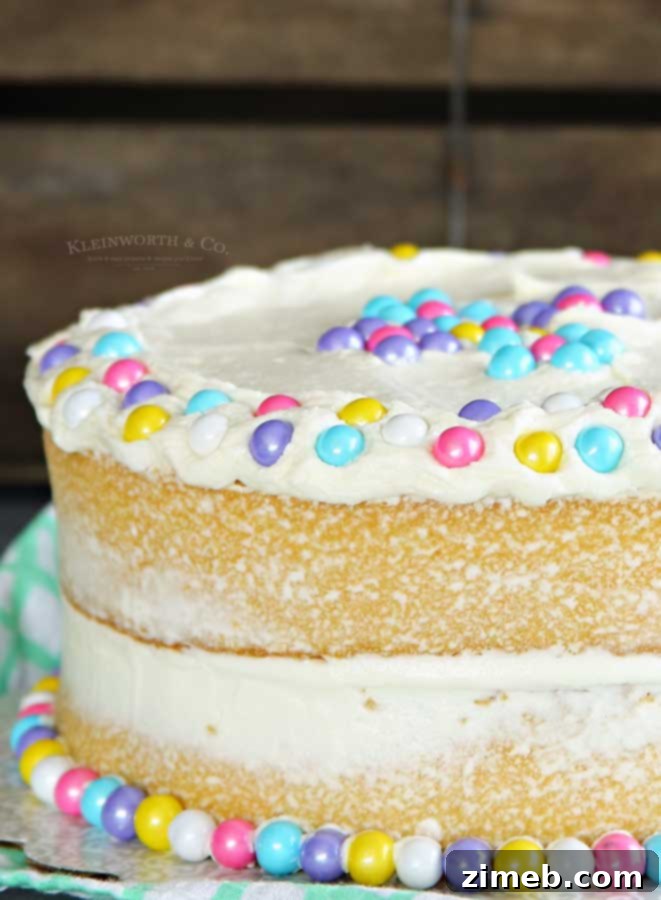
Unlike the often ultra-light and airy texture of a box mix cake, which can be delightful for a simple, single-layer treat, our recipe yields a subtly denser, yet still wonderfully tender, crumb. This isn’t to say it’s heavy; rather, it possesses a refined sturdiness that is crucial for layered creations. Box mix cakes, while fluffy, frequently struggle under the combined weight of luscious fillings, additional tiers, generous layers of frosting, and intricate decorations. The bottom layer can compress, leading to an undesirable “squished” appearance and compromising the overall elegance of your dessert.
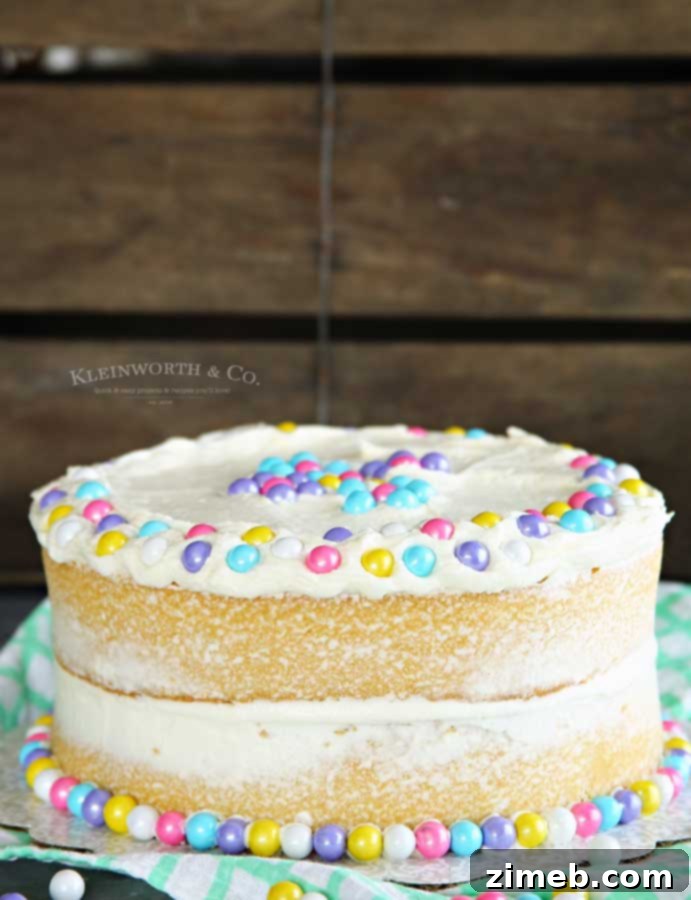
Our perfected white cake recipe is meticulously engineered to stand tall and proud, maintaining its beautiful structure even with multiple layers and abundant embellishments. Yet, it achieves this remarkable stability without ever feeling dense or heavy on the palate. Each bite is moist, tender, and incredibly satisfying, proving that homemade truly is best when it comes to a show-stopping 2-layer cake like this.
The Secret Behind Our Classic White Cake: A Perfectly Balanced Extract Blend
What truly distinguishes this recipe for the best white cake from countless others? The key lies in a carefully crafted, proprietary extract ratio that delivers an unparalleled flavor profile. Many white cake recipes often rely solely on almond extract, which, while distinctive, can sometimes impart a slightly medicinal or even maraschino cherry-like taste that isn’t universally appealing. Conversely, typical vanilla cake recipes feature only vanilla extract, which, while delicious, lacks the subtle complexity we aim for in a truly classic white cake.
Decades ago, my mom and I meticulously developed this unique combination of pure vanilla extract and almond extract. Our goal was to create a harmonious balance that avoids the pitfalls of single-extract recipes and instead produces the iconic flavor of a traditional white wedding cake. The vanilla provides a comforting, aromatic base, while a whisper of almond extract adds a sophisticated depth without overpowering. This thoughtful blend ensures a delicate, nuanced taste that is both familiar and utterly exquisite, making our homemade white cake unforgettable.
Perfect Pairings: The Best Frostings for Your Classic White Cake
A truly exceptional white cake deserves an equally magnificent frosting. While personal preference plays a role, certain frostings beautifully complement the delicate flavor and texture of our Best White Cake Recipe. Our absolute top recommendation, and the most traditional pairing for any classic white cake, is our luxurious Bakery Buttercream Frosting. Its rich, smooth, and perfectly sweet consistency is the ideal canvas for this elegant cake, reminiscent of classic wedding cake flavors.
However, the versatility of this homemade white cake allows for delightful experimentation. For those who crave a sophisticated chocolate contrast, our super delicious Chocolate Espresso Frosting offers a deep, rich flavor that will undoubtedly impress. Alternatively, the tangy sweetness of this Chocolate Cream Cheese Frosting creates a wonderfully moist and indulgent combination. For a truly celebratory touch, consider our effervescent Champagne Frosting, which adds a unique sparkle. And for a whimsical, comforting twist, our Homemade Cake Batter Frosting brings an extra layer of sweetness and fun. Each of these options provides a fantastic finish to your perfect white cake.
Step-by-Step Guide: How to Make the Best White Cake
Crafting the perfect white cake is a rewarding experience, and with these clear, concise instructions, you’ll achieve stunning results every time. Follow these steps meticulously to create a moist, fluffy, and perfectly structured homemade white cake that will impress everyone. Paying attention to details like ingredient temperature and proper mixing techniques is key to unlocking the full potential of this classic white cake recipe.
- Preheat oven to 350°F.
- Prepare two 8-inch cake pans by greasing with shortening, lining the bottom with parchment, greasing with shortening again & then flouring & shaking out the excess.
- Blend milk, egg whites, & extracts in a medium bowl until fully combined.
- Slowly mix cake flour, sugar, baking powder, & salt in the bowl of electric mixer.
- Add the cubed butter, & beat on low, 1-2 minutes.
- Add milk mixture to dry ingredients & beat on medium, about 3 minutes.
- Pour batter evenly between the two prepared cake pans.
- Bake until a toothpick test comes out with just a few crumbs, about 27 to 30 minutes.
- Cool cakes in pans for about 5 minutes.
- Carefully flip the cakes out onto a wire cooling rack & continue cooling until they reach room temperature.
- I like to then freeze my cakes before decorating because it makes the frosting spread easier. But you can frost them at room temperature if you like.
Expert Tips: Freezing Your White Cake for Convenience and Flawless Decorating
One of the many advantages of this versatile homemade white cake recipe is its remarkable freezer-friendliness. Yes, a white cake can absolutely be frozen, and I incorporate this technique frequently into my baking routine! This cake holds up beautifully through various stages of the baking and decorating process, offering incredible flexibility and convenience.
For optimal results, I recommend freezing freshly baked and completely cooled cake layers. Once they’ve reached room temperature, carefully remove them from their pans, wrap each layer tightly in several layers of plastic wrap, and then perhaps an additional layer of aluminum foil to prevent freezer burn. This method is not only excellent for preparing components in advance but also provides a firm, cold base for frosting, which significantly aids in achieving smooth, professional-looking results without the frosting becoming too soft or melting.
Furthermore, you can freeze the cake after assembling its layers and applying a crumb coat. This intermediate freezing step is a lifesaver for achieving a perfectly smooth final frosting layer. A chilled, crumb-coated cake prevents the final decorative frosting from pulling up crumbs, ensuring a pristine finish. This strategy is particularly useful when preparing for special events, allowing you to complete this stage days ahead of time and simply add the final decorations the night before serving, reducing stress considerably.
Even a fully decorated white wedding cake can be gently wrapped and frozen until needed. Just be mindful that while frozen, the frosting won’t be rock-hard, so handle with care to avoid dents or smudges. When it’s time to enjoy, always thaw the cake in the refrigerator overnight. For the absolute best taste and texture, allow the thawed cake to sit at room temperature for 1-2 hours before slicing and serving. This allows the frosting to soften to a creamy consistency and the cake’s flavors to fully blossom, delivering that fresh-baked experience.
The Best White Cake Recipe for Any Occasion
Mastering Cake Release: The Magic of Homemade Baker’s Release
Achieving a flawlessly released cake from its pan is a baker’s triumph, and “baker’s release” is your secret weapon. This ingenious, homemade concoction is a simple yet incredibly effective blend of oil, flour, and shortening, designed to make removing cakes and other delicate baked goods from their molds virtually effortless. Forget sticking, tearing, or crumbling; baker’s release ensures your best white cake slides out perfectly every time, preserving its beautiful structure.
Making your own baker’s release is surprisingly easy and far more effective than store-bought sprays. The formula is elegantly simple: a 1:1:1 ratio of all-purpose flour, solid shortening, and cooking oil. For a practical batch, I typically combine 1 cup of each ingredient. The flour provides a non-stick coating, the shortening creates a barrier, and the oil helps spread it smoothly.
- Start with equal parts all-purpose flour, solid shortening, and cooking oil. For example, 1 cup of each.
Thoroughly mix these ingredients together, whisking vigorously until the mixture is completely smooth and uniform. Store this powerful release agent in an airtight container in your pantry for quick access, or in the refrigerator for extended freshness. When you’re ready to bake your perfect white cake, simply dip a pastry brush into the mixture and generously spread an even layer over the entire inside surface of your cake pan. This small step makes a monumental difference in the final presentation of your beautiful homemade white cake.
Understanding Cake Flour: The Secret to a Tender White Cake
For a truly light, tender, and classic white cake, understanding the role of cake flour is essential. Cake flour is not simply a finer version of all-purpose flour; it’s a specialty ingredient meticulously processed to yield superior results in delicate baked goods. It is characterized by three key attributes:
- Finely Milled: Its ultra-fine grind contributes significantly to a lighter, softer crumb texture in the final cake.
- Bleached: The bleaching process not only gives cake flour its characteristic bright white color but also subtly alters the protein structure, enhancing its ability to absorb liquid and preventing the cake from becoming tough.
- Lower Protein Content: Crucially, cake flour has a much lower protein content (typically 7-9%) compared to standard all-purpose flour (10-12%). Protein is what forms gluten when mixed with liquid. A lower protein content means less gluten development.
Why does less gluten matter for our best white cake recipe? Gluten provides structure and chewiness, which is great for bread, but undesirable in a delicate cake. By minimizing gluten formation, cake flour ensures a wonderfully tender, melt-in-your-mouth crumb, a higher, more delicate rise, and a consistent, soft consistency that is the hallmark of a truly excellent homemade white cake. It’s an indispensable ingredient for achieving that ethereal texture in your classic white cake.
Key Ingredients for Our Homemade White Cake
- milk
- egg whites
- pure vanilla extract
- almond extract
- cake flour
- granulated sugar
- baking powder
- table salt
- butter
Achieving Perfect Room Temperature Butter for Your White Cake
The temperature of your butter is paramount in baking, especially for a delicate recipe like our Best White Cake Recipe. Room temperature butter creams beautifully with sugar, incorporating air that contributes to a light and fluffy crumb. Here are a few reliable methods to achieve that ideal consistency:
Method 1: The Countertop Approach (The Patient Method)
The simplest way to bring butter and other chilled ingredients (like egg whites and milk) to room temperature is to plan ahead. Remove them from the refrigerator approximately 30-60 minutes before you intend to start baking. For optimal results, ensure your kitchen isn’t excessively cold, as this can prolong the softening process. I always recommend gathering all your chilled ingredients and placing them on the counter as the very first step in your baking process. This not only allows them to warm up naturally but also serves as a crucial inventory check, ensuring you have everything you need before diving into the recipe.
However, life happens! Sometimes, despite best intentions, you might find yourself short on time, or perhaps it’s winter, and your kitchen is too cool for passive softening. For those moments when planning ahead isn’t an option, don’t despair; I have a couple of trusty tricks up my sleeve.
Method 2: The Microwave Method (The Speedy Solution)
When time is of the essence, the microwave can be a helpful, albeit delicate, tool. Place your butter sticks, still wrapped in their paper (but *never* in foil!), into the microwave. Microwave on a low power setting for just 2 seconds. Flip the butter, microwave for another 2 seconds, flip again, and continue this process. The goal is to gently warm the butter from all sides without melting it. You’re looking for butter that yields to gentle pressure, not liquid butter. Exercise extreme caution with this method: Over-softened or melted butter will significantly alter the texture of your cake, leading to a denser, greasier result. Stop immediately if it feels soft enough to indent easily.
Method 3: The Warm Water Bath (The Gentle & Reliable Technique)
This is often my preferred quick method for achieving perfect room temperature ingredients. Place your wrapped sticks of butter into a zip-top bag, ensuring it’s sealed completely to prevent water from entering. Submerge the bag in a bowl of warm (not hot!) water. I also use this technique for eggs. The gentle warmth of the water gradually brings the butter (and eggs) to the ideal pliable, room-temperature consistency, providing a more even and controlled softening than the microwave, without risking melting. This method is incredibly reliable for ensuring your ingredients are perfectly prepared for a light and fluffy homemade white cake.
Mastering Flour Measurement: Key to a Perfectly Balanced White Cake
Accurate flour measurement is a critical, yet often overlooked, step in baking a truly exceptional cake, especially for a delicate homemade white cake like ours. Adding too much flour is a common pitfall that can lead to a dry, dense, and crumbly cake. Here’s how to ensure you get it just right:
The universally accepted and most accurate method for measuring flour (unless a recipe specifies weight measurements, which is always preferred) is the “spoon and level” technique. This involves using a spoon to lightly aerate the flour in its container, then gently spooning that flour into your dry measuring cup until it’s overflowing. Do not pack or tap the measuring cup. Once filled, use the back of a straight knife or another flat edge to level off the top, scraping away any excess flour. This method prevents compacting the flour into the cup, which can add significantly more than the recipe intends, resulting in a cake that is too dry and heavy.
While the “spoon and level” method is ideal, a careful “fluff and scoop” approach can also yield good results for this specific recipe, provided you are very mindful. Begin by fluffing the flour thoroughly with a spoon or whisk directly in its container. Then, gently scoop the flour with your measuring cup, being extremely careful not to press down or pack it in any way. Allow it to mound slightly, then level it off as described above. The key is to avoid compaction. Following these measurement guidelines will ensure your classic white cake achieves its signature moist and tender crumb.
This classic white cake will make your eyes roll back with every bite!
WHITE WEDDING CAKE RECIPE
If you love this Easy White Cake recipe, you’re going to love these other cake recipes too. Please click each link below to find the easy, printable recipe!
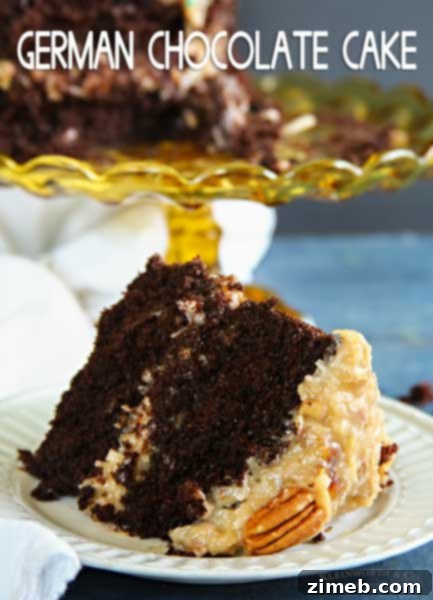
Best German Chocolate Cake
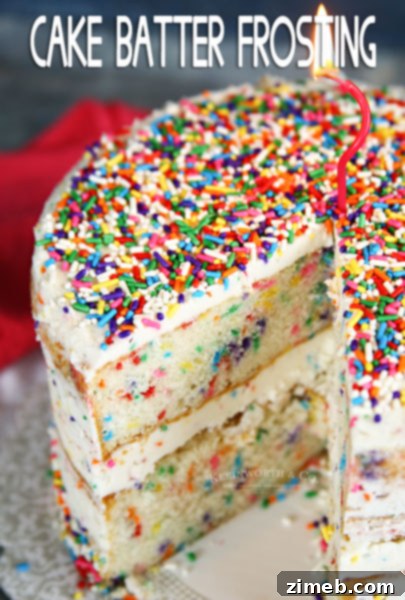
Cake Batter Frosting Recipe
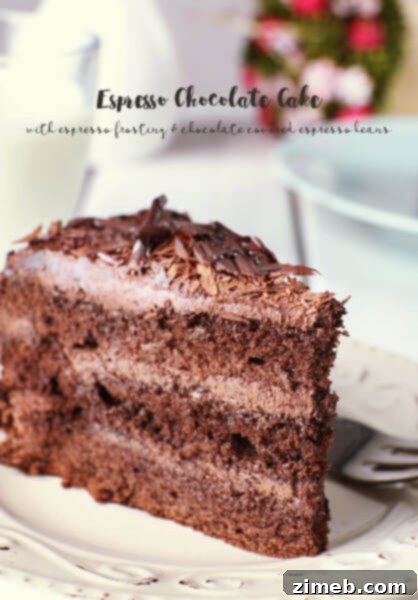
Espresso Chocolate Cake
Other Homemade Cake Recipes to Try
Here are some more of our favorite homemade cake recipes.
- Best Yellow Cake Recipe
- World’s Best Chocolate Cake
- Vanilla Bundt Cake
- Strawberry Cake
- Homemade Funfetti Cake
- Chocolate Raspberry Cake
- Best Chocolate Cupcake Recipe
- Zebra Cake
If you love this recipe for White Cake as much as I do, please write a five-star review, and be sure to help me share on Facebook and Pinterest!
CONNECT WITH YUMMI HAUS!
Be sure to follow us on social media, so you never miss a post from Yummi Haus!
Substack, FB, Pinterest, IG, Email Subscription
Rate this Recipe
Best White Cake Recipe
Course: Dessert
Servings: 12
Best White Cake Recipe that is perfect for weddings, birthdays & any other celebration. This easy, classic, 2-layer cake really is the best homemade dessert!
Print Recipe
Pin Recipe
Save Recipe
Prep Time: 15 mins
Cook Time: 30 mins
Total Time: 45 mins
Ingredients
- 1 cup milk (room temperature)
- 6 large egg whites (room temperature)
- 2 tsp pure vanilla extract
- 1 tsp almond extract
- 2-1/4 cups cake flour
- 1-3/4 cup granulated sugar
- 4 tsp baking powder
- 1 tsp table salt
- 3/4 cup butter (softened but still cool- cubed (1-1/2 sticks))
Instructions
- Preheat oven to 350°F.
- Prepare two 8-inch cake pans by greasing with shortening, lining the bottom with parchment, greasing with shortening again & then flouring & shaking out the excess.
- Blend milk, egg whites, & extracts in a medium bowl until fully combined.
- Slowly mix cake flour, sugar, baking powder, & salt in the bowl of electric mixer.
- Add the cubed butter, & beat on low, 1-2 minutes.
- Add milk mixture to dry ingredients & beat on medium, about 3 minutes.
- Pour batter evenly between the two prepared cake pans.
- Bake until a toothpick test comes out with just a few crumbs, about 27 to 30 minutes.
- Cool cakes in pans for about 5 minutes.
- Carefully flip the cakes out onto a wire cooling rack & continue cooling until they reach room temperature.
- I like to then freeze my cakes before decorating because it makes the frosting spread easier. But you can frost them at room temperature if you like.
Nutritional information for the recipe is provided as a courtesy and is approximate. Please double-check with your own dietary calculator for the best accuracy. We at Yummi Haus cannot guarantee the accuracy of the nutritional information given for any recipe on this site.
Love this recipe?
Follow @KleinworthCo for even more tasty recipes!