
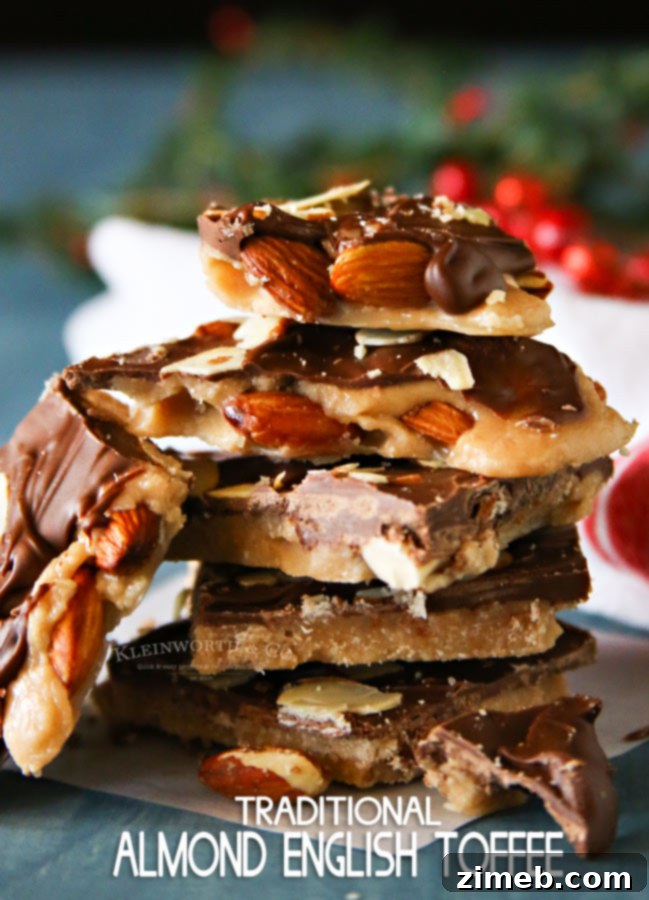
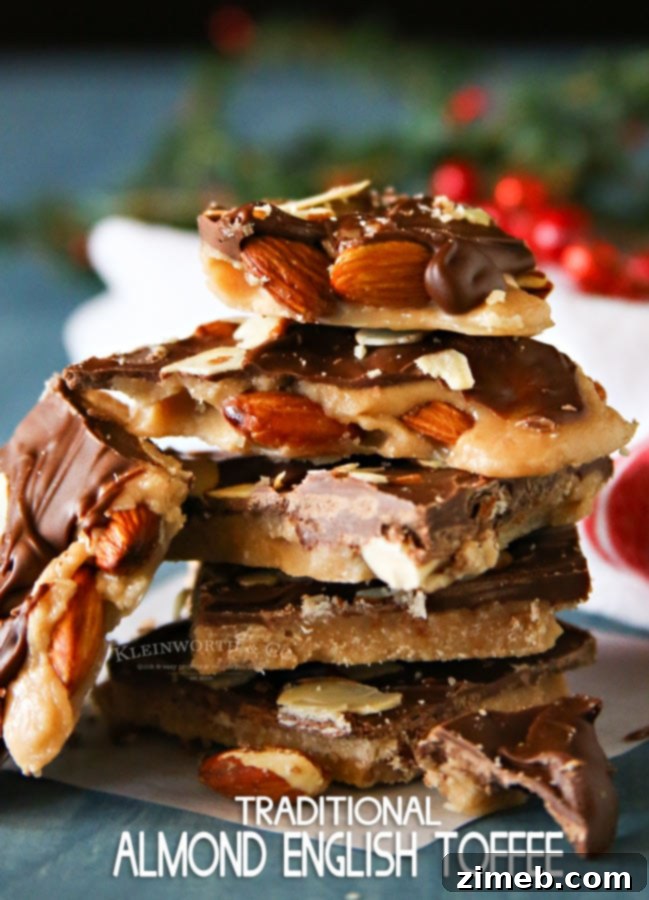
Welcome to the enchanting world of homemade confections, where holiday traditions truly come to life! This recipe for Traditional Almond English Toffee isn’t just a dessert; it’s a nostalgic journey back to simpler times, a staple of festive celebrations, and an unforgettable gift from your kitchen. If you’re searching for that perfect, delectable holiday food gift that will impress everyone on your list, look no further than this classic English Toffee recipe.
For many, the holidays conjure images of cherished family moments and irresistible homemade treats. Growing up, our home kitchen was a bustling hub of activity during this magical season. Fudge, sugar cookies, and, of course, this very Traditional Almond English Toffee were absolute must-haves. My mom and grandmother meticulously crafted these goodies, transforming simple ingredients into edible tokens of affection for friends and neighbors. There’s an undeniable charm about English toffee that perfectly captures the spirit of the holidays, and I eagerly anticipate making it every year, continuing a sweet legacy.
Crafting Perfect English Toffee: The Fundamentals of Success
While the exquisite result of this Almond English Toffee might suggest a complex process, I assure you, it’s far simpler than it appears. The absolute key to success lies in one crucial element: unwavering focus. I’m not exaggerating – during the critical five minutes this toffee cooks, you need to be completely present. Turn off the TV, silence your phone, and dedicate your attention solely to the task at hand. This short period requires constant stirring and keen observation of the mixture’s color transformations, ensuring a perfect, golden batch every time.
Candy making, especially toffee, is a delightful blend of art and science. Precision in timing and observation will lead to that perfectly crisp, buttery texture that defines exceptional English toffee. It’s a rewarding process that yields a truly spectacular treat, and with these tips, you’ll feel like a seasoned confectioner in no time. The subtle shifts in color are your guides, transitioning from a pale yellow to a rich, inviting brown, signaling the moment of perfection. Don’t rush it, embrace the process, and you’ll be amazed by what you create.
Avoiding Common Toffee Mistakes: The Science Behind Success
When making English toffee, there are a few critical watch-outs that can determine your success. One of the most common mistakes is cooking the mixture too quickly. It might be tempting to crank up the heat to speed things along, but doing so can have detrimental effects on your toffee’s texture and appearance. If the heat is too high, the moisture in your butter will evaporate too rapidly, leading to an undesirable separation of ingredients.
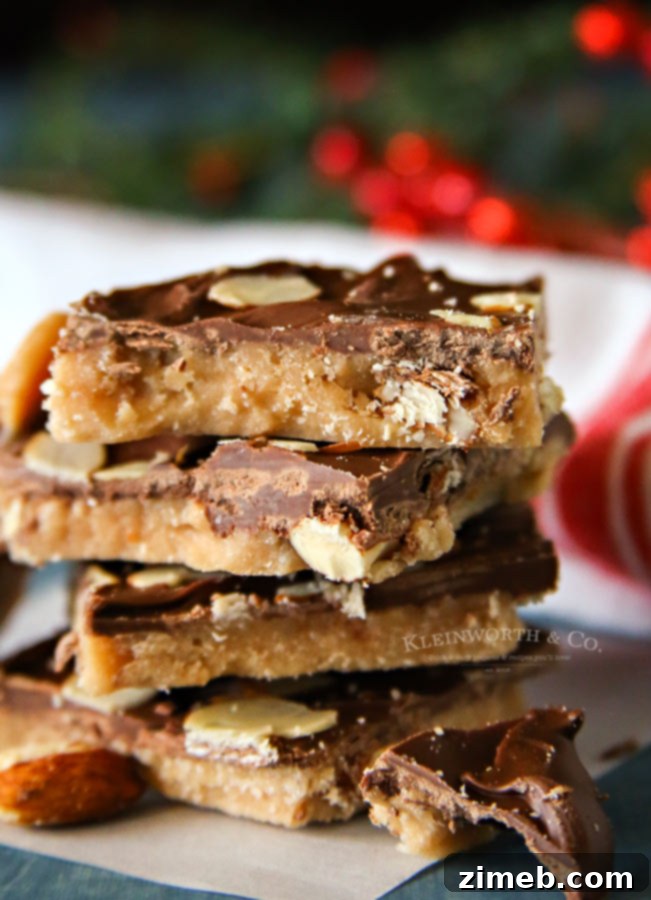
You might wonder what’s wrong with that. Well, when moisture evaporates too fast, it disrupts the emulsion of butter and sugar, causing them to separate. Instead of a single, beautiful layer of delicious, smooth toffee, you’ll end up with a layer of grainy candy topped with an unappetizing layer of oily butter. While it might still taste somewhat similar if you manage to sop up all that excess butter, the visual appeal is lost, and the toffee itself often becomes crumbly rather than having that desirable smooth snap. Patience truly is a virtue in toffee making, allowing the ingredients to cook and combine harmoniously for a superior result.
Another crucial aspect to master is the stirring technique. While it’s essential to keep the toffee mixture moving constantly to prevent it from burning and sticking to the bottom of the pan, you must do so gently. Always use a wooden spoon, as it provides a firm yet non-reactive tool for stirring. Avoid stirring too vigorously; a light, consistent motion is all that’s needed. Excessive movement can also contribute to that dreaded separation, breaking down the fragile emulsion as it forms. Think of it as a gentle coaxing rather than a frantic whisking. The goal is to ensure even cooking and prevent scorching, not to agitate the mixture. By maintaining a steady, calm hand, you’ll cultivate a smooth, homogenous toffee that sets perfectly.
The Allure of Traditional English Toffee
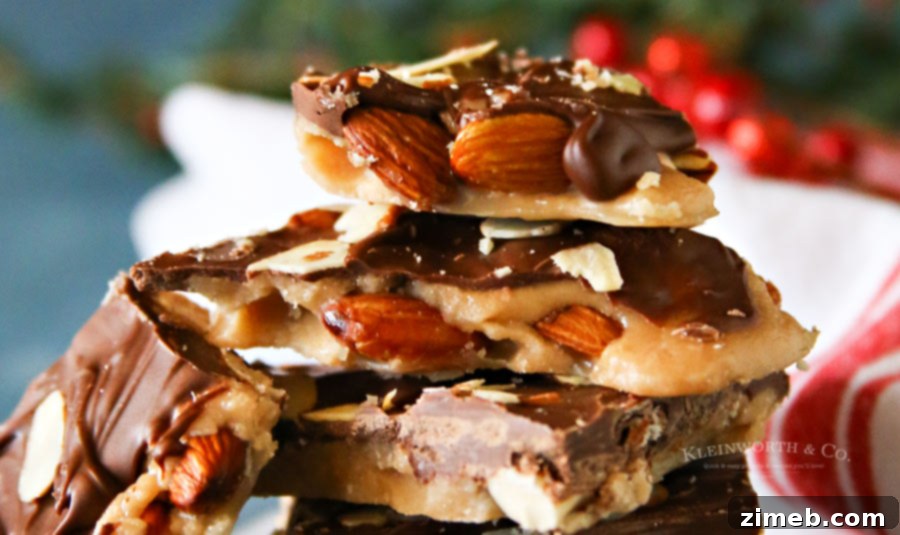
There’s a reason why traditional English toffee remains a beloved classic across generations. Its unique combination of crisp, buttery sweetness, often paired with crunchy almonds and a decadent layer of chocolate, creates an irresistible sensory experience. The snap as you break off a piece, the rich aroma of caramelized sugar, and the smooth melt-in-your-mouth sensation make it more than just candy – it’s a moment of pure indulgence. This recipe truly celebrates that timeless appeal, bringing the authentic flavor of artisanal toffee right into your home, perfect for sharing or savoring yourself.
Frequently Asked Questions About Homemade English Toffee
Should I use salted or unsalted butter for English toffee?
This is a delightful question of personal preference, and honestly, you can achieve excellent results with either! If you appreciate a subtle hint of salt to beautifully cut through the sweetness of the toffee, then salted butter is an excellent choice. The salt acts as a flavor enhancer, creating a more complex and balanced taste profile.
In my own kitchen, I often use whatever butter I have readily available. Typically, I keep salted butter on hand because I love that slight savory counterpoint it provides to sweet treats like this toffee. Given the current challenges in grocery shopping, adaptability is key – so grab what you can find, and trust that your toffee will still be incredibly delicious. The most important thing is to use real butter, never margarine, for the best flavor and texture.
English Toffee: A Sweet Holiday Tradition
Can I use a sugar substitute when making toffee?
While I haven’t personally experimented with sugar substitutes in this specific toffee recipe, I understand the desire for alternative options. Candy making relies heavily on the unique chemical properties of sugar for its texture and structure, which can be challenging to replicate with substitutes. If you decide to try it, I highly recommend using a product specifically designed for a 1:1 sugar replacement in baking and cooking. Be prepared for potential variations in texture and caramelization. If you do give it a try, please share your results – I’d be very interested to hear how it turns out!
Can this homemade toffee be frozen for later?
Absolutely! English toffee freezes beautifully, making it an ideal candidate for advance preparation or for keeping a stash of deliciousness on hand. The trick to successful freezing is ensuring it’s completely cooled and set before you break it into pieces. Once broken, transfer the toffee to an airtight container, ensuring minimal exposure to air. You can then freeze it for up to six months. When you’re ready to enjoy, simply remove it from the freezer and let it come to room temperature for that perfect snap and chew. It’s a wonderful way to extend the enjoyment of your homemade treat!
How to Make Classic Almond English Toffee: A Detailed Guide
Crafting this delightful English toffee is a straightforward process when you follow these steps carefully. The magic lies in the precise heating and stirring, transforming simple ingredients into a rich, golden candy.
- Prepare Your Baking Sheet: Begin by lining a sturdy baking sheet with aluminum foil. This step is crucial for easy removal of the cooled toffee. Evenly spread four cups of almonds over the foil. These will form the delicious base of your toffee. Set this prepared sheet aside.
- Combine Ingredients in Saucepan: In a heavy-bottomed saucepan (this is important for even heat distribution), combine one cup of butter (ensure it’s not margarine!), one cup of brown sugar, half a teaspoon of vanilla extract, and a generous pinch of salt. Place the saucepan over medium heat. Stir continuously until the butter is completely melted and the ingredients are well-combined.
- Bring to a Boil: Once the butter is melted, increase the heat to medium-high. Continue stirring constantly. This consistent motion is vital to prevent scorching and ensure the sugar dissolves evenly. Keep stirring until the mixture comes to a full, rolling boil.
- The Critical Cooking Phase (5 Minutes!): As soon as the mixture reaches a boil, set a timer for exactly five minutes. This is your cue to enter a zone of complete concentration. During these five minutes, you MUST NOT stop stirring. Keep that wooden spoon moving constantly to prevent the butter and sugar from separating or burning at the bottom of the pan. No distractions allowed!
- Observe Color Changes: Pay close attention to the visual transformation. After approximately two minutes of boiling and stirring, the mixture will begin to take on a light yellow hue. Around the four-minute mark, it should appear mostly brown and frothy. Continue cooking and stirring until the entire five minutes are up, and the toffee has achieved a rich, warm brown color, similar to a brown paper bag. This deep amber color signifies perfect caramelization.
- Pour Onto Almonds: Immediately and carefully pour the hot toffee mixture directly over the almonds on your foil-lined baking sheet. You can gently scrape the sides of the pan to get all the toffee, but avoid scraping any dark, hardened bits from the very bottom, as these can taste burnt.
- Even Out the Toffee: Quickly, before the toffee begins to set, gently tilt and move the baking sheet back and forth. This action will help spread the hot toffee evenly over the layer of almonds, ensuring a consistent thickness.
- Easy Cleanup Tip: For easier cleanup later, immediately fill your saucepan with hot water and a squirt of dish soap, and let it soak while the toffee cools.
- Cool and Harden: Allow the almond toffee to cool completely. This typically takes only a few minutes, during which it will harden into a brittle, irresistible slab.
- Melt the Chocolate Topping: In a microwave-safe bowl, melt three cups of milk chocolate chips. Heat in 30-second intervals, stirring thoroughly between each interval, until the chocolate is smooth and glossy.
- Spread Chocolate: Using a small spatula or the back of a spoon, evenly spread the melted chocolate over the hardened toffee layer.
- Add Optional Topping: If desired, sprinkle a quarter cup of slivered almonds (or any other chopped nuts) over the wet chocolate layer for extra crunch and visual appeal.
- Set and Break: Allow the chocolate to set completely. You can speed this up by placing the baking sheet in the refrigerator for 10-15 minutes. Once hardened, carefully break the toffee into irregular, delicious pieces.
Homemade English Toffee: Essential Ingredients
Key Ingredients for Almond Toffee:
To create this classic treat, you’ll need just a few high-quality ingredients that transform into golden perfection:
- Almonds: The star of the show, providing a delightful crunch and nutty flavor.
- Butter: This is the foundation of rich toffee. Crucially, DO NOT use margarine; real butter is essential for flavor and proper texture.
- Brown Sugar: Gives English toffee its characteristic deep caramel notes and slightly chewier texture compared to toffee made with granulated sugar.
- Vanilla Extract: A splash enhances the overall flavor profile, adding warmth and depth.
- Pinch of Salt: Balances the sweetness and amplifies all the other flavors.
For the Decadent Chocolate Topping:
- Milk Chocolate Chips: Provide a smooth, sweet, and creamy layer that complements the crunchy toffee.
- Slivered Almonds (Optional): A final sprinkle adds an elegant touch and an extra layer of almond flavor and texture.
Storing Your Delicious Almond Toffee
What is the best way to store leftover almond toffee?
Proper storage is crucial to maintain the crispness and fresh taste of your homemade almond toffee. Once the toffee has completely cooled and you’ve broken it into pieces, transfer it to an airtight container. This prevents moisture and air from reaching the candy, which can cause it to become sticky or lose its snap. Store the container at room temperature, away from direct sunlight or heat, for up to two weeks. If you live in a humid environment, consider adding a small piece of parchment paper between layers or even a desiccant packet to help absorb moisture. For longer storage, freezing is an excellent option as mentioned above.
Is a candy thermometer necessary for this recipe?
One of the beauties of this particular toffee recipe is that you don’t actually need a candy thermometer! While thermometers can be helpful for precise temperature control in some candy-making ventures, this recipe relies on visual cues, specifically the color and consistency of the mixture. By carefully following the instructions and watching for the specified color changes – from yellow to mostly brown and frothy, finally reaching the color of a brown paper bag – you’ll achieve the perfect toffee stage without any special equipment. This makes the recipe more accessible and takes away some of the intimidation often associated with candy making.
English Toffee vs. Butter Toffee: Understanding the Difference
The world of toffee can sometimes be a little confusing with various names and slight variations. The primary distinction between traditional English toffee and what’s often referred to as “butter toffee” or “buttercrunch” in America lies in the type of sugar used. Authentic English toffee, as this recipe demonstrates, is characteristically made with brown sugar. This gives it a deeper, richer caramel flavor and a slightly more complex, often chewier texture. Americanized versions, or buttercrunch, on the other hand, typically use granulated (white) sugar, which results in a lighter color and a generally crisper, more brittle consistency. Both are delicious, but the brown sugar in our recipe truly defines it as classic English toffee.
Choosing the Right Brown Sugar for Your Toffee
When it comes to selecting brown sugar for your English toffee, you have a couple of options, and both light and dark brown sugar will work effectively in this recipe. Since I often enjoy making my own brown sugar at home, I tend to use light brown sugar for the majority of my recipes. Light brown sugar will give your toffee a slightly milder molasses flavor and a lighter caramel hue.
Dark brown sugar, with its higher molasses content, will impart a deeper, more robust caramel flavor and a richer, darker color to your toffee. It’s truly a matter of personal preference and what flavor profile you desire. Whichever you choose, ensure it’s fresh and soft. If you’re intrigued by the idea of making your own, a simple and rewarding process, you can find my guide on how to make your own brown sugar by visiting my Homemade Brown Sugar post here.
Recommended Tools and Products for Toffee Making:
This toffee recipe is incredibly delicious, and if you’re like me during this time of year, you might already have most of these items on hand. Or perhaps you’re new to making homemade toffee and feel a bit nervous – but don’t worry, you’re going to love the process and the delicious outcome! To help ensure your success, I’ve compiled a list of essential items that I rely on when making this classic English toffee recipe. Having the right tools makes the experience much more enjoyable and efficient.
- Whole Almonds
- Brown Sugar
- Vanilla Extract
- Fine Sea Salt
- Milk Chocolate Chips
- Slivered Almonds (for topping)
- Heavy-Bottomed Saucepan
- Baking Sheet
- Aluminum Foil
- Wooden Spoon
If you love this Traditional Almond English Toffee recipe, you’re going to adore these other delightful treats too! Each recipe is easy to follow and perfect for bringing joy to your kitchen. Please click each link below to discover the simple, printable recipe!
Check out this recipe

Check out this recipe
Check out this recipe

Check out this recipe

Check out this recipe
Check out this recipe

Check out this recipe

Check out this recipe

If you cherish this recipe for Classic Almond English Toffee as much as I do, please take a moment to write a five-star review below. Your feedback helps immensely! And don’t forget to share your homemade toffee creations with friends and family on Facebook and Pinterest!
CONNECT WITH YUMMI HAUS!
Be sure to follow me on my social media, so you never miss a post and stay up-to-date with all our latest delicious recipes and tips!
Substack, Facebook, Pinterest, Instagram, Email Subscription
Rate this Recipe
Classic English Toffee
Ingredients
Toffee Base
- 4 cups almonds (whole, raw, or lightly toasted)
- 1 cup butter (salted or unsalted, DO NOT use margarine)
- 1 cup brown sugar (light or dark)
- ½ tsp. vanilla extract
- pinch of salt (if using unsalted butter)
Chocolate Topping
- 3 cups milk chocolate chips (or your preferred chocolate)
- ¼ cup slivered almonds (optional, for garnish)
Instructions
-
Prepare Baking Sheet: Line a large baking sheet with aluminum foil. Evenly spread 4 cups of whole almonds across the foil. Set aside.
-
Combine Toffee Base: In a heavy-bottomed saucepan over medium heat, combine 1 cup butter, 1 cup brown sugar, ½ tsp vanilla extract, and a pinch of salt. Stir consistently until the butter is fully melted and all ingredients are well incorporated.
-
Boil the Mixture: Increase the heat to medium-high. Continue stirring constantly until the mixture comes to a vigorous boil.
-
The Critical 5 Minutes: Set a timer for 5 minutes. During this entire time, DO NOT stop stirring the butter/sugar mixture with a wooden spoon. Maintain continuous motion to prevent burning and separation.
-
Watch for Color Changes: After about 2 minutes of cooking, the mixture will turn yellow. At approximately 4 minutes, it will become mostly brown and frothy. Continue stirring until the full 5 minutes are complete and the toffee reaches a rich, brown paper bag color.
-
Pour Toffee: Immediately pour the hot toffee mixture onto your foil-lined baking sheet, directly over the spread almonds. You may gently scrape the sides of the saucepan, but avoid scraping any dark, hardened residue from the very bottom.
-
Evenly Distribute: Gently tilt and move the baking sheet back and forth to evenly spread the hot toffee over the almonds. Work quickly, as it sets fast.
-
Soak for Easy Cleanup: For a hassle-free cleanup, immediately fill your saucepan with hot water and dish soap, and let it soak.
-
Cool the Toffee: Allow the almond toffee to cool completely at room temperature. It should harden within a few minutes.
-
Melt Chocolate Topping: In a microwave-safe bowl, melt 3 cups of milk chocolate chips. Heat in 30-second intervals, stirring thoroughly between each, until smooth and creamy.
-
Spread Chocolate: Using a small spatula or the back of a spoon, evenly spread the melted chocolate over the hardened toffee.
-
Garnish (Optional): If desired, sprinkle the ¼ cup of slivered almonds over the wet chocolate for an extra crunch and decorative touch.
-
Break into Pieces: Allow the chocolate to set completely (you can place it in the refrigerator for quicker setting). Once firm, break the toffee into desired pieces.
Nutritional information for this recipe is provided as a courtesy and is approximate. Please double-check with your own dietary calculator for the best accuracy tailored to your specific ingredients. We at Yummi Haus cannot guarantee the absolute accuracy of the nutritional information given for any recipe on this site.