
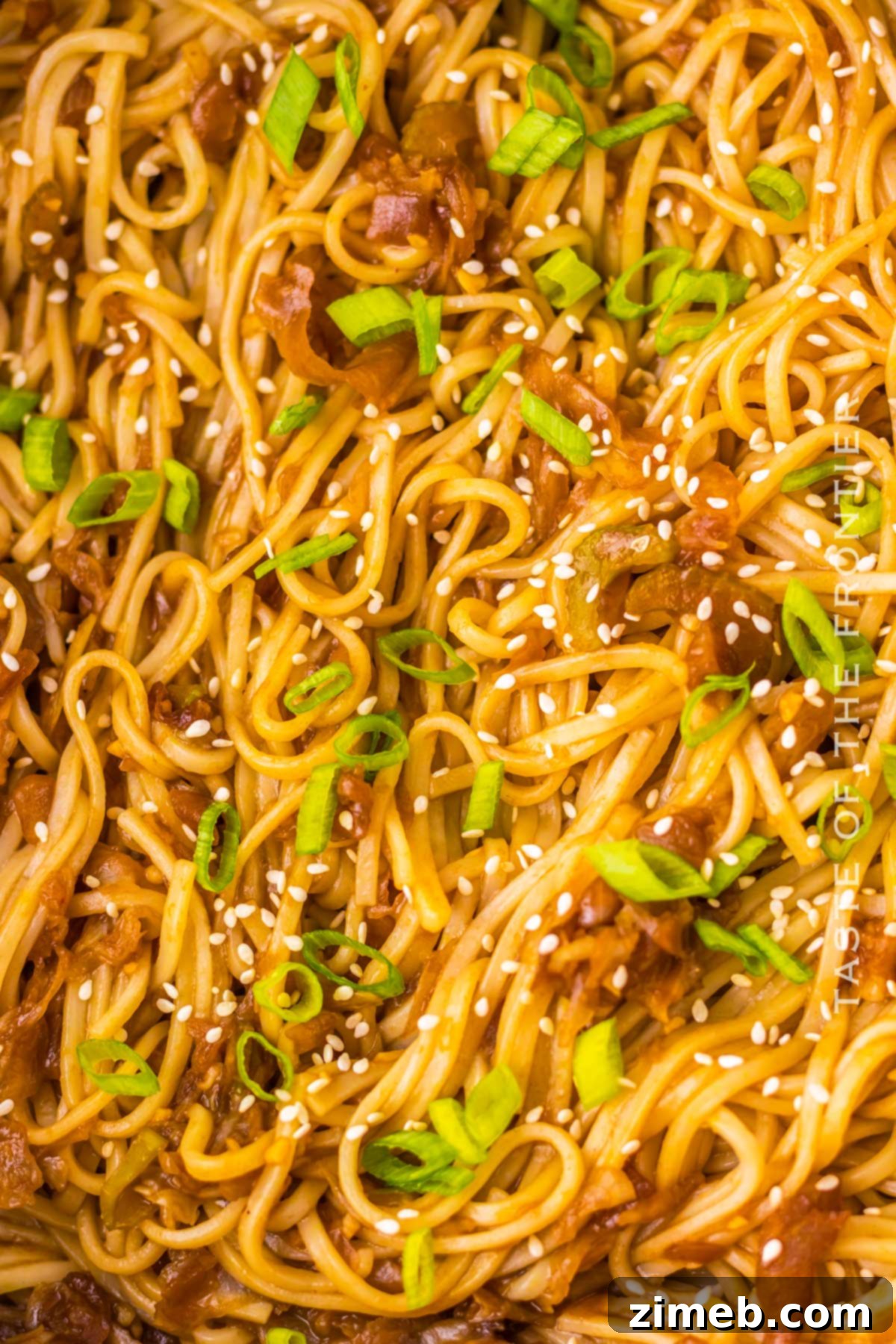
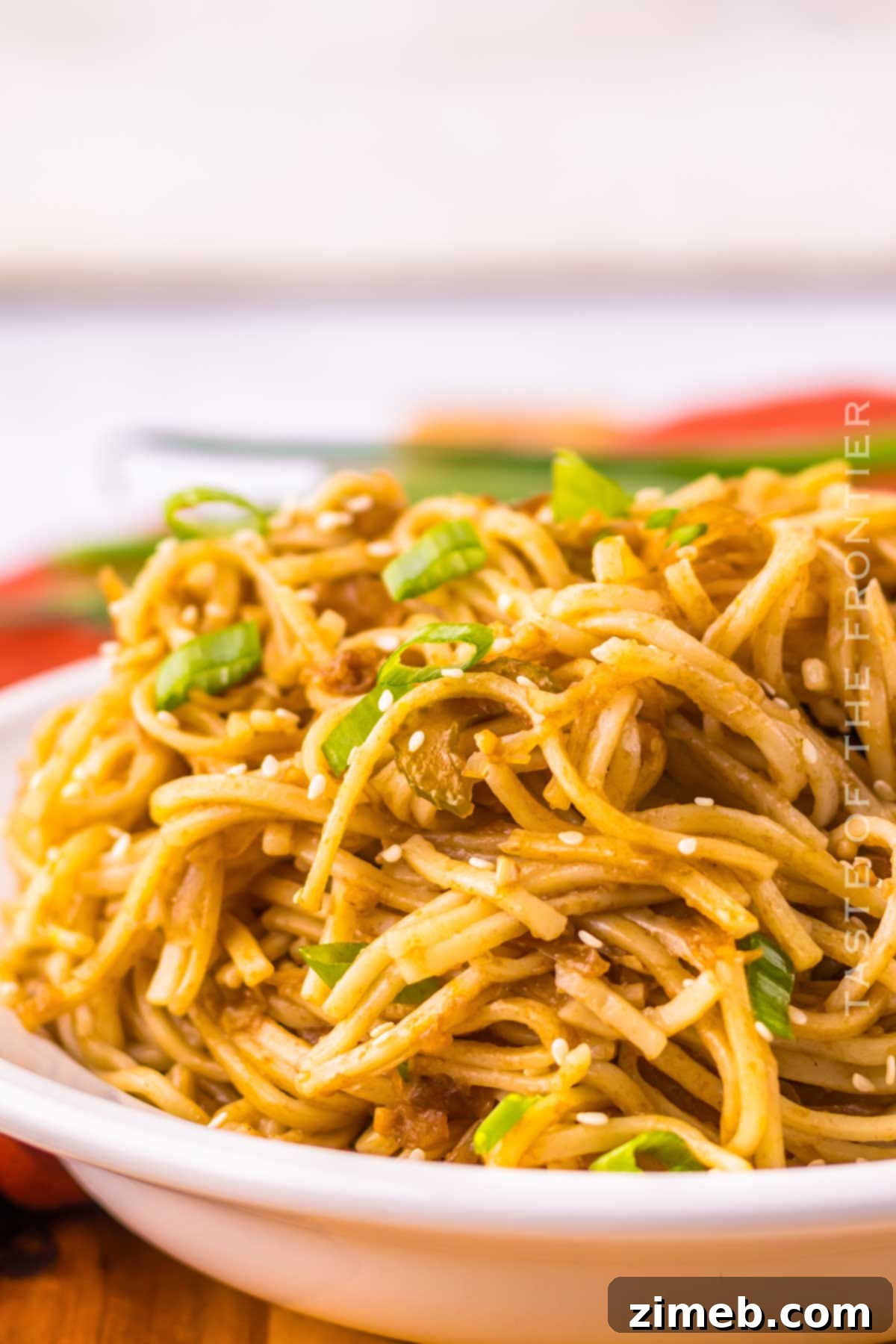
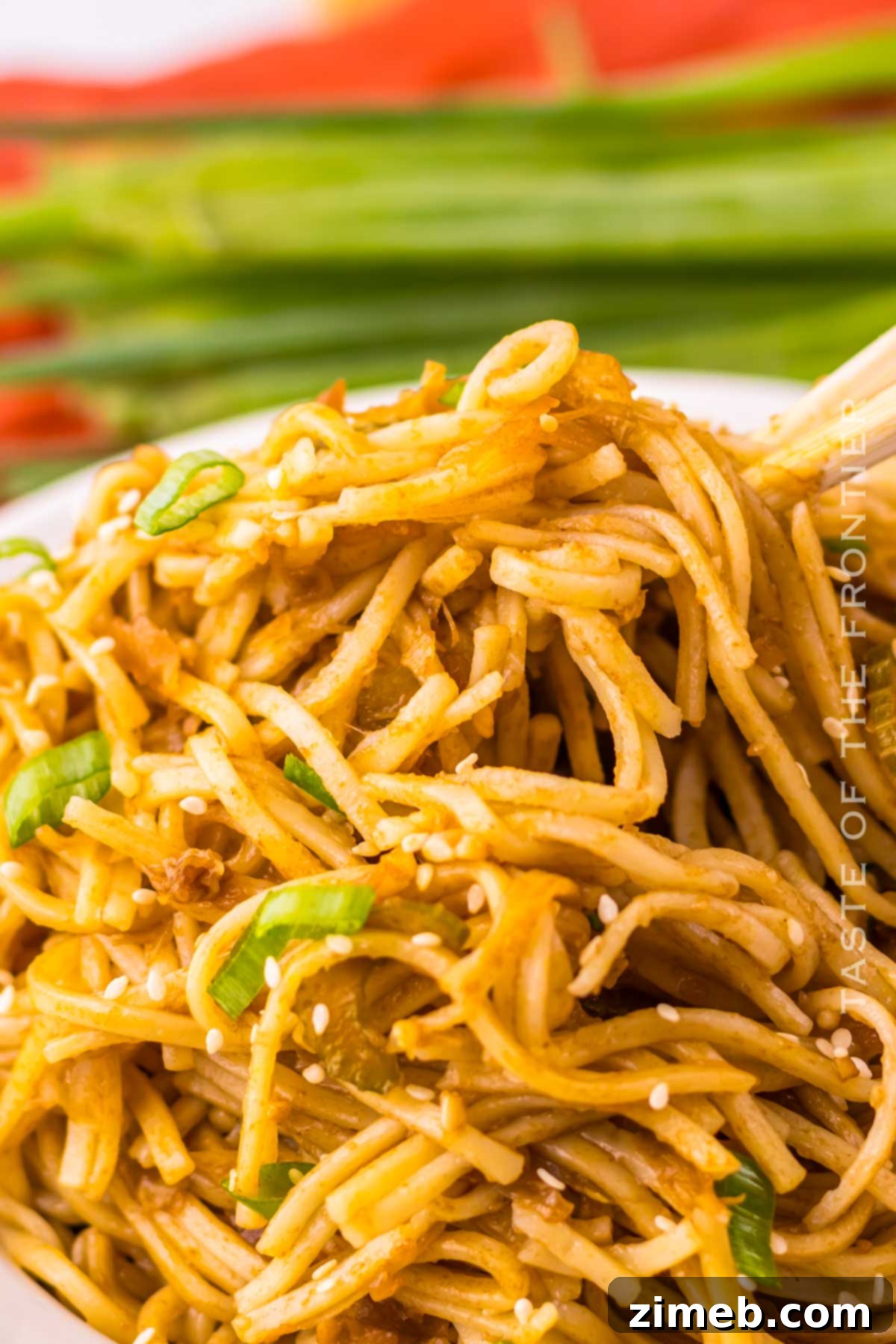
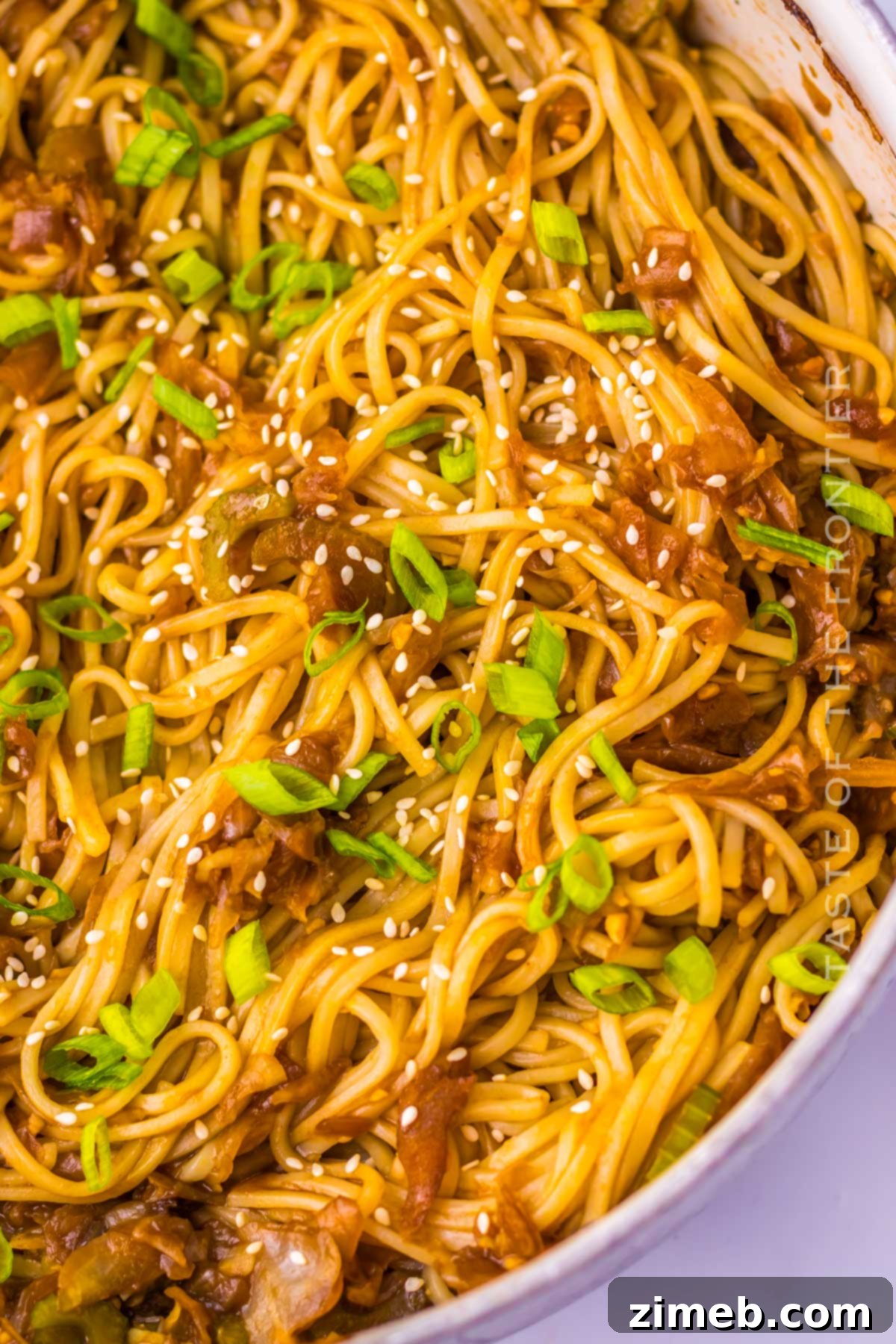
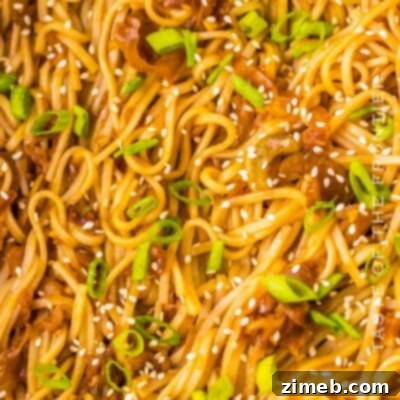
These Panda Express-style chow mein noodles offer the ultimate blend of flavors and textures, making them the perfect companion to any Asian-inspired meal. Imagine tender, bouncy noodles combined with crisp, fresh cabbage, all coated in a rich, savory, and perfectly balanced sauce. This delightful dish brings the iconic taste of your favorite fast-food chain right into your kitchen!
Panda Express chow mein has always been my top choice for a side dish, and now, you can master this famous copycat recipe at home. Not only is it incredibly satisfying, but making it yourself also allows for healthier adjustments and fresh ingredients.
Gina’s Recipe Rundown:
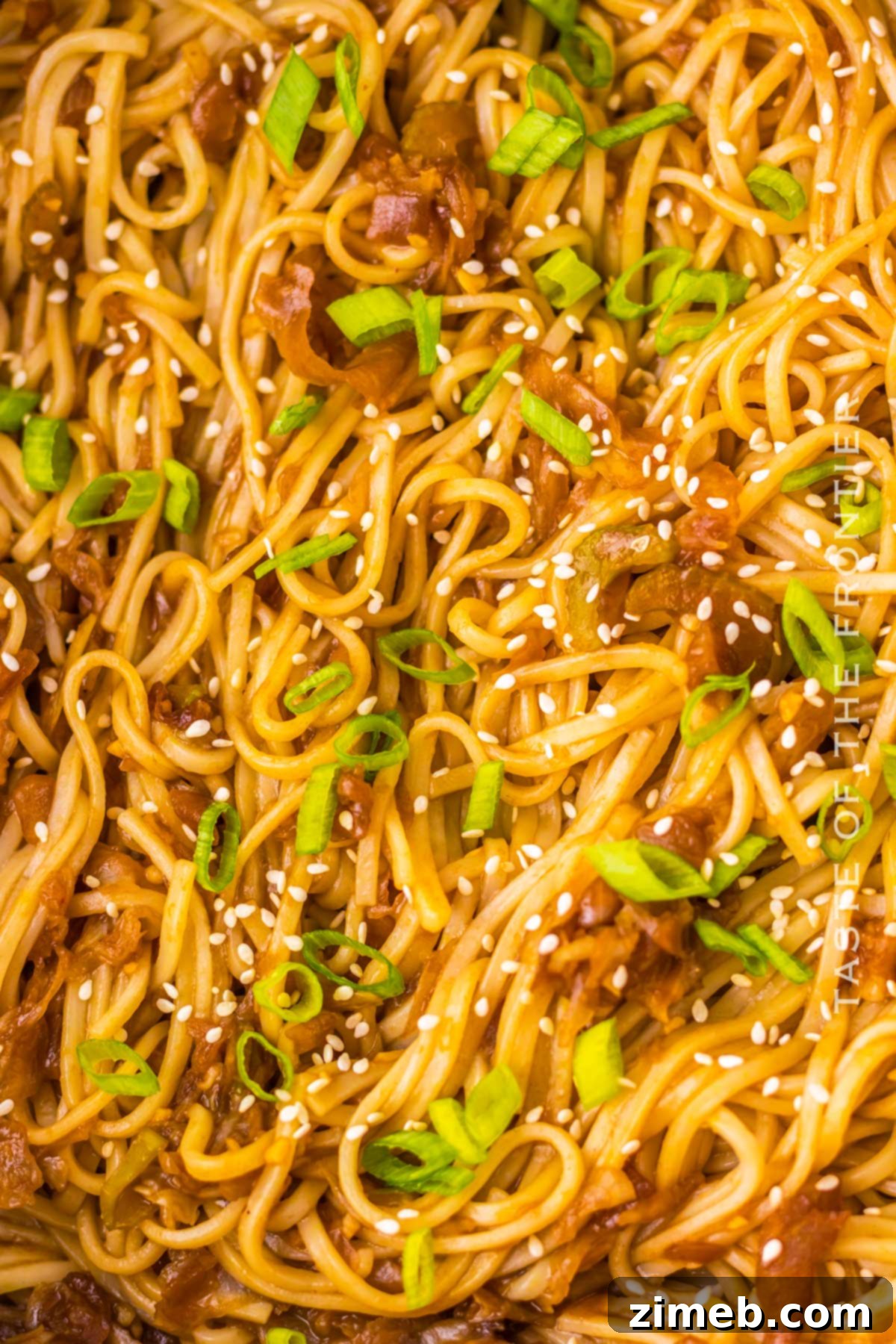
Texture: This chow mein recipe delivers a delightful textural contrast. The stir-fried vegetables, particularly the cabbage, retain a satisfying crispness, while the noodles become beautifully tender and chewy. The savory sauce meticulously coats every strand and vegetable, creating a smooth and flavorful finish that makes each bite irresistible. It’s a perfect harmony of soft and crunchy.
Taste: Experience the signature savory and umami-rich taste of Panda Express Chow Mein. This copycat recipe achieves a superb balance of salty and subtly sweet flavors, enhanced by aromatic garlic and the deep notes of hoisin and soy sauce. It’s truly a burst of authentic Asian-inspired goodness in every forkful.
Ease: You’ll be surprised how effortlessly this Panda Express Chow Mein comes together in your own kitchen. It requires only a handful of readily available ingredients like noodles, fresh vegetables, and common Asian sauces. The process involves simple stir-frying, making it a quick and straightforward recipe, even for novice cooks.
Why I love it: The irresistible combination of chewy noodles and crisp vegetables creates a wonderful mouthfeel. The simple yet incredibly flavorful sauce elevates the dish, coating every element to deliver a satisfying and utterly “slurpable” experience that keeps you coming back for more. It’s comfort food at its best, reinvented for home.
Crafting these flavorful noodles requires just a few basic ingredients, many of which you might already have in your pantry. For a more substantial meal, consider adding some cooked chicken or tofu to transform it into a complete and satisfying entrée.
One of the greatest benefits of making this famous chow mein at home is the ability to control the salt, oil, and sugar content. This allows you to create a significantly healthier version of your beloved takeout classic without sacrificing any of the delicious flavor. You can tailor it to your dietary preferences, ensuring a meal that is both indulgent and wholesome.
If you’re not a big fan of rice or simply want to skip the typical takeout routine tonight, this recipe is your perfect solution! But be warned: its incredible taste and addictive quality might just make it a new favorite in your weekly meal rotation. Prepare to be delighted!
- Gina’s Recipe Rundown:
- What is Chow Mein?
- What Is In Panda Express Chow Mein?
- Chow Mein vs Lo Mein
- Why You’ll Love This Recipe
- Essential Chow Mein Ingredients
- Crafting the Perfect Chow Mein Sauce
- Garnish Ideas
- Kitchen Essentials You’ll Need
- How To Make Panda Express Chow Mein Recipe
- How To Store and Reheat Chow Mein Noodles?
- Add-ons & Variations
- Pro Tips and Tricks for Perfect Chow Mein
- Frequently Asked Questions
- Can I Make Chow Mein Noodles In an Instant Pot?
- What Is The Secret To Great Chow Mein Sauce?
- Is Homemade Chow Mein Healthier Than Panda Express?
- What Gives Chow Mein Its Distinctive Taste?
- What are the best noodles for Chow Mein?
What is Chow Mein?
Chow mein, literally meaning “stir-fried noodles” in Cantonese, is a classic and widely beloved Chinese dish that has gained immense popularity worldwide. It typically features soft, often chewy, egg noodles that are first boiled and then stir-fried with a medley of vegetables, a savory sauce, and often a choice of protein. The magic of chow mein lies in its vibrant textures and deeply savory flavor profile, making it a staple in Chinese restaurants and a favorite comfort food for many.
While various regional variations exist across China, the Americanized version, particularly popularized by fast-food chains like Panda Express, is known for its distinctive blend of noodles, crisp cabbage, celery, onions, and a rich, umami-packed sauce. It’s not just a dish; it’s a cultural icon, representing the fusion of traditional Chinese cooking with Western culinary preferences.
What Is In Panda Express Chow Mein?
Panda Express Chow Mein is a signature side dish at the popular American Chinese fast-food chain, famously served as part of their combo plates. At its heart, it’s a noodle-based stir-fry featuring bouncy, wheat-flour noodles. The dish is characterized by its slightly tangy, sweet, and predominantly savory sauce, which perfectly coats a harmonious mix of sautéed vegetables.
The core vegetable components typically include crunchy cabbage, crisp celery, and tender onions. Interestingly, the Panda Express Chow Mein is notable for being completely vegan, as it traditionally contains no dairy, no eggs (in the noodles themselves, often using wheat noodles), and no animal proteins. This makes it a fantastic, accessible option for those adhering to a plant-based diet. For many, including myself, it’s a go-to choice, often paired with their famous Orange Chicken!
Chow Mein vs Lo Mein
While often confused, chow mein and lo mein noodles are distinct dishes with key differences in their cooking methods and resulting textures. Understanding these distinctions is crucial for appreciating each dish.
Chow Mein (meaning “stir-fried noodles”) involves noodles that are typically pre-boiled until al dente, then drained and often allowed to dry slightly before being added to a hot wok. The defining characteristic is the stir-frying process itself, where the noodles are fried, sometimes until they achieve a slightly crispy or browned texture, alongside vegetables and sauce. This results in a dish that is generally drier, with a firmer, chewier, and sometimes slightly crunchy noodle. The sauce coats the noodles rather than submerging them, contributing to a more “fried” and savory profile.
Lo Mein (meaning “tossed noodles”), on the other hand, features noodles that are boiled until fully cooked and tender. Once cooked, these soft noodles are simply tossed with the sauce and other ingredients (like vegetables and protein) at the very end of the cooking process, without extensive stir-frying. This method yields a dish with softer, silkier noodles that are more heavily coated in sauce, making it typically saucier and less oily or dry than chow mein. The focus is on the smooth, yielding texture of the noodles themselves, rather than any crispness.
In essence, if you prefer a dish with a drier, chewier, and potentially crispier noodle, chow mein is your go-to. If you favor soft, saucy noodles, lo mein is the ideal choice. Both are delicious, but their textural experiences are quite different.
Why You’ll Love This Recipe
- Quick & Versatile Meal: This easy chow mein recipe is perfect for busy weeknights, transforming into a delicious side or main dish in just about 25 minutes. The stir-fry cooking style, utilizing quick, high heat, ensures a speedy yet flavorful meal that’s ideal for hectic schedules.
- Superior Homemade Quality: While Panda Express might be a delightful guilty pleasure, nothing quite compares to the freshness and quality of a homemade meal. This copycat recipe allows you to skip the MSG (a common additive in many restaurant dishes) and enjoy the pure, natural flavors of fresh ingredients. You have complete control over what goes into your food, making it a healthier and more wholesome option for your family.
- Fantastic Leftovers: Don’t underestimate the power of delicious leftovers! This chow mein stores beautifully in the refrigerator for a few days, making it an excellent meal prep option for lunches or quick dinners throughout the week. The flavors often deepen overnight, enhancing the enjoyment.
- Irresistible Flavorful Sauce: The heart of any great chow mein is its sauce, and this recipe delivers every time. Bursting with savory, sweet, and umami notes, the sauce caramelizes beautifully with the vegetables during cooking, coating every strand of noodle. The result is a satisfying, rich, and utterly “slurpable” dish that tantalizes your taste buds and leaves you craving more.
Essential Chow Mein Ingredients
Don’t be intimidated by some of the Asian-sounding names on this ingredient list! Most items are quite affordable and easily accessible, either online or in the international aisle of larger grocery stores and, of course, at your local Asian markets. Freshness is key here, so opt for high-quality produce and sauces where possible.
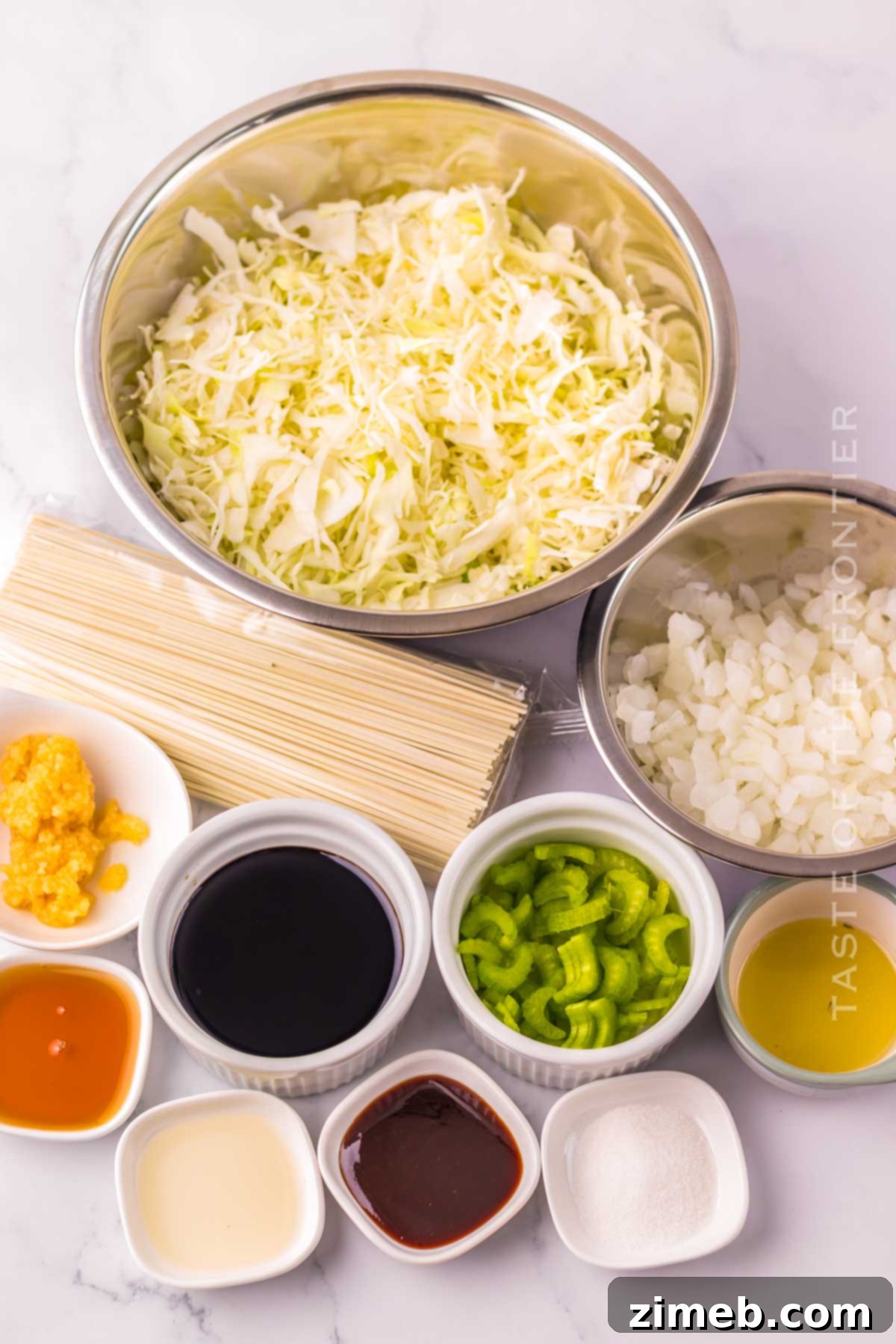
- Noodles: For an authentic Panda Express copycat, lo mein noodles are your best bet. These thick, slightly chewy wheat-flour noodles provide the perfect base. Direct substitutes include dry chow mein noodles or yakisoba noodles, which work wonderfully for a classic Chinese food stir-fry. While ramen noodles can be used in a pinch, they will alter the texture and flavor profile slightly from the original Panda Express dish. If you’re looking to make this recipe gluten-free, seek out specific gluten-free chow mein or rice noodles (ensure they contain no added wheat). For a vegan version, check that your chosen noodles do not contain eggs, as traditional chow mein noodles often do.
- Fresh Vegetables: The trio of cabbage, celery stalks, and onions (white or yellow, avoid red as it can overpower) forms the backbone of the vegetable medley. Cabbage, in particular, is an indispensable ingredient in this noodle stir-fry and should not be skipped, providing that signature crunch. Feel free to enhance the dish with additional vegetables if you desire a more filling or varied meal; options will be shared below. Ensure all vegetables are sliced thinly for quick and even cooking. The cabbage should be sliced at an angle into ribbons, and celery pieces should be approximately 1/2 inch in length to maintain texture.
- Vegetable Oil: Essential for stir-frying the vegetables to perfection. Choose a neutral oil with a high smoke point and no strong aroma or flavor that might compete with the sauce. Excellent choices include avocado oil, canola oil, or peanut oil. These oils allow the natural flavors of the vegetables and sauce to shine through.
Crafting the Perfect Chow Mein Sauce
The magic of Asian cuisine often lies in its rich, flavorful, yet surprisingly simple and customizable sauces. This chow mein sauce recipe comes together in mere minutes and can be easily adjusted to your personal preference – whether you like it sweeter, saltier, or with a deeper umami punch. This versatile sauce is excellent for any Asian-inspired cooking.
- Light Low-Sodium Soy Sauce: This is the cornerstone of a classic chow mein sauce. Given that several ingredients are naturally quite salty, opting for a lighter, low-sodium version helps to prevent the dish from becoming overly salty. Be mindful of your choice; dark soy sauce, for example, is too overpowering and will drastically change the flavor and color of your chow mein.
- Minced Garlic: Freshly minced garlic is non-negotiable for its pungent aroma and depth of flavor. It infuses the entire dish with an essential savory foundation.
- Granulated Sugar or Brown Sugar: A touch of sweetness is crucial for balancing the savory and salty elements. Granulated sugar provides a clean sweetness, while brown sugar offers a more subtle, caramel-like note that pairs exceptionally well with Asian-style savory dishes, adding an extra layer of complexity.
- Hoisin Sauce: This thick, fragrant sauce provides a wonderful sweet and savory dimension with hints of tang. It’s often referred to as Chinese barbecue sauce and contributes significantly to the characteristic umami flavor of the chow mein.
- Sesame Oil: While optional, a drizzle of sesame oil at the end significantly deepens the nutty, aromatic flavor of the dish. It’s typically used as a finishing oil rather than for high-heat cooking, as its flavor can diminish quickly.
- Rice Vinegar or Chinese Cooking Wine: These acidic components are vital for cutting through the richness of the other sauces. They add a bright tang that lightens the otherwise thick umami flavors, creating a more dynamic and well-rounded taste profile.
You can effortlessly mix all the sauce ingredients in a small bowl ahead of time, allowing the flavors to meld. This saves precious minutes during the fast-paced stir-frying process. I personally don’t add any pepper to my basic recipe, but you can certainly incorporate either black pepper for a familiar heat or its milder cousin, white pepper. White pepper is often considered one of the “secret ingredients” in authentic Chinese cuisine, offering a distinct, subtle warmth without the robust flavor of black pepper.
Garnish Ideas
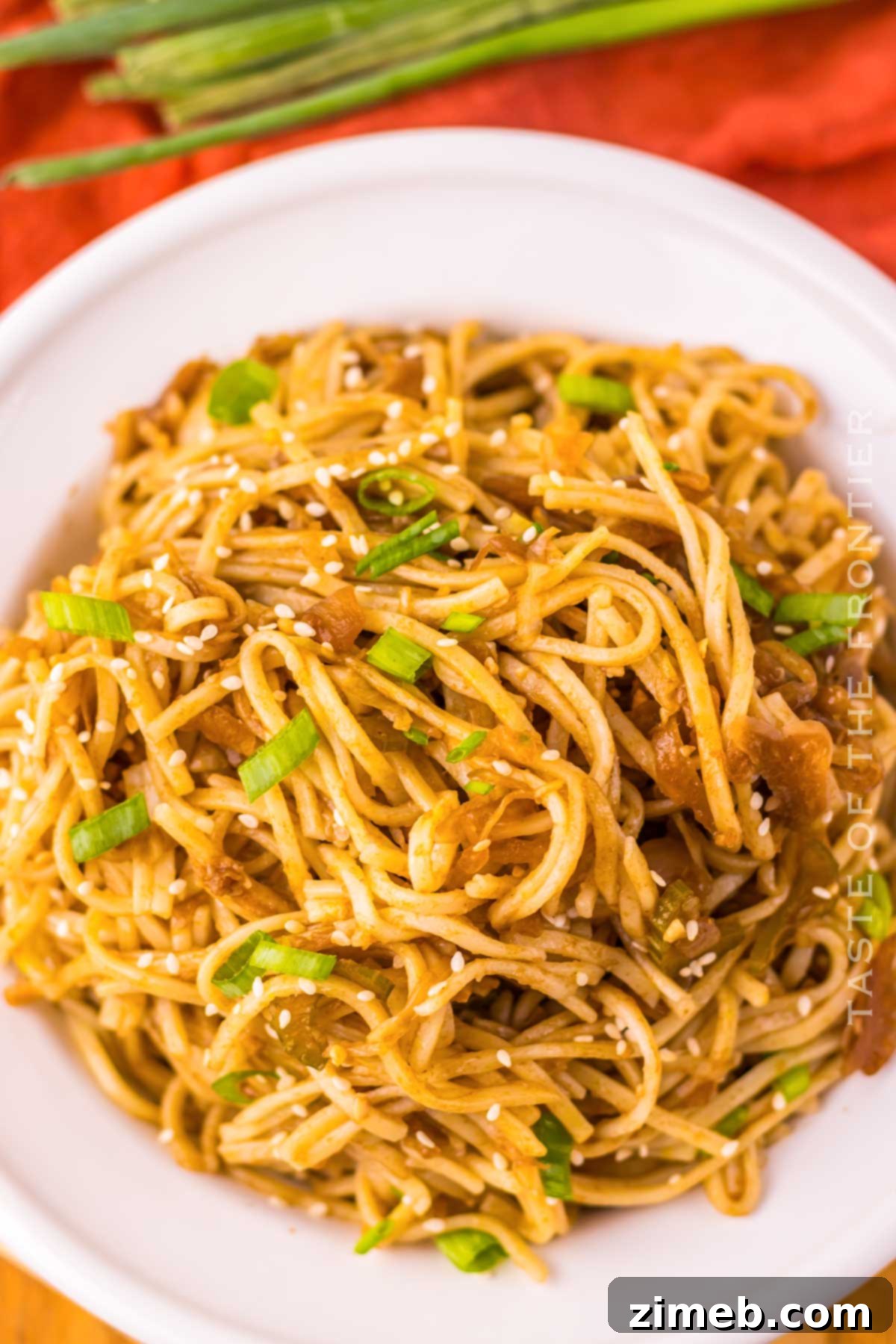
- Scallions (Green Onions) and Sesame Seeds: These are classic garnishes that add a pop of color, a fresh, mild oniony bite, and a nutty finish. While optional, they truly elevate the presentation and provide an extra layer of flavor.
Kitchen Essentials You’ll Need
Having the right tools can make all the difference in achieving perfect homemade chow mein. While specialized equipment can be helpful, you can still make a fantastic dish with common kitchen items.
- A large pot to pre-cook your noodles is essential for boiling them to the ideal al dente texture.
- Alternatively, a large skillet, a non-stick pan, or, ideally, a wok is needed for cooking the vegetables, simmering the sauce, and finishing the stir-fry. A wok is highly recommended for stir-frying due to its sloped sides and even heat distribution, which allows for quick and efficient cooking, preventing ingredients from steaming. You can even boil the noodles in your skillet or wok first, then dry it thoroughly before adding oil to cook the vegetables, minimizing dish cleanup.
How To Make Panda Express Chow Mein Recipe
This easy chow mein recipe is designed for speed and convenience, coming together incredibly quickly with minimal prep time and fast sautéing of vegetables. It’s almost a one-pan meal that you can serve immediately or prepare ahead for several delicious weeknight dinners.
- Cook the Noodles: Begin by boiling your chosen chow mein or lo mein noodles according to the package directions until they are al dente. This typically means they are cooked through but still have a slight bite. Once cooked, drain them thoroughly and set them aside. To add an extra layer of savory flavor, you can even cook the noodles in chicken or vegetable broth instead of just water.
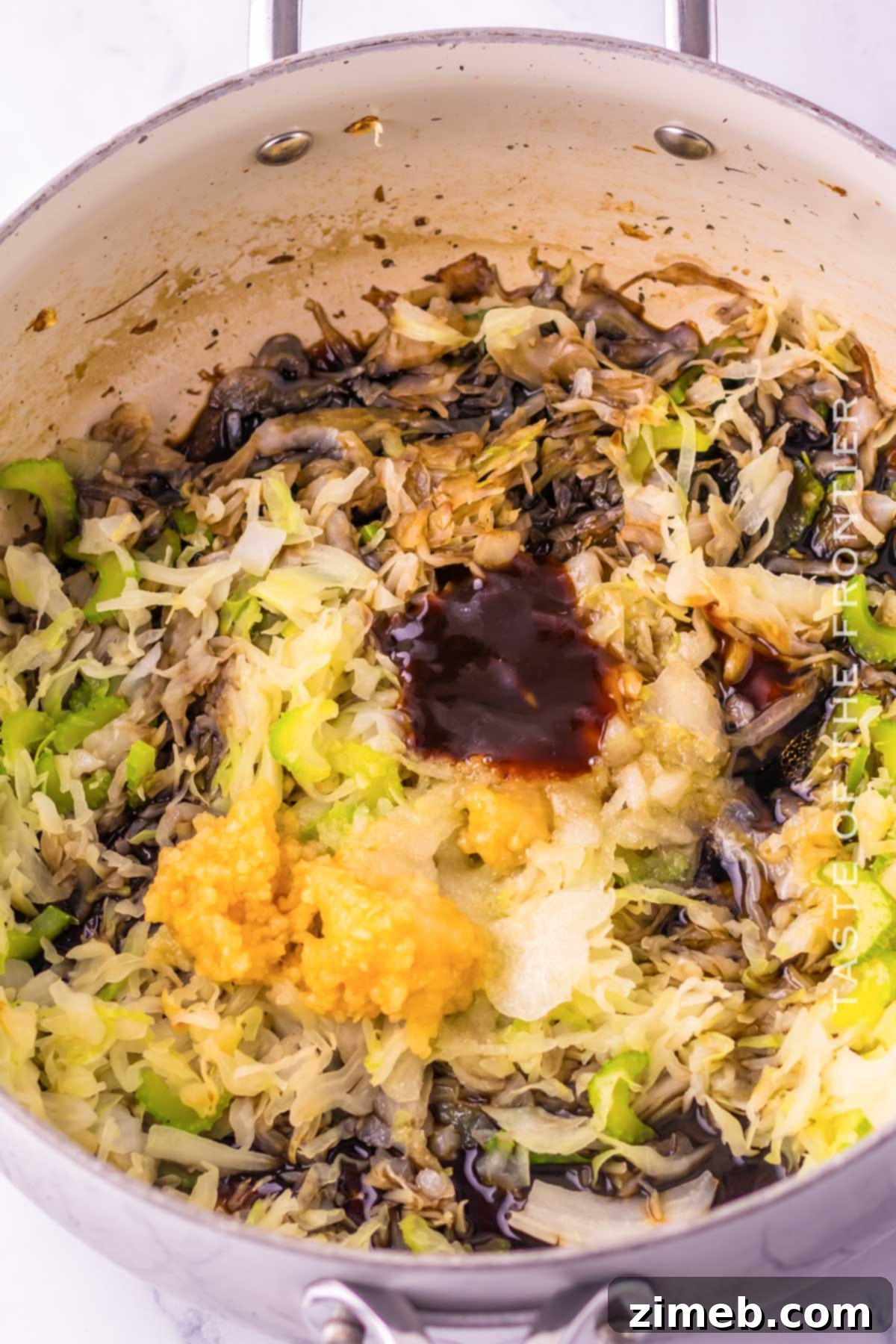
- Sauté the Vegetables: In a large skillet, non-stick pan, or a wok, combine the thinly sliced cabbage, celery, and diced onion with your chosen vegetable oil. Heat this over medium-high heat. Sauté the vegetables, stirring frequently, for about 3-5 minutes. The goal is for them to become just softened and slightly tender-crisp, retaining some of their bite, rather than becoming fully limp.
- Infuse with Sauce: Once the vegetables have softened, add the pre-mixed sauce ingredients directly to the pan: soy sauce, minced garlic, granulated sugar, hoisin sauce, sesame oil, and rice vinegar. Continue to cook and stir for just 1 minute. This short cooking time allows the aromatics to bloom and the sauce to slightly thicken and meld, creating a rich base for your noodles.
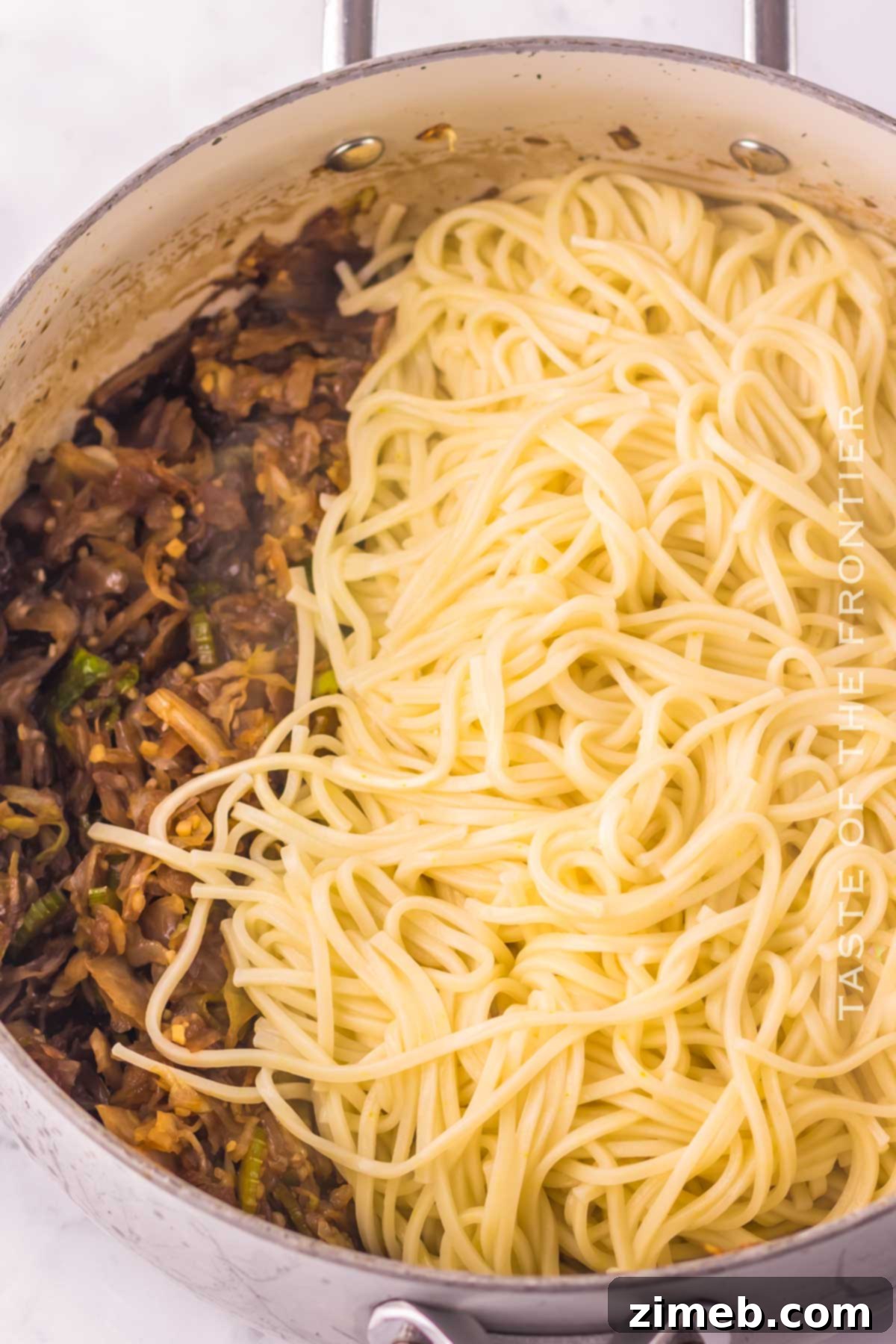
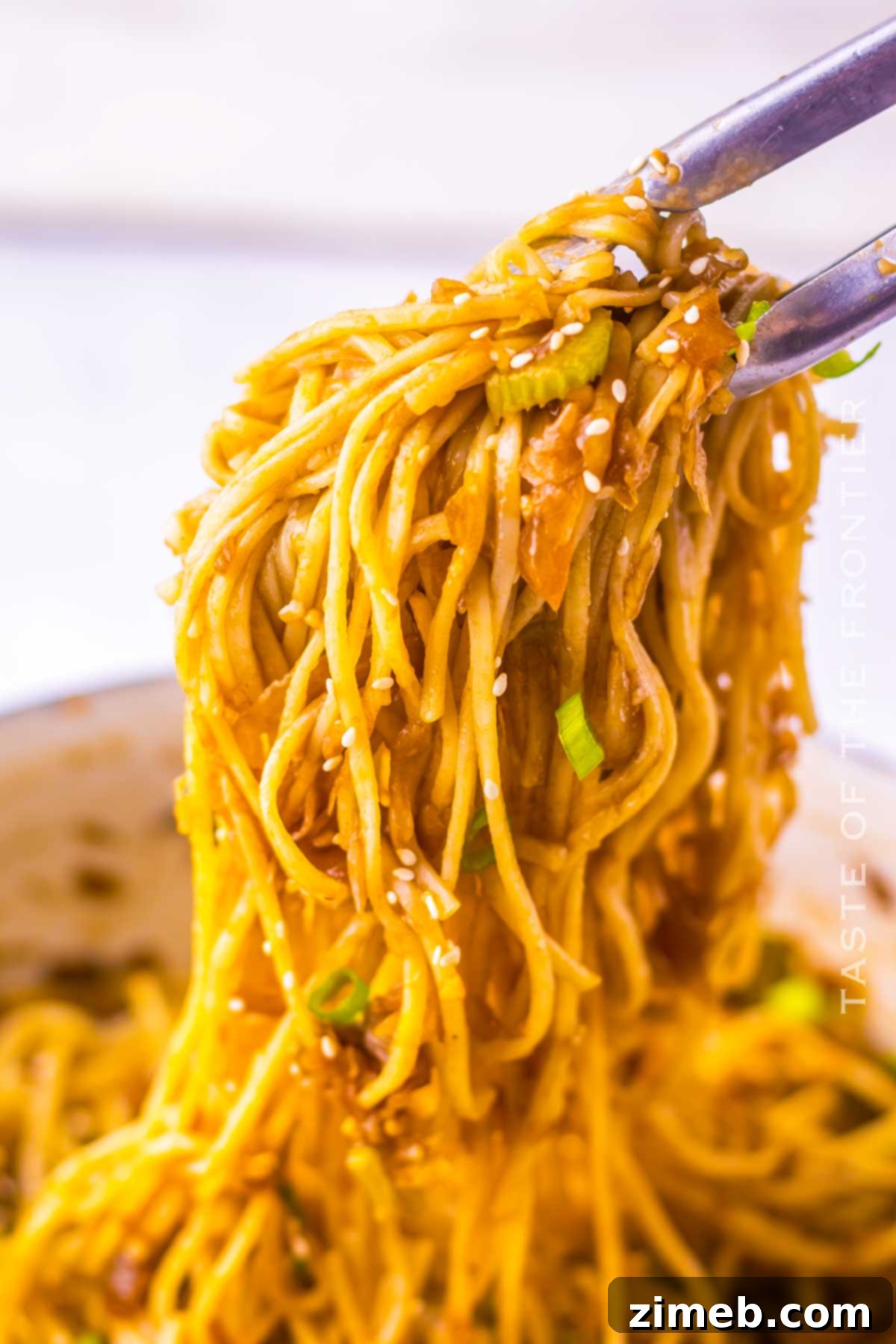
- Combine and Finish: Finally, toss in the cooked and drained noodles. Gently stir and toss all the ingredients together, ensuring the noodles are evenly coated with the luscious sauce and thoroughly combined with the vegetables. Be careful not to overmix or vigorously stir, as this can break the noodles.
At this stage, it’s important not to overcook the dish, as the noodles are already boiled and can quickly become too soft and soggy. A great tip for achieving a perfect texture is to slightly undercook the noodles in step 1 (by 1-2 minutes short of the package cooking time). Then, when you combine everything in step 4, stir-fry all the ingredients together for an additional minute. This final stir-fry step will perfectly finish cooking the noodles, allowing them to absorb more flavor and achieve that ideal chewy-crisp chow mein texture.
How To Store and Reheat Chow Mein Noodles?
Proper storage and reheating are key to enjoying your homemade chow mein even after the first meal.
Refrigeration: Store any leftover chow mein noodles in an airtight container in the refrigerator for up to 3-4 days. This keeps them fresh and prevents them from absorbing odors from other foods.
Reheating: When ready to enjoy, simply reheat portions in a microwave or a skillet over medium heat. If using a microwave, add a tiny bit of water or oil before heating to help rehydrate the noodles and prevent them from drying out. In a skillet, a splash of water or broth will help steam them back to life. Stir frequently until heated through. Be cautious not to overcook, as this can make the noodles mushy.
Freezing: Stir-fried chow mein actually freezes quite well! For longer storage, transfer cooled chow mein to a freezer-safe bag or an airtight container. It can be stored in the freezer for up to 2-3 months. Thaw overnight in the refrigerator before reheating as directed above. Freezing may slightly alter the texture of the vegetables, making them a little softer, but the flavor will remain delicious.
Add-ons & Variations
One of the best things about homemade chow mein is its versatility. Feel free to customize this recipe with your favorite ingredients to create a truly unique and satisfying meal!
- Boost the Aromatics & Heat: For an even deeper Asian flavor profile, consider adding a teaspoon of ginger paste or freshly minced ginger to the sauce mixture. This will bring out a subtle warmth and aromatic complexity. For those who enjoy a little kick, a pinch of red pepper flakes added with the sauce can provide a fantastic level of heat to the dish.
- Expand Your Veggies: Beyond the core cabbage, celery, and onions, many other vegetables can elevate your chow mein. Experiment with finely chopped snow peas, vibrant red bell peppers, spicy Thai chiles, crunchy broccoli florets, fresh bean sprouts, or shredded carrots for added color, texture, and nutrients. Just remember to slice them thinly for quick cooking.
- Incorporate Oyster Sauce: Oyster sauce is a staple in many Asian cuisines and pairs beautifully with soy sauce in stir-fries. It offers a rich, sweet, and salty umami flavor. However, note that traditional oyster sauce is not vegan. If you’re adhering to a plant-based diet, you can find vegan oyster sauce alternatives or simply rely on the hoisin sauce in this recipe, which offers a similar depth of flavor.
- Add Protein: To transform this side dish into a complete meal, adding a protein is an excellent choice. Cooked chicken breast (sliced or shredded), crispy beef strips, succulent shrimp, or pan-fried tofu are all fantastic options for a chow mein recipe. Ensure your protein is pre-cooked or quickly seared before adding it to the stir-fry. For an indulgent treat, serve your chow mein with honey walnut shrimp – it’s an absolutely divine combination!
- Westernized Noodle Alternatives: If traditional Asian noodles are hard to find, or if you simply prefer a different texture, you can experiment with a Westernized version of this dish. Fettuccine noodles or any spaghetti-shaped pasta can be used as a substitute for lo mein noodles, offering a familiar base with the same savory sauce.
- Pancit Noodle Shortcut: For an incredible time-saver, consider using Pancit noodles. Many varieties of Pancit noodles do not require pre-boiling! You can directly toss them into the pan with a bit of liquid, and they will cook beautifully within the stir-fry, simplifying your process even further.
- Gluten-Free Version: Most traditional noodles like Pancit Canton, chow mein, yakisoba, and Chinese egg noodles contain egg and wheat flour. To make this dish gluten-free, you will need to carefully check noodle packages and look for buckwheat soba or rice noodles specifically marked as gluten-free, with no added wheat. Additionally, you must swap the low-sodium soy sauce for a certified gluten-free soy sauce or tamari to ensure the entire dish is safe for those with gluten sensitivities.
Pro Tips and Tricks for Perfect Chow Mein
Achieving restaurant-quality chow mein at home is easier than you think with these expert tips and tricks:
- Adjusting Oil Content: Panda Express chow mein is often recognized for its slightly oily sheen and rich mouthfeel. If you enjoy this characteristic, feel free to add a bit more vegetable oil to your stir-fry, or even a small pat of butter for added richness and flavor. Control the oil to suit your preference, making it as light or decadent as you wish.
- Sourcing Ingredients: If you’re struggling to find specific Asian ingredients like particular noodles or sauces at your local conventional grocery store, don’t despair! An Asian market is your best friend. These specialty stores offer a wide array of authentic ingredients that can truly elevate your homemade dishes.
- Discard Flavor Packets: Many store-bought noodle packages, especially ramen or instant chow mein, come with flavor packets. For this fresh, homemade recipe, it’s best to discard those. We are building our own superior sauce from scratch, so those packets are unnecessary and can introduce artificial flavors that detract from the dish.
- Wok for Optimal Stir-Frying: While a large skillet or non-stick pan will work, a wok is undeniably superior for stir-frying. Its unique shape allows for even heat distribution up the sides, creating a hot, dynamic cooking surface. This ensures ingredients cook quickly and evenly, achieving that signature stir-fried texture without steaming, and keeps everything moving and well-mixed.
- Thickening a Runny Sauce: If you find your chow mein sauce is too thin and runny even after cooking for a while, a simple fix is to add a cornstarch slurry. Dissolve a teaspoon of cornstarch in a tablespoon of cold water, then stir it into the simmering sauce. It will thicken almost instantly, giving you that desirable consistency where the sauce evenly coats the back of a wooden spoon and clings beautifully to the noodles.
- Prep Ahead for Speed: Stir-frying is a very fast cooking method, which means you need to have all your ingredients ready and within reach before you start cooking. Chop all your vegetables, mince your garlic, and mix your sauce ahead of time. This “mise en place” approach ensures a smooth and stress-free cooking experience, allowing you to focus on the stir-frying itself.
Frequently Asked Questions
Here are answers to some common questions about making this delicious Panda Express Chow Mein at home.
Can I Make Chow Mein Noodles In an Instant Pot?
Absolutely! The Instant Pot can be a great tool for a quicker chow mein. Start by setting your pressure cooker to sauté mode and sauté the vegetables in a bit of oil until softened. Then, add your pre-mixed sauce, the chow mein noodles, and some broth (or water) to the pot. Secure the lid and pressure cook on high for about 5 minutes, followed by a quick release. This method yields tender noodles with minimal fuss, though the stir-fried texture might be slightly different from a wok.
What Is The Secret To Great Chow Mein Sauce?
While the exact Panda Express chow mein sauce recipe remains a secret, a fantastic homemade version relies on a balance of key components. The secret lies in blending light soy sauce for savory depth, hoisin sauce for sweetness and umami, a touch of brown sugar for caramel notes, a dash of aromatic sesame oil, and optional oyster sauce (or its vegan counterpart) for richness. Adding fresh minced garlic and a splash of rice vinegar provides essential brightness and tang that elevates the entire flavor profile. The interplay of these ingredients creates a complex, irresistible sauce.
Is Homemade Chow Mein Healthier Than Panda Express?
Yes, homemade chow mein is generally a much healthier option than its restaurant counterpart. Restaurant versions, including Panda Express, are often high in sodium, unhealthy fats, and added sugars. When you make chow mein noodles at home, you have complete control over the ingredients. You can opt for low-sodium soy sauce, use less oil (or healthier oils), and pack it full of fresh, nutrient-rich greens and other vegetables, boosting fiber and essential vitamins. This allows you to significantly reduce calories, sodium, and fat content while maximizing nutritional value.
What Gives Chow Mein Its Distinctive Taste?
The distinctive taste of chow mein comes from a combination of factors. Primarily, it’s the specific cooking technique: “chow mein” literally translates to “stir-fried noodles.” The process of pre-cooking noodles and then stir-frying them at high heat with vegetables and a savory sauce is crucial. This stir-frying caramelizes the sauce onto the noodles and vegetables, giving them a slightly chewy, often crunchy, and undeniably oily texture that is instantly recognizable. The blend of soy sauce, hoisin, and aromatics like garlic creates the iconic savory-sweet, umami-rich flavor that defines classic chow mein.
What are the best noodles for Chow Mein?
For an authentic Panda Express-style chow mein, fresh or dried “lo mein” noodles are typically the best choice. These are thick, round, wheat-flour noodles that become deliciously chewy when cooked. Other excellent options include fresh or dried “chow mein” noodles (which can be a bit thinner and flatter than lo mein but still work well) and “yakisoba” noodles, which are also wheat-based and have a great texture for stir-frying. While you can use thinner “ramen” noodles in a pinch, they might not offer the same robust chewiness as the traditional choices. Always look for noodles specifically designed for stir-frying to get the best results, ensuring they can withstand the high heat and vigorous tossing without breaking down.
If you love this copycat recipe, you’re going to love these copies of your other restaurant favorites too. Please click each link below to find the easy, printable recipe!
Check out this recipe

Check out this recipe
Check out this recipe

Check out this recipe
Check out this recipe

More Great Chinese Food Recipes
If you loved making this Panda Express Chow Mein, be sure to explore more of our fantastic Chinese food recipes that are perfect for home cooks:
Orange Chicken Recipe – Panda Express Copycat: Master the sweet and tangy classic at home.
Cashew Chicken Recipe: A savory and nutty chicken dish that’s always a crowd-pleaser.
Air Fryer Teriyaki Chicken: Quick, healthy, and flavorful chicken made easy in your air fryer.
Air Fryer Spring Rolls: Crispy, golden spring rolls made healthier without deep frying.
CONNECT WITH YUMMI HAUS!
Be sure to follow me on my social media, so you never miss a post!
Substack, FB, Pinterest, IG, Email Subscription
Rate this Recipe
Panda Express Chow Mein – Copycat Recipe
Ingredients
- 14 ounces lo mein noodles
- 4 cups cabbage – angel sliced
- 3 celery stalks sliced
- 1 onion diced – small
- 3 tablespoons vegetable oil
- ½ cup soy sauce lite
- 3 cloves garlic minced
- 1 tablespoon granulated sugar
- 1 tablespoon hoisin sauce
- 2 tablespoons sesame oil
- ½ tablespoon rice vinegar
scallions and sesame seeds for garnish, optional
Instructions
-
Boil and drain the noodles according to box directions and set aside.
-
Combine the cabbage, celery, and onion with the vegetable oil, in a large skillet or wok over and cook over medium-high heat. Cook while stirring for about 3-5 minutes until the vegetables are just softened.
-
Add the soy sauce, minced garlic, sugar, hoisin sauce, sesame oil, and rice vinegar. Cook while stirring for 1 minute.
-
Toss in the cooked noodles and gently stir with the sauce until everything is combined.
Notes
● Store leftovers in an airtight container in the refrigerator for up to 3-4 days.
●You can add any cooked protein you like, such as chicken, shrimp, or tofu, to make it a complete meal.
●A little red pepper flake added with the sauce can give this dish a great kick.
●For a different take, you can use fettuccine noodles or any spaghetti-shaped pasta instead of lo mein noodles.
●Panda Express chow mein can be quite oily; adjust the amount of vegetable oil or even add some butter to your preference.
Nutrition
Nutritional information for the recipe is provided as a courtesy and is approximate. Please double-check with your own dietary calculator for the best accuracy. We at Yummi Haus cannot guarantee the accuracy of the nutritional information given for any recipe on this site.