Gluten-Free Blueberry Bagels
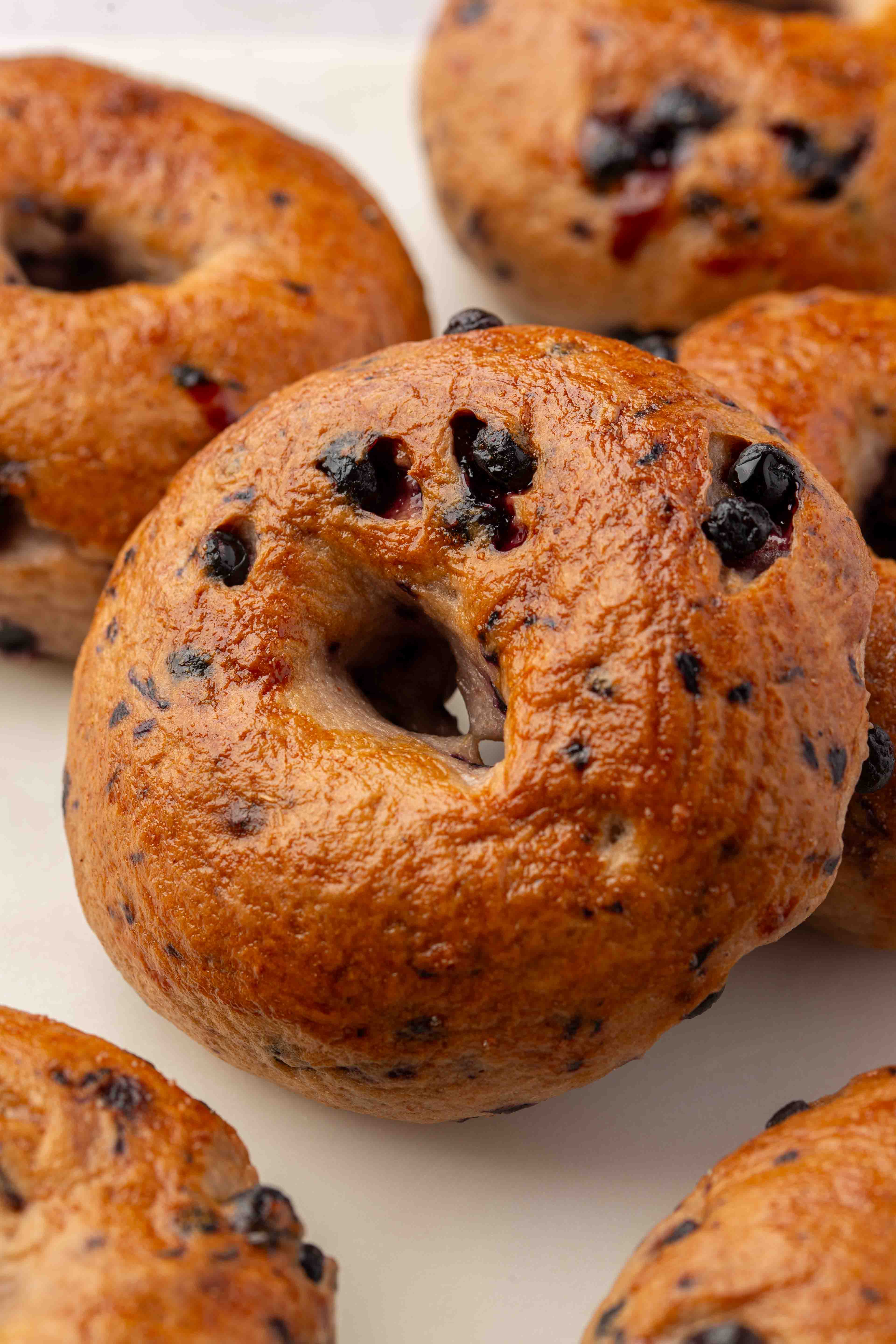
These gluten-free blueberry bagels are chewy and dense, with fresh blueberries worked into the dough and dried blueberries folded in at the end. Fresh blueberries replace the water in this gluten-free bagel dough. They're boiled in a brown sugar water bath before baking, just like a real New York-style bagel. Chewy, dense, and the most beautiful shade of purple!
- Prep20 min
- Cook30 min
- Total1 hr 35 min
- Yield6 bagels
4 Sep 2026
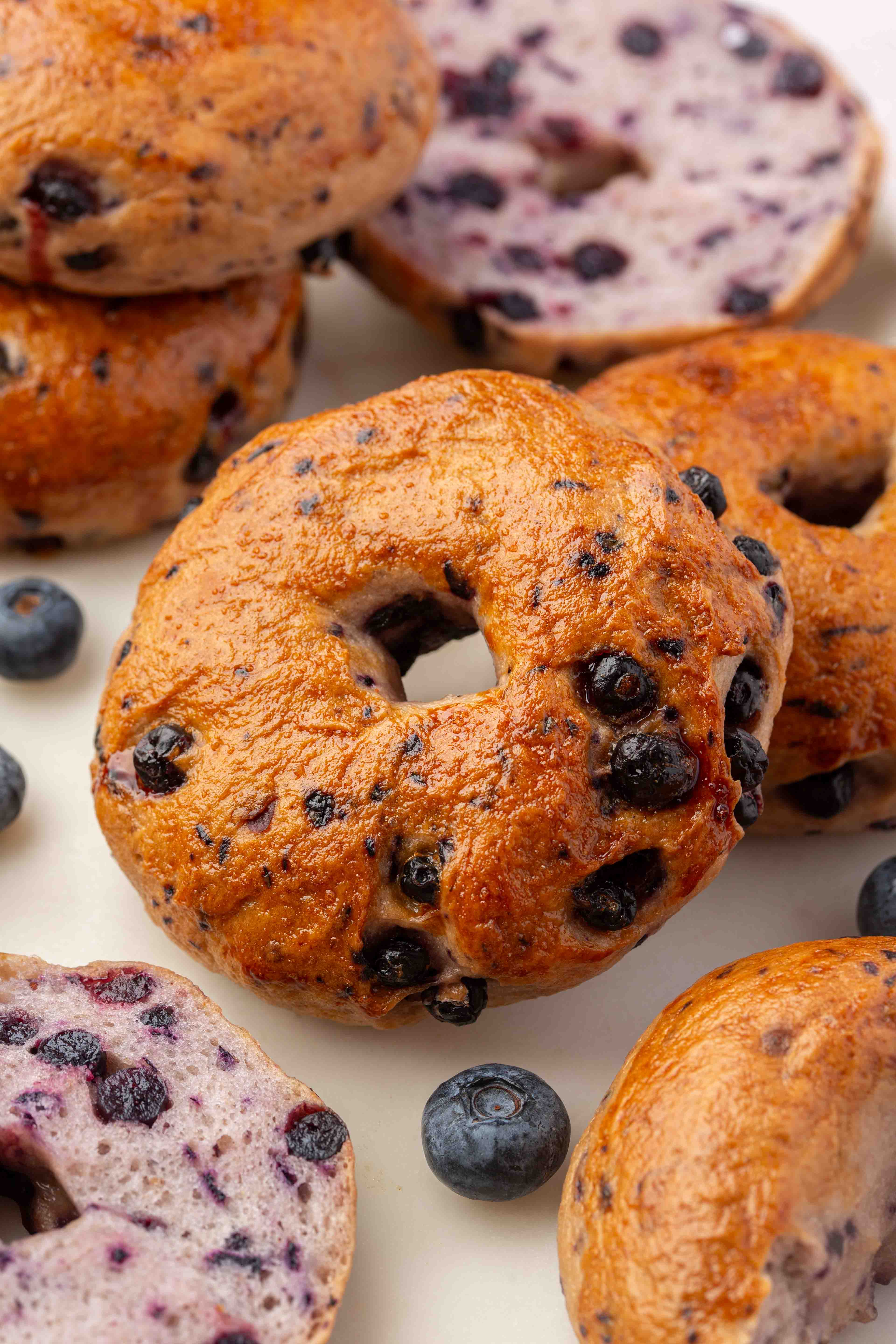
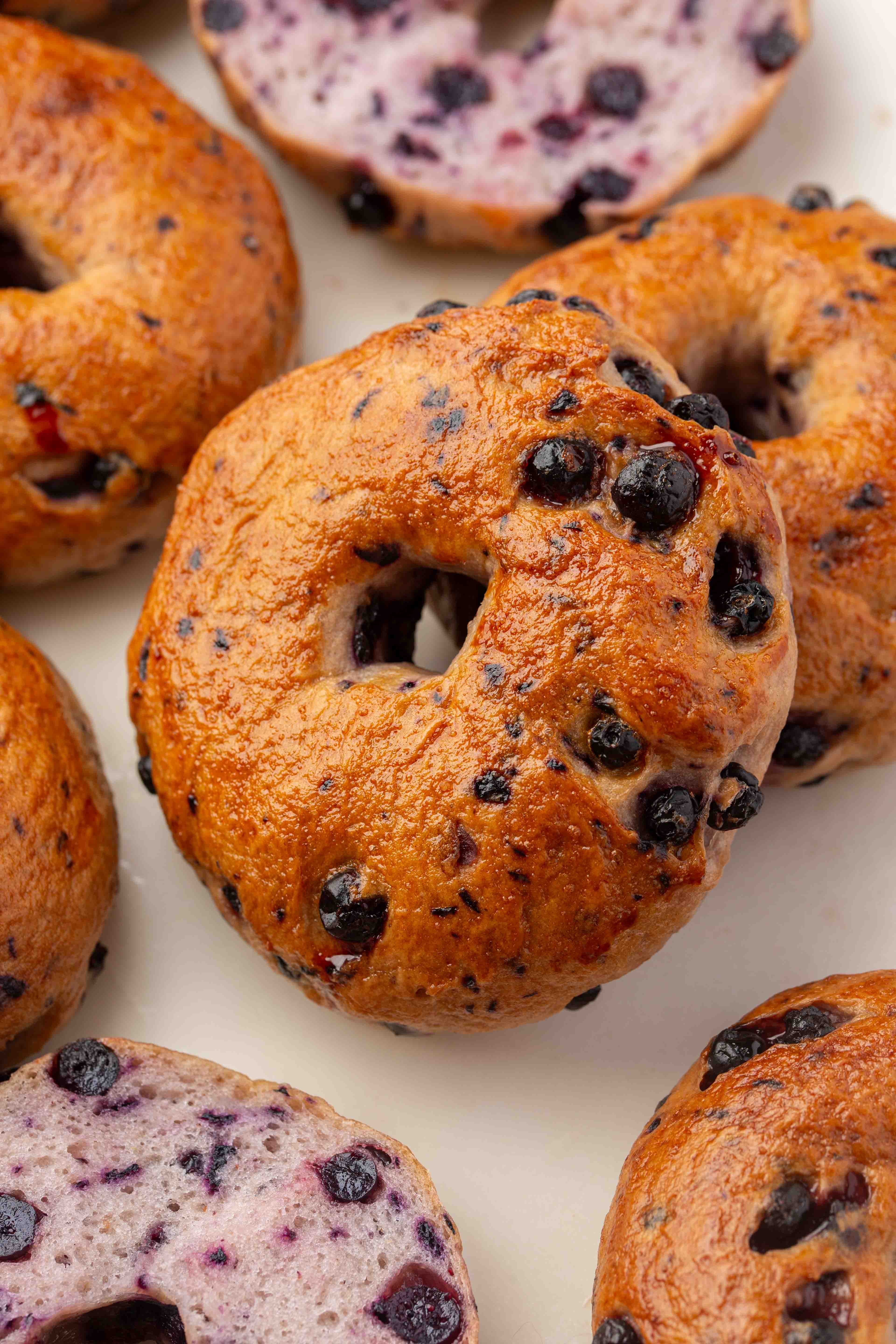
If you’ve already made my Gluten-Free Bagels , this recipe will feel familiar. These gluten-free blueberry bagels use the same lean dough with one key change. Instead of water, fresh blueberries go into the dough. Blueberries are about 85% water, so 170g of fresh blueberries replaces the 140g of water in the original recipe. Dried blueberries get folded in at the end for concentrated flavor and chew in every bite. Everything else, the boiling, the shaping, the baking, is exactly the same.
Why You’ll Love This Recipe
- Real blueberry flavor in every bite. Fresh blueberries go into the dough and dried blueberries get folded in at the end.
- The same tested bagel dough. If you’ve made the original gluten-free bagels, you already know how this dough works. One change, same process.
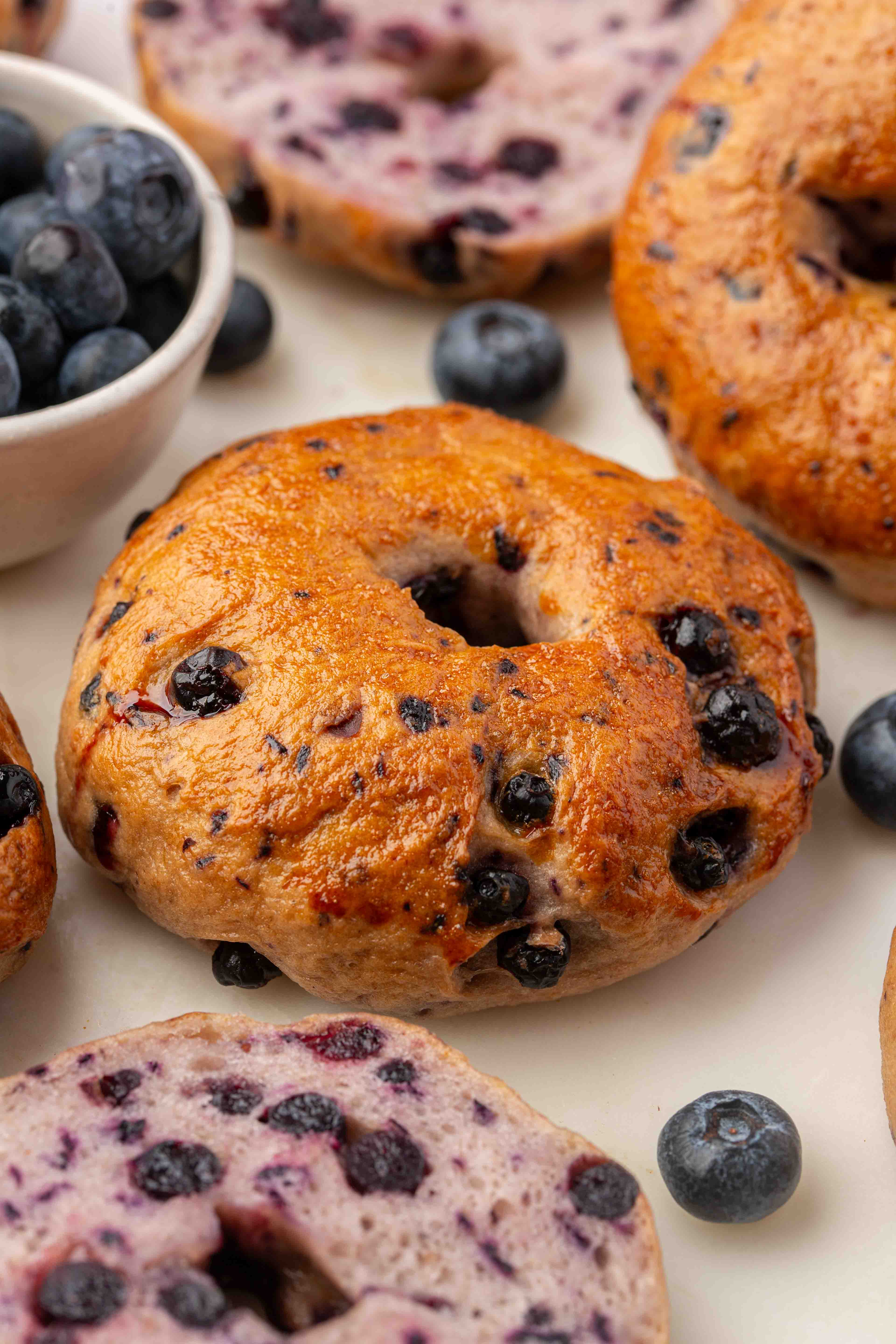
- The color. The dough turns purple from the fresh blueberries. It only gets better if you heat the blueberries first.
How I Tested This Recipe
The first test was straightforward. I knew blueberries were about 85% water, so I replaced the 140g of water in the original bagel recipe with 170g of fresh blueberries, lightly mashed before going into the dough with the psyllium gel. It worked. The dough came together the same way and the bagels had a subtle blueberry flavor throughout.
The second test is when I added dried blueberries, folded in at the end of mixing. That’s what took the flavor from subtle to actually tasting like a blueberry bagel. The dried blueberries add chew and concentrated flavor in every bite without making the dough too wet.
For the third test I tried heating the fresh blueberries first to see what would happen to the color. It worked. The bagels came out a deep, vibrant purple that looked incredible. But the taste was the same as the unheated version and it added an extra step, so I left it out of the final recipe. If you want the more vibrant purple color, just put the blueberries in a microwave-safe bowl and microwave for 30 to 60 seconds until they plump up and release their juice, then use them in place of the fresh blueberries. I’m sharing photos of both so you can see the difference and decide which you prefer.
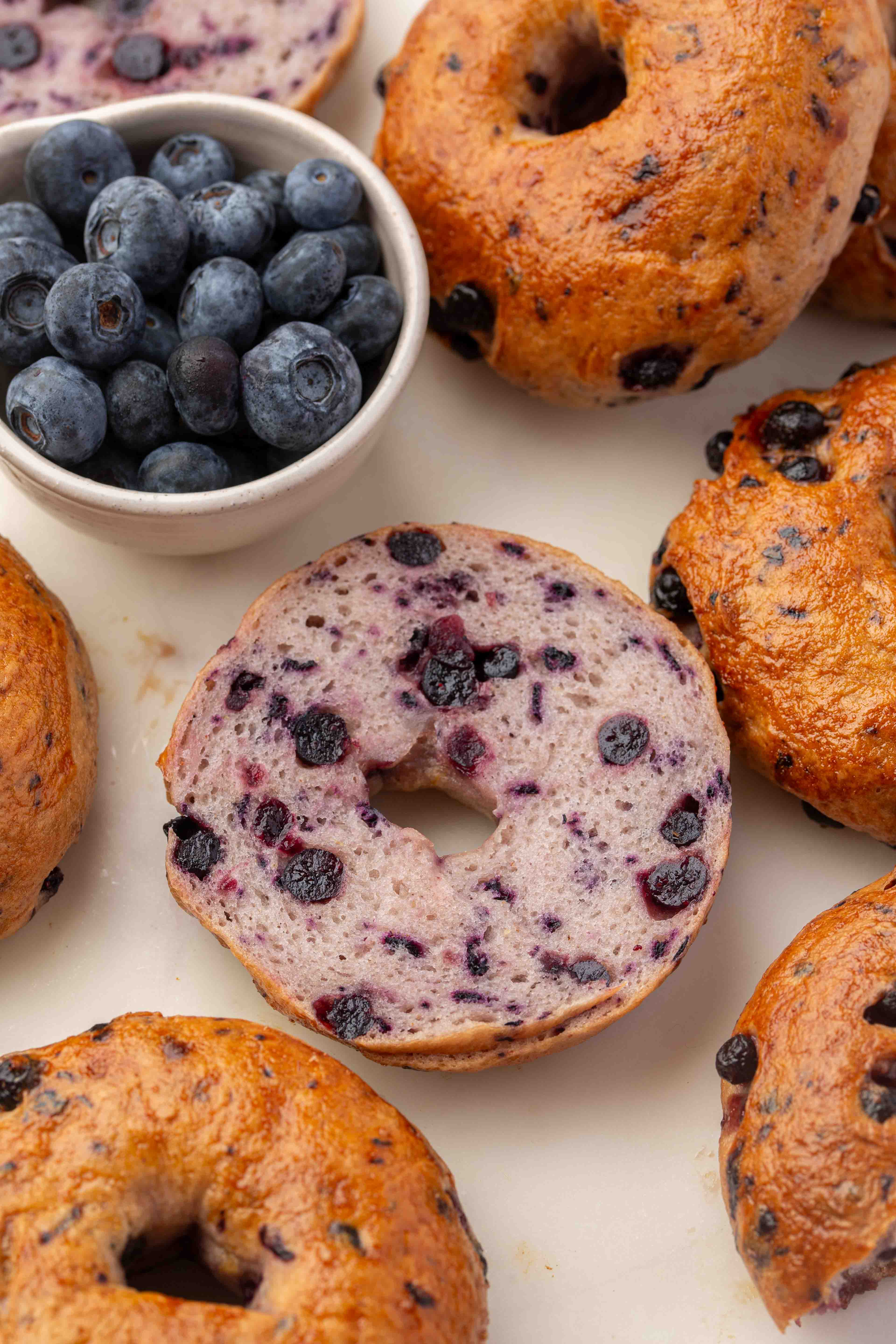 Gluten-Free Blueberry Bagels that have unheated blueberries added to the dough. The color is light purple, but less vibrant.
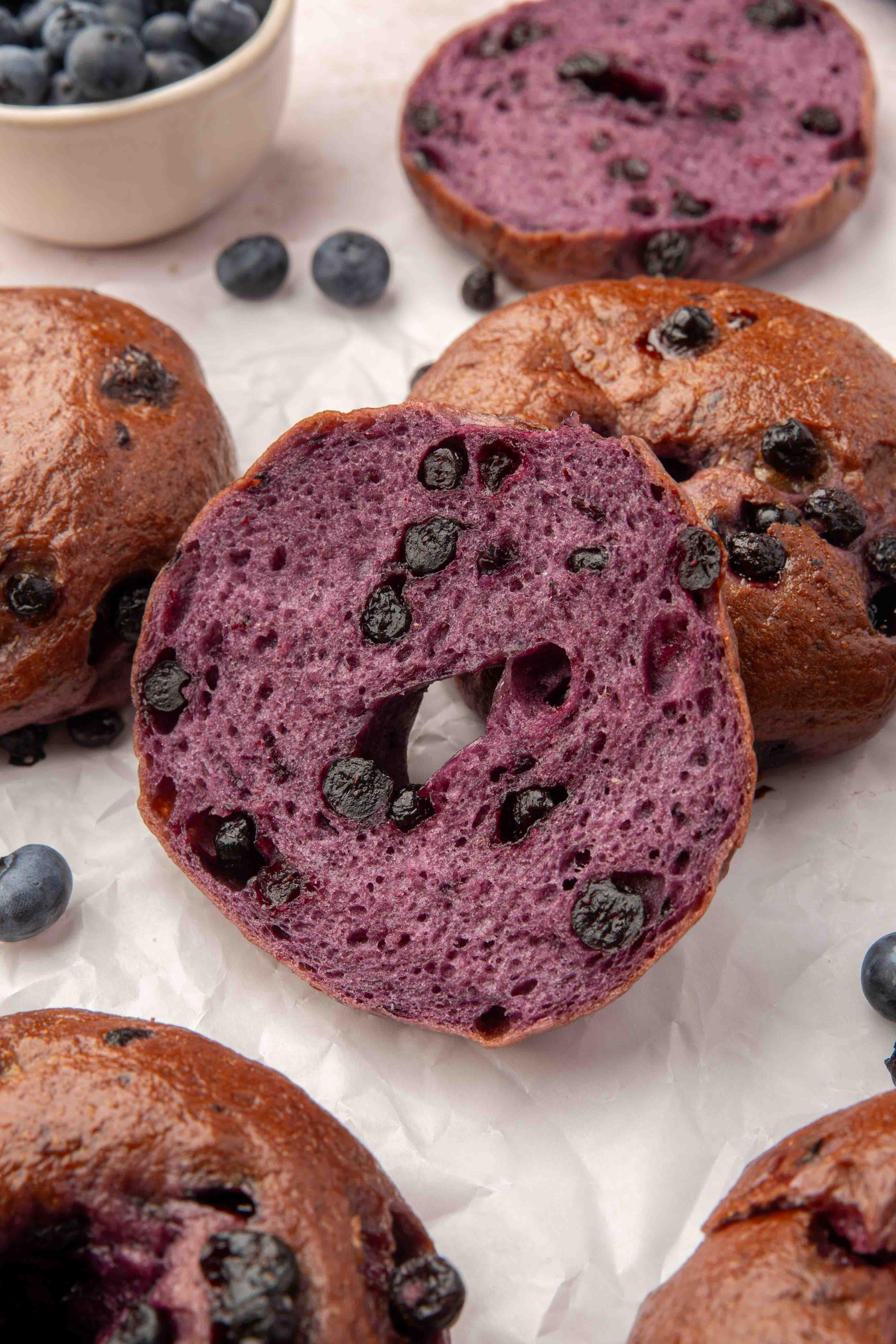 Gluten-Free Blueberry Bagel with blueberries that have been heated in the microwave for 1 minute until juicy.
Ingredient Notes
- Brown rice flour, tapioca starch, and potato starch – Do not substitute with the pre-made gluten-free flour blend. This recipe is built around a specific ratio of these three flours, and a blend will not give you the same structure or chew.
- Fresh blueberries – Fresh works best here. If you’re using frozen, let them thaw completely first and then weigh out 170g. Lightly mash them before adding to the psyllium gel so they release enough juice to start hydrating the flours right away.
- Dried blueberries – While you don’t necessarily need these for a good blueberry bagel, I love the extra chew and flavor that they add. Use the chewy kind, not freeze-dried. Freeze-dried blueberries will dissolve into the dough without adding any texture. You want the ones that look like small raisins, not the ones that crumble when you press them.
- Whole psyllium husk – Use whole psyllium husk, not powdered. It gets mixed with water until it forms a gel. I use Anthony’s Whole Psyllium Husk (affiliate link).
- Brown sugar for the water bath – Traditional bagels use barley malt syrup which contains gluten. Brown sugar is the gluten-free swap that gives the bagels their shiny crust.
Lightly Mash the Fresh Blueberries Before Adding Them
You don’t need to fully puree them. Just give them a gentle mash so they start releasing their juice before they go into the dough with the psyllium gel. This helps the flour start hydrating right away and distributes the blueberry flavor even more evenly throughout the dough.
Recipe FAQs
Can I use a different gluten-free flour blend?No. This recipe is built around a specific ratio of brown rice flour, tapioca starch, and potato starch. A pre-made blend has different ratios and added ingredients that will change how the dough handles and the final texture of the bagel. Stick with the individual flours and weigh everything.
Can I make these ahead of time?Yes. Bagels are best the day they’re made but they freeze well. Let them cool completely, slice them before freezing, and store in a freezer bag for up to 3 months. Toast straight from frozen.
Can I make these without a stand mixer?The dough is thick and takes a full 5 minutes of mixing to come together properly. A stand mixer with the dough hook is strongly recommended.
Why do my bagels lose their hole?The hole shrinks during proofing and baking, which is normal. Make it larger than you think you need to when shaping, about 1 to 1.5 inches wide. It will close up significantly by the time the bagels come out of the oven.
Can I heat the blueberries for a more vibrant purple color?Yes, put the fresh blueberries in a microwave-safe bowl and microwave for 30 to 60 seconds until they plump up and release their juice. Use them in place of the unheated blueberries. The taste is the same. The color is a deeper, more vibrant purple.
Expert Tips
- Weigh everything. The hydration in this dough is precise, and the blueberry swap is calculated by weight. Volume measurements introduce too much variation. A scale is not optional here.
- Add the dried blueberries at the very end. Mix the dough fully first, and then add the dried blueberries and let the mixer run for another minute or so until they’re incorporated.
- Wait at least 45 minutes before slicing. The crumb needs time to set after baking. If you cut into them too early, the inside will be gummy, even if the outside looks done.
Storage Instructions
Storing: Bagels are best the day they’re made. Store leftovers in an airtight container at room temperature for up to 2 days. The crust will soften overnight but the bagels will still taste good toasted.
Freezing: Let the bagels cool completely before freezing. Slice them before they go in the freezer so they’re ready to use straight from frozen. Store in a freezer bag for up to 3 months. Toast directly from frozen.
Serving Suggestions
These bagels are great with cream cheese, lox, or a fried egg. If you’re putting together a full blueberry brunch, my Blueberry Turkey Breakfast Sausage is a natural alongside it, since it uses fresh blueberries and can be ready in 20 minutes. My Gluten-Free Blueberry Sour Cream Coffee Cake is a good sweet addition to the table and can be made ahead. My Gluten-Free Quiche Lorraine is a savory anchor if you want something you can slice and serve at room temperature.
Method
Mix the dry ingredients:
-
1
In the bowl of a stand mixer, whisk together 190 g brown rice flour, 115 g tapioca starch, 50 g potato starch, 25 g granulated sugar, 8 g kosher salt, 7 g instant yeast, and 6 g xanthan gum.
Make the psyllium gel:
-
2
In a small bowl, combine 16 g whole psyllium husk and 160 g warm water. Stir well and let sit for 2 to 3 minutes until a thick gel forms.
-
3
Add the psyllium gel to the dry ingredients.
Mix the dough:
-
4
Lightly mash 170 g fresh blueberries and add them directly to the bowl with 28 g avocado oil and 5 g apple cider vinegar.
-
5
Mix with the dough hook attachment on low until combined, then increase to medium and mix for about 5 minutes until you have a smooth, cohesive dough.
-
6
Add 142 g dried blueberries and mix on low for about 1 minute until incorporated.
Divide and shape:
-
7
Divide the dough into 6 equal portions, about 125g each.
-
8
To shape each bagel, take one portion of dough and cup your hand over it and use a circular motion to roll it against the surface until it forms a smooth, tight ball. Use the friction between your hand and the surface to help it come together. You shouldn't really need flour on your surface.
-
9
Lightly dust your thumb with tapioca starch and poke it through the center of the ball.
-
10
Gently stretch the opening with both hands, rotating as you go, until the hole is about 1 to 1.5 inches wide.
-
11
Place on a parchment-lined baking sheet and repeat with remaining portions.
Proof:
-
12
Cover loosely and let rise for about 45 minutes until noticeably puffy but not completely doubled in size.
-
13
About 30 minutes before the proof is done, preheat the oven to 425°F.
Boil:
-
14
Bring 8 cups water and 3 tablespoons brown sugar to a gentle boil in a wide pot.
-
15
Gently lower 2 to 3 bagels at a time into the boiling water. Boil for 45 seconds, flip, then boil for another 45 seconds. Remove with a slotted spoon and place on a wire rack. Let sit for a few minutes to let excess water drip off.
Top and bake:
-
16
Transfer the bagels back to the parchment-lined baking sheet. Brush each bagel with beaten egg wash (1 large egg beaten).
-
17
Bake at 425°F for 27 to 30 minutes until deep golden brown and firm on the outside. The internal temperature should reach 205°F.
Cool:
-
18
Let cool on a wire rack for at least 45 minutes before slicing so the crumb can set.
Filed under
Cook next
 Gluten-FreeRecipeGluten-Free Strawberry CakeThis gluten-free strawberry cake is made from scratch with fresh strawberry puree and topped with strawberry…
 Gluten-FreeRecipeGluten-Free Pumpkin FocacciaThis gluten-free pumpkin focaccia is soft, fluffy, and full of cozy fall flavor. Made with Caputo Fioreglut f…
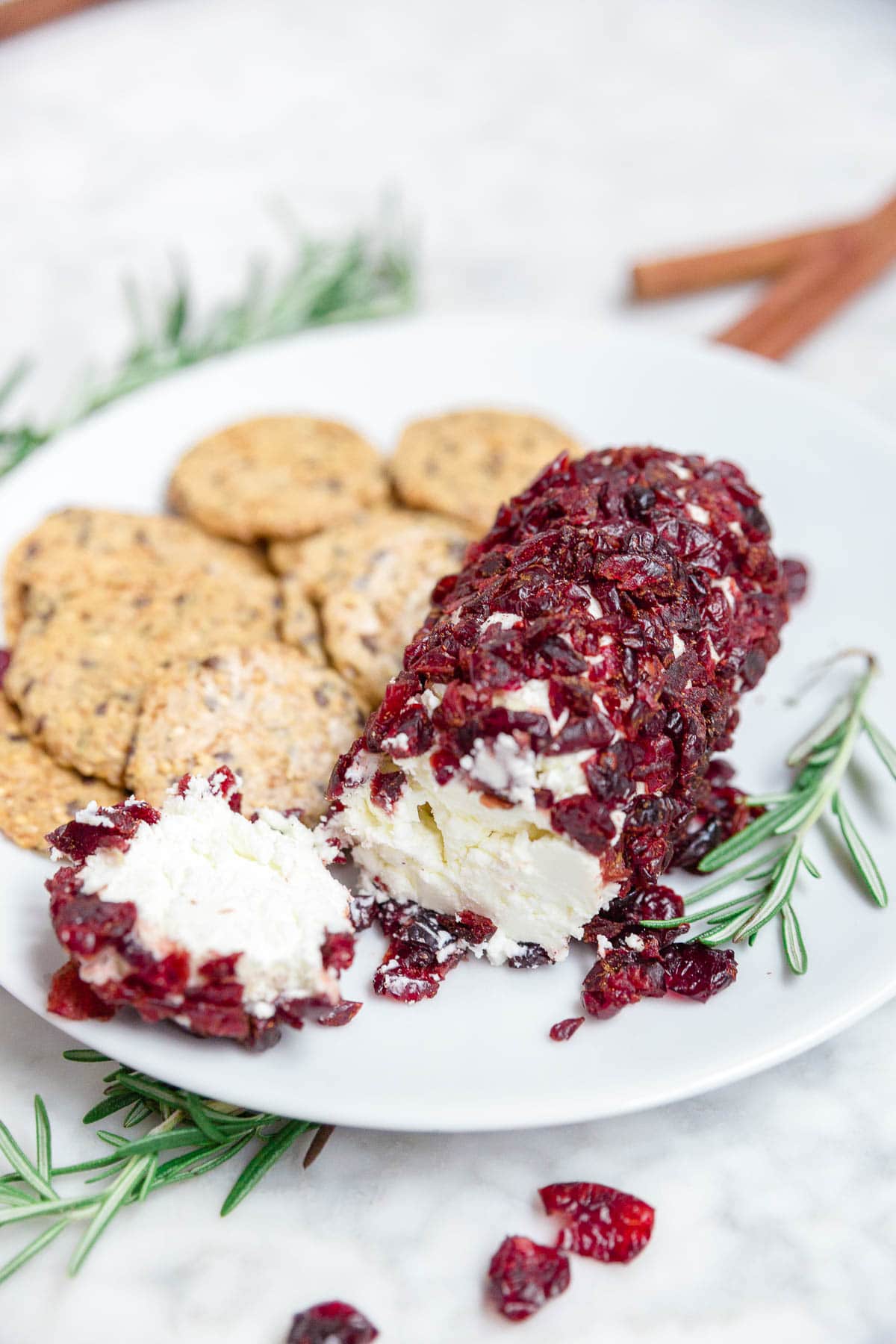 Gluten-FreeRecipeCranberry Goat Cheese LogDried cranberries, cinnamon and goat cheese combine to create a simple and delicious 3-ingredient gluten-free…
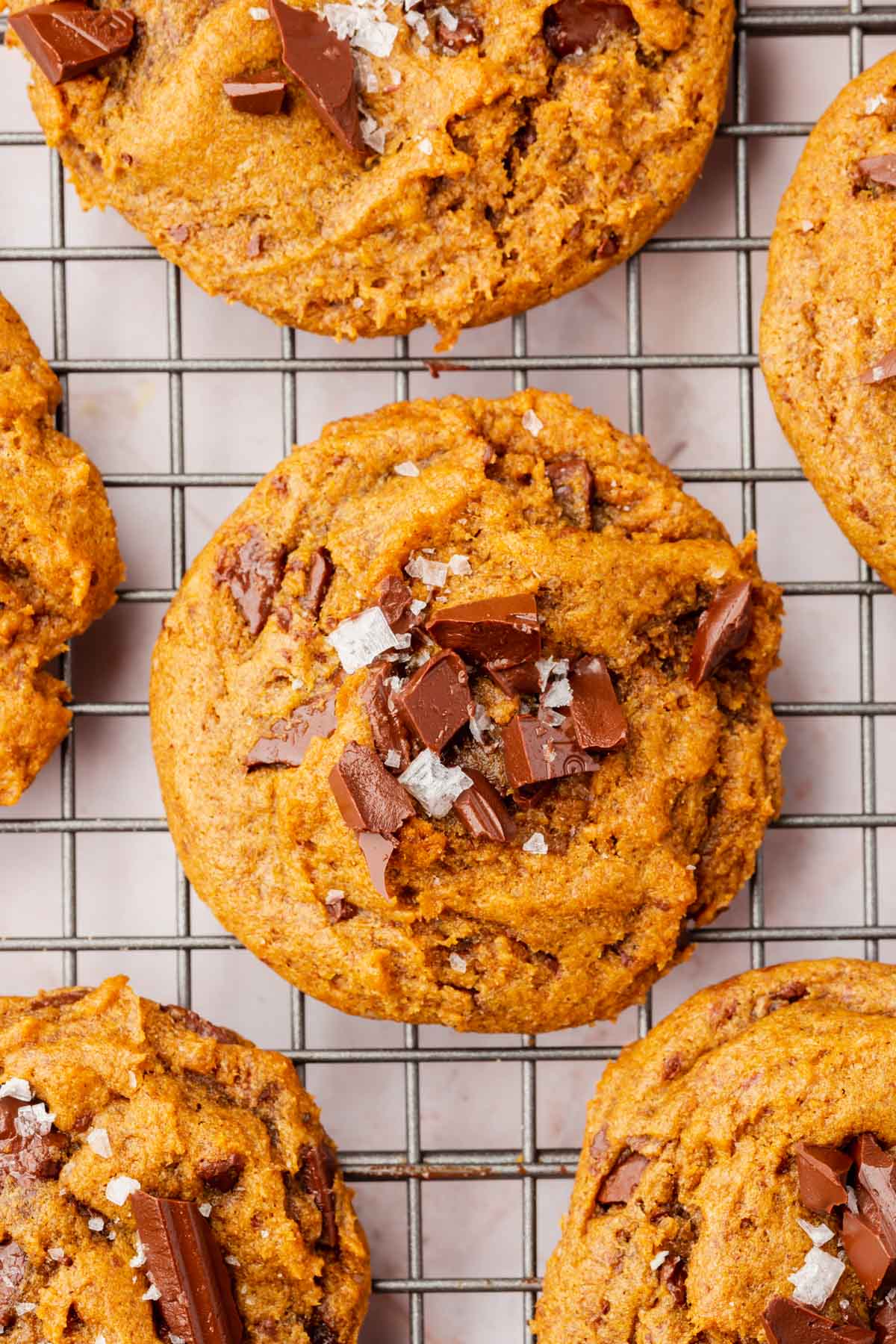 Gluten-FreeRecipeGluten-Free Pumpkin Chocolate Chip CookiesThese gluten-free pumpkin chocolate chip cookies are so soft and chewy! They're perfectly spiced, full of cho…
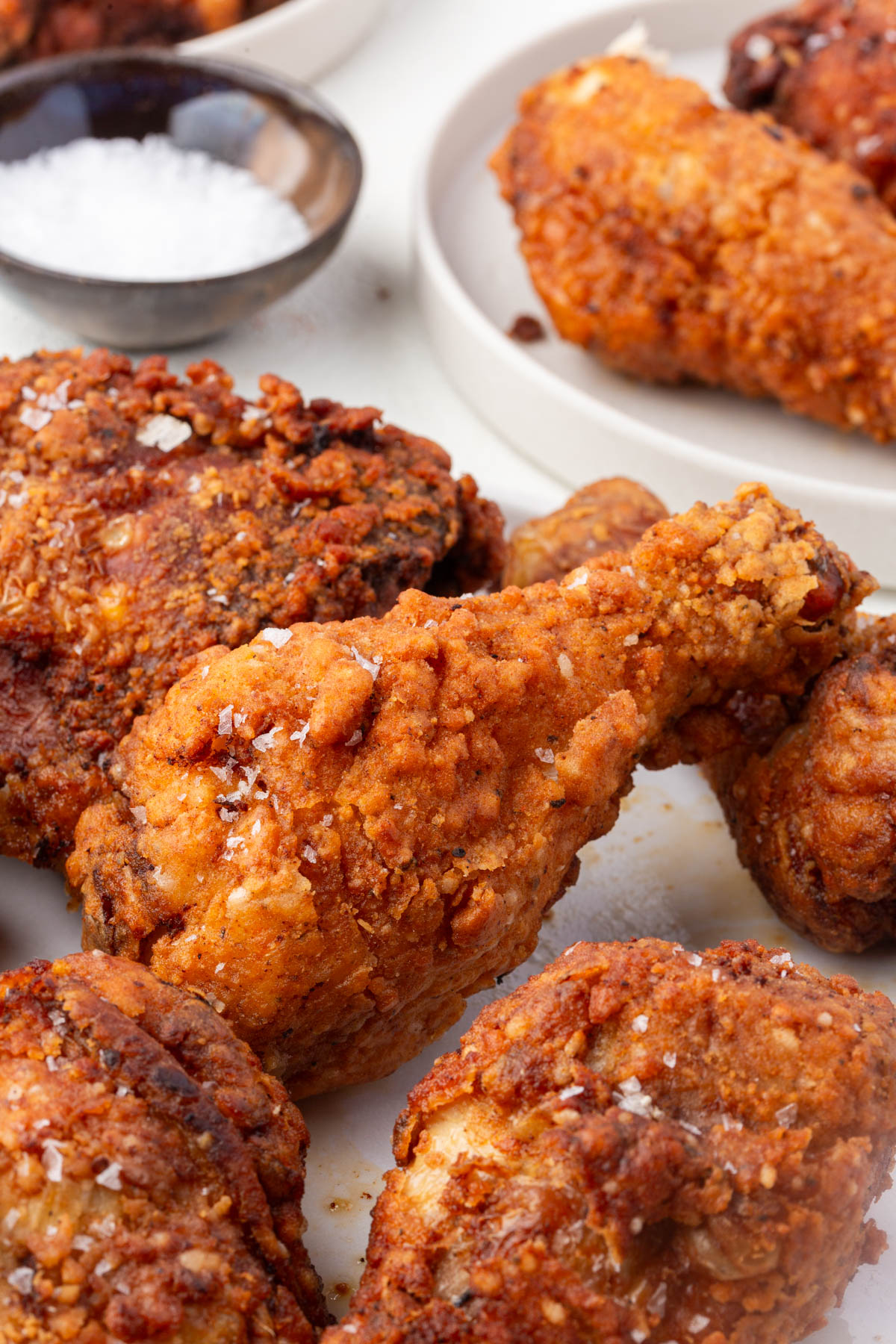 Gluten-FreeRecipeGluten-Free Fried ChickenCrispy, juicy gluten-free fried chicken with the perfect coating. It's light and crunchy without being thick…
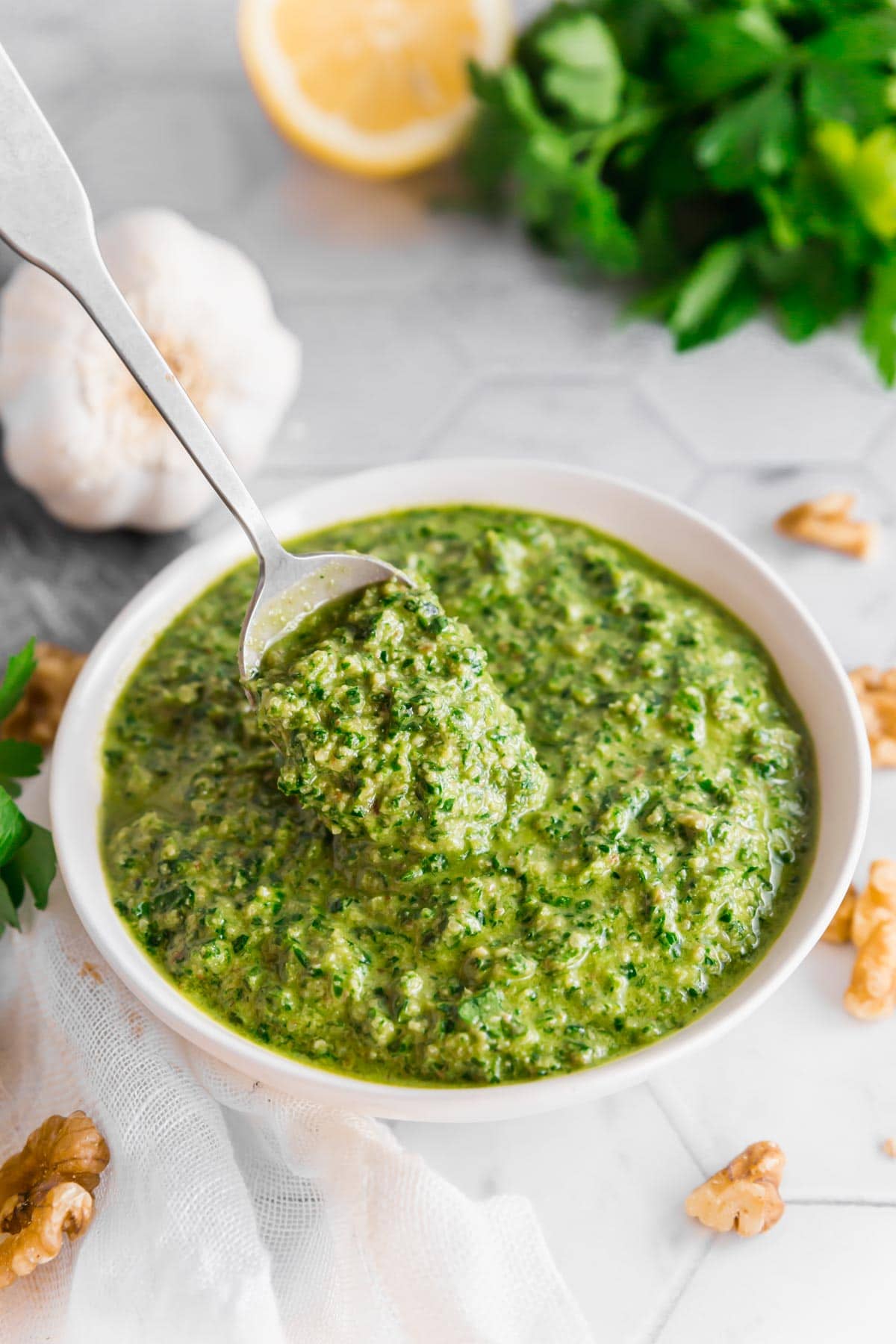 Gluten-FreeRecipeVegan Parsley Walnut PestoThis vegan parsley walnut pesto is thick, rich, and ready in 10 minutes with five ingredients. No cheese, no…
 Gluten-FreeRecipeSlow Cooker Chicken and Rice SoupThis slow cooker chicken and rice soup is packed with tender chicken, wild rice, and vegetables in a flavorfu…
 Gluten-FreeRecipeSpinach Artichoke Dip Without MayoThis spinach artichoke dip without mayo is rich, cheesy, and garlicky with no mayonnaise required. Cream chee…