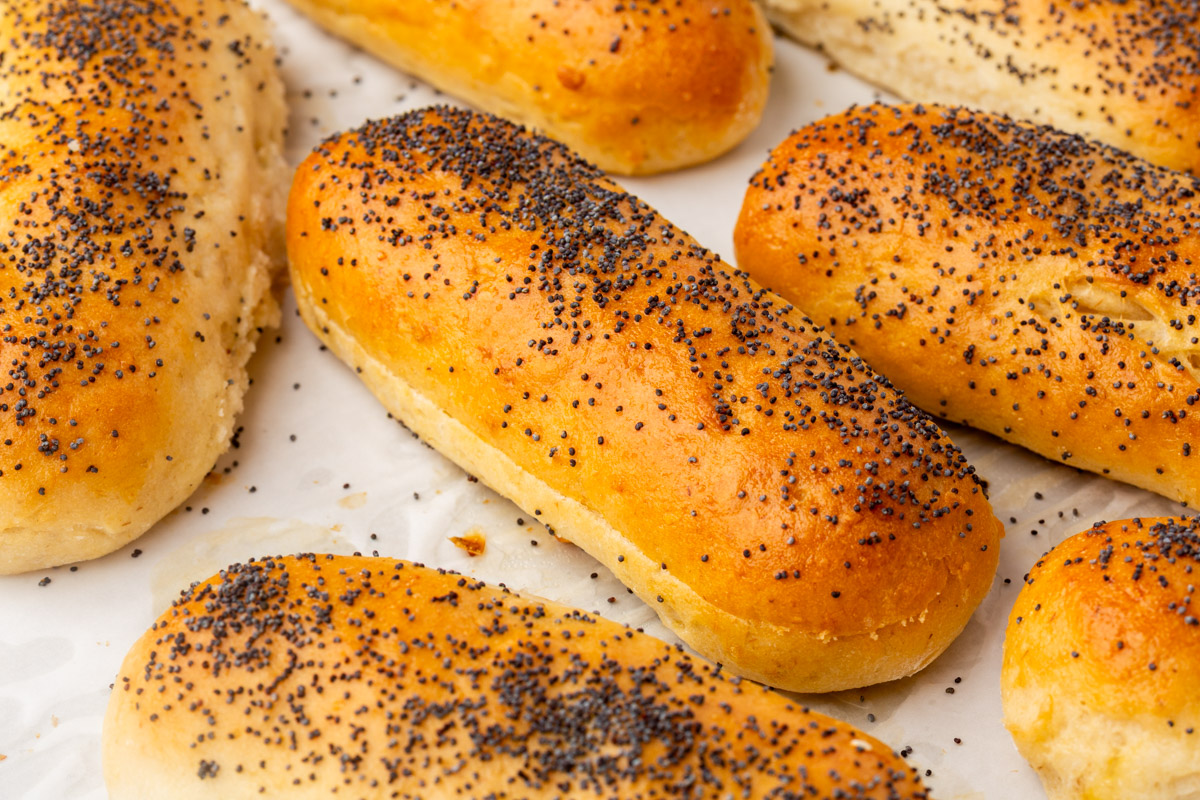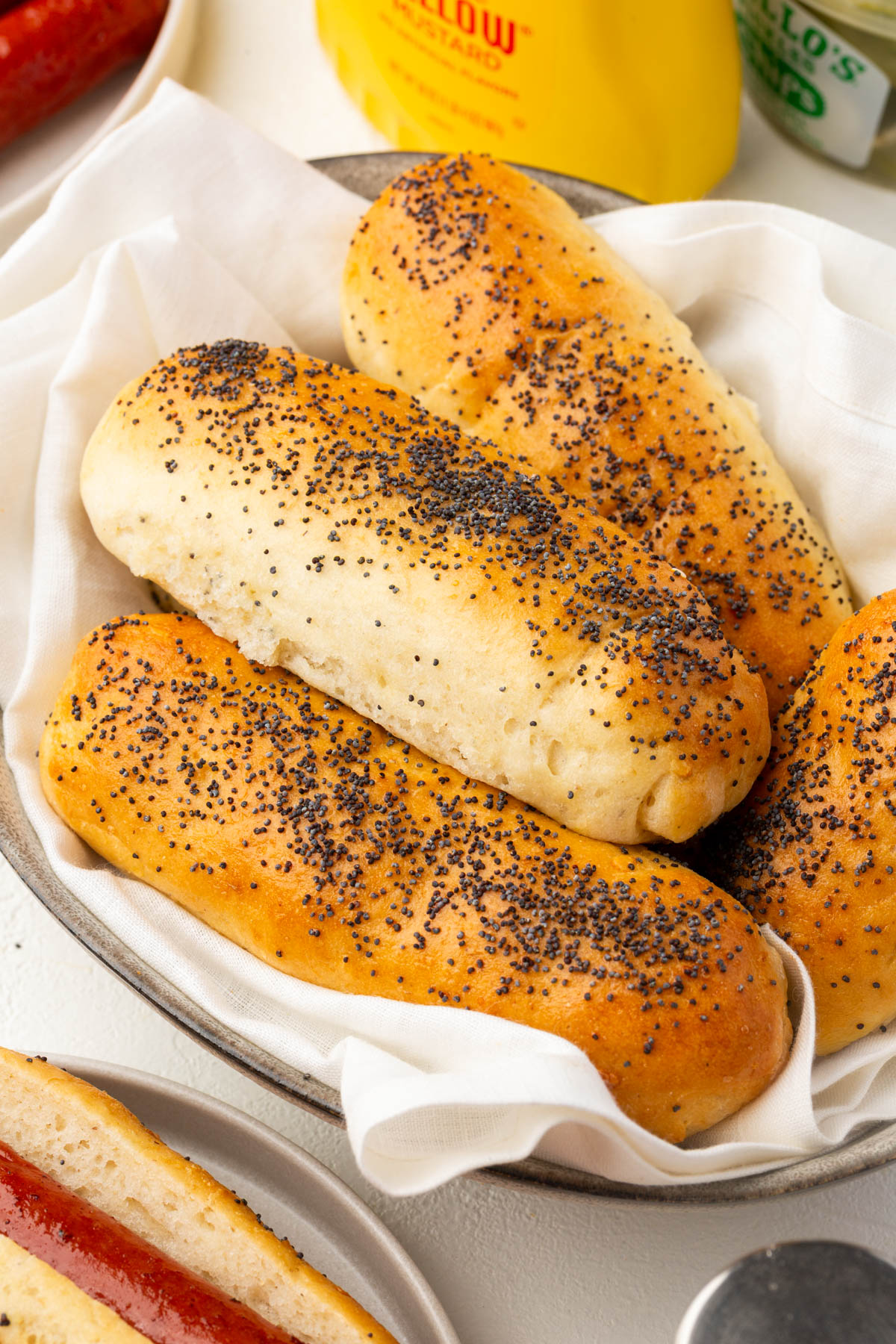
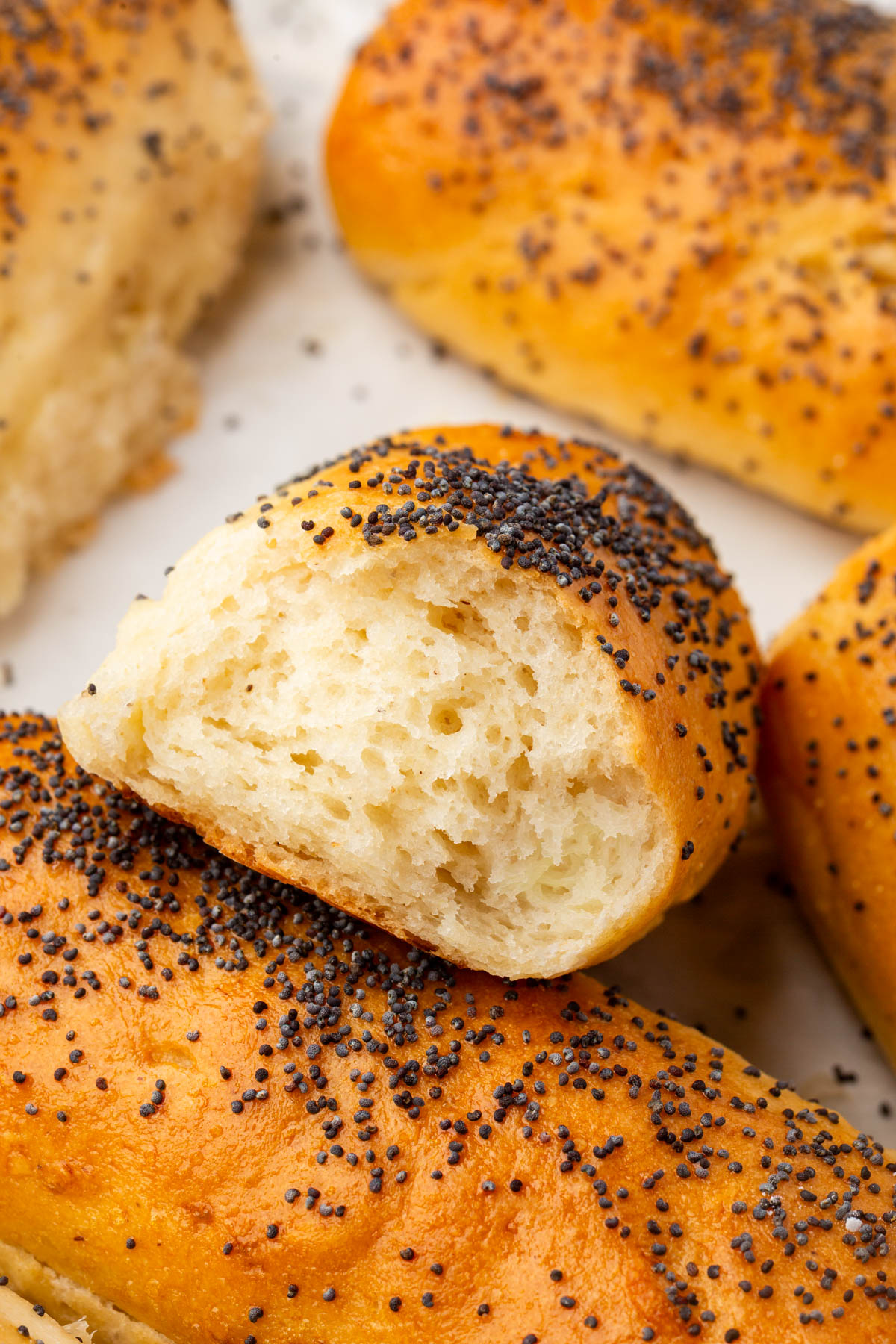
Gluten-free hot dog buns from the store are usually one of two things: too dense, or so soft they fall apart the second you pick them up. These are neither. They use the same enriched yeast dough as my Gluten-Free Hamburger Buns , which is a version of the enriched dough I use for my dinner rolls, cinnamon rolls, and fried donuts, adapted with avocado oil in place of butter to keep the crumb soft.
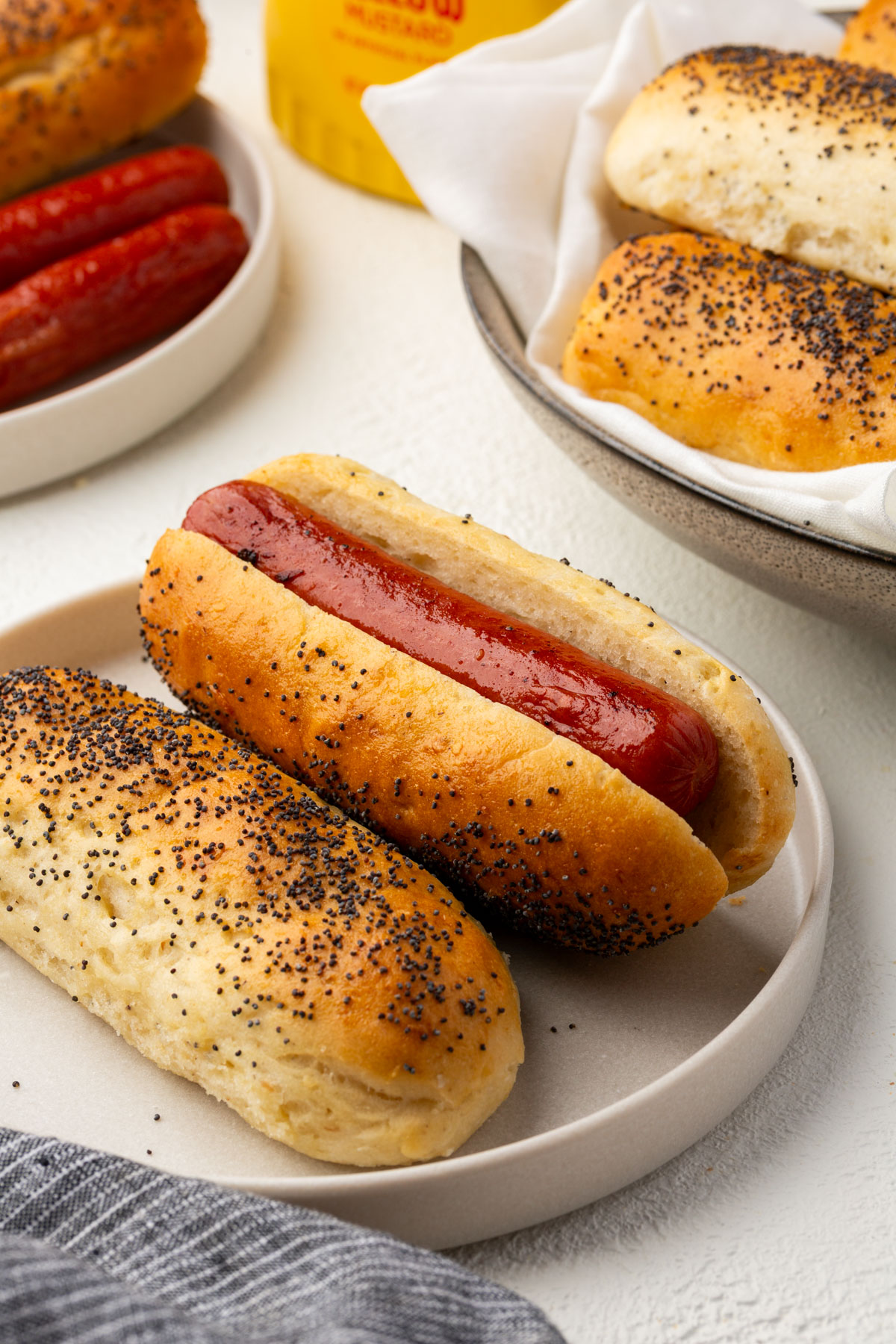
The shaping is what makes these different from the hamburger buns. Each piece of dough gets patted into a roughly 3×5 inch rectangle, rolled up from the short side into a cylinder, seams pinched closed, and then rolled out to about 5 inches long. You get 8 buns from one batch, and they go on the baking sheet in two groups of four, placed close together so they’re almost touching. As they proof and bake, they push up against each other and rise up instead of out, which gives you a bun that’s the right shape for a hot dog rather than spreading flat.
Why You’ll Love This Recipe
- The same tested dough as the hamburger buns. If you’ve already made those, you know how this dough handles. If this is your first time, you’re learning a dough that works across a lot of different recipes.
- Better than anything from the store. Soft, sturdy, and actually shaped like a hot dog bun. No crumbling, no falling apart halfway through.
- Freezer friendly. Make a batch, slice them before freezing, and you have gluten-free hot dog buns ready whenever you need them.
How I Tested This Recipe
The hot dog buns came together more easily than the hamburger buns did. Since I had already worked through the dough on the hamburger bun post, I knew what to expect. The main thing I needed to figure out was the shaping and how to get a bun that was the right proportions for a hot dog.
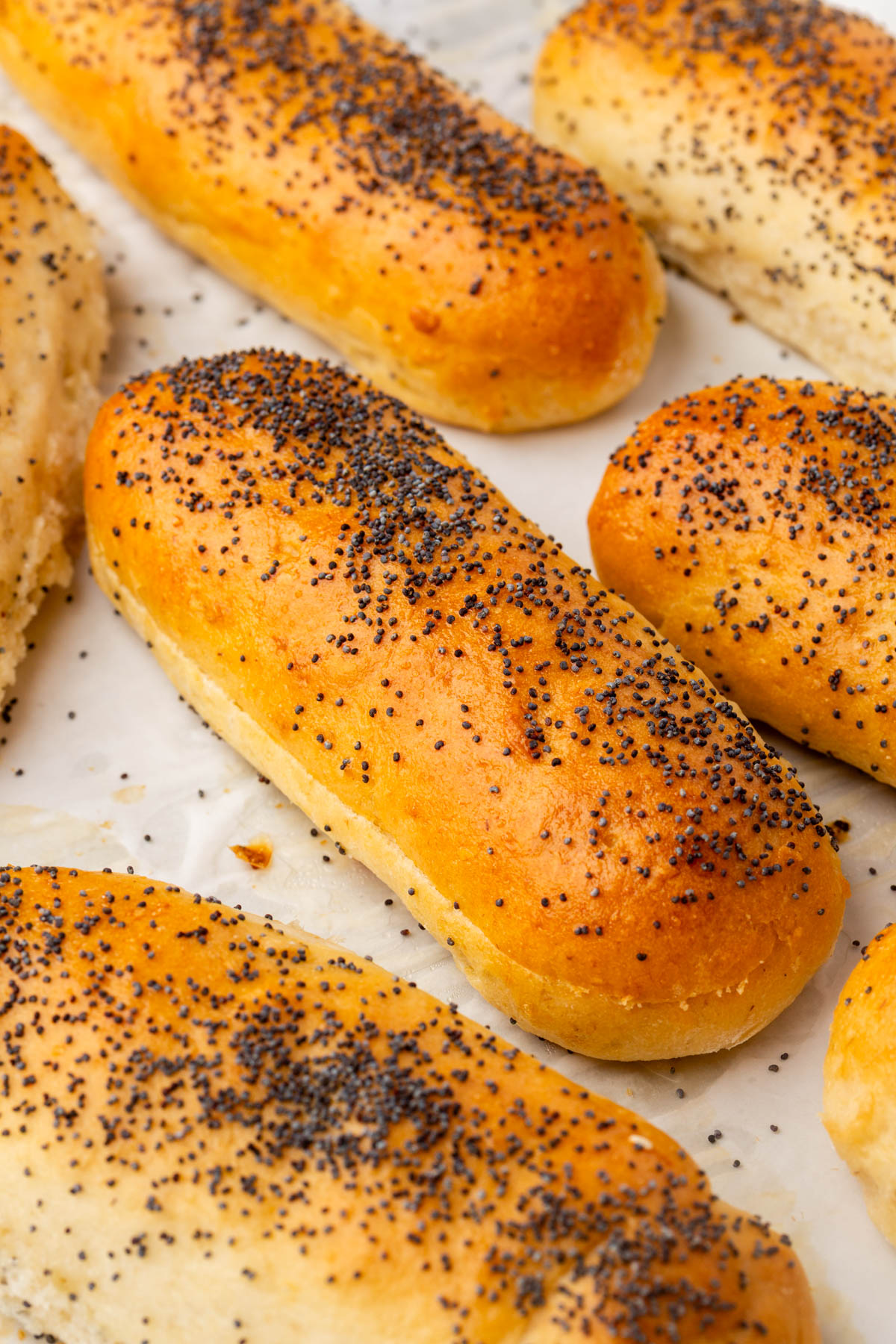
I tested with poppy seeds and plain. I kept coming back to the poppy seeds. If you’re making these for a Chicago-style dog, you already know why.
The grouping technique was something I figured out early. Placing the buns close together on the baking sheet before proofing means they rise into each other instead of spreading out. It’s a small thing but it makes a big difference in the final shape.
Zimeb is a participant in the Amazon Services LLC Associates Program, an affiliate advertising program designed to provide a means for us to earn fees by linking to Amazon.com and affiliated sites.
Ingredient Notes
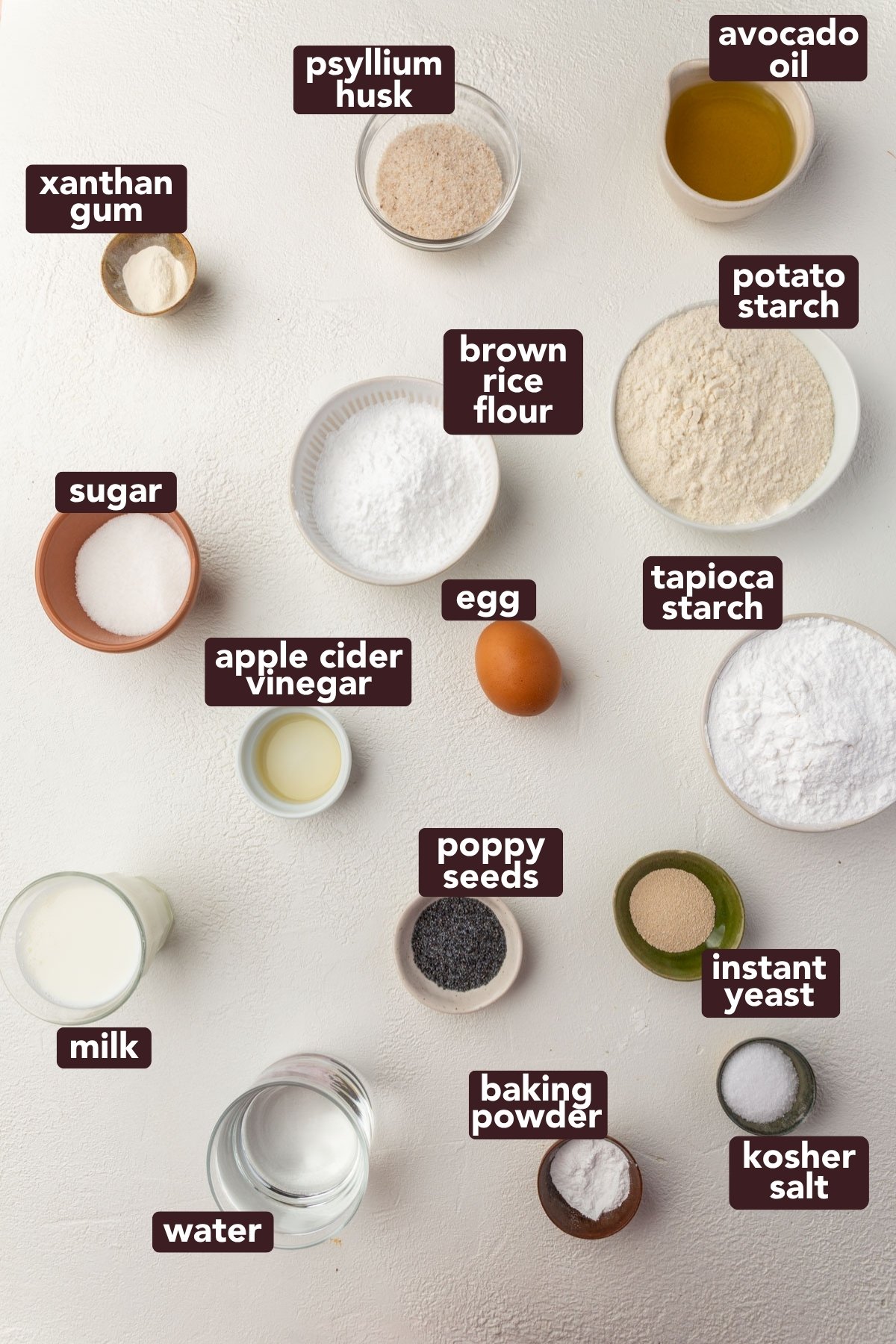
- Brown rice flour, tapioca starch, and potato starch – The same flour blend from the hamburger buns and dinner rolls. Don’t substitute with a pre-made gluten-free flour blend. Each flour plays a specific role in the dough and a blend won’t behave the same way. Measure by weight.
- Whole psyllium husk – I prefer whole psyllium husk over powder because it hydrates more easily and doesn’t clump as much. If you only have powder, use 13g instead of 16g. Either way, mix it with the warm water first to form a gel before adding it to the dough. Don’t mix it directly into the dry ingredients. I use Anthony’s Whole Psyllium Husk (affiliate link).
- Instant yeast – I use instant yeast instead of active dry yeast because it goes straight into the dry ingredients without any activating first. One less step in a recipe that already has a few. Just make sure yours isn’t expired before you start. Dead yeast is the most common reason this dough doesn’t rise. You only need one packet, but I prefer to buy a larger package since I bake with it so often.
- Avocado oil – Using oil instead of butter means the crumb stays soft longer. These buns are great fresh but they also hold up well for a few days, which makes them worth making in a bigger batch.
- Poppy seeds – Optional but worth it if you’re going for a Chicago-style dog. Brush the egg wash on first so the seeds stick to the bun instead of falling off.
Group the Buns Close Together
Place the shaped buns in two groups of four on the baking sheet, with less than half an inch between each bun. As they proof and bake, they push up against each other and rise up instead of spreading out. This is what gives you a bun that’s actually shaped like a hot dog bun rather than a flat oval.
Recipe FAQs
Can I use a different gluten-free flour blend?No. Brown rice flour, tapioca starch, and potato starch each do something specific in this dough. Swapping in a pre-made blend changes the whole equation because every blend has its own ratios, starches, and sometimes xanthan gum already added. Stick with the individual flours and weigh them.
My dough isn’t rising. What went wrong?Start by checking your yeast. If it’s past its expiration date, that’s your answer. If the yeast is fine, think about your water and milk temperatures. Even slightly too cold and the yeast just sits there. If both of those check out, your kitchen might be too cold for a good proof. A turned-off oven with the light on is the easiest fix.
How do I know when the buns are done baking?
Look for a deep golden brown color across the top of the buns. If you’re not sure, an instant read thermometer inserted into the center should read between 190°F and 195°F when they’re fully baked through.
Expert Tips
- Your water and milk temperature matters. Aim for 100°F to 110°F. If the temperature is too low, the yeast won’t activate, but if it’s too high, it will kill the yeast. A thermometer takes the guesswork out, so I always use one.
- Keep tapioca starch on your hands and work surface while shaping. This dough is sticky, and it’s tempting to add more flour, but don’t. Tapioca starch is all you need. Keep a bench scraper nearby to get underneath the dough as you work so it doesn’t stick to the surface while you’re shaping the buns.
- Give the dough the full proof time. The buns need 1.5 to 2 hours in a warm spot and should look puffy and nearly doubled before they go in the oven. If your kitchen is cold, put the baking sheet in a turned-off oven with just the light on. The light creates enough warmth to help the dough rise without any actual heat, and it keeps drafts out too.
Storage Instructions
Storing: Keep the buns in an airtight container at room temperature for up to 2-3 days. For longer storage, I prefer freezing the buns so I can have hot dogs whenver I want.
Freezing: Slice the buns before freezing. Freeze in a single layer first, then transfer to a freezer bag for up to 3 months.
Reheating: Thaw at room temperature or in the microwave for about 30 seconds. You can toast the the cut side of the bun if you’d like.
Serving Suggestions
These hot dog buns were made for a summer cookout and go with so many great sides. My Dill Cabbage Coleslaw is a tangy, no-mayo slaw that goes great on the side or piled right on top of the hot dog. My Gluten-Free Pasta Salad is made with rotini, salami, fresh mozzarella, and a homemade Italian dressing, and it only gets better the longer it sits in the refrigerator. And my Watermelon Feta Salad is topped with fresh basil and a honey lime dressing for a refreshing summer side that’s always on the table at a cookout.