
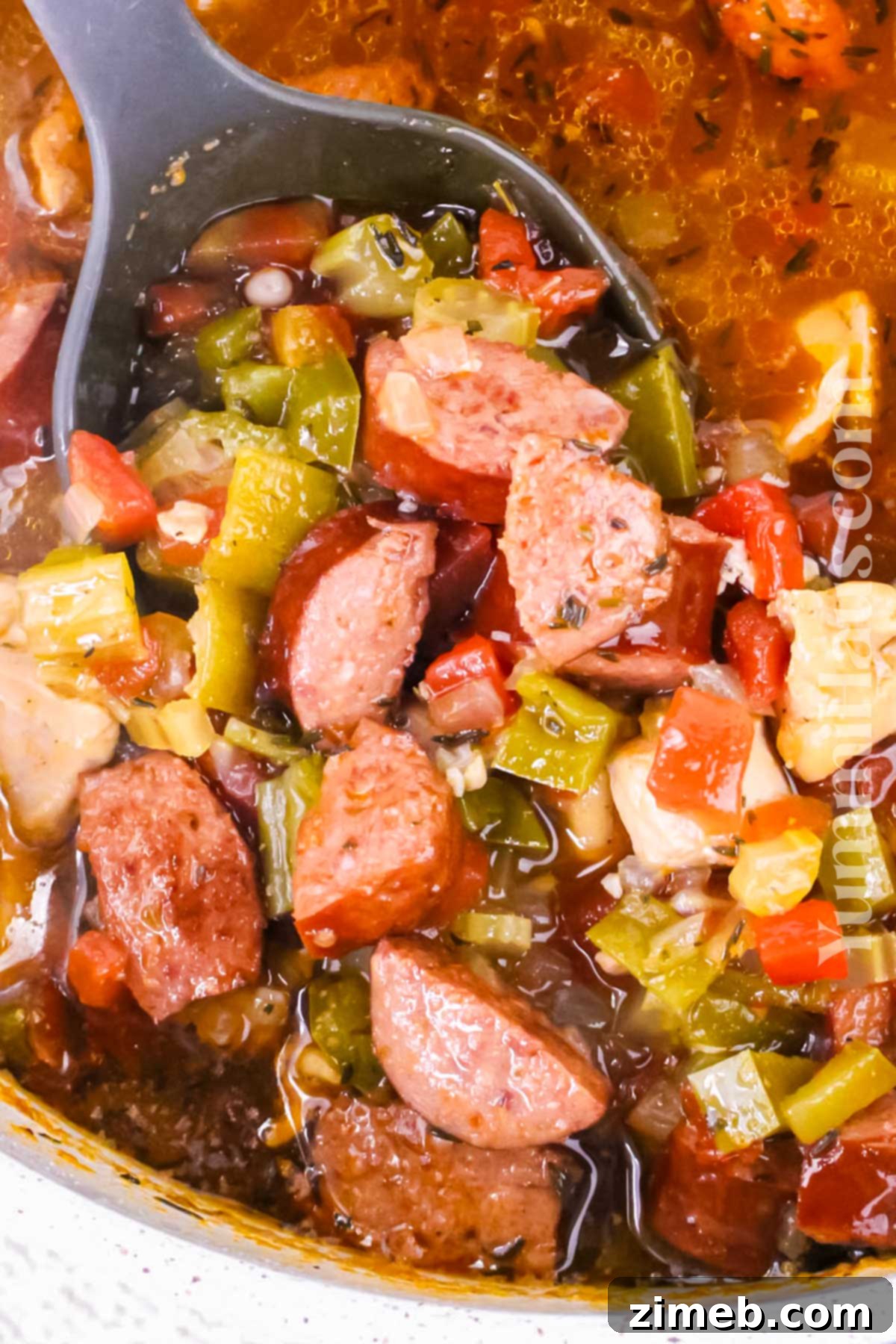
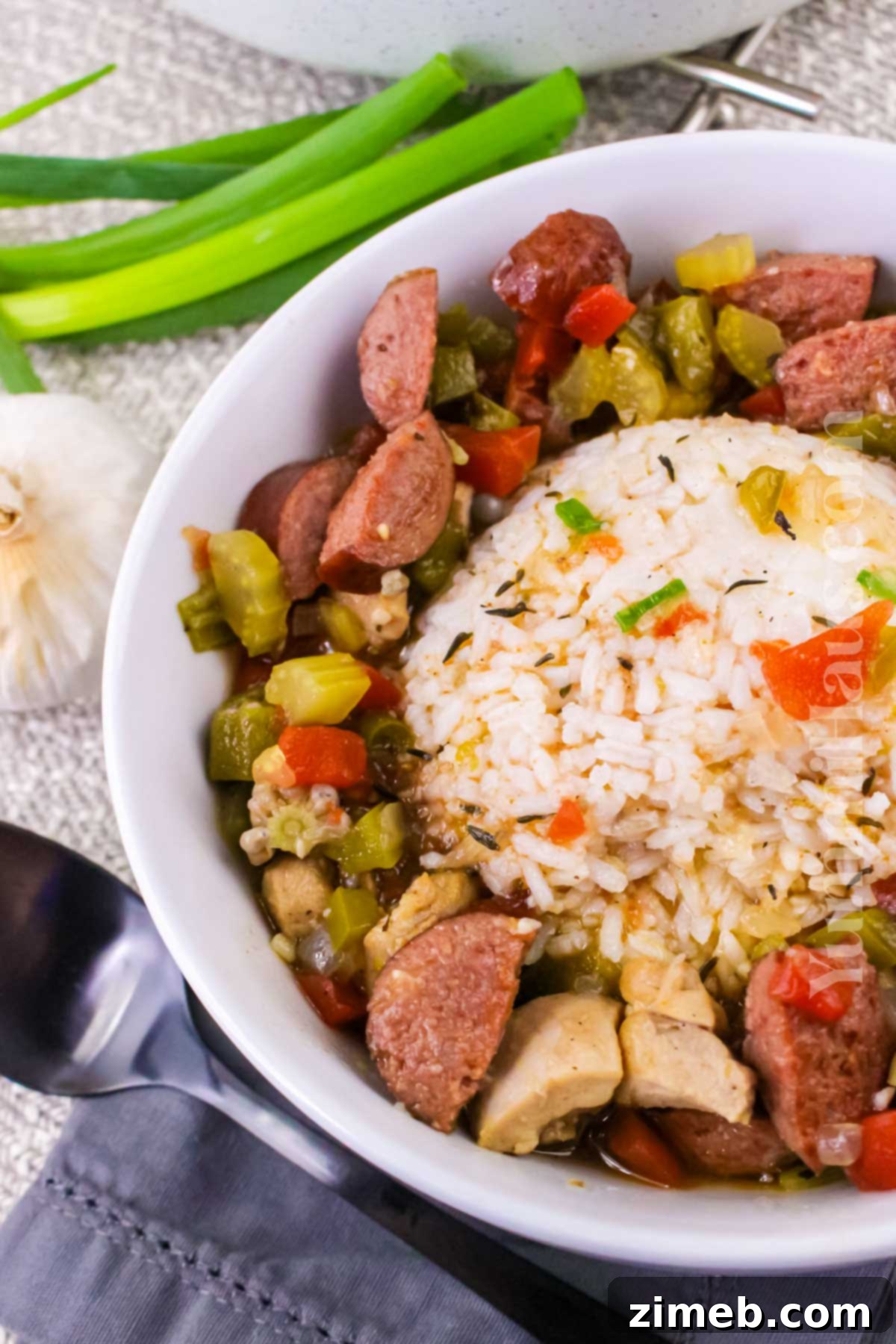
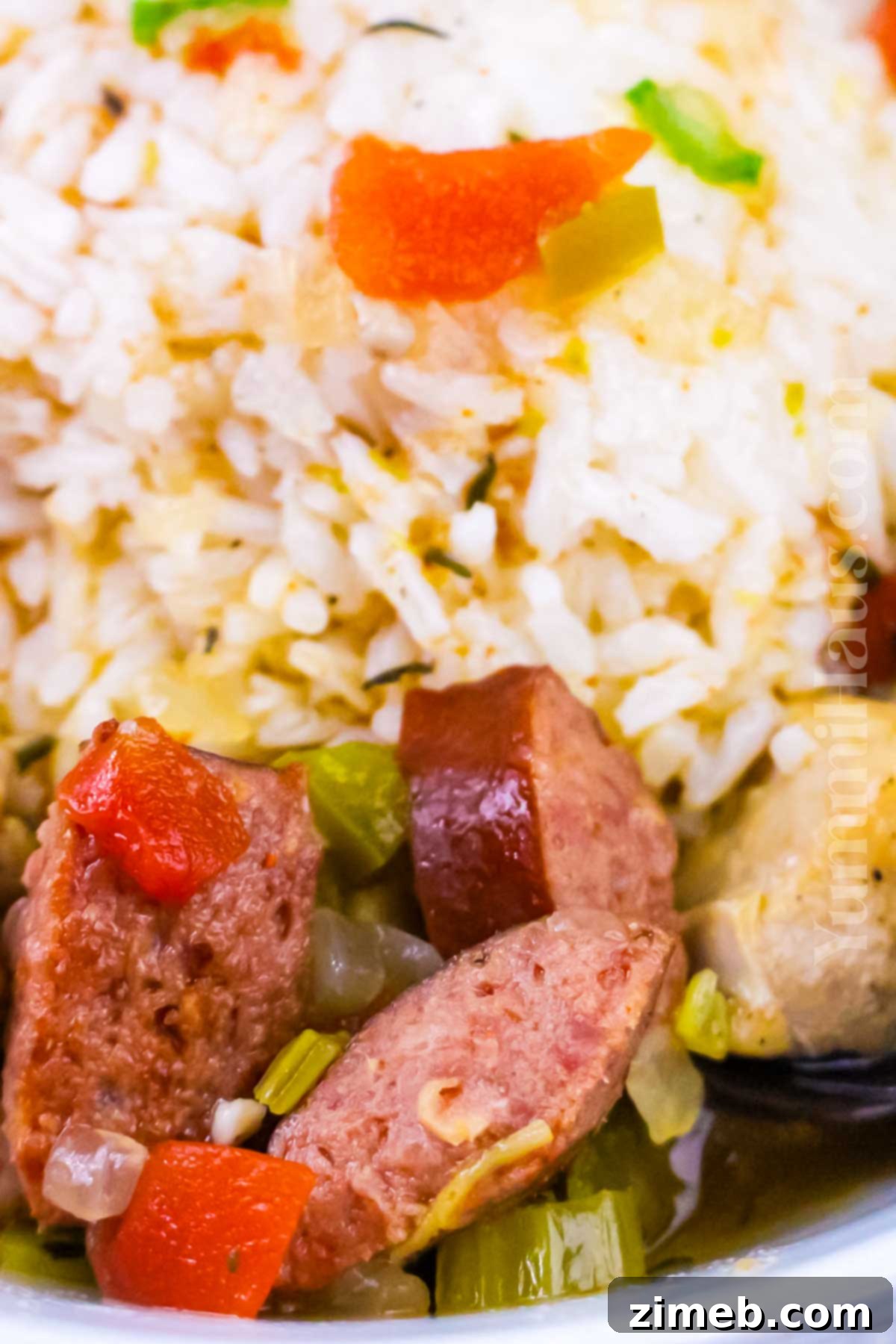
Experience the quintessential taste of the South with this magnificent Chicken and Sausage Gumbo. More than just a soup, this New Orleans classic is a hearty, filling stew brimming with rich, complex flavors. Tender chicken and smoky sausage are simmered in a luscious, thick base, infused with vibrant Creole spices that transport your senses straight to the heart of Louisiana.
If you’ve ever spent time in the Southern United States, you’ll know the comforting embrace of a well-made, thick stew. This authentic gumbo, traditionally served over fluffy white rice, is a culinary masterpiece featuring the distinctive flavors of Cajun country. Its depth comes from a meticulously crafted broth, the savory goodness of browned meats, and often, the unique texture provided by okra or a classic roux. Get ready to create a truly unforgettable meal that embodies the soul of Southern cooking.
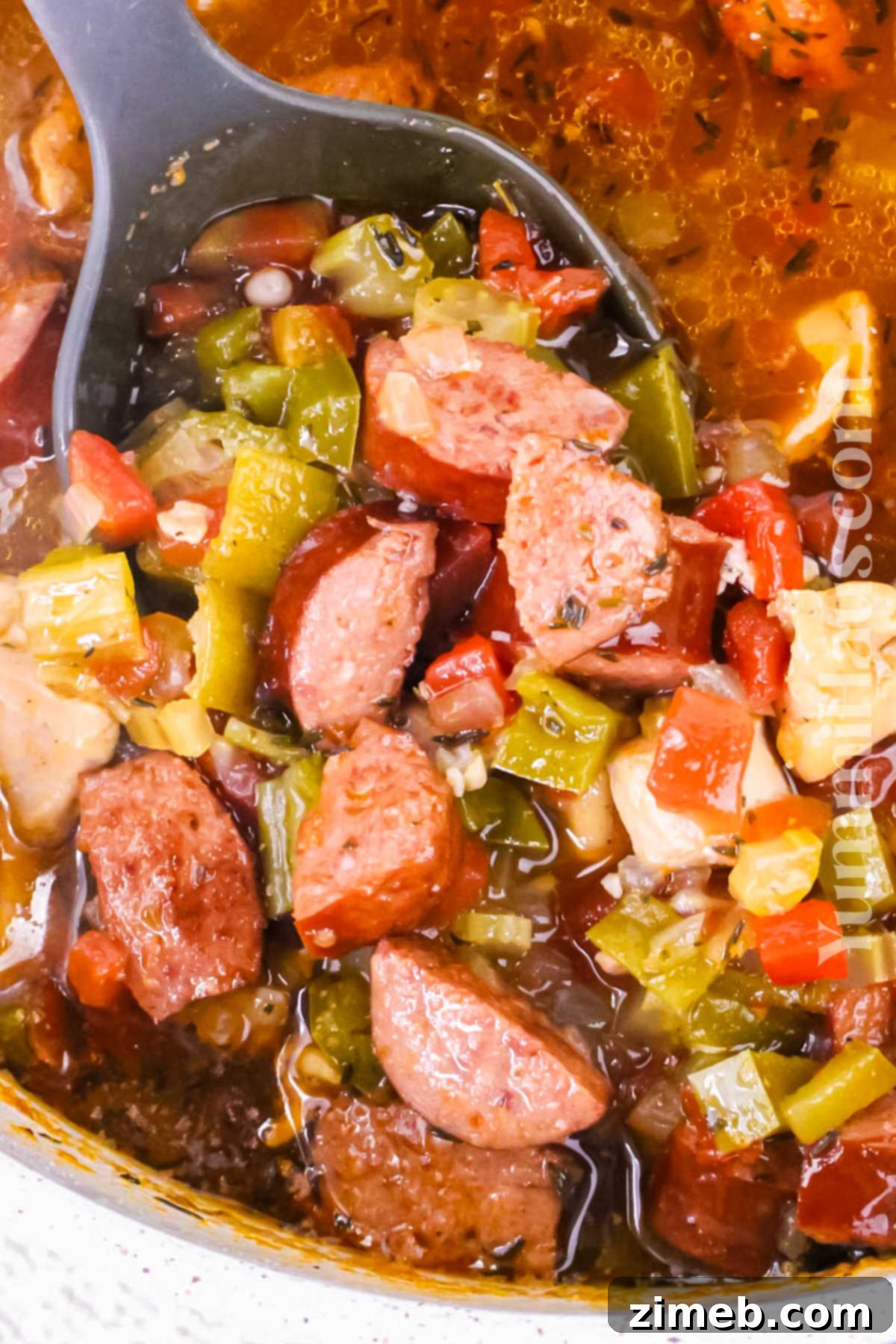
This delightful gumbo recipe offers a fantastic solution for a family dinner. It requires minimal preparation time and utilizes readily available, simple ingredients, making it an ideal choice for a soul-warming dish, especially perfect for colder months. Its robust flavors and satisfying nature guarantee it will become a beloved staple in your home.
What Is Gumbo? Exploring a Culinary Icon
Gumbo is far more than just a soup; it’s a celebrated stew, a cornerstone of Creole and Cajun cuisine, and a vibrant fusion of diverse culinary traditions. Originating in Louisiana, this iconic dish masterfully combines various meats, seafood, textures, and colors into a single, cohesive, and deeply flavorful experience. Its unique character is a testament to the rich cultural tapestry of the region, blending influences from West African, French, German, and Choctaw cuisines.
At its heart, gumbo is a dynamic dish where ingredients often vary based on region and personal preference. Common main components typically include succulent sausage (often a smoky Andouille), tender chopped chicken, and sometimes a medley of fresh seafood like shrimp, crab, or oysters. The distinctive, rich flavor often begins with a dark roux – a mixture of flour and fat cooked until it achieves a deep brown hue, providing both thickening and a nutty flavor. This is complemented by the “Holy Trinity” of Creole and Cajun cooking: finely chopped celery, onions, and bell peppers, along with pungent garlic. The signature slightly gooey texture in many gumbos comes from the inclusion of fresh or frozen okra, which acts as a natural thickener. Alternatively, filé powder (ground sassafras leaves) can be used for thickening and an earthy flavor. Predominantly cooked and cherished in Louisiana, gumbo represents the heart and soul of its culinary landscape.

Why You’ll Fall in Love with This Gumbo Recipe
This Chicken and Sausage Gumbo recipe isn’t just another meal; it’s an invitation to savor the rich traditions and incredible flavors of Louisiana. Here’s why it’s destined to become a household favorite:
- Creole Cuisine at Its Finest: This recipe delivers authentic Creole flavors that are perfectly seasoned, irresistibly delicious, and surprisingly easy to prepare. It’s a showcase of sophisticated yet comforting Southern cooking, offering a taste experience that’s both exotic and familiar. Plus, it’s a fantastic make-ahead dish, allowing the flavors to deepen even further overnight.
- An Explosion of Flavor: Prepare your palate for an incredible journey. Even without the traditional dark roux (though we offer a variation to include it), the combination of smoked sausage, tender chicken, aromatic vegetables, and robust Cajun seasoning creates a symphony of aromas and tastes that are truly irresistible. Each spoonful is packed with a depth of flavor that speaks to the soulful origins of gumbo.
- Effortless One-Pot Preparation: Say goodbye to stacks of dirty dishes! This is a genuine one-pot wonder, simplifying both the cooking process and the cleanup. You won’t need any complex kitchen equipment or advanced cooking methods, making it accessible for cooks of all skill levels. It’s comfort food without the culinary fuss.
- Ultimate Southern Comfort Food: There’s a reason gumbo is a beloved Southern staple. It’s deeply satisfying, warming, and evokes a sense of home and heritage. This particular chicken and sausage rendition is designed to be a crowd-pleaser, guaranteeing smiles around the dinner table. It’s the kind of dish that brings families together and creates lasting memories.
Essential Ingredients for Your Perfect Gumbo
Crafting an outstanding Chicken and Sausage Gumbo begins with understanding each ingredient and its role in building that iconic flavor profile:
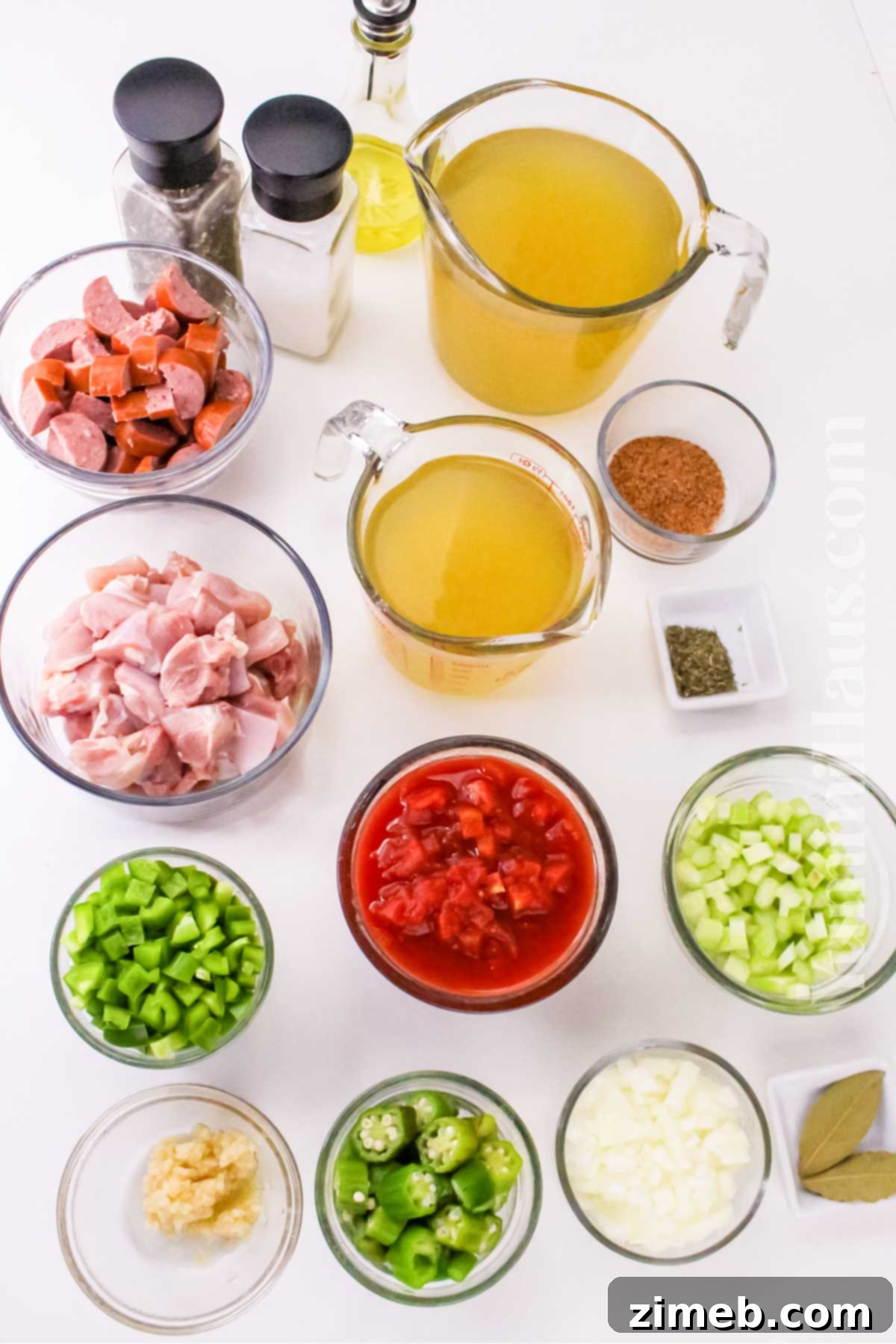
- Smoked Sausage: The choice of sausage significantly impacts the gumbo’s smoky depth. While Andouille sausage is the classic, providing a spicy, robust flavor, feel free to use any other high-quality smoked sausage you enjoy. Options include chicken, beef, turkey, or pork varieties. Ensure it’s sliced into bite-sized pieces for even cooking and distribution throughout the stew.
- Olive Oil or Canola Oil: This serves as the initial cooking fat for browning your meats. Any neutral-flavored vegetable oil, such as canola, grapeseed, or even a light olive oil, will work beautifully to achieve that perfect sear without imparting unwanted flavors.
- Boneless, Skinless Chicken Thighs: For maximum tenderness and flavor, chicken thighs are highly recommended. They remain moist and succulent during the longer simmering process. If you prefer, chicken breast can be used, but be mindful that it tends to be tougher and can dry out more easily. For an even quicker preparation, leftover rotisserie chicken, cut into bite-sized pieces or shredded, is an excellent shortcut. Always remember to trim any excess fat from the chicken.
- The Holy Trinity of Aromatics: This essential foundation of Creole and Cajun cooking provides the aromatic backbone of the gumbo. You’ll need green bell pepper, celery stalks, and yellow onion, all finely chopped. It’s crucial to use fresh vegetables here; onion powder or dried celery simply won’t deliver the same depth or texture.
- Minced Garlic: Freshly minced garlic is always superior for its pungent aroma and flavor. However, if convenience is key, a good quality garlic powder can be used in a pinch, though the fresh version adds an undeniable vibrancy.
- Diced Tomatoes, Undrained: Canned diced tomatoes are the most convenient and consistent choice. While their inclusion can sometimes be a point of debate in traditional gumbo (some purists omit them, especially in Cajun style), they add a subtle acidity and sweetness that brightens the overall flavor profile in a Creole-style gumbo.
- Chicken Broth: This forms the rich liquid base of your gumbo. Homemade chicken broth will always yield the most intensely flavorful soup, but a high-quality store-bought broth or stock works perfectly fine. For best results, use broth that is at least at room temperature; adding cold broth can significantly slow down the cooking process and impact the temperature of other ingredients.
- Cajun Seasoning: This spice blend is critical for achieving the authentic flavor of gumbo. It typically contains paprika, cayenne pepper, garlic powder, onion powder, dried oregano, and thyme. Adjust the amount to your preferred spice level.
- Herbs: Dried Thyme and Bay Leaves: These herbs contribute an earthy, aromatic complexity. You can certainly add other herbs like a touch of dried oregano or marjoram if you wish to further deepen the flavor profile. Remember to remove the bay leaves before serving.
- Fresh Okra: Okra plays a dual role: it provides a unique textural element and, when cooked, releases a natural mucilage that helps to thicken the gumbo. While fresh okra is wonderful, frozen okra (chopped) is an excellent and readily available alternative. If you’re not a fan of okra’s texture, you can omit it and thicken the gumbo with filé powder or a cornstarch slurry (a mixture of cornstarch and a small amount of cold water).
- Salt and Black Pepper: These fundamental seasonings are added to taste throughout the cooking process. Always taste your gumbo and adjust as needed, especially after adding the broth and allowing it to simmer.
- Cooked White Rice: Long-grain white rice is the traditional and classic accompaniment for serving gumbo. Its neutral flavor and fluffy texture perfectly complement the rich stew.
- Chopped Green Onions and Fresh Parsley: These are optional but highly recommended for garnish. They add a fresh, bright counterpoint to the rich gumbo and enhance its visual appeal. Fresh thyme sprigs can also be used as a garnish.
Essential Kitchen Tools
You won’t need a specialized arsenal of kitchen gadgets for this recipe. Just a few basic items will suffice to bring this delicious gumbo to life:
- Large Dutch Oven or Heavy-Bottomed Pot: A Dutch oven is ideal due to its excellent heat retention and even heating capabilities, which are crucial for developing the rich flavors and simmering the gumbo thoroughly. A large, heavy-bottomed stockpot will also work well.
- Wooden Spoon: Essential for stirring, scraping the bottom of the pot, and preventing sticking, especially during the sautéing and simmering phases.
Crafting Your Authentic Chicken and Sausage Gumbo Soup
While the list of ingredients might seem extensive, the process of making this flavorful gumbo is surprisingly straightforward. The key lies in building layers of flavor at each stage, allowing the ingredients to meld and deepen over time. Follow these simple steps to create a truly memorable Louisiana classic:
1: Precook The Sausage for Enhanced Flavor
Begin by combining the sliced smoked sausage with a tablespoon of olive oil in your large stockpot or Dutch oven. Cook the sausage over medium to medium-high heat, stirring occasionally, until it is nicely browned and has released its flavorful fats – this typically takes about 5 minutes. Browning the sausage not only adds a delicious crust but also renders out fat, which will be the foundation for the next steps. Once browned, remove the sausage from the pot with a slotted spoon and set it aside, leaving the rendered fat in the pot.
2: Brown the Chicken to Lock in Juices
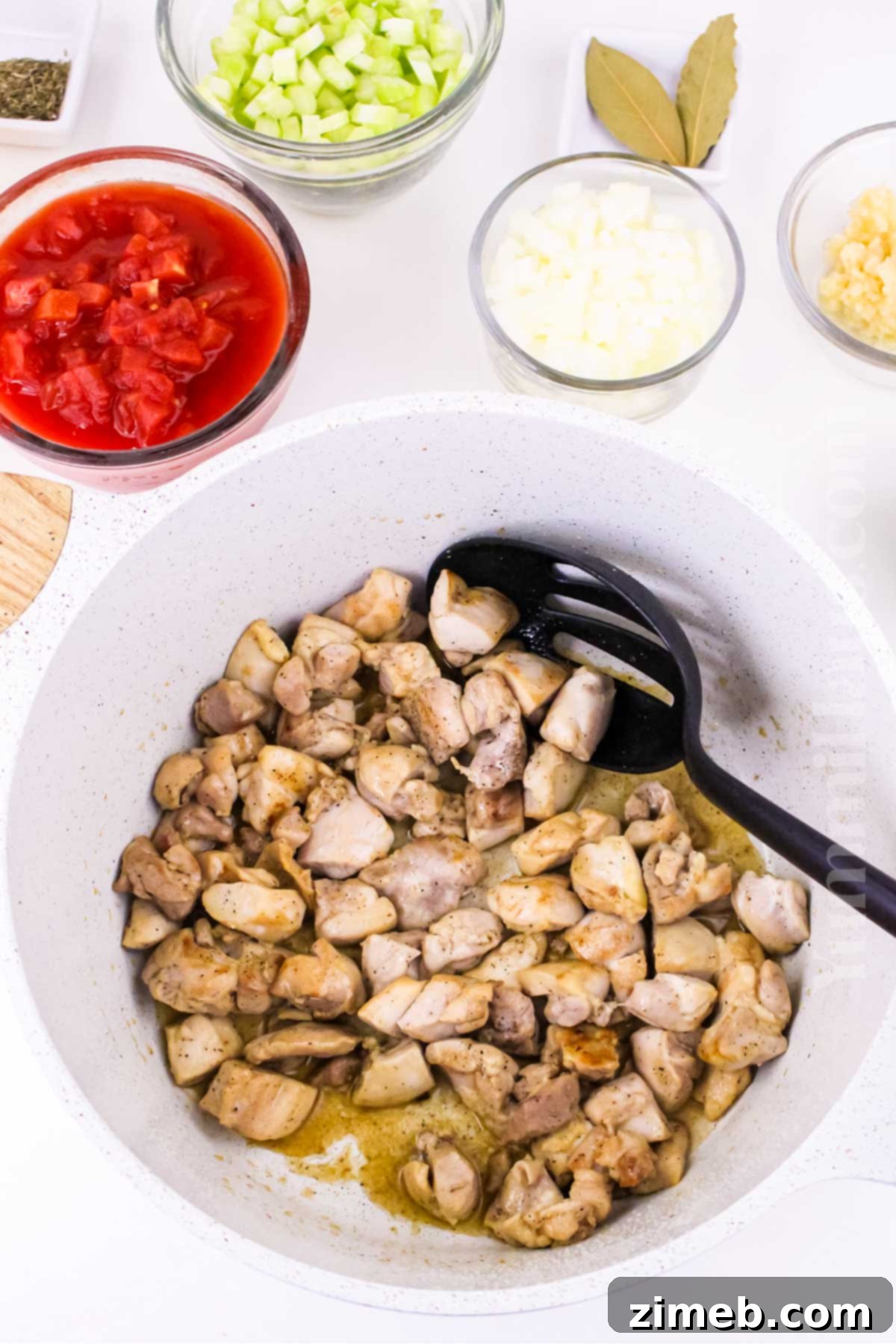
Using the same pot with the sausage drippings, add the diced chicken thighs. Cook the chicken over medium heat for 5-7 minutes, turning occasionally, until it is browned on all sides. This step is crucial for developing a rich flavor and creating a beautiful texture. Like the sausage, once the chicken is browned, remove it from the pot and let it rest with the cooked sausage. The fond (browned bits) left at the bottom of the pot will contribute immense flavor to your gumbo base.
3: Develop the Aromatic Soup Base
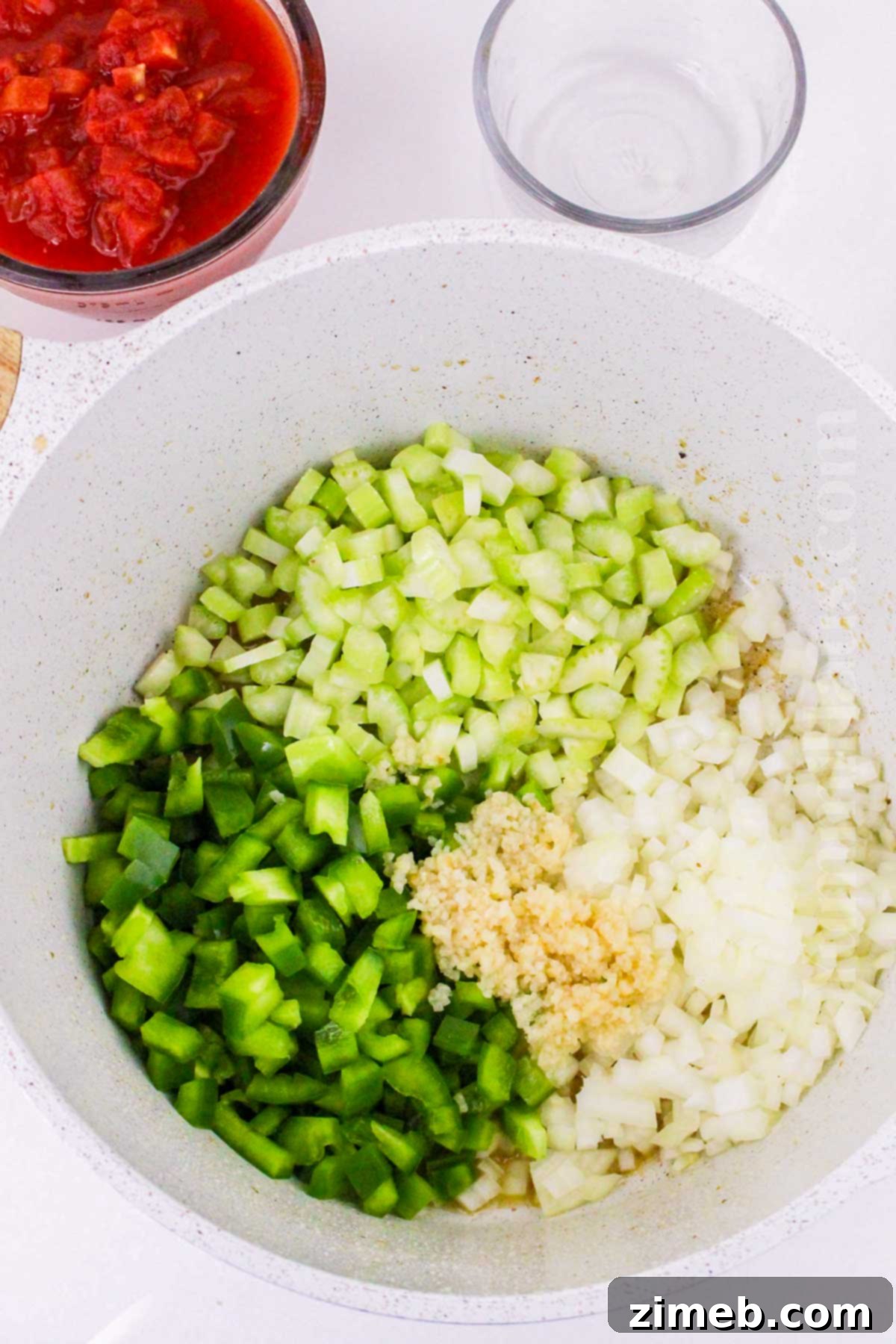
- Sauté the Holy Trinity and Garlic: In the same pot, add a little more oil if needed, then introduce the chopped onion, bell pepper, and celery. Sauté these “Holy Trinity” vegetables over medium heat for approximately 5 minutes, or until they have softened and become fragrant. Add the minced garlic during the last minute of sautéing to prevent it from burning.
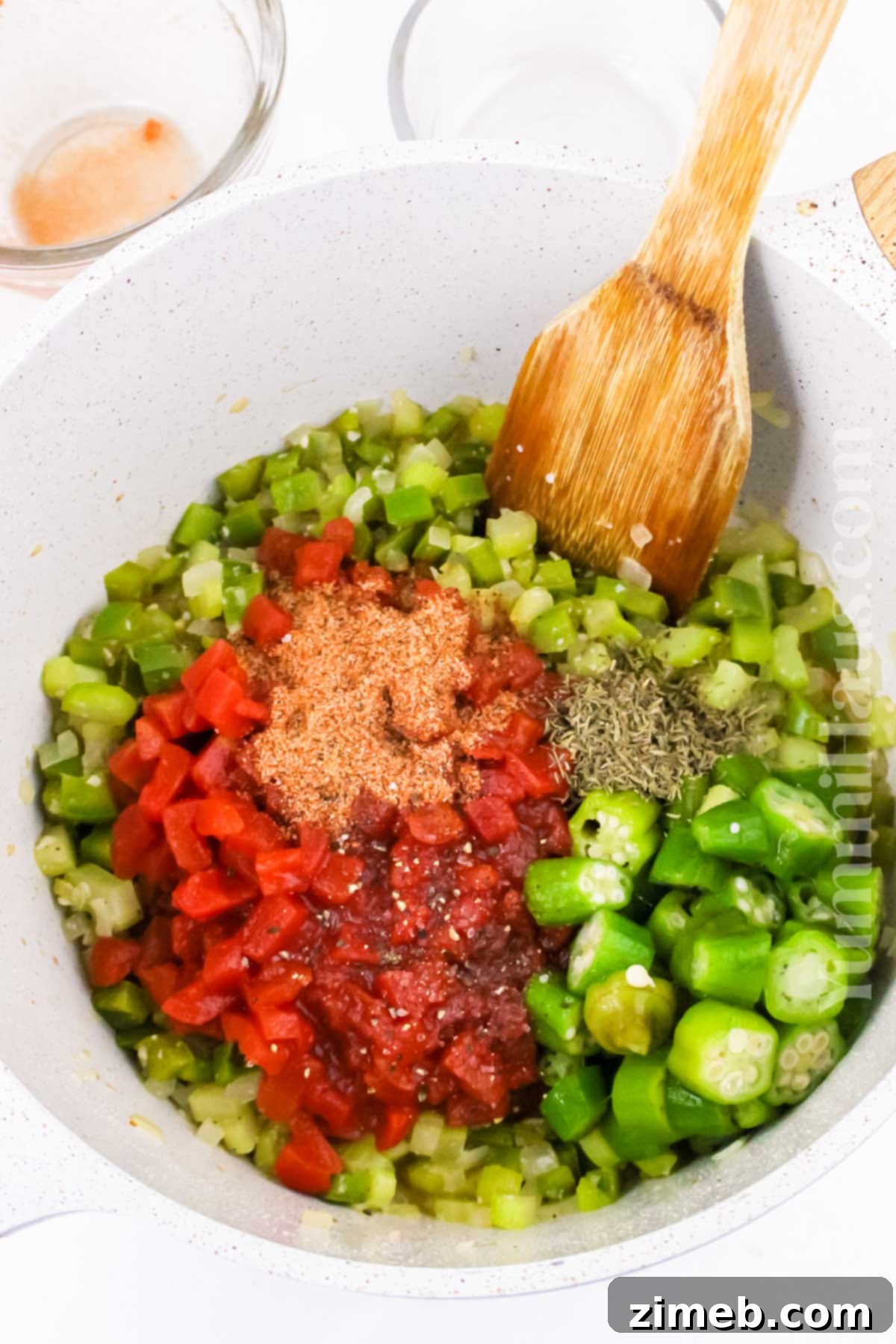
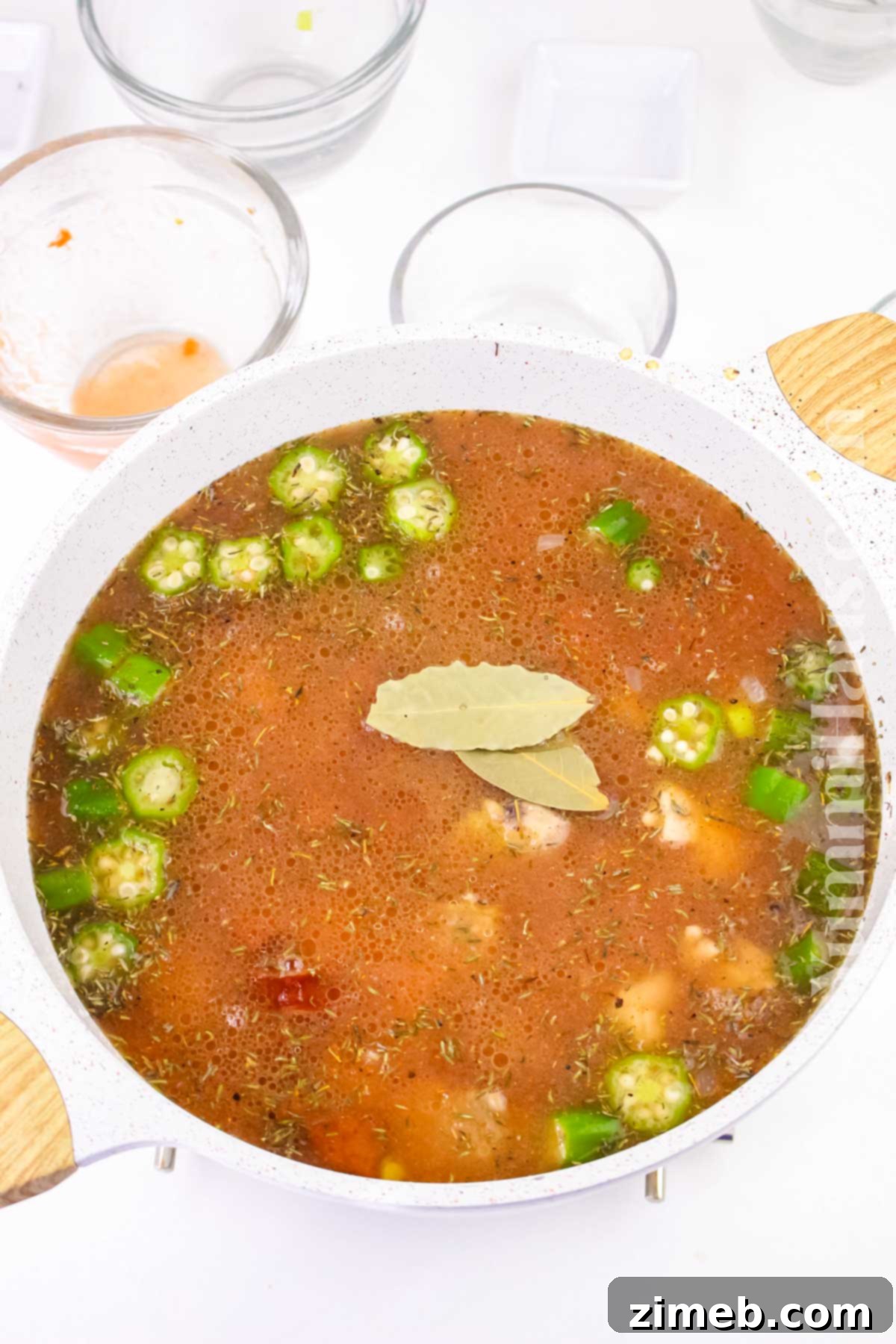
- Build the Liquid Base: Stir in the undrained diced tomatoes, chicken broth, Cajun seasoning, dried thyme, and bay leaves. Incorporate the sliced fresh or frozen okra. Bring the entire mixture to a gentle simmer, stirring occasionally to ensure all ingredients are well combined and the flavors begin to meld.
4: Combine and Simmer for Depth of Flavor
- Return the Meats: Carefully add the pre-cooked chicken and sausage back into the pot with the simmering soup base. Stir everything together gently, ensuring the meats are submerged.
- Simmer to Perfection: Allow the gumbo to simmer uncovered for at least 30-40 minutes. During this time, the flavors will deepen and meld beautifully, and the gumbo will naturally thicken, especially if you’re using okra. The longer it simmers, the more profound the taste.
- Prepare Rice (if not already done): While the gumbo simmers, if your rice isn’t already prepared, cook your preferred long-grain white rice according to package instructions.
- Final Seasoning and Serving: Before serving, carefully remove and discard the bay leaves. Taste the gumbo and adjust the seasoning with salt and black pepper as needed. Serve generously over mounds of hot, cooked white rice, and garnish with fresh chopped green onions and parsley for a burst of freshness and color. For an extra touch of Southern hospitality, consider serving with a side of crusty bread or savory cornbread muffins to soak up every last drop of the rich stew.
Storage and Reheating Tips for Gumbo
Gumbo is one of those magical dishes that often tastes even better the next day, making it excellent for meal prepping. Here’s how to properly store and reheat your delicious Chicken and Sausage Gumbo:
Storage:
- Refrigeration: Allow any leftover gumbo to cool completely before transferring it to an airtight container. It will keep beautifully in the refrigerator for 3-4 days. It’s best to store the gumbo separately from the cooked rice, as the rice can become mushy when stored with the stew.
- Freezing: Gumbo freezes exceptionally well. Pour the cooled gumbo into freezer-safe containers or heavy-duty freezer bags, leaving a little headspace for expansion. It can be frozen for up to 2 months. Thaw overnight in the refrigerator before reheating.
Reheating:
- Microwave: For individual portions, transfer the gumbo to a microwave-safe bowl and heat in 1-minute intervals, stirring in between, until heated through.
- Stovetop: For larger quantities, transfer the gumbo to a pot and reheat over medium-low heat, stirring occasionally, until it reaches your desired temperature.
- Adjusting Consistency: Gumbo can thicken significantly upon cooling. If your reheated gumbo is too thick, simply add a splash of extra chicken broth or even a little water until it reaches your preferred consistency.
Roux Storage: If you decide to make a large batch of roux for future use, it can also be stored. Once cooled, transfer the roux to an airtight container and refrigerate for up to a week, or freeze for several months. This makes future gumbo preparations even faster.
Exciting Substitutions & Variations to Customize Your Gumbo
Gumbo is a wonderfully versatile dish, open to a myriad of delicious adaptations. Feel free to get creative and tailor this recipe to your preferences or what you have on hand:
- Seafood Gumbo Delights: Transform this into a stunning seafood gumbo by incorporating shrimp, crab meat (fresh or canned), and even oysters. For shrimp, add them in the last 10-15 minutes of simmering to prevent overcooking. Crab meat and oysters can be stirred in right at the end, just long enough to heat through. Many seafood gumbos also include fish fillets.
- Boost Umami with Worcestershire: For an additional layer of savory depth and umami flavor, a small dash of Worcestershire sauce (about 1-2 teaspoons) can be added to the gumbo base. This is entirely optional but can enhance the overall richness.
- The Art of the Dark Brown Roux: For a truly traditional and deeply flavored gumbo, consider making a dark brown roux. This involves whisking all-purpose flour into heated oil (or rendered fat) in your Dutch oven, stirring constantly over low to medium-low heat for 20-30 minutes, or until it reaches the color of dark peanut butter or milk chocolate. This requires patience and vigilance, as a burnt roux will ruin the flavor of your gumbo. While it adds incredible depth and thickening, many home cooks opt for simpler thickening methods, as it’s easy to burn. If you’re a beginner, feel free to skip this step, or try it on a day when you have extra time and focus.
- Ignite the Heat with Spicy Gumbo: While traditional Cajun dishes aren’t excessively spicy, you can certainly amp up the heat if you’re a chili lover. Opt for a spicier Andouille sausage, and don’t hesitate to add more Cajun seasoning, a pinch of red pepper flakes, or a dash of cayenne pepper. For an extra kick at the table, serve your gumbo with a bottle of Louisiana hot sauce.
- Alternative Side Dishes: While white rice is the classic pairing for gumbo, feel free to explore other delicious accompaniments. Consider a scoop of creamy potato salad for a true Southern experience, serve it alongside crusty French bread for dipping, or lighten it up with cauliflower rice as a low-carb option.
- The Magic of Filé Powder: If you have access to it, filé powder (ground sassafras leaves) is a traditional thickening agent and flavor enhancer for gumbo. It should be stirred into individual bowls of gumbo *after* removing from the heat, never during cooking, as it can become stringy. Start with a quarter teaspoon per serving and adjust to taste.
Expert Tips for Crafting the Ultimate Chicken and Sausage Gumbo
Achieving a truly exceptional gumbo goes beyond just following the steps. Incorporate these expert tips to elevate your Chicken and Sausage Gumbo to culinary perfection:
- Skim the Foam: During simmering, especially in the initial stages, you might notice some foam or impurities rising to the surface of the soup. Use a wooden spoon or a ladle to gently skim these off. This simple step contributes to a clearer, more appealing broth and a cleaner flavor profile.
- Avoid Crowding the Pot: When browning the sausages and chicken, ensure that you cook them in batches if necessary. Crowding the pot lowers the temperature, steaming the meat instead of searing it, which prevents the development of that delicious, flavorful crust. Give each piece enough space to brown evenly on all sides.
- Don’t Rush the Simmer: While the recipe calls for 30-40 minutes of simmering, remember that gumbo truly benefits from time. A longer, slow simmer (up to an hour or even more on very low heat) allows the flavors to deepen and meld, resulting in a more complex and satisfying stew.
- Taste and Adjust Seasoning: This is perhaps the most important tip. Taste your gumbo throughout the cooking process, especially after adding the broth and before serving. Adjust salt, pepper, and Cajun seasoning as needed. Remember that flavors can become concentrated as the gumbo simmers.
- Consider a Slow Cooker: For an incredibly hands-off approach, this sausage gumbo recipe can be adapted for a slow cooker. Brown the meats and sauté the Holy Trinity on the stovetop first to build flavor, then transfer everything to the slow cooker and let it simmer on low for 4-6 hours. This is perfect for busy days!
Frequently Asked Questions About Gumbo
What Is the Secret to a Truly Good Gumbo?
The secret to an exceptional gumbo lies in a few key elements: First, its characteristic thickness, which should resemble a hearty stew. This is achieved through specific thickening agents like fresh okra, filé powder, or a cornstarch slurry. Second, and arguably most important, is the development of flavor, often initiated by preparing a dark roux (a mixture of flour and fat cooked to a deep brown). The roux adds a profound nutty, earthy flavor and contributes significantly to the gumbo’s richness and color. Finally, the slow simmering process allows all the ingredients to meld and deepen their flavors, creating a complex and harmonious dish.
Do You Cook the Chicken and Sausage Before Adding It to the Gumbo?
Yes, absolutely. It is crucial to pre-cook and brown both the sausage and chicken before incorporating them into the gumbo stew. This initial browning step is vital for developing rich flavors and textures. Searing the meats creates a flavorful crust and renders out fat, which then forms the base for sautéing the aromatic vegetables. If you are using any other proteins like seafood or other cuts of meat, they should also be pre-cooked or at least seared beforehand to enhance the overall taste and prevent an insipid flavor.
What Is the Best Sausage to Use for Gumbo?
For an authentic and flavorful gumbo, smoked sausages are generally considered the best choice due to their rich, savory, and often spicy characteristics. Andouille sausage, a smoked pork sausage with a coarse texture and a spicy kick, is the traditional and most popular option in Louisiana. However, many other smoked sausages work wonderfully, including other Cajun-style sausages, Chorizo (which adds a distinct Spanish paprika flavor), or even a good quality Polish kielbasa. The key is to choose a smoked variety that will contribute depth and character to your stew.
What Is the Difference Between Cajun and Creole Gumbo?
While both Cajun and Creole gumbos are staples of Louisiana cuisine, they have distinct characteristics. Creole gumbo, often found in New Orleans, typically uses tomatoes and sometimes features a lighter roux or even no roux, relying on okra for thickening. It also often includes seafood alongside or instead of meat. Cajun gumbo, more common in rural Louisiana, usually omits tomatoes, relies heavily on a very dark roux for flavor and thickening, and traditionally focuses on chicken and sausage or other meats, with less emphasis on seafood. The difference often comes down to the roux, the use of tomatoes, and the protein choice.
If you’ve enjoyed this delightful Chicken and Sausage Gumbo, we’re confident you’ll appreciate these other quick and easy dinner recipes that celebrate robust flavors and simple preparation. Each recipe offers a unique culinary experience, perfect for any weeknight meal.
Smoked Sausage Pasta
Smoked Sausage Pasta is a hearty, delicious weeknight dinner featuring pasta, savory smoked sausage, and a creamy sauce. It’s a comforting dish that comes together quickly.
Check out this recipe

Crockpot Red Beans & Rice
Crockpot Red Beans & Rice is the perfect cozy dinner. This easy, flavorful, slow-cooked recipe brings a taste of New Orleans comfort right to your table.
Check out this recipe
Crab Cakes
Crab Cakes are a favorite along the coast. They’re delicious, savory, and can be enjoyed alone or served with a creamy dipping sauce for an elevated experience.
Check out this recipe

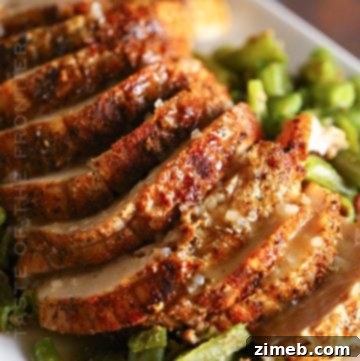
Cajun Turkey Breast
Spice up your holiday or any meal with this easy-to-make Cajun Turkey Breast recipe, roasted in the oven to juicy perfection. It’s positively delicious and packed with flavor!
Check out this recipe
One Pot Lasagna Soup
This One-Pot Lasagna Soup is packed with savory ground beef, tender pasta, rich tomato sauce, and creamy cheese—perfect for a cozy, hassle-free meal that tastes like classic lasagna.
Check out this recipe

Discover More Cajun-Inspired Recipes
Dive deeper into the vibrant flavors of Louisiana with these other fantastic Cajun and Creole-inspired dishes that are sure to delight your taste buds.
Cajun Sausage Spaghetti
Boudin King Cake
Spicy Mac and Cheese
Beignets Recipe
CONNECT WITH YUMMI HAUS!
Be sure to follow me on my social media, so you never miss a post!
Substack, FB, Pinterest, IG, Email Subscription
Chicken and Sausage Gumbo Soup

Course: Dinner, Main Course
Servings: 6 servings
Warm up with a hearty bowl of Chicken and Sausage Gumbo Soup! This Louisiana-inspired recipe is perfect for any occasion.
Prep Time: 15 mins
Cook Time: 1 hr
Total Time: 1 hr 15 mins
Ingredients
- 1 pound smoked sausage, sliced
- 1 tablespoon olive oil
- 1 pound chicken thighs, boneless, skinless – diced
- 1 medium onion, chopped
- 1 green bell pepper, chopped
- 2 celery stalks, chopped
- 3 cloves garlic, minced
- 14.5 ounces diced tomatoes, undrained
- 6 cups chicken broth
- 1 tablespoon Cajun seasoning
- 1 teaspoon dried thyme
- 2 bay leaves
- 1 cup okra, sliced (fresh or frozen)
To Taste:
- Salt and pepper
For Serving:
- Cooked rice
- Chopped green onions and parsley, for garnish (optional)
Instructions
- Combine the smoked sausage and oil in a large stockpot or Dutch oven. Cook over medium heat until the sausage has browned – about 5 minutes. Remove the sausage and set aside.
- Cook the chicken in the same pot for 5-7 minutes, or until it is browned on all sides. Remove and let it rest with the sausage.
- Sauté the onion, bell pepper, celery, and garlic in the same pot, cooking for approximately 5 minutes or until the veggies are soft.
- Add the diced tomatoes, chicken broth, Cajun seasoning, thyme, bay leaves, and okra. Stir and bring the mixture to a simmer.
- Add the cooked chicken and sausage back to the pot. Stir and allow the gumbo to simmer for 30-40 minutes.
- Remove the bay leaves before serving.
- Season with salt and pepper to taste.
Serving Suggestion:
Serve over cooked rice and garnish with chopped green onions and parsley.
Nutrition
Nutritional information for the recipe is provided as a courtesy and is approximate. Please double-check with your own dietary calculator for the best accuracy. We at Yummi Haus cannot guarantee the accuracy of the nutritional information given for any recipe on this site.
Serving: 1 serving | Calories: 486kcal | Carbohydrates: 12g | Protein: 28g | Fat: 37g | Saturated Fat: 11g | Cholesterol: 128mg | Sodium: 782mg | Potassium: 779mg | Fiber: 2g | Sugar: 4g | Vitamin C: 28mg | Calcium: 71mg | Iron: 3mg | Net Carbohydrates: 10g
Love this recipe? Follow @KleinworthCo for even more tasty recipes!