
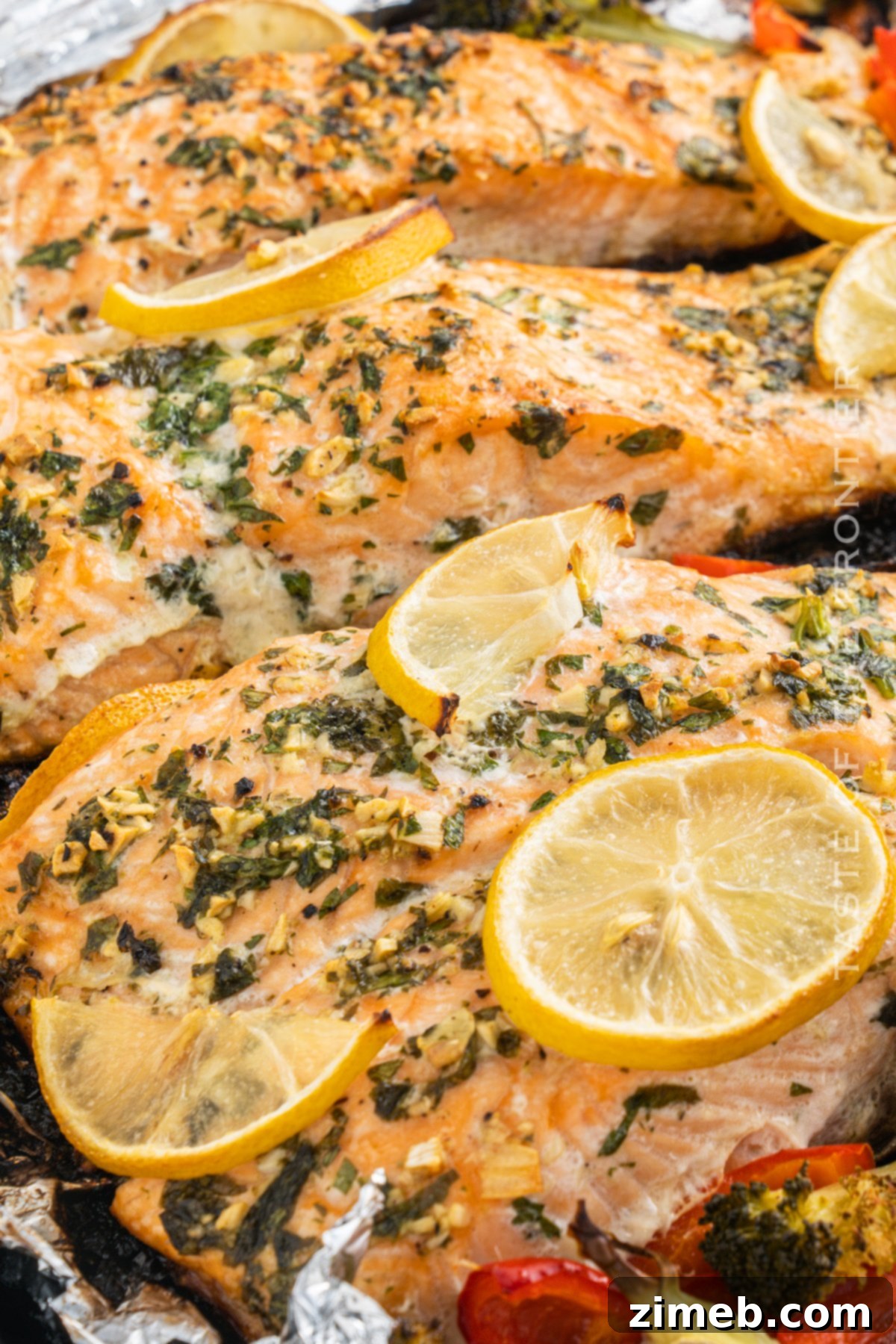
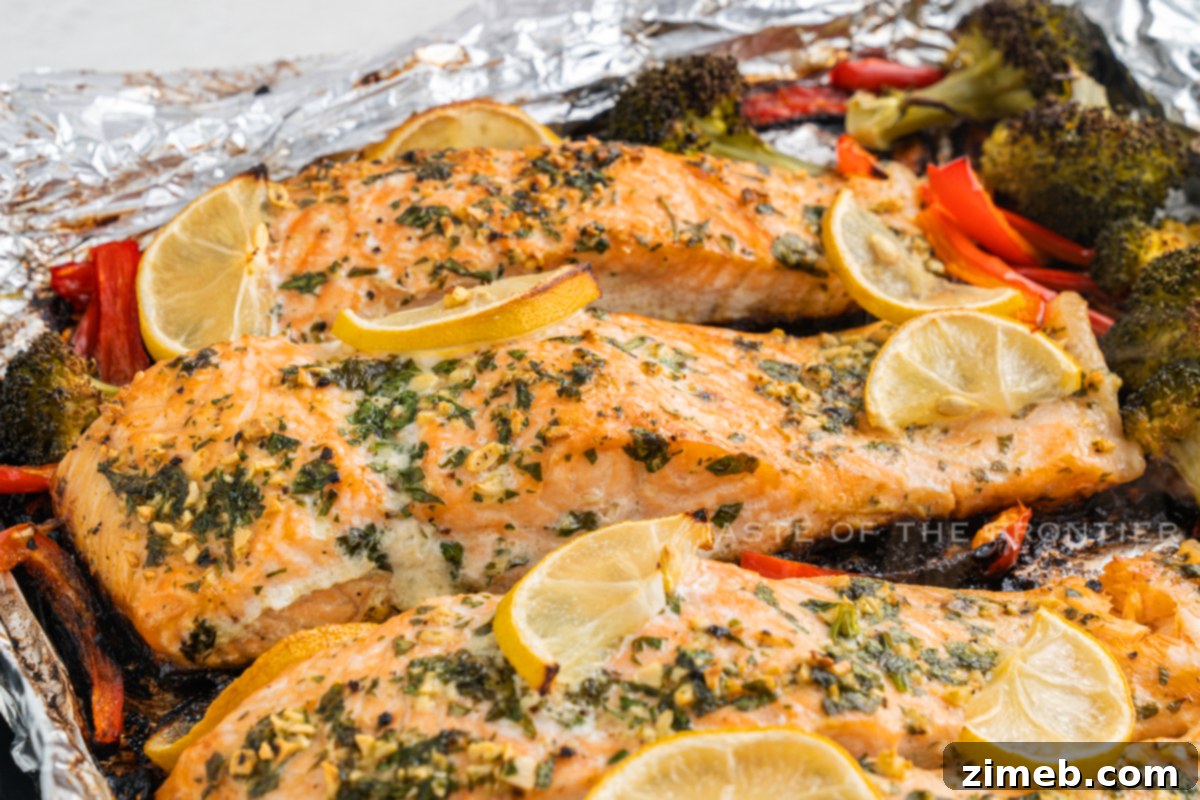
Welcome to your new go-to recipe for perfectly Baked Salmon! This simple yet elegant dish, featuring vibrant lemon, savory garlic, aromatic parsley, and essential salt and pepper, promises a healthy and delicious meal that’s incredibly quick to prepare and easy to cook in the oven. Whether you’re navigating a busy weeknight or simply craving a wholesome, flavorful dinner, this recipe is designed to deliver maximum taste with minimal effort.
Salmon stands out as a culinary superstar, celebrated not only for its rich flavor and flaky texture but also for its exceptional nutritional profile. As a powerhouse of lean protein, beneficial omega-3 fatty acids, and essential vitamins, it’s a fantastic choice for supporting overall health and well-being. This particular baked salmon recipe transforms fresh fillets into a mouthwatering meal in under an hour, making it an ideal candidate for those hectic evenings when time is of the essence. Plus, its naturally low-carb and gluten-free nature means it aligns beautifully with various dietary preferences, ensuring everyone can enjoy a truly satisfying dining experience.
Forget complex cooking techniques or intimidating ingredient lists. This easy baked salmon recipe is crafted with beginners in mind, providing clear, straightforward steps that guarantee success every time. There’s no need to be a gourmet chef to create a restaurant-quality dish right in your own kitchen. So, if you’re ready to impress your family and friends (or just treat yourself!) with a healthy and incredibly tasty meal, look no further. Let’s get cooking and make this delicious salmon dish tonight!
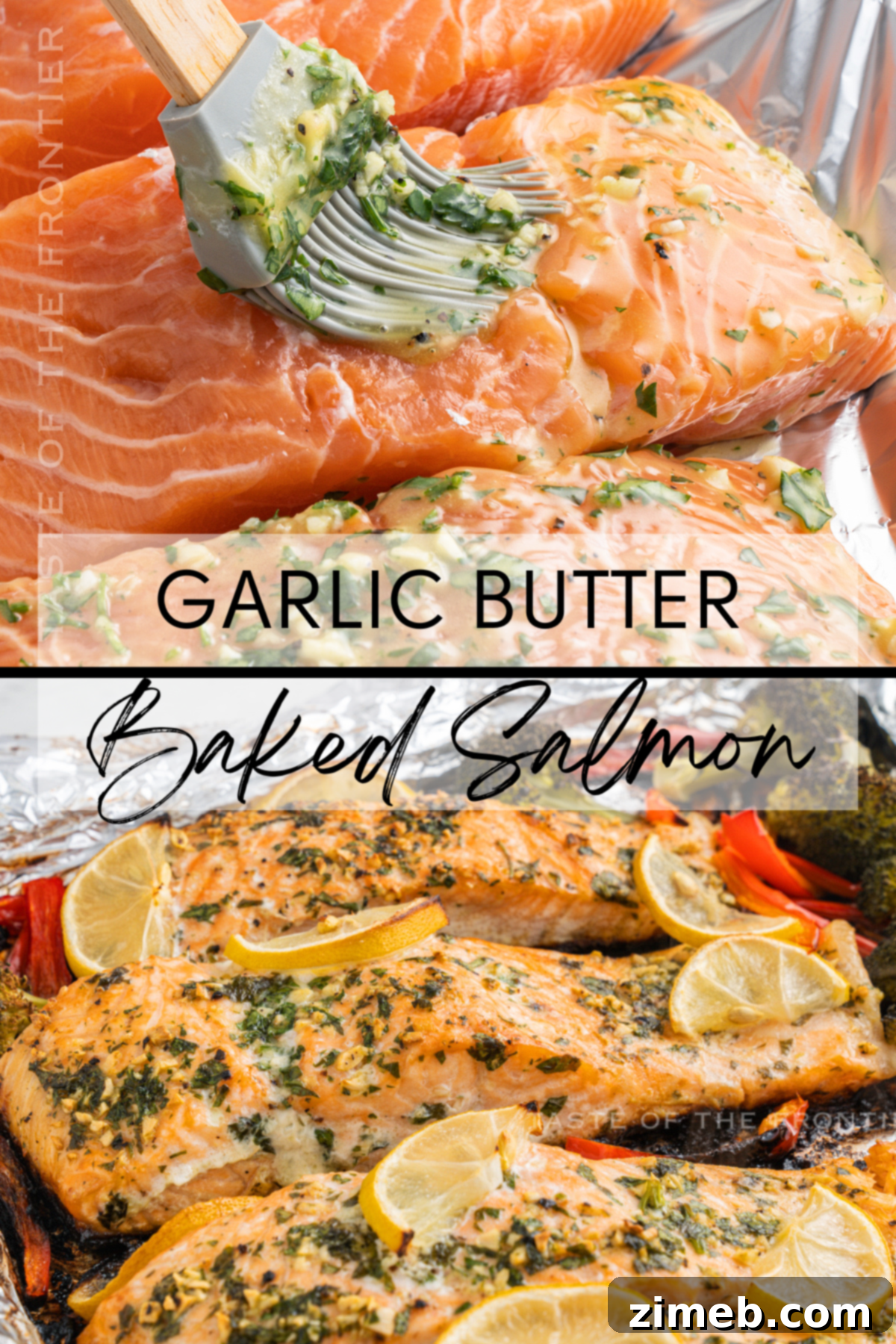
Searching for an effortlessly delicious salmon recipe? You’ve landed in the perfect spot! This baked salmon creation is not only remarkably simple to execute but also bursts with incredible flavor, transforming ordinary ingredients into an extraordinary meal. Beyond its delightful taste, it’s a supremely healthy option that supports your dietary goals, whether you’re sticking to New Year’s resolutions or simply aiming for a nutritious lifestyle. Why wait? Dive into preparing this delightful dish and discover how easy healthy eating can be!
While our beloved Garlic Butter Salmon often finds its way to the grill during warmer months, the changing weather here in North Idaho brings us indoors. This oven-baked version ensures you can enjoy that same wonderfully buttery and tender salmon, regardless of the season. We’re confident you’ll find yourself making this recipe time and time again, thanks to its irresistible flavor and foolproof preparation.
Perfectly Baked Salmon: Your Ultimate Guide
Frequently Asked Questions About Baked Salmon
Unlocking the Health Benefits of Baked Salmon
Incorporating salmon into your diet is a fantastic way to boost your health. This incredible fish offers a wealth of nutritional advantages:
- Rich in Protein: Salmon is an excellent source of high-quality protein, crucial for muscle repair, growth, and overall bodily functions.
- Abundant in Omega-3 Fatty Acids: It’s particularly renowned for its high content of EPA and DHA, powerful omega-3 fatty acids vital for heart health, reducing inflammation, and supporting brain function.
- Packed with Antioxidants: Salmon contains astaxanthin, an antioxidant responsible for its vibrant pink hue, which helps protect cells from damage and supports skin health.
- Promotes Heart Health: Regular consumption of salmon can significantly help reduce the risk of heart disease, lower blood pressure, and improve cholesterol levels.
- Boosts Brain Function: The omega-3s in salmon are essential for cognitive health, enhancing memory, focus, and overall brain performance.
- Supports Bone Health: Salmon is a good source of Vitamin D, which is critical for calcium absorption and maintaining strong, healthy bones.
The Brilliance of Baking Salmon in Foil
Baking salmon in foil isn’t just a clever trick; it’s a game-changer for achieving tender, moist, and flavorful results with minimal cleanup. Here’s why this method is highly recommended:
- Effortless Cooking: It simplifies the cooking process, requiring very little hands-on time and making it perfect for busy schedules.
- Locks in Moisture: The foil creates a steamy environment around the fish, preventing it from drying out and ensuring every bite is wonderfully moist and tender.
- Preserves Nutrients and Flavor: By encasing the salmon, the foil helps trap delicate flavors and essential nutrients, resulting in a more potent and healthier dish.
- Requires Minimal Added Fats: This healthy cooking method often needs little to no additional oil or butter, letting the natural richness of the salmon shine through.
- Makes Cleanup a Breeze: The foil acts as a barrier, containing any juices or marinades, which means less mess on your baking sheet and a quick, easy cleanup.
Everything You Need to Know About Choosing the Best Salmon
Selecting the right salmon is the first step to a truly exceptional meal. When you’re at the fish counter, keep these tips in mind to ensure you bring home the very best:
Wild-Caught vs. Farmed Salmon:
- Wild-Caught Salmon: Often considered superior in flavor and nutritional value, wild-caught salmon (like Alaskan salmon) typically boasts a more vibrant color and firmer texture. They tend to be leaner and higher in omega-3 fatty acids due to their natural diet and active lifestyle. Look for certifications like “MSC certified” for sustainable fishing practices.
- Farmed Salmon: While more readily available and often more affordable, farmed salmon can vary in quality. Modern farming practices have improved significantly, but it’s still wise to research the source and look for certifications that indicate responsible farming.
What to Look For in a Fresh Fillet:
- Color: The flesh should be a bright, vibrant pink or orange. Avoid any fillets with dull, grayish, or discolored patches, which can indicate age or poor handling.
- Texture: Fresh salmon should be firm and resilient to the touch. When gently pressed, it should spring back. Avoid fish that feels mushy or watery.
- Smell: It should have a fresh, mild, oceanic scent, not a strong, “fishy” odor. A strong odor is a clear sign that the fish is past its prime.
- Skin: If the skin is on, it should be shiny and intact, without any scales missing or significant damage.
Once you’ve found the perfect piece of salmon, you’re ready to embark on a culinary adventure! This recipe for baked garlic butter salmon is the ideal way to celebrate your amazing find. The simple yet profoundly flavorful garlic butter sauce beautifully enhances the salmon’s natural taste, creating a harmonious and utterly delicious dish. It’s not just tasty; it’s a healthy and relatively easy meal, making it perfect for any weeknight dinner.
How to Properly Thaw Frozen Salmon for Optimal Quality
Thawing frozen salmon correctly is essential for maintaining its texture, flavor, and overall quality. While there are a few methods, some are far superior to others:
The Best Method: Refrigerator Thawing
The safest and most recommended way to thaw salmon is to transfer it from the freezer to the refrigerator overnight. This slow, gradual thawing process helps to preserve the delicate structure of the fish, resulting in a superior texture and taste once cooked. Place the salmon (still in its original packaging or a sealed bag) on a plate or in a container to catch any condensation, and allow it to thaw for 12-24 hours, depending on its thickness.
The Quick Method: Cold Water Thawing
If you’re pressed for time, the cold water thawing method can be used, but it requires a bit more attention. Place the frozen salmon in a watertight, sealable plastic bag. Submerge the bag in a bowl of cold water. It’s crucial that the water remains cold, so change it every 20-30 minutes. This method can thaw a fillet in about 1-2 hours. Be aware, however, that this faster thawing can sometimes lead to a slight loss of flavor and a less firm texture compared to refrigerator thawing.
Important Considerations:
- Never Thaw at Room Temperature: Do not leave frozen salmon on the counter to thaw. This can bring the fish into the “danger zone” (between 40°F and 140°F), where harmful bacteria can multiply rapidly.
- Cook Immediately: Once your salmon is thawed, it’s best to cook it immediately for the freshest taste and best results. Salmon is a delicate fish and does not fare well if it’s thawed and then left uncooked for too long or reheated multiple times. Enjoy your delicious salmon while it’s fresh and at its peak!
Discovering the Five Types of Salmon
The world of salmon is diverse and fascinating, encompassing several distinct species, each with unique characteristics. Understanding these differences can help you appreciate and choose the perfect salmon for your culinary needs. Here are the five main types of Pacific salmon:
- Sockeye Salmon: Also known as “red salmon” due to its striking reddish-orange flesh and vibrant skin during spawning, Sockeye is typically smaller than other Pacific salmon. It’s known for its firm texture and rich, distinct flavor, making it a favorite for grilling, smoking, and baking where its robust taste can truly shine. Sockeye thrives in cold, clear waters and prefers to spawn in lakes rather than rivers.
- Coho Salmon: Often called “silver salmon” for its bright, silvery skin, Coho salmon offers a milder flavor and more delicate texture than Sockeye. Its flesh is a beautiful orange-red and flakes easily, making it highly versatile for various cooking methods, including baking, pan-searing, and broiling. Coho salmon can be found in both freshwater and saltwater habitats along the Pacific coast.
- Chinook Salmon: The largest and often considered the most prized of the Pacific salmon, Chinook is also known as “King salmon.” These magnificent fish can weigh upwards of 30 pounds and are celebrated for their rich, buttery flavor and tender, moist flesh, which ranges from white to deep reddish-pink. Chinook salmon has the highest fat content, contributing to its luxurious texture. It’s excellent for baking, grilling, and poaching. They inhabit both freshwater and saltwater but prefer colder water temperatures.
- Chum Salmon: Frequently referred to as “dog salmon” or “keta salmon,” Chum salmon typically has lighter, more pale orange flesh and a lower fat content compared to other varieties. Its flavor is mild, making it a good choice for those who prefer a less intense salmon taste. Chum is often used for canning, smoking, or in dishes where it can be enhanced with flavorful sauces. They have a greenish-blue back with silver sides and spotted skin, preferring cold water habitats.
- Pink Salmon: The most abundant and smallest of the Pacific salmon species, Pink salmon is also known as “humpback salmon” due to the distinctive hump males develop during spawning. Its flesh is light pink and has a delicate flavor with a softer texture. Pink salmon is frequently used in canned salmon products, but fresh fillets can be delicious when baked or pan-fried with light seasonings that complement its mild taste. They are found in both freshwater and saltwater habitats, preferring cold water temperatures.
Mastering Oven-Baked Salmon
Creative Ideas for Leftover Salmon and Reheating Tips
Don’t let any of that delicious baked salmon go to waste! Leftovers are incredibly versatile and can be transformed into new, exciting meals. Here are some fantastic ideas to repurpose your salmon:
- Salmon Salad: Flake the cooked salmon and mix it with diced celery, red onion, a touch of mayonnaise or Greek yogurt, fresh dill, lemon juice, salt, and pepper. Serve it on a bed of greens, in a sandwich, or as a topping for crackers.
- Salmon Pasta: Toss flaked salmon with your favorite pasta (linguine, penne, or even zucchini noodles), a light cream sauce, olive oil, or a vibrant pesto. Add cherry tomatoes, spinach, or capers for extra flavor and color.
- Salmon Cakes: Combine flaked salmon with a beaten egg, breadcrumbs, finely diced bell peppers or onions, and seasonings. Form into patties and pan-fry until golden brown and crispy. Serve with a squeeze of lemon or a dollop of tartar sauce.
- Salmon Tacos or Wraps: Crumble or flake the salmon and use it as a filling for soft tortillas or lettuce wraps. Top with shredded cabbage, a creamy avocado sauce, salsa, and a squeeze of lime for a fresh and flavorful meal.
- Salmon Scramble or Omelet: For a protein-packed breakfast or brunch, gently fold flaked salmon into scrambled eggs or an omelet with some fresh herbs and cheese.
- Salmon Pizza Topping: Spread a thin layer of cream cheese or pesto on a flatbread or pizza crust, add flaked salmon, thinly sliced red onion, capers, and a sprinkle of fresh dill. Bake until heated through.
- Hearty Salmon Soup or Chowder: Add flaked salmon to a creamy potato chowder or a clear vegetable broth-based soup for a warming and satisfying meal.
When reheating, gently warm salmon in the oven at a low temperature (around 275°F/135°C) for about 10-15 minutes, or until just heated through. Avoid microwaving on high, as this can dry out the fish. For best results, reheat until warm, not hot, to maintain moisture and flavor.
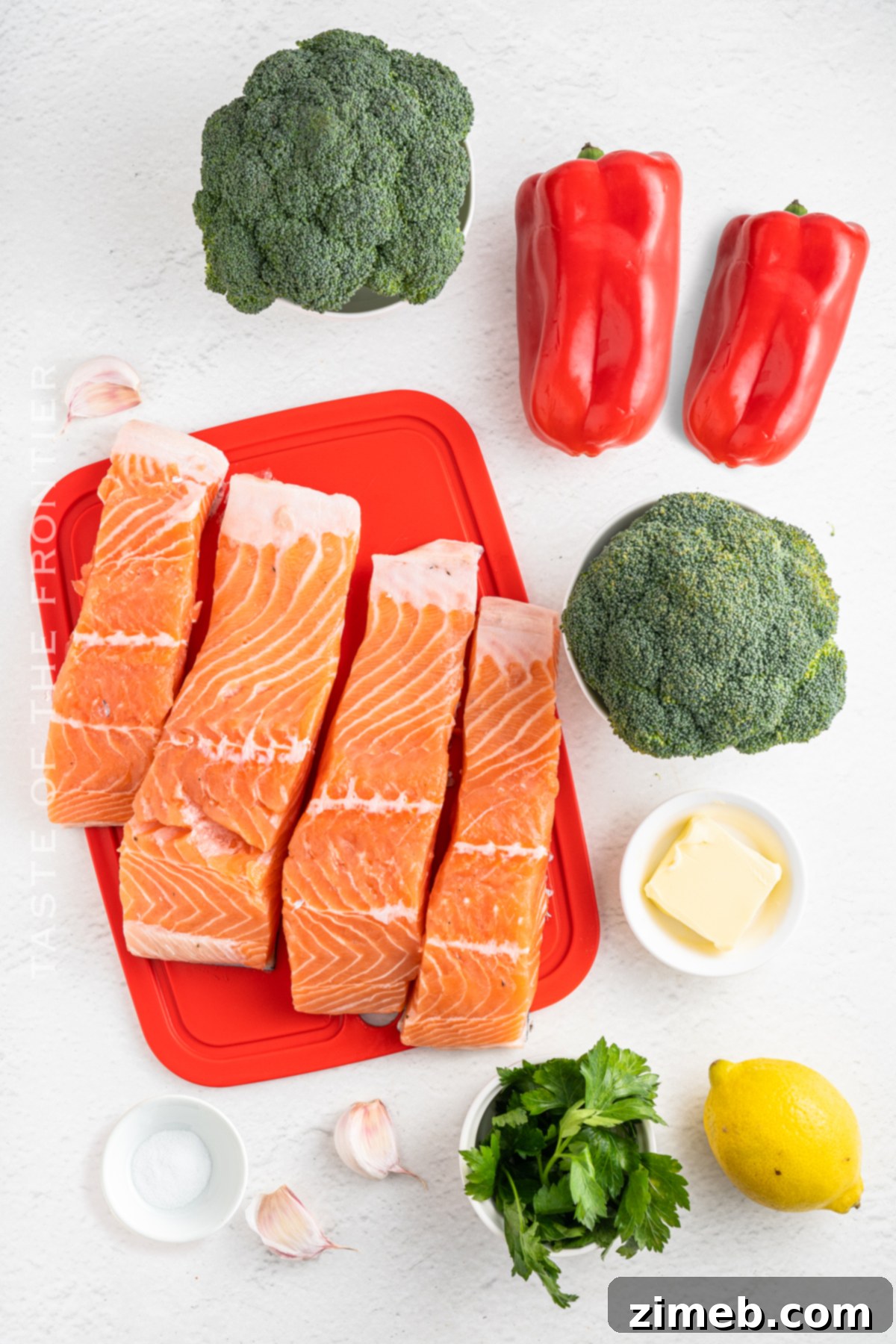
Essential Ingredients for Garlic Butter Baked Salmon
- Salmon Fillets: Opt for high-quality salmon with skin on for best results.
- Broccoli Heads: Fresh broccoli florets provide a fantastic green vegetable side.
- Red Bell Peppers: Adds a touch of sweetness and vibrant color to the dish.
- Lemon: Fresh lemon slices and juice are key for brightening the flavors.
For the Irresistible Garlic Butter:
- Butter: Melted, unsalted butter forms the rich base.
- Garlic: Freshly minced garlic is crucial for that aromatic, savory kick.
- Parsley: Finely chopped fresh parsley adds herbaceous notes and a pop of color.
- Black Pepper: Freshly ground black pepper for a subtle spice.
- Salt: Kosher or sea salt to enhance all the flavors.
Skin On or Skin Off? A Culinary Debate
The decision of whether to cook salmon with the skin on or off is a matter of personal preference and can influence the final texture and presentation of your dish. Both approaches have their merits:
- Keeping the Skin On: Many chefs and home cooks advocate for cooking salmon with the skin on. The skin acts as a natural barrier, protecting the delicate flesh from direct heat and helping to retain moisture. This often results in a more tender and juicy interior. If cooked properly, the skin can become incredibly crispy and delicious, adding a textural contrast to the soft fish. Additionally, it can help prevent the white protein (albumin) from leaching out, keeping the fillet looking more appealing.
- Removing the Skin: Others prefer to remove the skin before cooking. This can allow seasonings and marinades to penetrate both sides of the fillet more evenly, potentially intensifying the flavor of the flesh itself. It also ensures that every bite is pure fish, without the skin texture which some people dislike. However, removing the skin can make the salmon more prone to drying out if not cooked carefully, especially if the fillet is thin.
Ultimately, the choice is yours. If you enjoy crispy skin and prioritize moisture retention, leave the skin on. If you prefer a uniform texture and maximum flavor absorption directly into the flesh, go skinless. Regardless of your choice, ensure you season the fish well before cooking to bring out its best flavor.
To Cover or Uncover? The Secret to Perfectly Baked Salmon
The debate over baking salmon covered versus uncovered often boils down to the desired outcome for your fish. Each method offers distinct advantages:
- Baking Salmon Covered: Wrapping salmon in foil (or covering with a lid) during baking creates a steaming environment. This method is excellent for ensuring the fish remains incredibly moist and tender. The trapped steam gently cooks the salmon evenly, preventing it from drying out. It’s particularly useful for thicker fillets or when you want to infuse maximum flavor from your marinade, as the steam helps distribute those aromas. This is our preferred method for the initial baking stage.
- Baking Salmon Uncovered: Baking salmon uncovered allows the surface of the fish to come into direct contact with the oven’s dry heat. This is the key to achieving a beautifully browned and slightly crispy exterior, especially if the skin is on. It also helps in caramelizing any glazes or seasonings applied to the top. Many recipes, including this one, use a combination: covered for moisture, then uncovered to finish and add texture. For truly crispy results, a short stint uncovered at the end can be transformative.
So, which approach is superior? It genuinely depends on your preference. For a salmon that is extra moist, tender, and infused with flavor, start by baking it covered. If you crave a crispy skin or a slight caramelization on top, finish by baking it uncovered for the last portion of the cooking time.
Is Baked Salmon Truly a Healthy Recipe?
Absolutely! Baked salmon is unequivocally one of the healthiest choices you can make for a meal. Its nutritional profile and preparation method combine to offer significant health benefits:
- Excellent Source of Omega-3s: Salmon is a powerhouse of omega-3 fatty acids (EPA and DHA), which are well-known for their profound benefits for heart health, brain function, and reducing inflammation throughout the body.
- High in Lean Protein: It provides a substantial amount of high-quality protein, essential for muscle building, satiety, and maintaining healthy tissues, all without excessive saturated fats.
- Rich in Vitamins and Minerals: Salmon is packed with B vitamins (especially B12), Vitamin D, potassium, and selenium, which play crucial roles in energy production, immune function, and bone health.
- Baking Preserves Nutrients: The baking method is a gentle way of cooking that helps retain the delicate nutrients in salmon, unlike high-heat frying which can degrade some beneficial compounds. When baked in foil, even more nutrients are locked in.
- Low in Unhealthy Fats: By baking, you minimize the need for additional cooking oils, making it a naturally lower-fat meal compared to pan-frying or deep-frying.
This garlic butter baked salmon recipe, with its fresh ingredients and simple cooking technique, embodies a perfectly balanced and incredibly healthy meal option.
How Long Does Baked Salmon Last in the Refrigerator?
Salmon is a fantastic and versatile fish, brimming with protein and beneficial omega-3 fatty acids. To ensure you enjoy it at its best and safest, proper storage is key. Once cooked, baked salmon typically lasts for **two to three days** in the refrigerator.
To store leftover salmon:
- Allow the salmon to cool completely to room temperature (within two hours of cooking) before refrigerating.
- Wrap it tightly in plastic wrap or aluminum foil, or place it in an airtight container. This helps prevent it from drying out and absorbing odors from other foods in the fridge.
- Store it on the coldest shelf of your refrigerator.
If you’re planning to keep salmon for longer than two to three days, your best bet is the freezer. Cooked salmon can be stored in an airtight freezer-safe bag or container for up to **three months**. When ready to use, thaw it overnight in the refrigerator before gently reheating.
When cooking salmon, always ensure it reaches an internal temperature of 145 degrees Fahrenheit to confirm it’s cooked through and safe to eat. Enjoy your delicious and healthy salmon responsibly!
Our Favorite Oven Baked Salmon in Foil
Serving Salmon: Whole or Sliced?
The presentation of your salmon can elevate the dining experience, and deciding whether to serve it whole or sliced depends on the occasion and your preference.
Serving Salmon Whole: If you plan to serve a larger piece or a whole side of salmon, you’ll typically start by ensuring the head and tail are removed (your fishmonger can often do this for you). For a dramatic presentation, leaving the skin on and cooking it to a beautiful crisp is often desired. A whole cooked salmon makes an impressive centerpiece for a dinner party or special occasion.
Slicing into Individual Portions: For most weeknight meals and easier serving, slicing the salmon into individual fillets before or after cooking is more practical. Before cooking, cut the salmon into thick, even fillets, typically 1 to 1.5 inches thick. This ensures uniform cooking. After cooking, you can easily flake or portion the fish with a fork or spatula.
Regardless of how you present it, the cooking process remains similar. The most reliable way to cook salmon is in a preheated oven. Bake until the salmon is cooked through and flakes easily with a fork, reaching an internal temperature of 145 degrees Fahrenheit. It’s crucial not to overcook salmon, as this will result in dry, tough flesh. When in doubt, it’s better to remove it from the oven slightly sooner rather than later, as it will continue to cook a bit from residual heat. Serve your perfectly cooked salmon immediately with your chosen delectable sides.
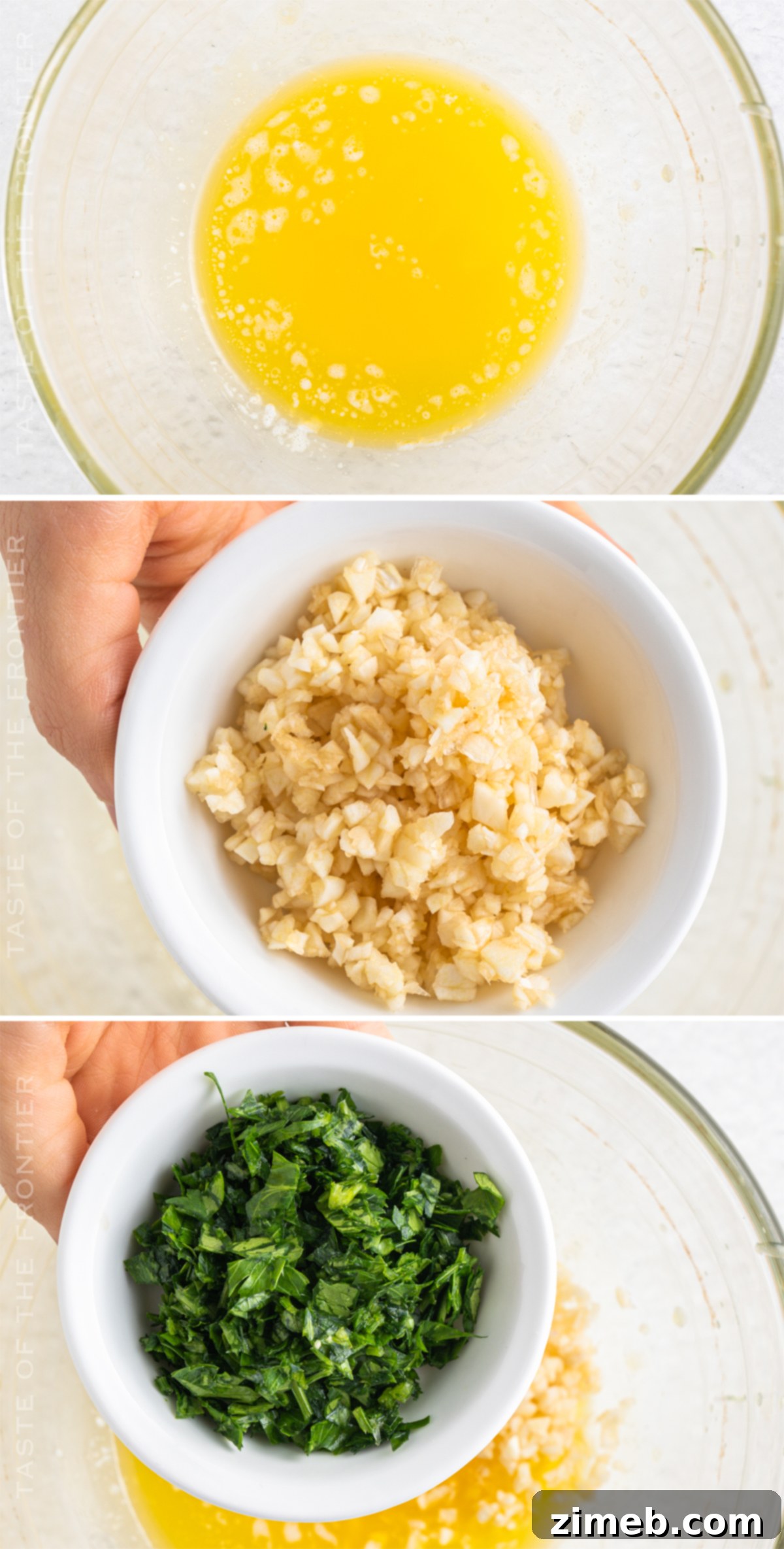
Crafting the Perfect Garlic Butter for Your Salmon
The garlic butter is the heart of this recipe, infusing the salmon with incredible flavor and moisture. Making it is wonderfully simple:
- Begin by melting the butter in a small bowl.
- To the melted butter, add your freshly minced garlic, finely chopped parsley, a generous pinch of ground black pepper, and salt. Stir everything together until well combined.
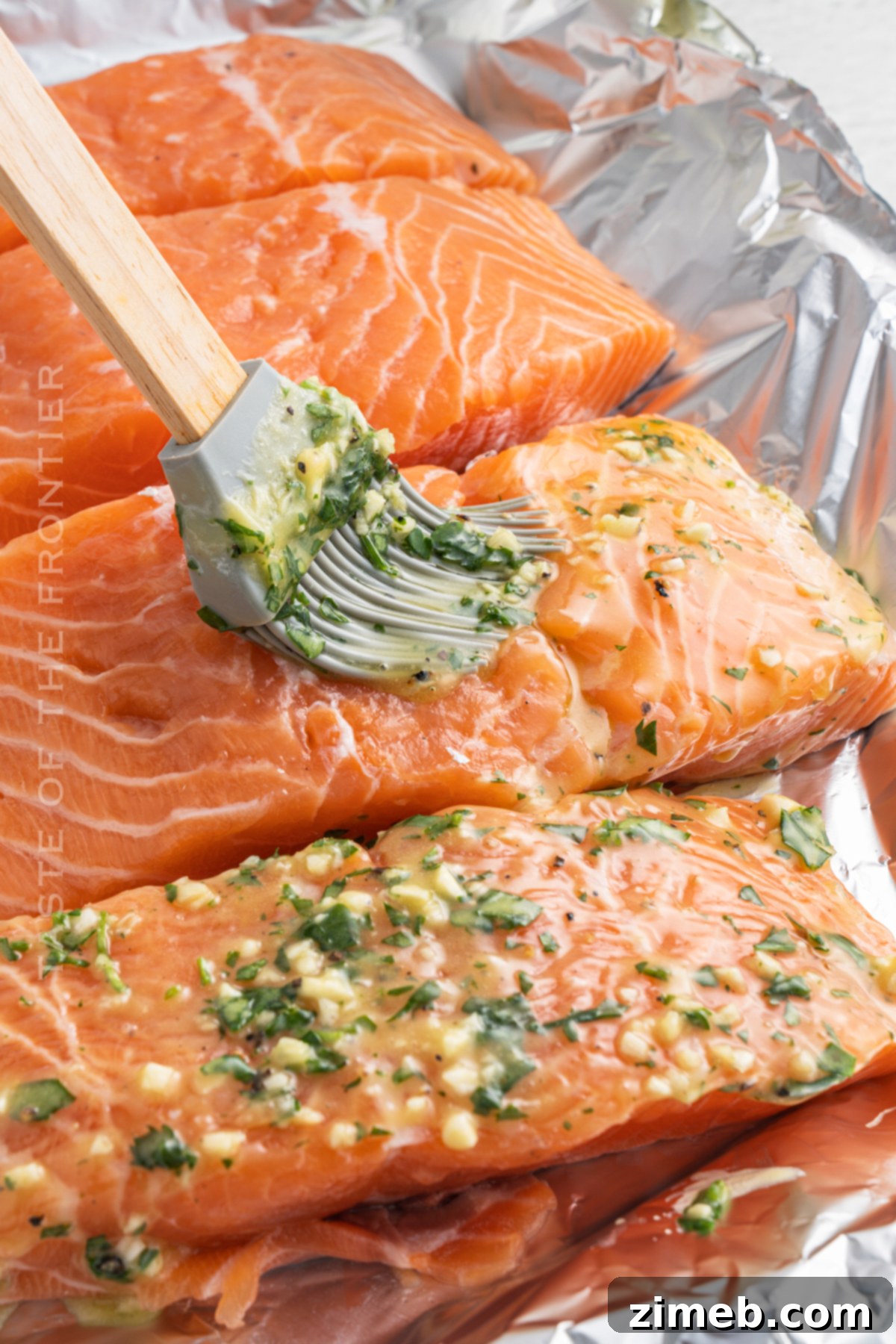
- Once your salmon fillets are arranged on the baking tray, generously brush each one with this aromatic garlic butter mixture. Ensure an even coating for maximum flavor.
Expert Wine Suggestions for Baked Salmon
Pairing the right wine with salmon can truly elevate your dining experience. Given salmon’s rich, sometimes oily texture and distinct flavor, the key is to choose a wine that complements without overpowering it. Here are some excellent suggestions:
- Crisp White Wines: For a classic pairing, opt for a light-bodied white wine with good acidity. These wines cut through the richness of the salmon and cleanse the palate.
- Sauvignon Blanc: Its vibrant acidity and citrusy, herbaceous notes wonderfully complement the lemon and parsley in the garlic butter.
- Pinot Grigio/Gris: A dry, crisp Pinot Grigio with its subtle fruitiness is a fantastic, versatile choice that won’t compete with the salmon’s flavor.
- Chablis (Unoaked Chardonnay): If you enjoy Chardonnay but want to avoid oak, a crisp Chablis offers minerality and bright acidity that pairs beautifully.
- Fuller-Bodied White Wines (with caution): If your salmon is prepared with a richer sauce, a lightly oaked Chardonnay might work, but ensure the oak isn’t overwhelming.
- Light-Bodied Red Wines: For red wine enthusiasts, certain varietals can be surprisingly harmonious with salmon, especially when the fish is prepared with savory elements like garlic. Look for wines with moderate tannins and good acidity.
- Pinot Noir: Its earthy notes, red berry flavors, and smooth tannins make it a classic match for salmon, particularly if the dish is more robust.
- Beaujolais: A light, fruity Beaujolais (made from Gamay grapes) is another excellent choice that offers enough acidity to stand up to the fish without overpowering it.
Experiment to find your perfect match, but these suggestions provide a great starting point for enhancing your baked salmon dinner!
Optimal Ways to Serve Your Baked Salmon
The beauty of this delicious and healthy baked salmon recipe lies in its versatility. While it shines on its own, serving it with complementary additions truly completes the meal. The best way to present this dish is often with a generous drizzle of the flavorful garlic butter, which not only adds an extra layer of savory richness but also enhances the fish’s natural moisture, making every bite even more delectable.
For a well-rounded and complete meal, consider pairing your salmon with a variety of sides:
- Fresh Vegetables: Roasted asparagus, green beans, or a vibrant medley of bell peppers and onions complement the salmon perfectly.
- Grains: A side of fluffy quinoa, wild rice, or a simple couscous can absorb the delicious juices and butter.
- Crisp Salad: A light, refreshing green salad with a vinaigrette dressing offers a lovely contrast to the richness of the fish.
- Potatoes: Roasted baby potatoes, creamy mashed potatoes, or even a simple baked potato can be excellent accompaniments.
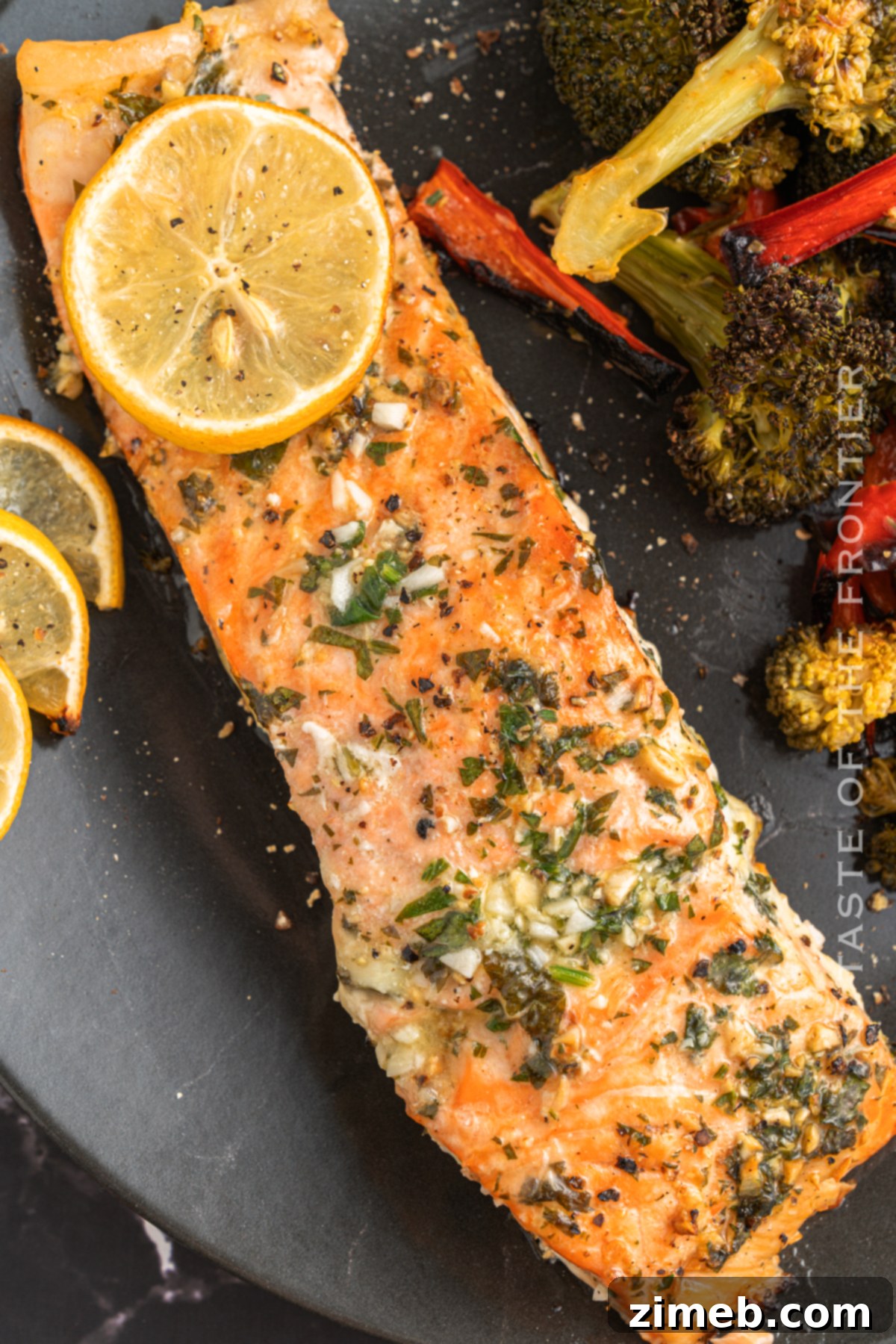
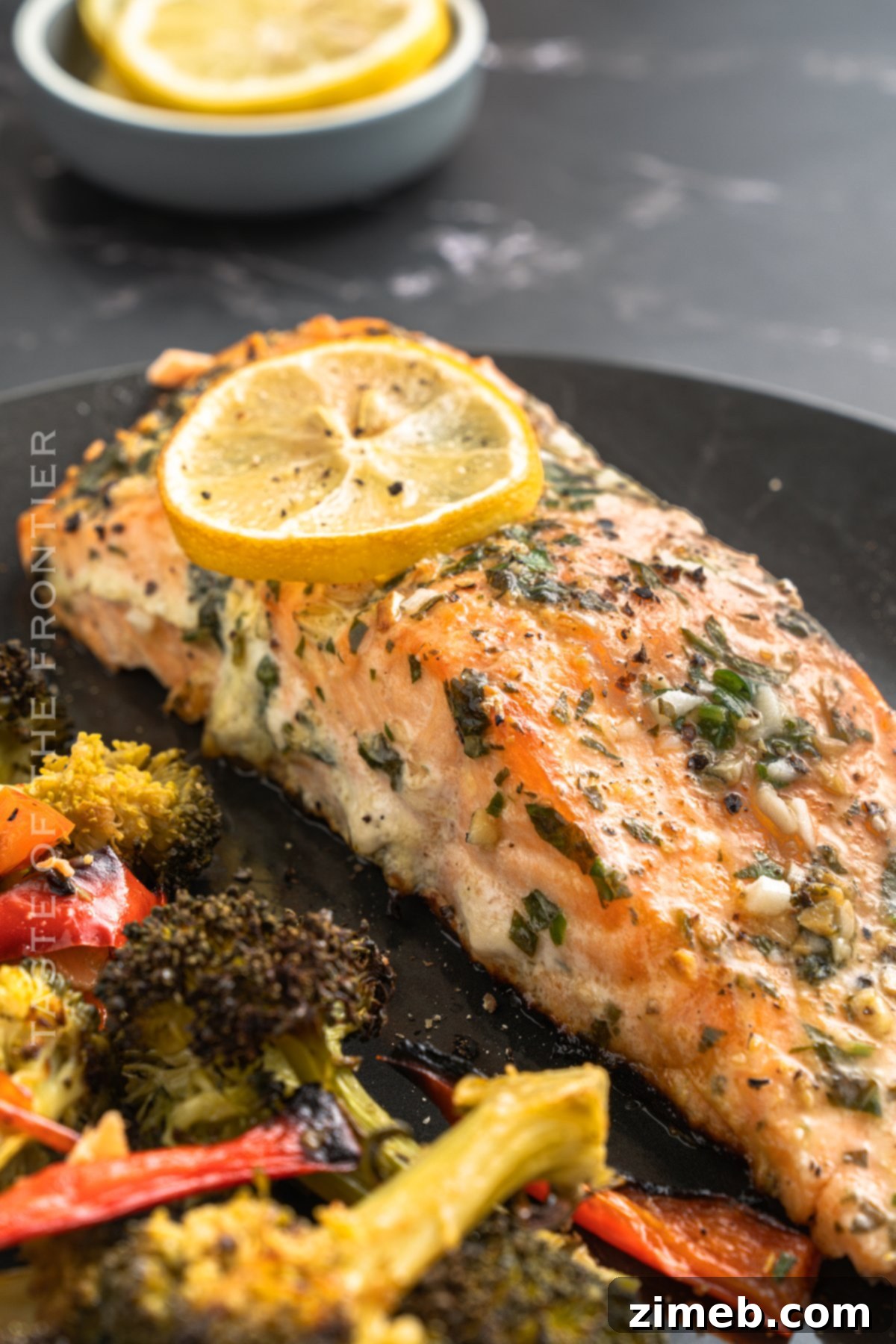
Arrange your salmon beautifully on a plate, perhaps garnished with fresh lemon wedges and a sprinkle of extra parsley, alongside your chosen sides. This presentation ensures a delightful and satisfying meal for everyone.
How to Determine When Salmon is Perfectly Baked
Achieving perfectly cooked salmon means hitting that sweet spot where it’s tender, moist, and flaky, without being overcooked and dry. Here’s how to tell when your baked salmon is done:
- Internal Temperature is Key: For a medium to medium-rare doneness, aim for an internal temperature of 125 to 135 degrees Fahrenheit when measured with an instant-read thermometer at the thickest part of the fillet. The fish will continue to cook slightly from residual heat after being removed from the oven, so pulling it a few degrees before your target temperature can help ensure it remains incredibly tender and moist. For fully cooked salmon, the USDA recommends 145°F, but many prefer slightly less for optimal texture.
- Visual Cues: Look for the telltale signs of doneness. The flesh should transition from translucent to opaque throughout. As it cooks, the natural fat will render, and the muscle fibers will start to separate, causing the fillet to look more flaky.
- The Flake Test: Gently insert a fork into the thickest part of the salmon and twist slightly. If the fish is done, the flesh will flake easily, separating into distinct layers. If it resists flaking, it needs a bit more time.
- Trust Your Senses: Your best judgment is a powerful tool. If the salmon looks and smells done – a pleasant, cooked aroma without a strong “fishy” smell – it probably is!
Remember, cooking times can vary based on the thickness of your salmon fillets and the exact temperature of your oven, so relying on these indicators will yield the best results every time.
Delightful Pairings: What to Serve with Baked Salmon in Foil
Baked salmon in foil is a fantastic main course, and pairing it with the right side dishes can transform it into a complete and unforgettable meal. Here are some of the best accompaniments to serve:
- Roasted Vegetables: Roasting vegetables alongside your salmon is an excellent way to create an easy, healthy, and flavorful one-pan meal. Consider roasting broccoli, carrots, asparagus, or even sweet potatoes. Their caramelized edges and tender interiors beautifully complement the flaky salmon.
- Wholesome Grains: Grains provide a satisfying base and soak up any delicious juices. Quinoa or rice are both quick-cooking and offer complex carbohydrates that will keep you feeling full and energized.
- Fresh Salads: A simple, crisp green salad is always a superb choice with fish. Add a variety of chopped veggies, nuts, or seeds to your salad for extra crunch and nutrition. A light vinaigrette dressing works perfectly. For something more substantial, a pasta salad or a refreshing cucumber and dill salad would be lovely.
- Fruit: Unexpected yet delightful, fresh fruit can add a pop of sweetness and acidity that complements the mild flavor of salmon. Sliced oranges, grapes, berries, or even a light fruit salsa can bring a refreshing element to your plate.
- Potatoes: Whether it’s creamy mashed potatoes, crispy roasted potatoes, or a simple baked potato, potatoes are a comforting and hearty side that pairs well with salmon.
Choose one or a combination of these sides to create a balanced, flavorful, and incredibly satisfying baked salmon dinner.
Oven Cooked Salmon Perfection
Step-by-Step Guide: How to Bake Salmon
Follow these simple steps to create a show-stopping baked salmon that’s both delicious and easy:
- Preheat Oven and Prepare Tray: Preheat your oven to 400°F (200°C). Lay a large piece of aluminum foil, double its length, onto a baking tray. Ensure you have extra foil handy.
- Position Salmon: Place the salmon fillets, skin-side down, on the prepared foil on the baking tray. Leave a little space between each fillet.
- Prepare Garlic Butter: In a small bowl, whisk together the melted butter with minced garlic, finely chopped parsley, ground black pepper, and salt. This creates your aromatic garlic butter.
- Brush Fillets: Generously brush each salmon fillet with the prepared garlic butter mixture, ensuring an even coating.
- Chop Vegetables: Chop the red bell peppers into strips and the broccoli into bite-sized florets.
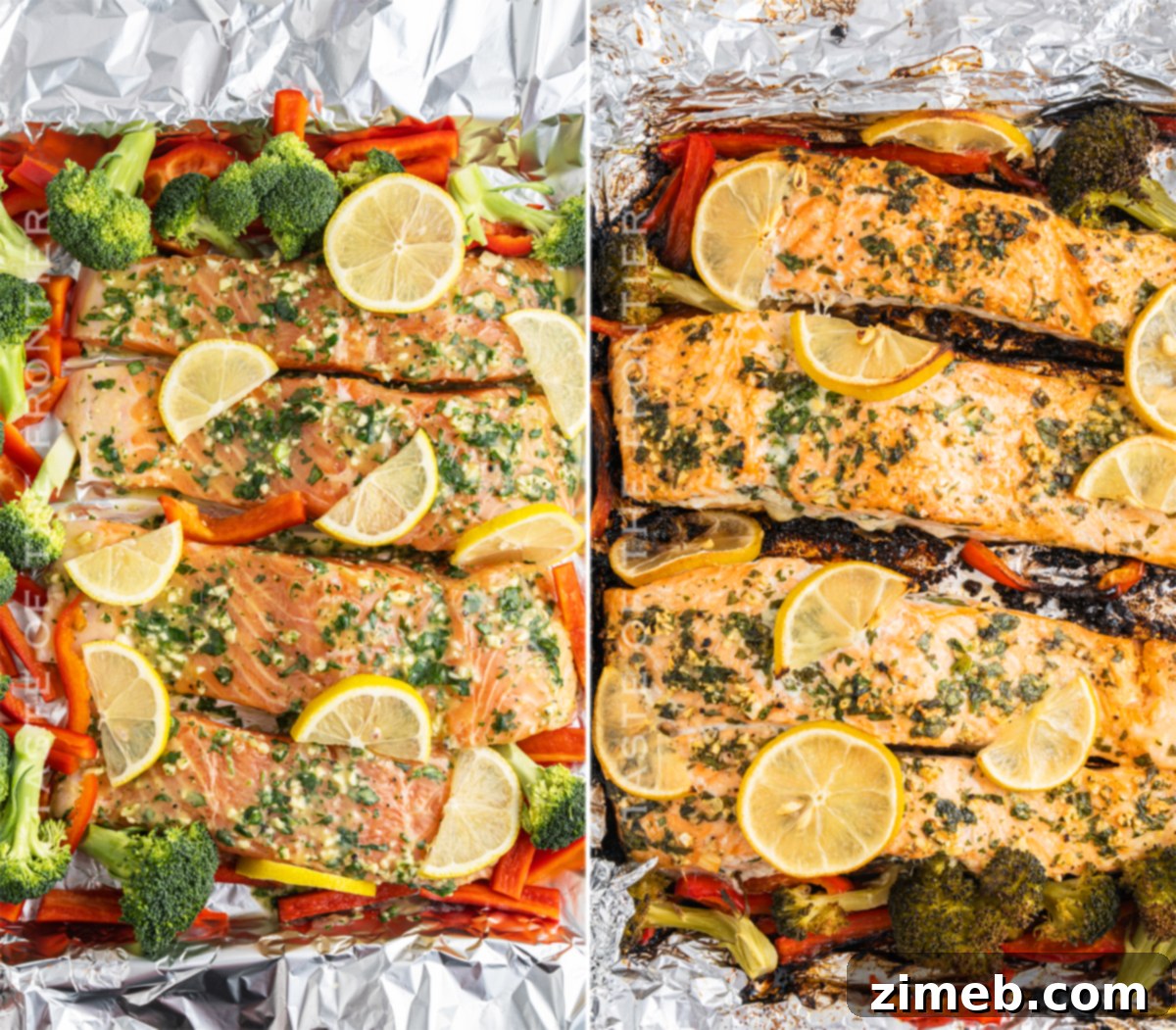
- Arrange Vegetables: Scatter the chopped red bell pepper strips and broccoli florets around the salmon on the baking tray. If your tray is too crowded, you can use a separate baking tray for the vegetables.
- Cover and Seal: Carefully cover the salmon and vegetables with another piece of foil, or fold the excess from the bottom sheet over the top, creating a sealed packet. Ensure it’s tightly sealed to trap the steam.
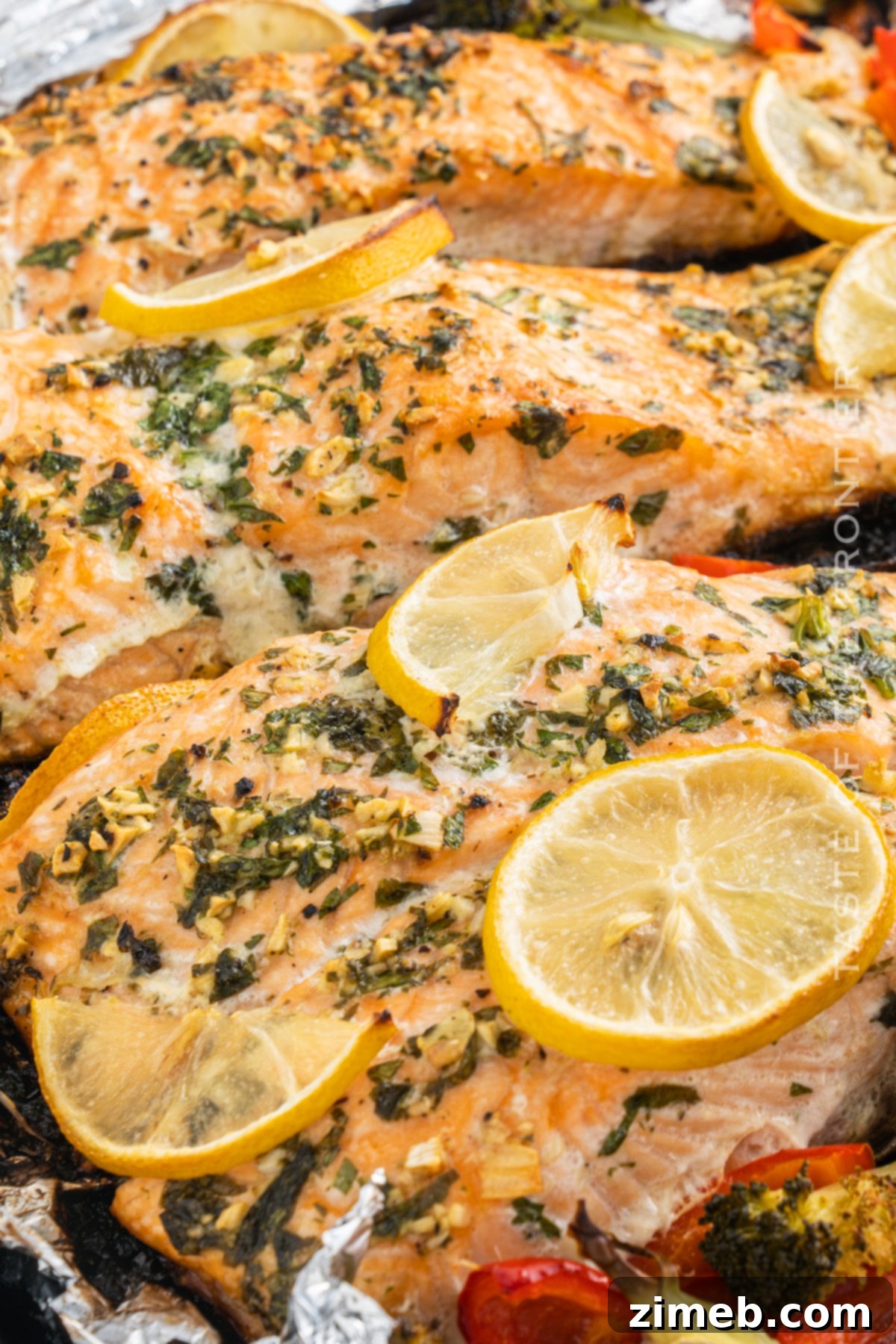
- Bake and Brown: Bake for 20 minutes covered. After 20 minutes, carefully remove the top layer of foil. Return the tray to the oven and continue baking for another 15 to 20 minutes uncovered, allowing the salmon to brown slightly and the vegetables to tenderize further. Keep an eye on it to prevent overcooking.
Optimal Baking Time and Temperature for Salmon
For the best-baked salmon, achieving that perfect balance of doneness and moisture is crucial. Our recommended method involves a two-stage baking process:
- Initial Covered Bake: Begin by baking your salmon, covered in foil, at a temperature of 400 degrees Fahrenheit (200°C) for 20 to 25 minutes. This steaming period ensures the salmon cooks through gently, locking in moisture and flavor.
- Uncovered Finish for Browning: After the initial covered bake, remove the top layer of foil and continue baking for an additional 15-20 minutes. This uncovered stage allows the salmon to develop a beautiful golden-brown exterior and slightly crisp edges, while the accompanying vegetables also get a chance to caramelize.
Always remember to use an instant-read thermometer to check the internal temperature (aiming for 130-135°F for medium-rare, or 145°F for fully cooked, as it will continue cooking out of the oven) and visually inspect for flakiness to ensure your salmon is cooked to perfection. Using fresh salmon and seasoning it generously with our garlic butter will yield the most flavorful and juicy results every time.
Pro Tips for Flawless Baked Salmon
Elevate your baked salmon from good to extraordinary with these expert tips:
- Skin-Side Down for Albumin Control: If your salmon fillet has the skin on, always cook it skin-side-down first. This helps create a barrier that prevents the white albumin (a protein that can appear as white ‘gunk’ on the surface) from leaching out excessively, keeping your salmon looking pristine.
- Season Generously: Don’t be shy with seasonings. Salmon can handle robust flavors. Generously season your salmon with salt, freshly ground black pepper, and any other herbs or spices you love. A good seasoning blend is key to a flavorful dish.
- Don’t Overcook: The biggest mistake with salmon is overcooking. It goes from perfectly tender and moist to dry and tough very quickly. Use a meat thermometer to check for doneness (125-135°F for medium-rare, 145°F for fully cooked) and remove it from the oven just before it reaches your desired temperature, as it will continue to cook from residual heat.
- Rest Before Serving: Like most proteins, salmon benefits from a brief rest (about 5 minutes) after cooking. This allows the juices to redistribute throughout the fillet, ensuring a more succulent and flavorful experience.
- Serve Immediately: For the best taste and texture, serve your baked salmon hot, straight from the oven, accompanied by your favorite sides and sauces.
Understanding Albumin in Salmon
If you’ve ever cooked salmon and noticed a white, cloudy substance forming on the surface, you’ve encountered albumin. Albumin is a natural protein found in salmon and other fish. It’s essentially a harmless liquid protein that coagulates and turns white when heated.
Why Does It Appear? When salmon cooks, the muscle fibers contract, pushing the albumin from the interior of the fish to the surface. It’s a natural part of the cooking process, particularly when the salmon is cooked at a higher temperature or too quickly.
Is It Harmful? No, albumin is completely safe to eat and doesn’t affect the flavor of the salmon. However, some people find its appearance unappetizing.
How to Minimize Albumin:
- Cook Skin-Side Down: As mentioned in our pro tips, cooking salmon skin-side-down helps create a buffer against direct heat, reducing the amount of albumin that leaches out.
- Lower Heat, Slower Cooking: Cooking salmon at a slightly lower temperature for a longer period can help prevent the proteins from coagulating too quickly and forcefully.
- Brining: A quick saltwater brine (10-15 minutes) before cooking can help the muscle fibers relax and absorb some moisture, which can also reduce albumin leakage.
While you can’t completely eliminate albumin, these techniques can help keep your salmon looking as beautiful as it tastes.
Explore More Delicious Salmon Recipes
- Instant Pot Sesame Salmon Bowls: A quick and flavorful meal perfect for busy days.
- Garlic Butter Salmon – for the grill: Our popular grilled version of garlic butter salmon for outdoor cooking.
- Best Air Fryer Salmon: Achieve perfectly crispy and tender salmon using your air fryer.
Creative Ways to Utilize Leftover Salmon
Transforming leftover baked salmon into new and exciting dishes is a fantastic way to enjoy its flavor and nutrients without feeling repetitive. Here are some innovative ideas:
1. Delightful Salmon Cakes:
- Flake the leftover salmon into a bowl.
- Mix with finely diced onion, a beaten egg, a few tablespoons of bread crumbs, fresh dill or parsley, a squeeze of lemon juice, and seasonings like salt and pepper.
- Form the mixture into small patties.
- Pan-fry in a bit of olive oil until golden brown and heated through. Serve with a dollop of tartar sauce or fresh lemon wedges for a delicious appetizer or light meal.
2. Flavorful Salmon Pasta:
- Toss flaked cooked salmon with your favorite pasta sauce – be it a creamy Alfredo, a vibrant pesto, a zesty lemon-garlic sauce, or a simple marinara.
- Serve over hot cooked pasta (linguine, fettuccine, or even zucchini noodles for a lighter option).
- Finish with a sprinkle of freshly shredded Parmesan cheese and a garnish of chopped parsley for a comforting and quick dinner.
3. Refreshing Salmon Salad:
- Gently flake the salmon and combine it with finely diced celery, red grapes (halved), a spoonful of mayonnaise or Greek yogurt, a touch of Dijon mustard, and seasonings to taste.
- Serve this delectable salmon salad over crisp greens or in a sandwich wrap, or even scooped into avocado halves for a light and healthy lunch.
4. Savory Salmon Quesadillas:
- Distribute flaked salmon, shredded cheese (cheddar, Monterey Jack, or a blend), and finely chopped vegetables of your choice (like bell peppers, onions, or corn) evenly over one half of a whole wheat or corn tortilla.
- Fold the other half of the tortilla over the filling.
- Grill or cook in a lightly oiled skillet over medium heat until the tortilla is golden brown and crispy, and the cheese is melted and bubbly. Serve with salsa and sour cream.
My Favorite Kitchen Essentials for Oven-Baked Salmon
This salmon dinner recipe is incredibly straightforward and delicious. If you’re new to baking fish or just looking to streamline your cooking process, having the right tools makes all the difference. I’ve compiled a list of my absolute must-haves that make preparing this easy dinner a breeze. You can also explore more of my top picks in my shop!
- Mixing Bowl: Essential for preparing the garlic butter and other marinades.
- Whisk: Perfect for achieving a smooth, well-combined garlic butter mixture.
- Olive Oil: A kitchen staple, great for drizzling on veggies or light seasoning.
- Casserole Dish: Ideal for baking salmon and vegetables, especially when using the foil packet method.
Easy Baked Salmon Recipe Made Simple
If you’ve enjoyed this straightforward and delicious oven-baked salmon recipe, you’ll be thrilled with these other easy baked dinner ideas. Each link below leads to a simple, printable recipe perfect for any night of the week!
Check out this recipe

Check out this recipe
Check out this recipe

Check out this recipe

Check out this recipe
Check out this recipe
Check out this recipe
Check out this recipe

Check out this recipe
More Delicious Seafood Dishes to Explore
- Instant Pot Salmon Bowls: Quick, healthy, and packed with flavor.
- Air Fryer Cod: A simple way to get perfectly cooked, flaky cod.
- Garlic Butter Salmon: Our popular version for the grill, equally irresistible.
- Maple Glazed Salmon: A delightful sweet and savory option.
If you love this recipe for Baked Salmon as much as I do, please take a moment to write a five-star review, and be sure to help me share this deliciousness on Facebook and Pinterest!
CONNECT WITH YUMMI HAUS!
Be sure to follow me on my social media, so you never miss a post!
Substack, FB, Pinterest, IG, Email Subscription
PIN THIS TO SAVE FOR LATER
Rate this Recipe
Baked Salmon Recipe
Course: Dinner, Main Course
Servings: 6
This Baked Salmon Recipe is quick to prepare and easy to cook in the oven and is perfect for a busy weeknight or anytime you’re looking for a healthy and delicious meal.
Pin
Save
Prep Time: 30 mins
Cook Time: 40 mins
Total Time: 1 hr 10 mins
Ingredients
- 2.5 lb salmon with skin
- 2 large broccoli heads
- 2 large red bell peppers
- 1 lemon
Garlic Butter
- ½ cup butter – melted
- 3 cloves garlic – minced
- ⅓ cup parsley – finely chopped
- ½ tsp black pepper
- ½ tsp salt
Instructions
- Preheat the oven to 400F. Then, prepare a large baking tray with a piece of foil double its length. Keep some extra foil paper at hand because you’ll need it.
- Place the salmon fillets, with the skin down, in the prepared baking tray on the foil.
- Prepare the garlic butter by mixing melted butter with minced garlic, chopped parsley, ground black pepper, and salt.
- Then, brush each fillet with the prepared garlic butter.
- Chop the red bell peppers into strips and broccoli into florets.
- Arrange chopped red bell pepper strips and broccoli florets around salmon. If needed, you can use a different tray for the veggies.
- Finally, cover the salmon and veggies with foil, using an extra piece if needed.
- Bake for 20 minutes covered, then remove the top layer of foil to brown salmon and veggies. This will take another 15 to 20 minutes.
Notes
- After removing the top layer of foil, check it every couple of minutes, so it doesn´t overcook.
- Add different veggies like asparagus, cauliflower, or onion.
Equipment
- 2 large pieces of foil
- 1 large baking tray
Nutrition
Nutritional information for the recipe is provided as a courtesy and is approximate. Please double-check with your own dietary calculator for the best accuracy. We at Yummi Haus cannot guarantee the accuracy of the nutritional information given for any recipe on this site.
Follow @KleinworthCo for even more tasty recipes!