
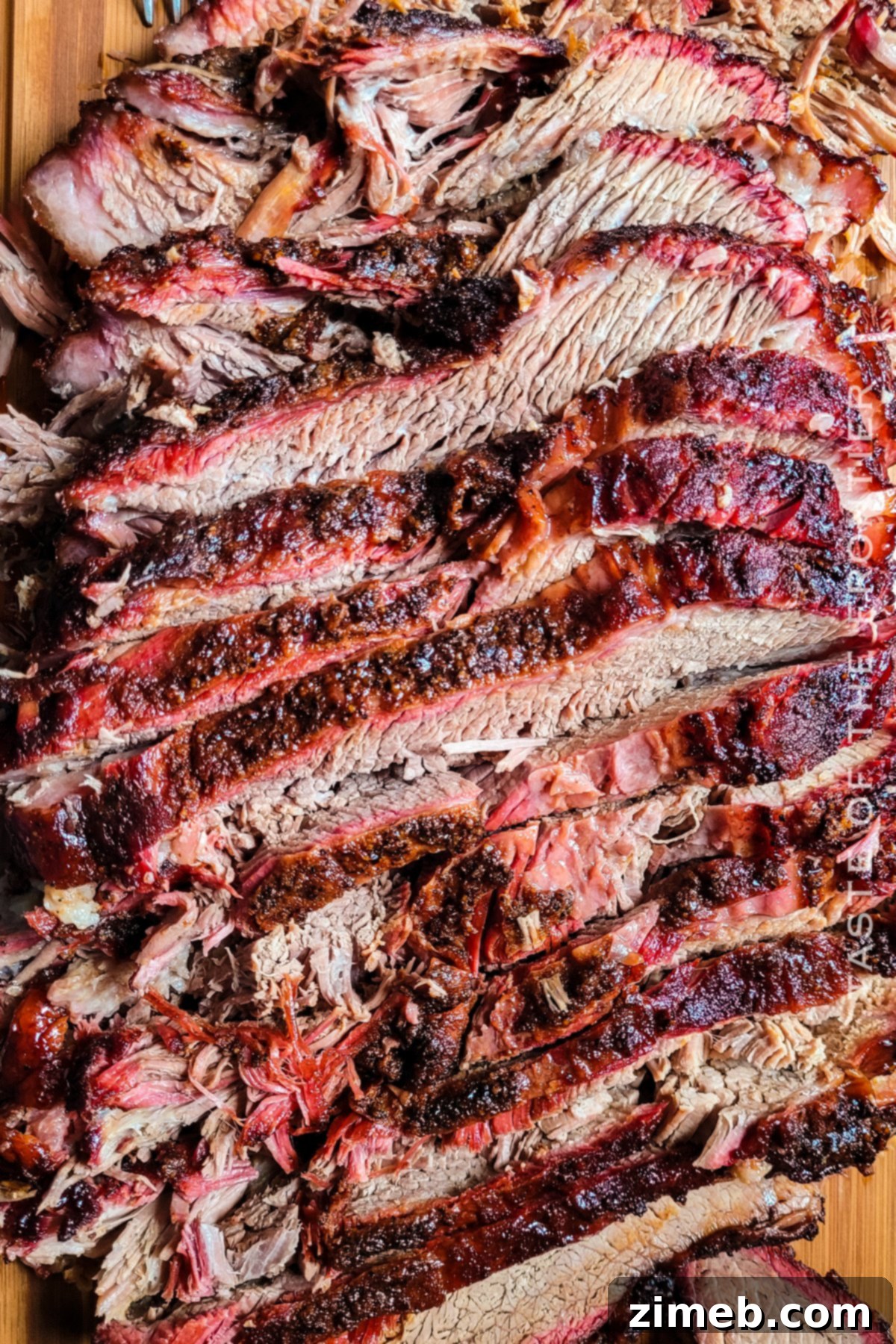
Smoked Beef Brisket is a legendary barbecue dish, renowned for its rich flavor and incredibly tender texture. Achieving barbecue perfection with brisket often seems daunting, but with a Traeger pellet grill, mastering this classic becomes an accessible and truly rewarding experience. This comprehensive guide will walk you through everything you need to know to create succulent, melt-in-your-mouth smoked beef brisket right on your Traeger grill, transforming your summer cookouts and family gatherings into unforgettable culinary events.
For many barbecue enthusiasts, mastering brisket is the ultimate achievement. For years, countless attempts to create that perfect, smoky brisket in traditional ovens or on gas grills often fell short, lacking the depth of flavor and signature tenderness that defines truly great barbecue. That all changed with the introduction of pellet grills like the Traeger. These innovative smokers have revolutionized home barbecue, making it simpler than ever to achieve professional-grade results.
Our own journey with brisket was transformed when we invested in a Traeger smoker. Suddenly, what once felt like an insurmountable challenge became one of the easiest and most delicious dishes we prepare during barbecue season. The incredible tenderness, the juicy texture, and the rich, smoky flavor of the beef, almost literally falling apart with every touch, are truly unmatched. You’ll be amazed at how straightforward this process is, and we’re confident you’ll cherish the results.
Let’s be upfront: smoking a beef brisket is a significant time commitment. It’s not a quick weeknight meal. Here in Northern Idaho, during the peak of summer, the sun rises as early as 3:45 AM. This early daylight often inspires an early start to our day, typically around 5:00 AM. This timing works perfectly for brisket, allowing us to get it onto the Traeger early enough to ensure dinner is ready at a reasonable hour. While summer days here stretch long, with daylight lingering until almost 10 PM, making late dining less of an issue, we still prefer to wrap up our meals before 6 PM, which is entirely achievable with this schedule.
This recipe suggests cooking brisket for approximately 16 hours, or until the internal temperature reaches 205°F. However, cooking times can vary significantly. For instance, a smaller brisket, combined with favorable ambient temperatures, might cook faster. Our own smaller brisket was perfectly done in 11 hours. Your brisket might also take less time, or potentially even longer, depending on its size, fat content, and external conditions. It’s crucial to understand this variability and use a reliable meat thermometer, but having a ballpark estimate is always helpful for planning your day.
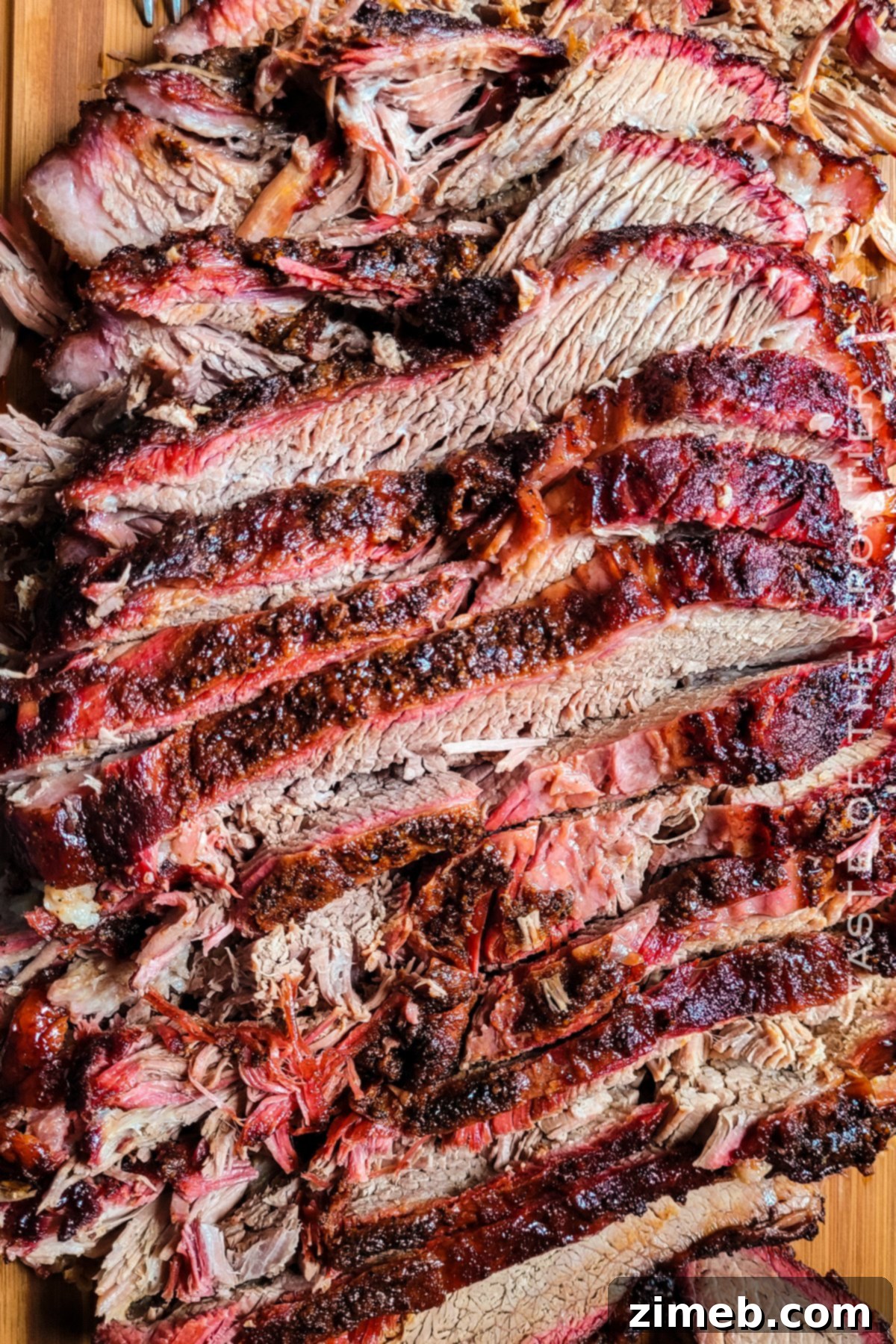
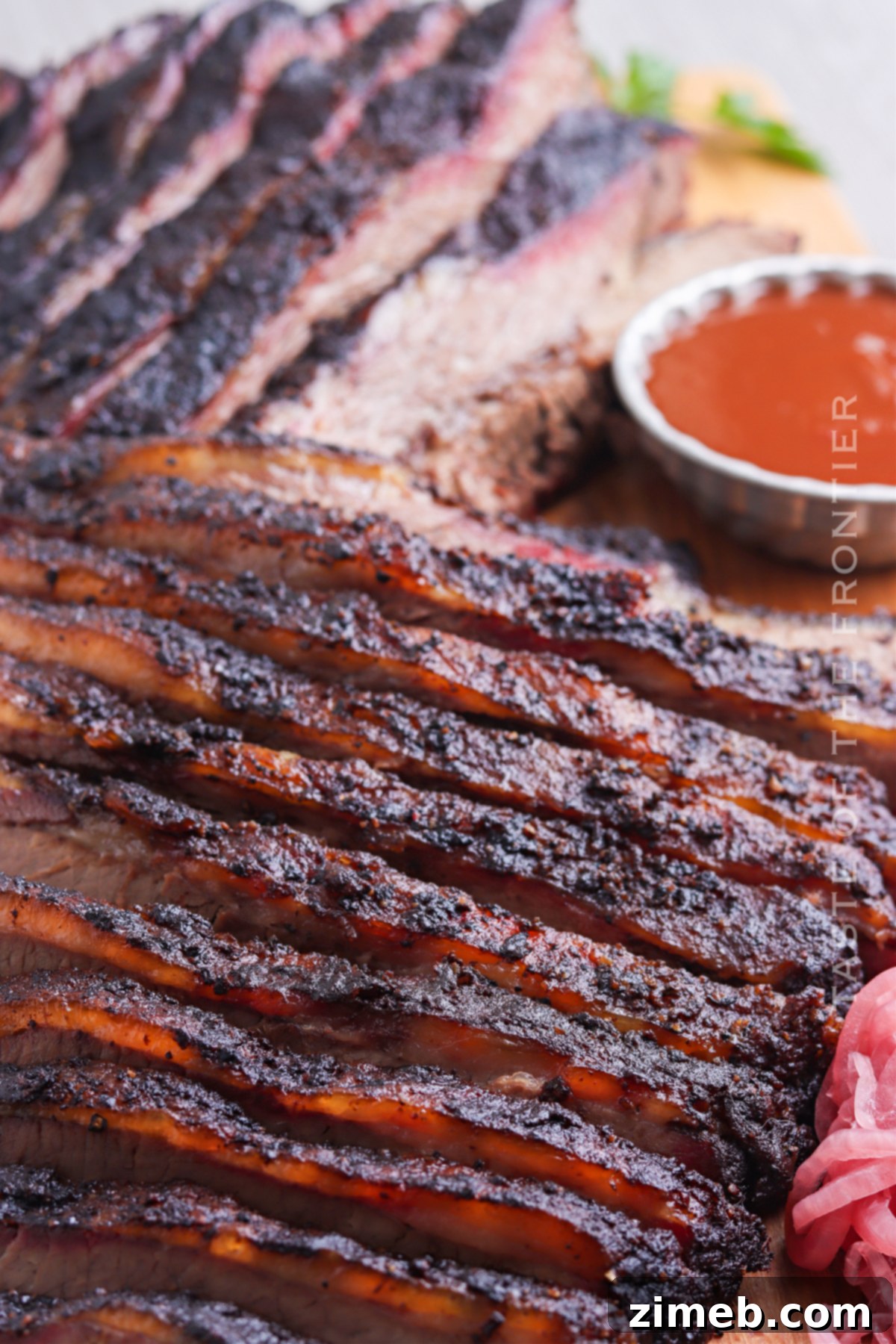
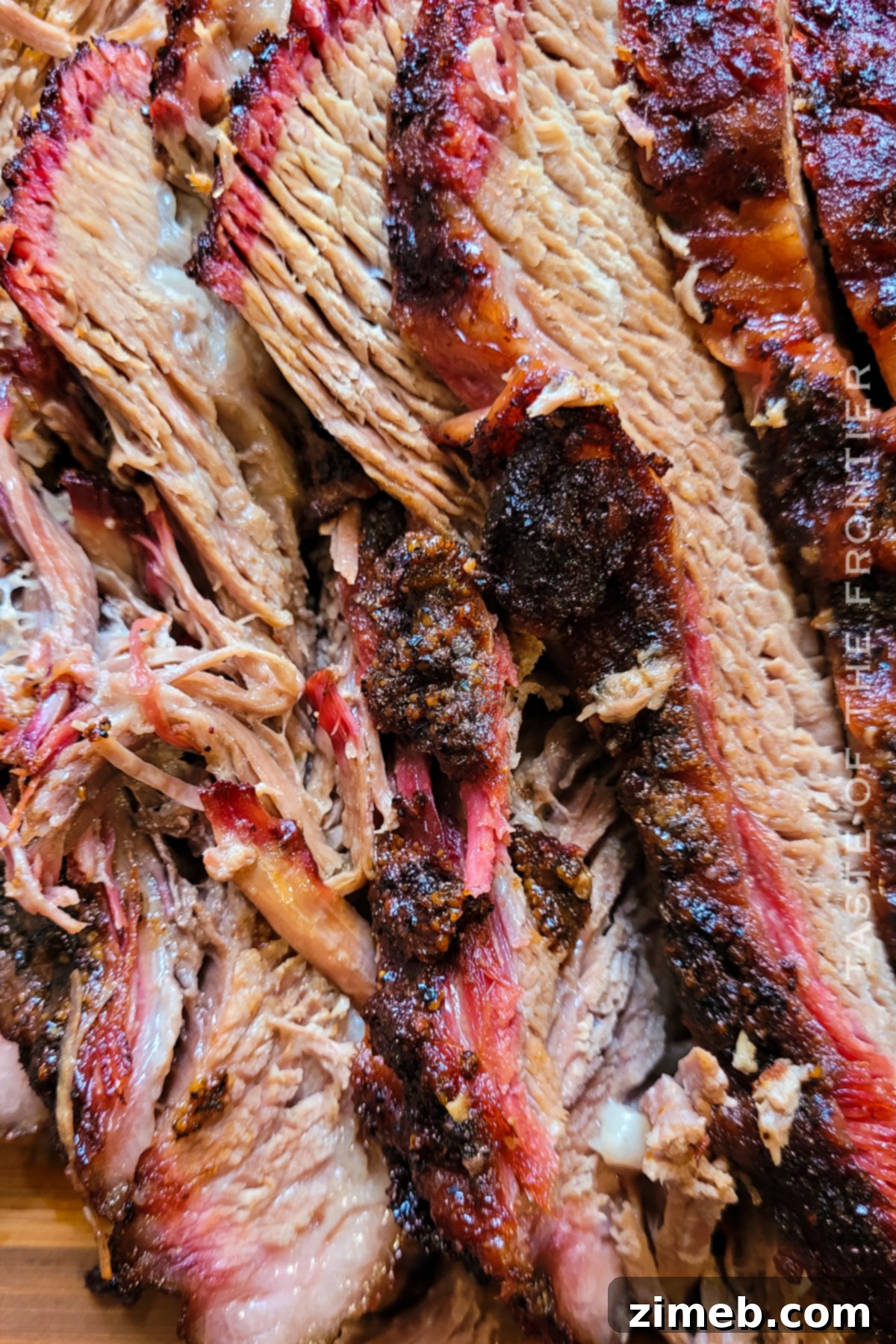
Rest assured, every minute of that commitment is absolutely worth it. The moment you take that first bite, you’ll understand. Just look at that magnificent smoke ring – a testament to perfectly smoked meat! Pure deliciousness awaits!
Mastering Pellet Grill Brisket: Why Traeger Excels
Pellet grills, especially Traeger models, have transformed the art of smoking brisket from a complex, labor-intensive process into an enjoyable and accessible culinary adventure. Unlike traditional offset smokers that require constant attention to maintain temperature and smoke, Traeger grills offer precise digital temperature control. This “set it and forget it” convenience means you can confidently smoke your brisket for hours without constantly monitoring the fire, ensuring consistent heat and a steady flow of flavorful wood smoke.
The secret lies in the wood pellets themselves, which come in various flavors like hickory, mesquite, applewood, and cherry. These natural hardwoods burn efficiently, producing clean, delicious smoke that infuses the brisket with unparalleled flavor. The consistent low temperature (often around 225°F) is ideal for breaking down tough connective tissues in the brisket, rendering the fat, and allowing the smoke to deeply penetrate the meat. This combination of precise temperature management, consistent smoke production, and ease of use makes Traeger the perfect tool for achieving tender, juicy, and incredibly flavorful smoked brisket every single time.
Frequently Asked Questions About Smoked Brisket
How to Store and Reheat Leftover Brisket
Leftover smoked brisket is a treasure, perfect for creating delicious sandwiches, adding to salads, or enjoying as a hearty dinner the following night. To properly store your brisket, ensure it has cooled completely. Then, slice or shred it as desired, place it in an airtight container, and refrigerate for up to 4 days. For longer storage, brisket freezes exceptionally well. Wrap individual portions tightly in plastic wrap, then aluminum foil, and store in a freezer-safe bag or container for up to 3 months. When reheating, it’s best to do so gently to maintain moisture. We recommend reheating sliced brisket low and slow in the oven, tightly wrapped in foil with a splash of beef broth, or briefly in a skillet with a little liquid until just warmed through.
Can This Recipe Be Doubled? (Smoking Multiple Briskets)
Absolutely, this recipe can be doubled! In fact, if you’re feeding a crowd or simply want plenty of leftovers (especially if you follow a high-protein diet like ours, which makes leftovers a rare treat), making two briskets is highly recommended. The main consideration when doubling the recipe is the size of your Traeger grill. A small camper Traeger typically accommodates only one brisket comfortably, preventing overcrowding that can hinder smoke circulation and even cooking. However, a Traeger Pro-Grill or larger model usually has ample space for two briskets, making doubling this recipe remarkably easy and efficient. Just ensure there’s enough room for air to circulate around each piece of meat for optimal smoke absorption and even cooking.
Enhance Your Brisket with Homemade BBQ Sauces
While perfectly smoked brisket is phenomenal on its own, a complementary homemade BBQ sauce can elevate the experience even further. Here are some of our favorites:
- Carolina BBQ Sauce: A tangy, vinegar-based sauce that offers a delightful contrast to the rich beef.
- Texas BBQ Sauce: A robust, savory sauce with a hint of spice, perfect for traditional brisket.
Choosing the Best Wood Pellets for Smoking Brisket
The type of wood pellets you choose plays a significant role in defining the final flavor profile of your smoked brisket. Different woods impart distinct characteristics, allowing you to customize your barbecue experience. For a rich, bold, and classic smoky flavor without excessive sweetness, hickory and mesquite pellets are often the top choices among barbecue enthusiasts. Hickory offers a strong, bacon-like smoke, while mesquite provides an even more intense, earthy flavor that stands up beautifully to beef.
However, introducing a touch of sweetness can also create a wonderful balance. Applewood and maple pellets offer a milder, slightly sweeter smoke profile, which can add complexity and brightness to the brisket. Some pitmasters even prefer to blend different types of pellets, combining, for example, a strong wood like hickory with a milder fruit wood like apple for a more nuanced flavor. Experiment with different woods to discover your personal preference and find the perfect smoky symphony for your brisket.
Best Ways to Serve Smoked Brisket
Once your brisket has been perfectly smoked and rested, the optimal way to serve it is by cutting it into thin slices against the grain. This method ensures maximum tenderness and allows the rich, juicy flavors to shine. We love serving freshly sliced brisket alongside vibrant, steamed vegetables such as our zesty Sea Salt Garlic Corn or a creamy, delightful Macaroni Salad. These sides provide a refreshing balance to the rich, smoky beef.
One of my absolute favorite ways to enjoy this brisket, especially with leftovers, is to transform it into an epic sandwich. Pile thinly sliced or shredded brisket onto a good bun, add a generous drizzle of Texas BBQ Sauce, and perhaps some pickles or onions for an irresistible meal. Brisket also shines in tacos, quesadillas, chili, or even as a topping for loaded baked potatoes, showcasing its versatility beyond a simple platter.
Understanding “Low and Slow”: Why 225°F is Perfect for Brisket
For those accustomed to traditional high-heat grilling, a cooking temperature of 225°F for brisket might seem surprisingly low. However, this “low and slow” approach is fundamental to successful smoking and is what differentiates it from direct grilling. The primary goal when smoking meat isn’t just to reach a safe internal temperature, but to allow ample time for the meat to absorb the complex flavors of the smoke and for tough connective tissues to slowly break down into gelatin. This process is essential for achieving the characteristic tenderness and juiciness of expertly smoked brisket.
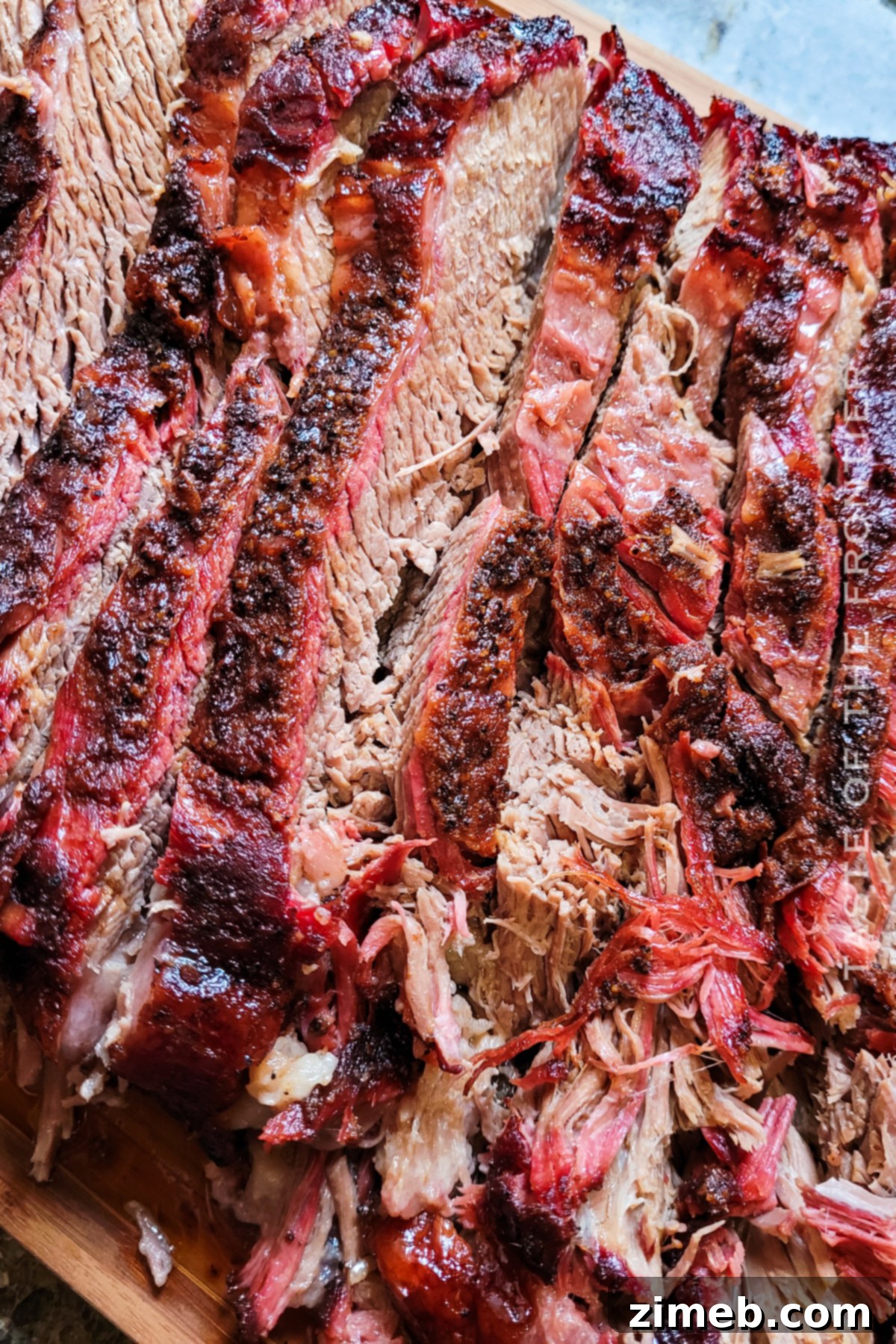
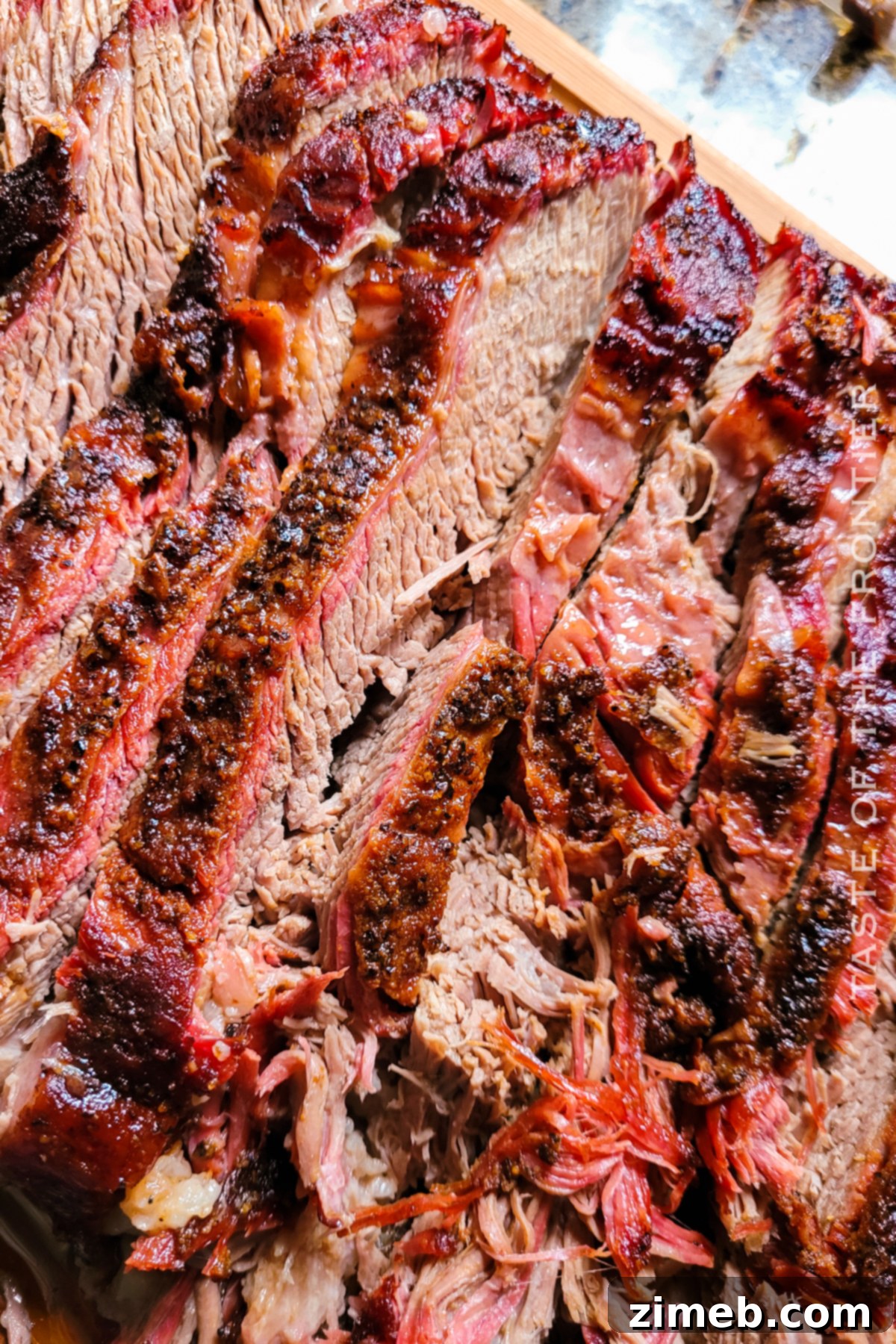
If you were to smoke brisket at too high a temperature, the intense heat would rapidly sear the exterior, forming a crust that traps juices inside but simultaneously prevents the smoke from penetrating deeply into the meat. This also dries out the outer layers prematurely. By maintaining a consistent low temperature of 225°F, the meat cooks gently, allowing the smoke to permeate the entire cut and the collagen to gradually render. The result is a beautifully moist interior, a flavorful “bark” on the exterior, and the highly coveted pink smoke ring visible just beneath the surface—a sure sign of properly slow-smoked meat, just like you see in the pictures accompanying this recipe.
The Art of Brisket Trimming: Maximizing Flavor and Texture
Trimming a brisket before it hits the smoker is a crucial step that sets the stage for success. While it might seem counterintuitive to remove a significant portion of the meat, proper trimming is about optimizing the flavor, texture, and overall eating experience. Most of what is removed consists of hard fat and tough silver skin. These elements will not render down properly during the long cooking process and will become unpleasantly tough or chewy in the final product. Removing them ensures every bite is tender and delicious.
Furthermore, “squaring the edges” of the brisket involves removing thinner sections from the ends and sides of the flat. These thinner areas tend to cook much faster than the thicker parts of the brisket, leading to dry, overcooked sections by the time the rest of the meat is perfectly done. By trimming them, you promote more even cooking, preventing undesirable dry spots. While this process does reduce the overall weight of your brisket, the improvement in quality and consistency of the final product is immeasurable. It’s an investment in a superior barbecue experience.
When trimming, precision is key. Be diligent in removing the hard fat and silver skin, but always strive to leave as much of the muscle intact as possible. The goal is to preserve the integrity of the meat while ensuring that only the best parts remain for smoking, allowing you to maximize both quality and the yield from your purchase.
Understanding and Conquering The Brisket Stall
If you’re using a reliable meat thermometer throughout the smoking process (which is highly recommended, rather than just occasional poking), you will inevitably encounter a phenomenon known as “the stall.” This is a moment when the internal temperature of your brisket, after steadily rising, seems to completely stop or even slightly drop for an extended period. It can be frustrating, especially when you’re anticipating a delicious meal, but it’s a completely normal part of smoking larger, time-consuming cuts of meat like brisket and pork shoulders, which are notorious for it.
The stall occurs due to “evaporative cooling.” As the brisket cooks, moisture from the surface evaporates, just like sweat cooling your skin. This evaporation cools the meat, preventing its internal temperature from rising until a significant amount of surface moisture has dissipated. The collagen in the meat also breaks down during this phase, further contributing to the process. The best strategy during the stall is patience. Resist the urge to increase the smoker’s temperature drastically. Simply continue to let it cook, trusting the process. You’ll find that enduring this phase is truly worth it when you finally cut into the juiciest, most delicious, and perfectly tender brisket you’ve ever had!
Customizing Your Brisket: Adding Personal Seasonings
Absolutely! The beauty of barbecue lies in its adaptability, and customizing your brisket with personal seasonings is highly encouraged. While a classic salt, pepper, and paprika rub provides an excellent foundation, feel free to experiment with your favorite flavors. You might consider trying a robust Montreal seasoning blend, a savory seasoned salt, or a commercially available rub designed for beef. These can add layers of flavor, creating a distinct and memorable bark on your brisket during the smoking process.
Don’t be afraid to try something new. Incorporating spices like garlic powder, onion powder, cayenne pepper for a little kick, or even a touch of brown sugar for caramelization can truly make this recipe your own. Think about what flavors you enjoy and decide how you want to put your unique signature on this incredible dish.
Preparing Your Brisket for the Traeger Smoker
Getting your brisket ready for the Traeger is a simple yet crucial phase that ensures maximum flavor and optimal cooking. The first step involves meticulously trimming the brisket, as discussed earlier, to remove hard fat and silver skin, and squaring the edges. Once trimmed, applying the rub is where the magic begins. A generous coating of your chosen seasoning blend, whether it’s our classic salt, pepper, and paprika mix or your custom creation, is key to developing that incredible “bark”—the flavorful, darkened crust that every smoked brisket enthusiast craves. Ensure all surfaces of the brisket are thoroughly covered, allowing the rub to adhere evenly. This preparation ensures that once your brisket hits the low, consistent heat of the Traeger, it will slowly transform into a tender, smoky masterpiece, ready to impress.
The Essential Brisket Rest: Why Patience Pays Off
After hours of patient smoking, the final step—allowing your brisket to rest—is arguably one of the most critical for achieving truly tender and juicy results. It might be tempting to slice into that beautifully smoked brisket immediately, but doing so would compromise all your hard work. When meat cooks, its muscle fibers contract, and the internal juices (fats, oils, and water) become highly fluid, circulating rapidly within the muscle structure. Cutting into the meat at this stage would cause these precious liquids to gush out onto your cutting board, leaving you with a dry, less flavorful brisket.
Instead, letting the meat rest, ideally for at least an hour, allows the muscle fibers to relax and reabsorb these internal juices. As the meat’s temperature gradually drops, the fats and oils begin to condense into a more viscous state, becoming more effectively trapped within the muscle fibers. Simultaneously, any vaporized water returns to a liquid phase, preventing it from instantly evaporating into the air the moment you make a cut. This redistribution and reabsorption of juices ensure that every slice of brisket remains incredibly moist, rich, and tender.
For a cut as delicate and rich as brisket, cutting too soon can ruin hours of meticulous effort. Patience truly pays off here. By allowing these juices to be captured by the muscle fibers and fats to marble throughout the meat, you will ultimately enjoy a brisket that is significantly richer, more moist, and exquisitely tender than if you had rushed the process. This resting period is not merely a waiting game; it’s an active part of the cooking process that guarantees a superior final product.
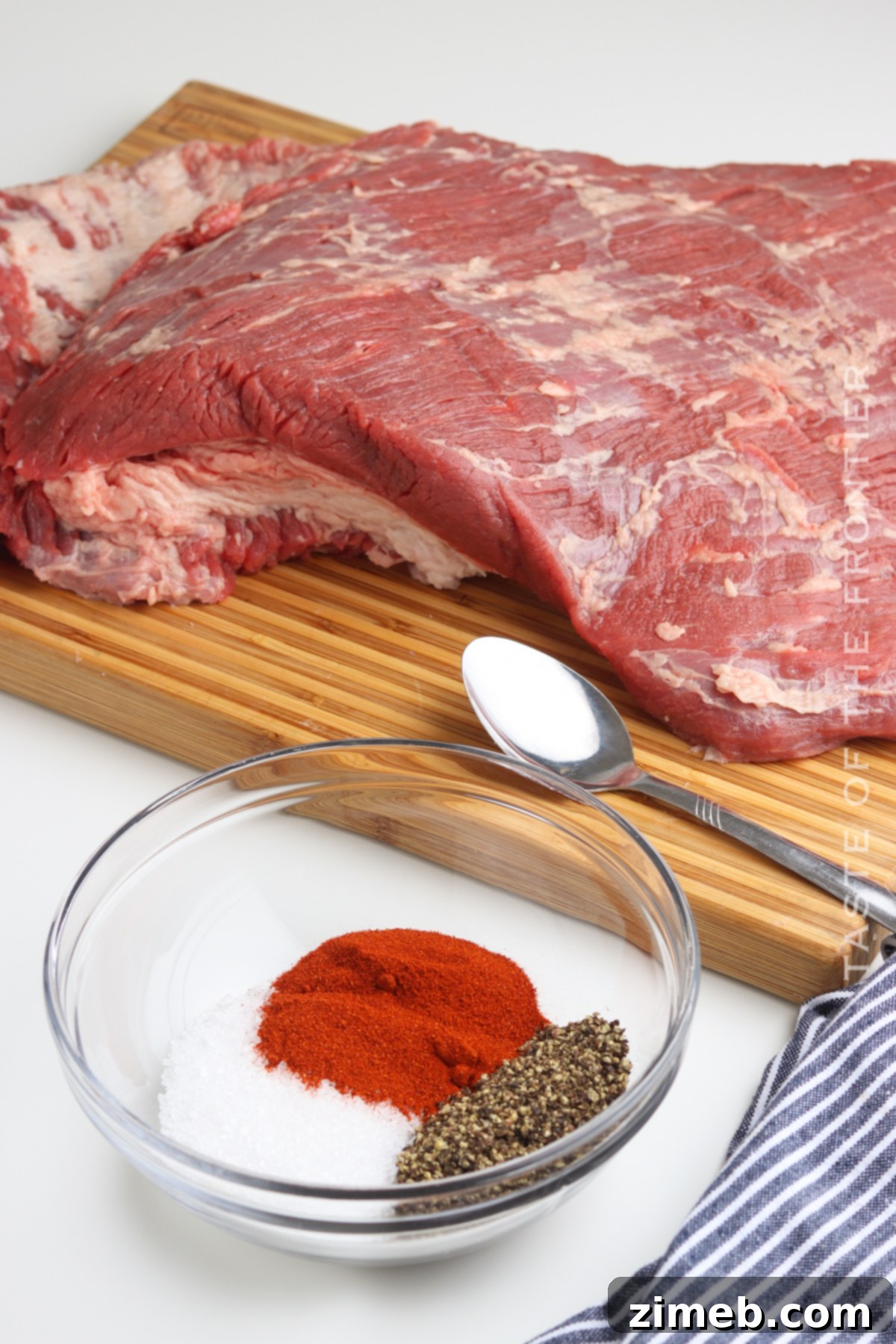
Ingredients for Smoked Brisket
- 11-15 pound whole packer brisket
- 3 tablespoons kosher salt
- 3 tablespoons coarse ground black pepper
- 2 tablespoons paprika
The Importance of the Brisket Fat Cap
While meticulous trimming is essential for preparing brisket, there’s a delicate balance to strike, particularly regarding the fat cap. The emphasis on leaving a controlled amount of this fat serves two crucial purposes, both contributing significantly to the final quality of your smoked brisket.
Firstly, the fat cap acts as a natural protective layer. During the long, slow smoking process, this layer helps shield the most tender parts of the meat from direct heat and prevents excessive moisture loss. This is absolutely critical when cooking meat for such extended periods at low temperatures, ensuring the brisket remains moist and succulent throughout.
Secondly, the fat cap is composed of a softer, more buttery fat compared to the tougher fat and silver skin found on the bottom. As the brisket cooks, this marbling of fat slowly renders, melting and basting the meat from above. This rendering process releases incredible flavor and keeps the brisket incredibly moist from the inside out. A properly trimmed fat cap (typically ¼ to ½ inch thick) will render down beautifully, infusing the meat with richness and tenderness, without leaving behind large, unappetizing pockets of unrendered fat.
How to Make Smoked Brisket on a Traeger
- Preheat your Traeger or pellet smoker to a steady 225°F.
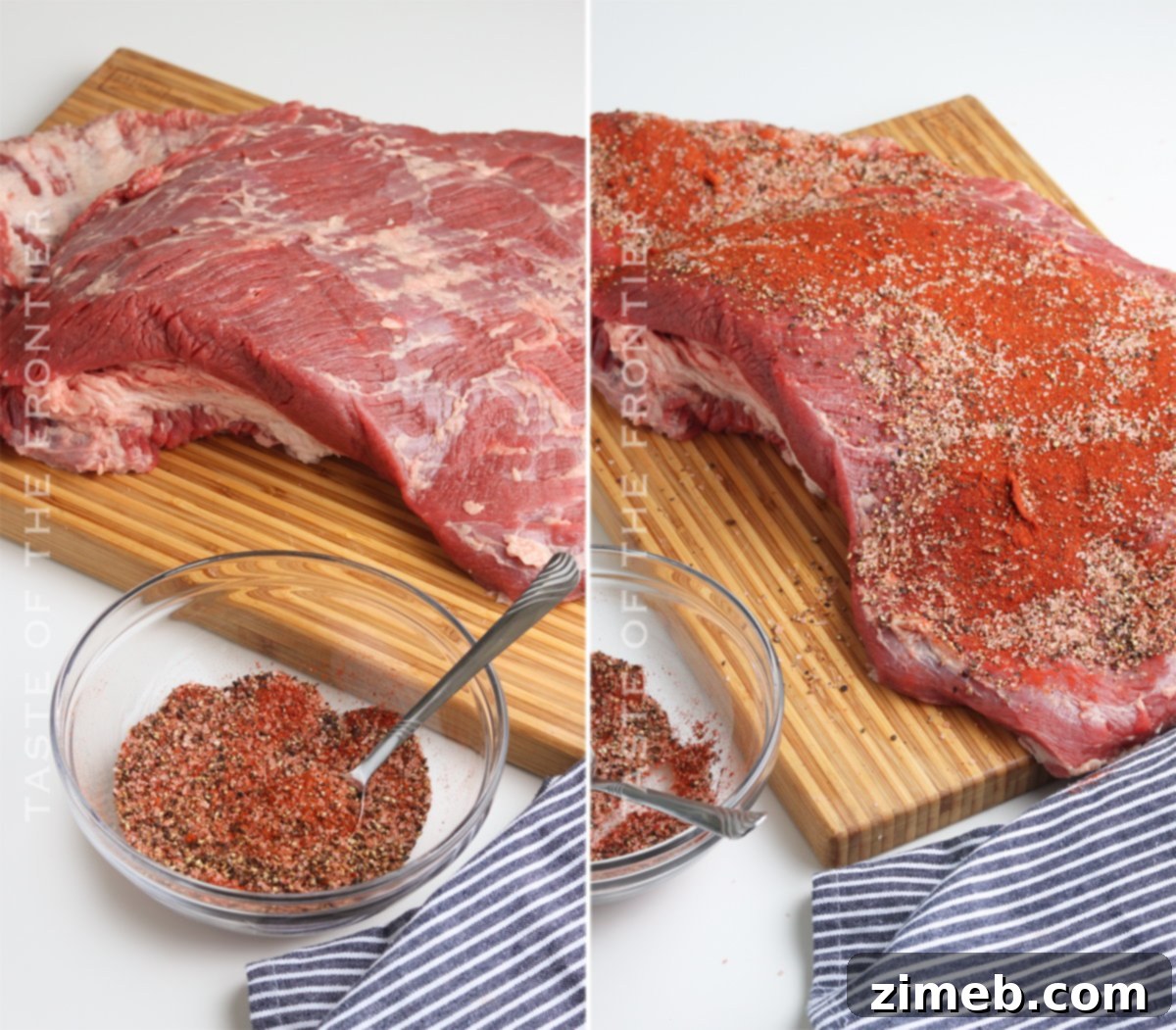
- In a small bowl, combine the kosher salt, coarse ground black pepper, and paprika. Whisk them together thoroughly to create your brisket rub.
- Carefully trim the brisket. Remove any hard fat or silver skin from the lean flat muscle. Square off the edges and ends of the flat to promote even cooking and prevent dry areas. Flip the brisket and trim the fat cap on the point muscle to an even thickness of no more than ¼ inch.
- Generously sprinkle the blended seasonings over all surfaces of the trimmed brisket, ensuring an even coating that will form a delicious bark.
- Place the seasoned brisket directly on the smoker grates, positioning the thicker end (the point) closer to any potentially hotter sections of your smoker for more even heat distribution.
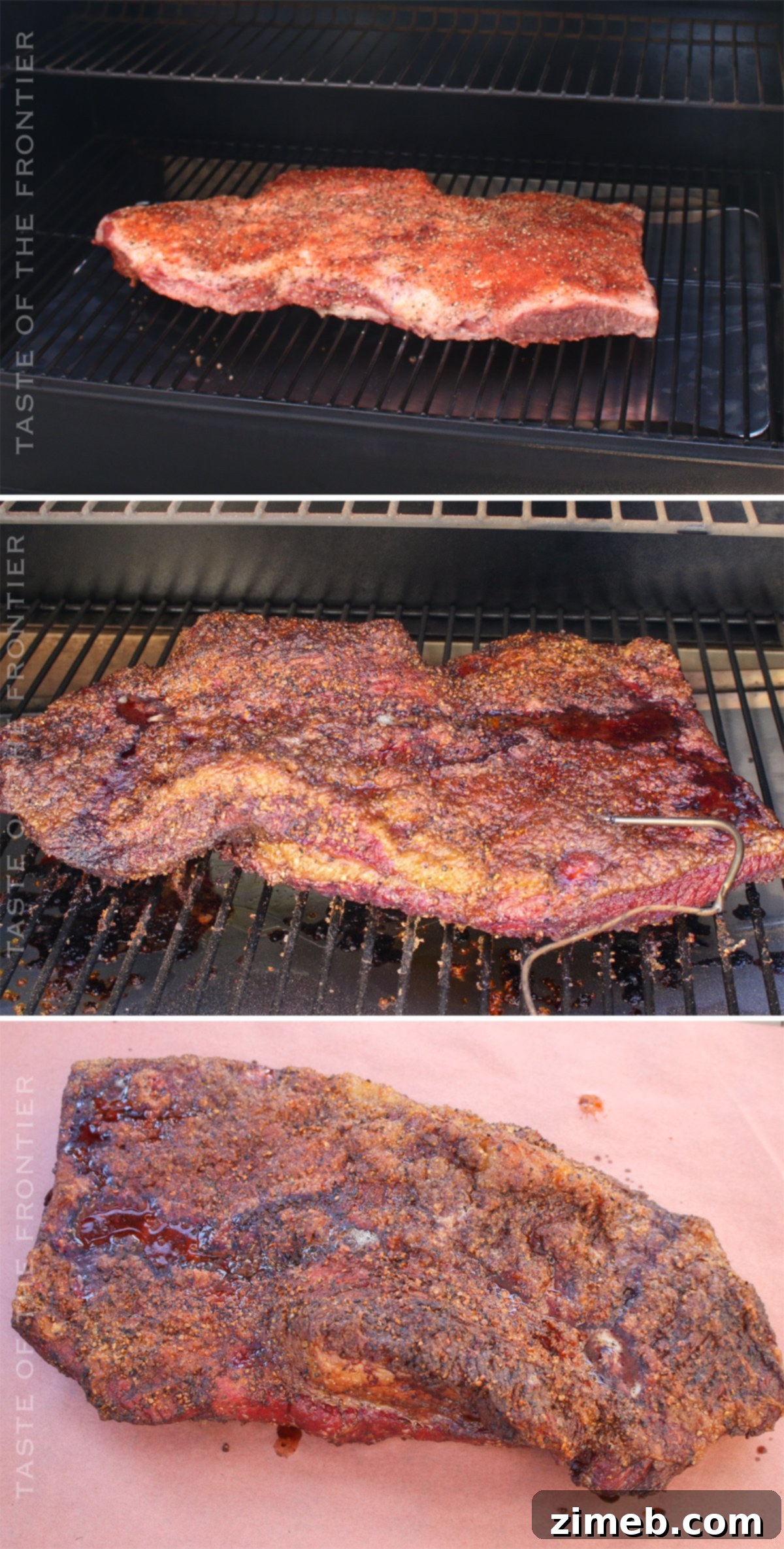
- Close the smoker lid and allow the brisket to smoke until its internal temperature reaches 165°F. This typically takes around 8 hours, but always rely on your meat thermometer.
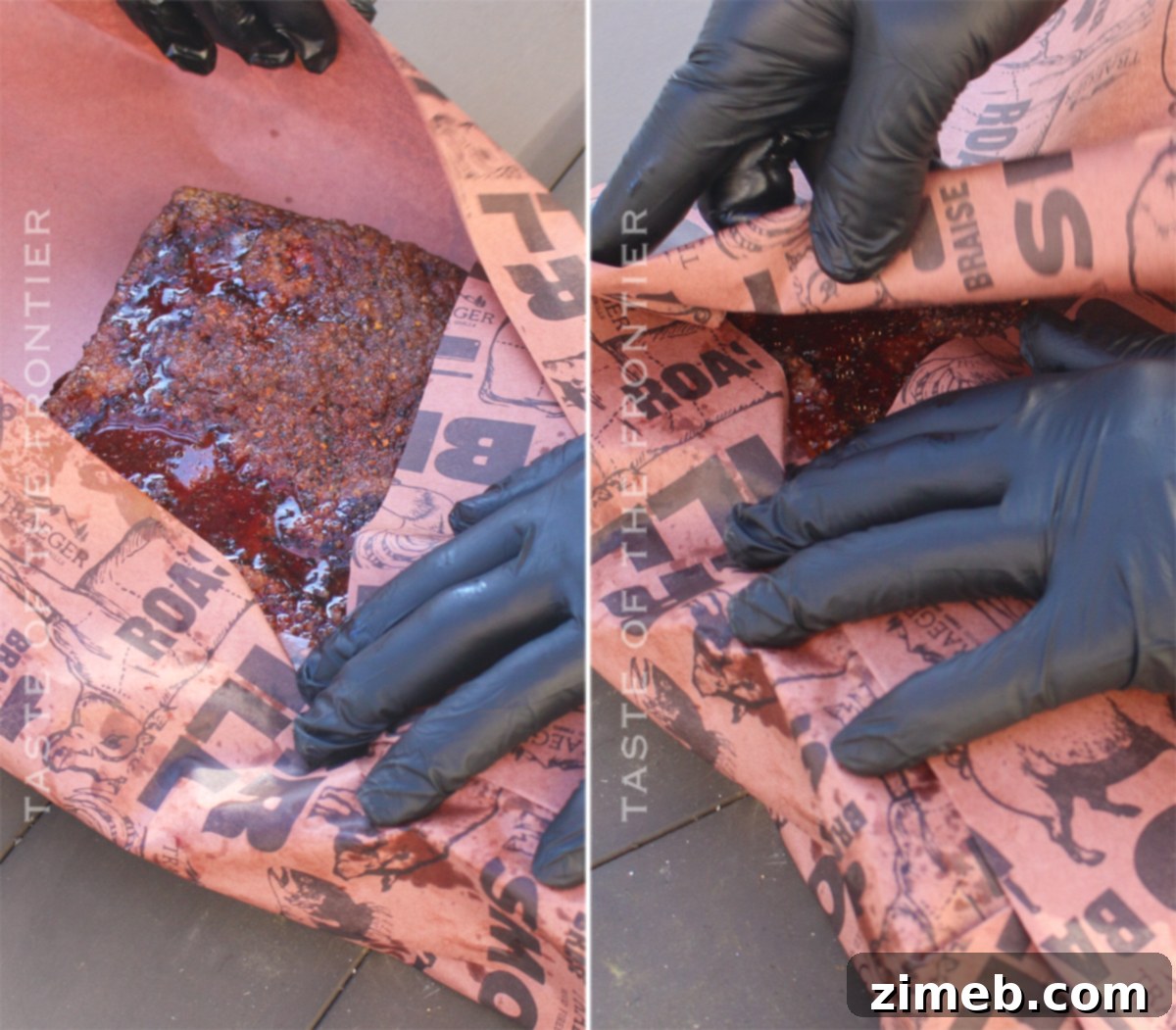
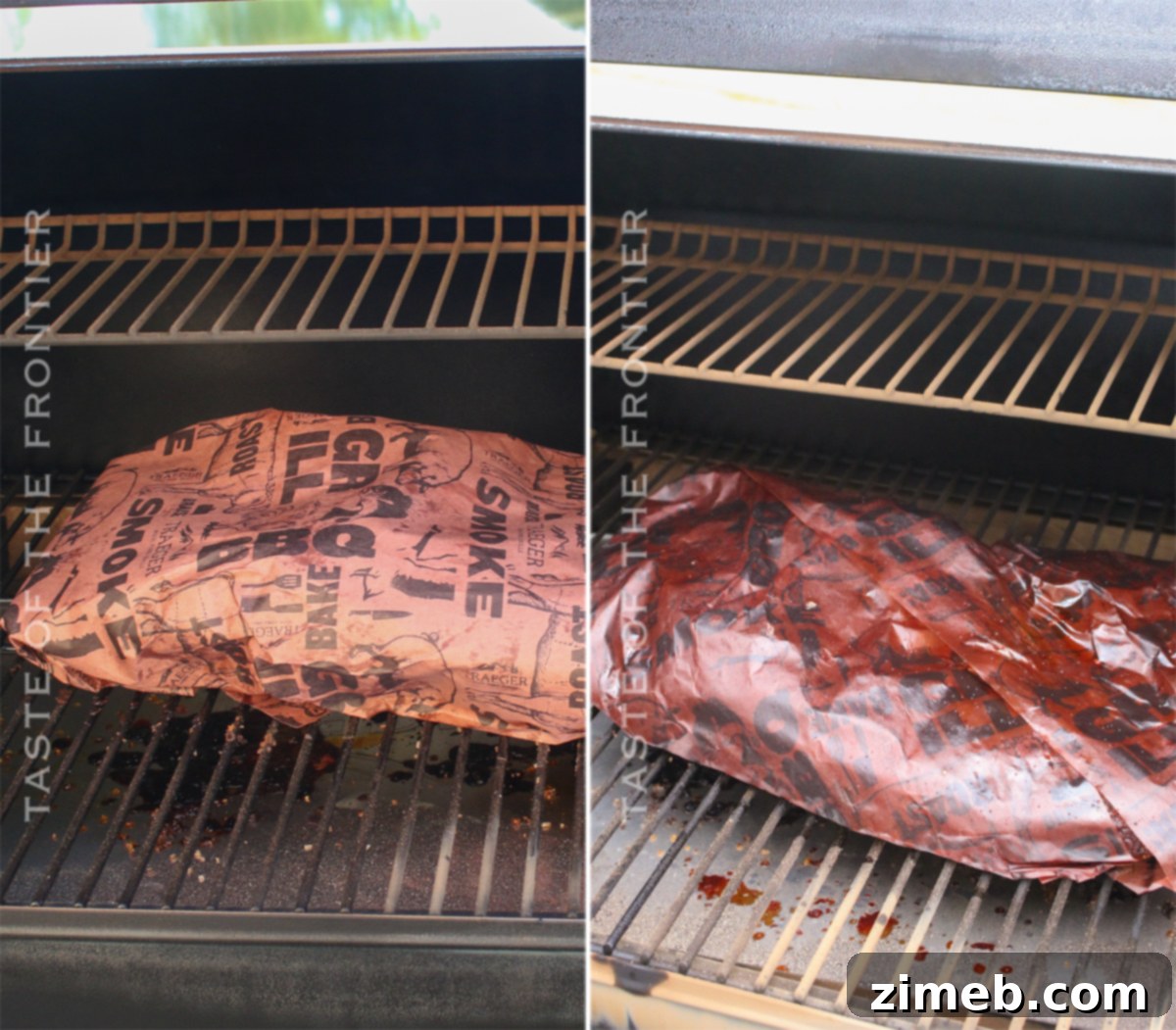
- Once the brisket reaches 165°F, carefully remove it from the smoker. Double-wrap it tightly in peach butcher paper (or heavy-duty foil) to create a protective barrier.
- Return the wrapped brisket to the smoker, close the lid, and continue cooking at 225°F until the internal temperature in the thickest part of the meat (the point) reaches 203°F. This stage can take an additional 6-8 hours of cooking.
- After the brisket reaches its target temperature, remove it from the smoker. For optimal juice retention, wrap the butcher-paper-clad brisket in a thick towel and place it into an empty cooler. Let it rest for a minimum of one hour, or even up to 3-4 hours, before slicing and serving.
- To serve, unwrap the brisket and slice it against the grain of both the point and flat muscles with a very sharp knife. This ensures maximum tenderness.
The Texas Crutch: Why Wrapping Brisket in Peach Butcher Paper is Key
For seasoned barbecue chefs, the “stall” is a well-known challenge when smoking brisket low and slow. This is the frustrating period where the meat’s internal temperature stops rising, or even slightly decreases, for several hours. This phenomenon is primarily caused by evaporative cooling. Much like how human sweat cools the body, liquid water on the brisket’s surface absorbs energy (heat) from the meat, converting the water into vapor and carrying away heat. This process occurs so efficiently that the brisket cannot continue heating up until a significant amount of moisture has evaporated from its muscle fibers.
To both expedite the stall and prevent your precious meat from drying out, experienced pitmasters employ a technique known as the “Texas Crutch”—wrapping the brisket, typically in peach butcher paper (or sometimes foil), once it reaches the stall temperature (around 165°F). This works by retaining the water vapor that would otherwise escape. By trapping this moisture, the vapor is forced to return its heat energy back to the meat, effectively pushing the brisket through the stall and allowing its temperature to continue rising. Peach butcher paper is often preferred over foil because it allows for some breathability, preventing the meat from steaming too much and softening the precious “bark,” while still effectively retaining moisture and heat. This simple wrapping step is a game-changer for achieving a tender, juicy brisket within a more predictable timeframe.
What to Serve with Smoked Brisket: Perfect Pairings
Smoked brisket is a versatile centerpiece that pairs beautifully with a wide array of side dishes. Since we often smoke meat during the warmer months, we’ve compiled some of our absolute favorite BBQ pairings that will perfectly complement this delicious meat and elevate your entire meal!
Delicious Barbecue Sides
- Easy Fruit Salad: A refreshing and light counterpoint to rich brisket.
- Cherry Fluff: A sweet and creamy dessert-like side dish.
- Sea Salt Garlic Corn: Simple, flavorful, and a barbecue staple.
- Cucumber Tomato Feta Salad: A fresh, tangy salad to cut through the richness.
- Smoked Mac and Cheese: The ultimate creamy, smoky comfort food.
- Parmesan Ranch Pasta Salad: A zesty and satisfying pasta salad.
- Slow Cooker Bourbon Baked Beans: Sweet and savory, a classic BBQ side.
- Squash Casserole Recipe: A rich, cheesy vegetable dish.
Refreshing Drinks
- Italian Cream Soda: A sweet and bubbly treat.
- Peach Bourbon Arnold Palmer: A sophisticated and refreshing adult beverage.
- Limonada (Mexican Lemonade): Tart and refreshing.
- White Peach Sangria: Fruity and perfect for summer entertaining.
- Instant Pot Iced Tea: A quick and easy crowd-pleaser.
- Red White and Blue Daiquiri: Festive and fun.
- Chocolate Milkshake: A classic indulgence.
Sweet Endings
- One Bowl Brownies: Simple, fudgy, and always a hit.
- Cherry Pie Bars: A delightful fruity dessert.
- Banana Pudding: Creamy, comforting, and a Southern classic.
- Lemon Lush Dessert: Light, tangy, and refreshing.
- No-Churn Coffee Ice Cream: Easy to make and wonderfully rich.
- Jello Jigglers: A fun, nostalgic treat.
- Cookie Ice Cream Sandwiches: The perfect cool-down treat.
Essential Products for Your Traeger Smoked Brisket Journey
Making this beef recipe is incredibly rewarding, and while it’s designed to be straightforward, having the right tools can make all the difference. Whether you’re a seasoned pitmaster or new to the world of pellet smoking, these items are highly recommended for achieving perfect Traeger smoked brisket every time. You might already have some of these on hand, but if you’re just starting out or looking to upgrade your barbecue setup, this list covers the essentials. (You can also browse my curated selections in my online store).
- Traeger/Pellet Grill: The heart of your smoking operation, essential for consistent heat and smoke.
- Traeger Applewood Pellets: A fantastic choice for a subtly sweet, fruity smoke flavor that complements beef beautifully.
- Assorted Wood Pellets: Explore other flavors like hickory, mesquite, or cherry to diversify your smoke profile.
- Wireless Meat Thermometer: Absolutely crucial for monitoring internal temperature without opening the smoker, ensuring consistent cooking.
- Peach Butcher Paper: The preferred wrapping material for beating the stall while preserving the brisket’s bark.
- Portable Traeger Grill (for camping): Perfect for taking your smoked brisket on the go!
- Stay Dry Bin for Pellets: Keeps your wood pellets dry and fresh, preventing moisture absorption.
- Long-Handle Tongs: Essential for safely handling hot meat on the grill.
- Large Mixing Bowl: For combining your rub ingredients.
If you loved this Smoked Brisket recipe, you’re sure to enjoy these other incredible smoked recipes too. Click each link below to discover easy, printable recipes for more smoked delights!
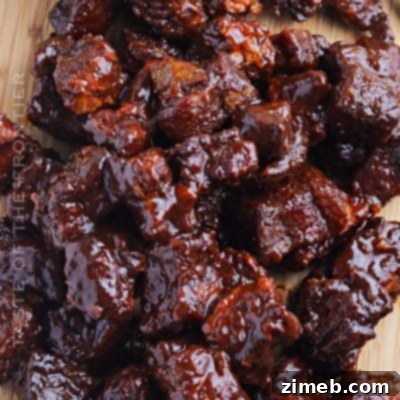
Pork Belly Burnt Ends
Slow-cooked and smoked, these Pork Belly Burnt Ends have a melt-in-your-mouth texture and rich and tangy-sweet, smoky flavor.
Check out this recipe
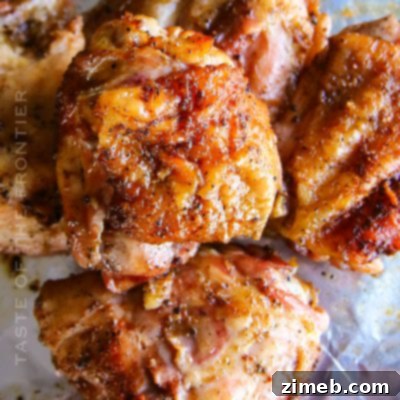
Traeger Smoked Chicken Thighs
Traeger Smoked Chicken Thighs are the perfect summertime BBQ dish. They’re juicy, flavorful, and easy to make. Everyone loves them!
Check out this recipe
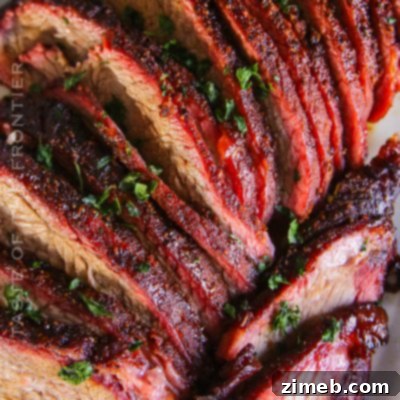
Smoked Tri-Tip Roast
Smoked Tri-Tip Roast is flavorful, tender, and juicy and is perfect for the Traeger. Great for backyard BBQs, summer gatherings, and more!
Check out this recipe
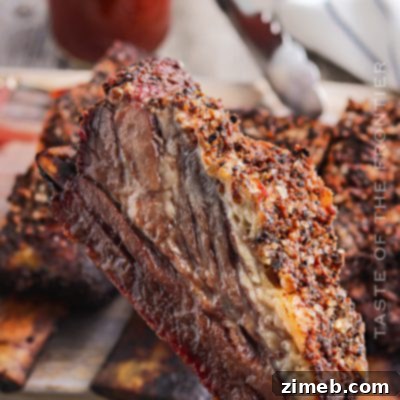
Smoked Beef Ribs
Ribs are a staple of barbecue cook-offs and summer picnics. Make this award-winning recipe for Smoked Beef Ribs that everyone loves!
Check out this recipe
Smoked Mac and Cheese
Smoked Mac and Cheese pairs the rich, salty flavor of smoked Muenster with the creamy goodness of a Mac n’ Cheese. This is a BBQ side dish staple!
Check out this recipe

Smoked Pork Butt
Break out the Traeger or pellet grill! This Smoked Pork Butt is made with a flavorful rub and perfectly smoked until juicy and tender.
Check out this recipe
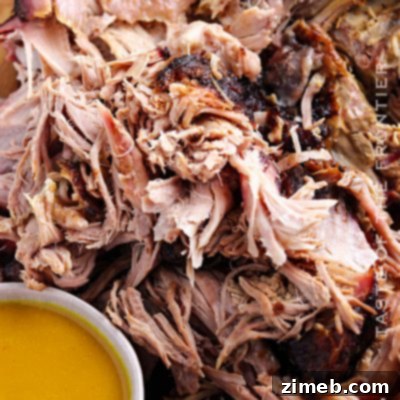
Applewood Smoked Turkey for Traeger
Make Thanksgiving EASY with this Applewood Smoked Turkey for Traeger! This practically effortless turkey recipe on a pellet grill is so juicy & delicious. You’ll never bake a turkey in the oven again.
Check out this recipe
Smoked BBQ Bacon Nachos
Smoked BBQ Bacon Nachos made on the grille are the perfect summer meal. Loaded with cheese, beans, smoky bacon & so much more- these are the best nachos for any celebration!

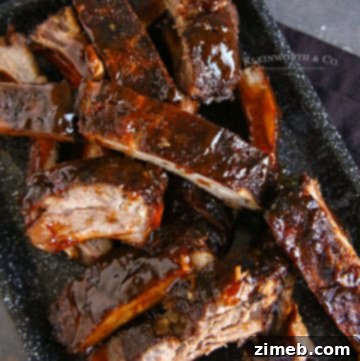
Smoked Baby Back Ribs
Smoked Baby Back Ribs are perfect for your backyard bbq. So easy to make, this bbq rib recipe will keep your crowd happy.
Check out this recipe
Other Delicious Beef Dishes to Explore
If you’re a fan of rich beef recipes, here are more options to tantalize your taste buds, ranging from comforting slow-cooked meals to quick and easy weeknight dinners:
- Slow Cooker Beef Stroganoff
- Instant Pot Beef Stew
- Easy BBQ Beef Brisket (Non-smoked variation)
- Beef Sliders
- Oven Roast Beef
- Oven Beef Tenderloin
- Oven Beef Brisket Recipe (Alternative cooking method)
CONNECT WITH YUMMI HAUS!
Be sure to follow us on our social media, so you never miss a post!
Substack, Facebook, Pinterest, Instagram, Email Subscription
PIN THIS RECIPE TO SAVE FOR LATER!
Rate this Recipe
Smoked Beef Brisket
Course: Dinner, Main Course
Servings: 12
Smoked Beef Brisket is a classic barbecue dish that is perfect for summer cookouts. Traeger pellet grills make it easy to get the perfect smoke flavor, and the results are juicy and delicious. Here’s how to make smoked beef brisket on your Traeger grill.
Pin Recipe
Save Recipe
Prep Time: 30 mins
Cook Time: 16 hrs
Rest Time: 1 hr
Total Time: 17 hrs 30 mins
Ingredients
- 11-15 pound whole packer brisket
- 3 tablespoons kosher salt
- 3 tablespoons coarse ground black pepper
- 2 tablespoons paprika
Instructions
- Preheat the smoker to 225°F.
- Combine the salt, pepper, and paprika in a small bowl. Whisk.
- Trim the brisket. Remove any silver skin or excess fat from the flat muscle, and square the edges and ends of the flat. Flip the brisket and trim the fat cap to no more than ¼ inch thickness.
- Liberally sprinkle all surfaces of the brisket with the blended seasonings.
- Place the brisket on the smoker with the thicker end closest to the hotter section of the smoker.
- Close the lid and smoke until the internal temperature is 165° F. Around 8 hours.
- Remove the brisket from the smoker and double wrap tightly with peach butcher paper.
- Return the brisket to the smoker and close the lid and continue cooking at 225°F until the internal temperature of the brisket reaches 203°F in the thickest part of the meat (another 6-8 hours of cooking).
- Remove the brisket from the smoker, wrap in a thick towel and place it into a cooler to rest for one hour before slicing and serving.
- To serve, slice across the grain of both the point and flat muscles with a sharp knife.
Equipment
- 1 Traeger/ Pellet Grill
- Peach butcher paper
Nutrition
Nutritional information for the recipe is provided as a courtesy and is approximate. Please double-check with your own dietary calculator for the best accuracy. We at Yummi Haus cannot guarantee the accuracy of the nutritional information given for any recipe on this site.
Love this recipe?
Follow @KleinworthCo for even more tasty recipes!